FASHION SCANDAL

“Ladies marked like Cattle” by Adriana Sassoon

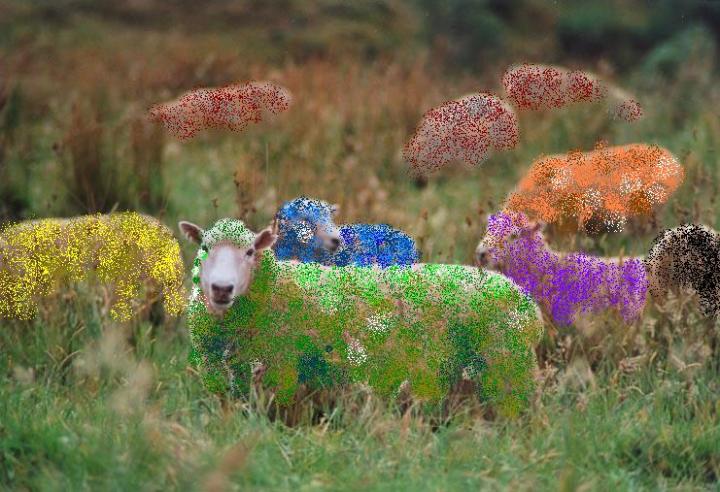
 colored_sheep


Have you being Marked?Can you see yourself? Which one is you?

A little while ago I posted an article about “DELUXE” a book by Dana Thomas.Well I just decided to make this new post and spread the knowledge out there! How can we address this issue?Please post your comments. Maybe we could even start a debate about this bubject.

https://adrianasassoon.wordpress.com/2008/03/22/re-deluxe/

https://adrianasassoon.wordpress.com/2008/03/22/deluxe/

THE LITTLE SEED

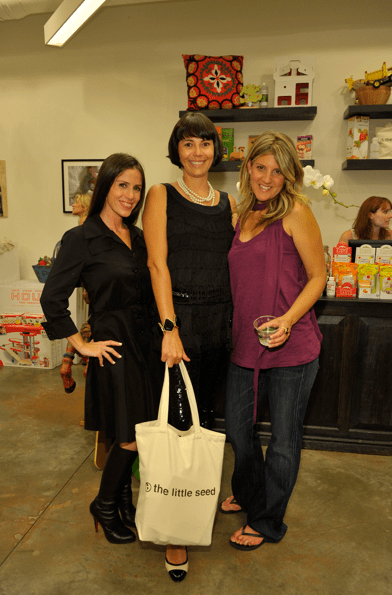
The Little Seed, a children’s specialty boutique carrying eco-friendly and organic products, opens its doors in the hip, urban enclave of Larchmont Village at 219 Larchmont Blvd.  Co-founded by new mothers Soleil Moon Frye and Paige Goldberg Tolmach, the goal was to create a one-stop shop for parents seeking products from skincare to bedding to toys that are made with organic or eco-friendly materials – healthy for babies and healthy for the planet… because it’s never too early to sow the seeds of care and responsibility.

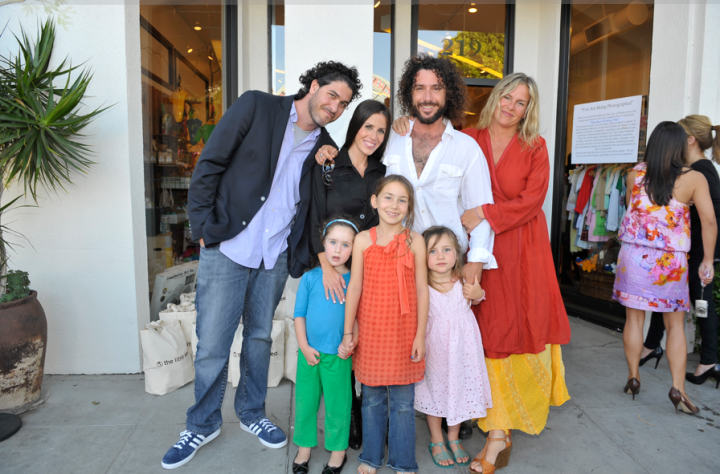
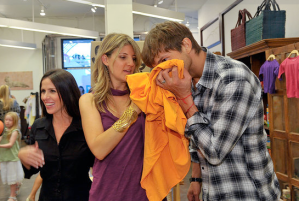
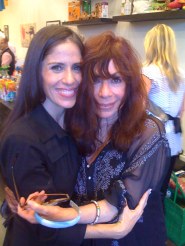
Soleil’s  party was a huge success ! Private Label launch party sponsored by Weleda skin care!

Jay,Soleil,Meeno  ilse & the Whole Family

IMG_0394

IMG_0395


IMG_0399IMG_0402


picture-4Ashton, Demi, Soleil


img_0391IMG_0392

IMG_0390

picture-6

WOMEN’S FASHION 1930

1930 paris

WOMEN’S FASHION 1930

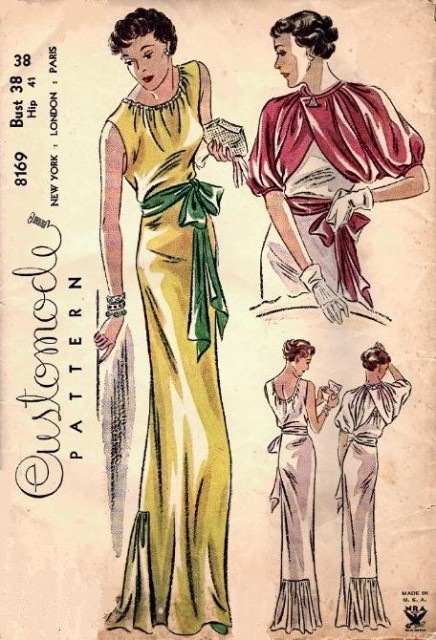
In the 1930s there was a return to a more genteel, ladylike appearance. Budding rounded busts and waistline curves were seen and hair became softer and prettier as hair perms improved. Foreheads which had been hidden by cloche hats were revealed and adorned with small plate shaped hats. Clothes were feminine, sweet and tidy by day with a return to real glamour at night.

The French designer Madeleine Vionnet opened her own fashion house in 1912. She devised methods of bias cross cutting during the 1920s using a miniature model. She made popular the halter neck and the cowl neck.

1930

The bias method has often been used to add a flirtatious and elegant quality to clothes. To make a piece of fabric hang and drape in sinuous folds and stretch over the round contours of the body, fabric pattern pieces can be cut not on the straight grain, but at an angle of 45 degrees. 

It is sometimes said that Vionnet invented bias cutting, but historical evidence suggests that close fitting gowns and veils of the medieval period were made with cross cut fabrics. The Edwardians also made skirts that swayed to the back by joining a bias edge to a straight grain edge and the result was a pull to the back that formed the trained skirt. She did really popularise it and the resulting clothes are styles we forever associate with movie goddesses and dancers like Ginger Rogers. 

fallgold-704452

Using her technique designers were able to produce magnificent gowns in satins, crepe-de-chines, silks, crepes and chiffons by cross cutting the fabric, creating a flare and fluidity of drapery that other methods could not achieve. Many of the gowns could be slipped over the head and came alive when put on the human form. Some evening garments made women look like Grecian goddesses whilst others made them look like half naked sexy vamps. Certain of her gowns still look quite contemporary.


141


There was a passion for sunbathing. Women tried to get tans and then show them off under full length backless evening dresses cut on the true cross or bias and which moulded to the body. To show off the styles a slim figure was essential and that was getting easier for women who were educated and aware as many now used contraception and did not have to bear baby after baby unless desired. 

goldie-hawn-vogue-photo-300x300

The new improved fabrics like rayon had several finishes and gave various effects exploited by designers eager to work with new materials. Cotton was also used by Chanel and suddenly it was considered more than a cheap fabric for work clothes. But nothing cut and looked like pure silk and it was still the best fabric to capture the folds and drapes of thirties couture. Fine wool crepes also moulded to the body and fell into beautiful godets and pleats.

Schiaparelli liked new things as well as new ideas. In 1933 she promoted the fastener we call the zip or zipper. The metal zip had been invented in 1893 and by 1917 it was somewhat timidly used for shoes, tobacco pouches and U.S. Navy windcheater jackets. Her use of the new plastic coloured zip in fashion clothes was both decorative, functional and highly novel. They soon became universally used and are now a very reliable form of fastening. 

glam2-709181


Health and fitness was an important aspect of thirties lifestyle. As sun worshipping became a common leisure pursuit fashion answered the needs of sun seekers by making chic outfits for the beach and its surrounds. Beach wraps, hold alls, soft hats and knitted bathing suits were all given the designer touch.

Swimwear was getting briefer and the back was scooped out so that women could develop tanned backs to show off at night in the backless and low backed dresses. The colours of the beach holiday were  navy, white, cream, grey, black and buff with touches of red.

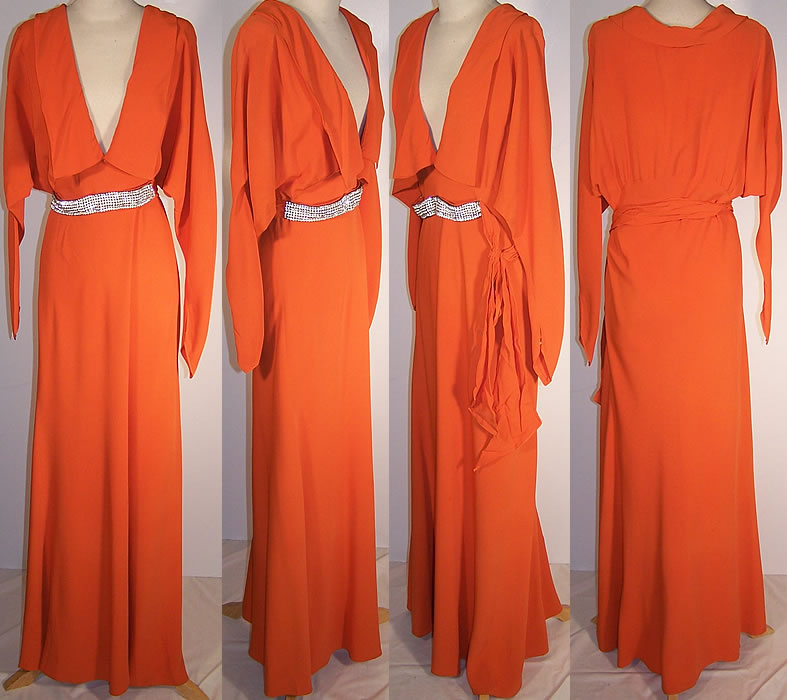
1930s-orange-silk-crepe-floor-length-dress

Pyjamas introduced as informal dinner dress or nightwear for sleeping died quickly as fashions. However the third use of them as a practical beach outfit caught on and every woman made them an essential garment to pack. They were soon regarded as correct seaside wear. The trousers were sailor style, widely flared and flat fronted with buttons. They were made up in draping heavy crepe-de-chine. Blue and white tops or short jackets finished the holiday look.


 MEN’S FASHION 1930

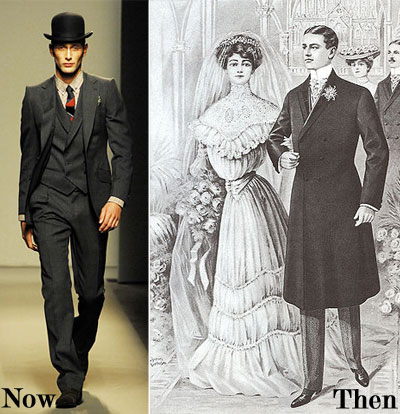
grooms_attire_1900's

 The decade of the 1930s saw dramatic changes in men’s fashion.  It began with the great Wall Street Crash of October 24, 1929.  By 1931, eight million people were out of work in the United States.  Less or no work meant little or no money to spend on clothing.  The garment industry witnessed shrinking budgets, and going-out-of-business sales were prevalent.  The Edwardian tradition of successive clothing changes throughout the day finally died. Tailors responded to the change in consumer circumstances by offering more moderately priced styles.

In the early part of the decade, men’s suits were modified to create the image of a large torso.  Shoulders were squared using wadding or shoulder pads and sleeves were tapered to the wrist.  Peaked lapels framed the v-shaped chest and added additional breadth to the wide shoulders.

This period also was a rise in the popularity of the double-breasted suit, the precursor of the modern business suit.  Masculine elegance demanded jackets with long, broad lapels, two, four, six or even eight buttons, square shoulders and ventless tails.  Generous-cut, long trousers completed the look. These suits appeared in charcoal, steel or speckled gray, slate, navy and midnight blue.

Dark fabrics were enhanced by herringbone and stippled vertical and diagonal stripes.  In winter, brown cheviot was popular.  In spring, accents of white, red or blue silk fibers were woven into soft wool.  The striped suit became a standard element in a man’s wardrobe at this time.  Single, double, chalk, wide and narrow stripes were all in demand.

grooms_attire_1920's

Plaids of various kinds became popular around this time as well.  Glen plaid checks, originally known as Glen Urquhart checks from their Scottish origin, were one of the more stylish plaids.  Glen plaid designs are sometimes referred to as “Prince of Wales” checks.  Initially the design was woven in saxony wool and later was found in tweed, cheviot, plied and worsted cloth. (See glossary for definitions of these terms.)

In 1935, as a result of President Roosevelt’s New Deal, signs of prosperity returned.  The rebounding economy demanded a redesign of the business suit, to signal the successful status of the man who wore it.  This new look was designed by the London tailor, Frederick Scholte and was known as the “London cut”.  It featured sleeves tapering slightly from shoulder to wrist, high pockets and buttons, wide, pointed lapels flaring from the top rather than the middle buttons and roll, rather than flat lapels.  Shoulder pads brought the tip of the shoulder in line with the triceps and additional fabric filled out the armhole, creating drape in the shoulder area.  As a result of this last detail, the suit was also known as the “London drape” or “drape cut” suit.

grooms_attire_1930's

Other versions of the new suit included four instead of six buttons, lapels sloping down to the bottom buttons, and a longer hem.  This version was known as the Windsor double-breasted (D.B.) and the Kent double-breasted (D.B.), named after the Prince of Wales and the Duke of Kent respectively.  Clark Gable, Jimmy Stewart, Fred Astaire and Cary Grant were a few of the Hollywood stars who lent their endorsement to this style by wearing the suits in their movies.  From there it became popular in mainstream America.

The famous “Palm Beach” suit was designed during the 1930s.  It was styled with a Kent double or single-breasted jacket, and was made from cotton seersucker, silk shantung or linen.  (See glossary for definitions.) Gabardine was also used to make this suit.  It quickly became the American summer suit par excellence and was touted as the Wall Street businessman’s uniform for hot days.

During this time, blazers became popular for summer wear.  Blazers are descendants of the jackets worn by English university students on cricket, tennis and rowing teams during the late nineteenth century.  The name may derive from the “blazing” colors the original jackets were made in, which distinguished the different sports teams.  The American versions were popular in blue, bottle green, tobacco brown, cream and buff.  Metallic buttons traditionally adorned the center front of the jackets, and they were worn with cotton or linen slacks and shorts

A discussion of men’s fashion during the thirties would be incomplete without recognizing the gangster influence.  Gangsters, while despised as thieves, paradoxically projected an image of “businessman” because of the suits they wore.  However, they didn’t choose typical business colors and styles, but took every detail to the extreme.  Their suits featured  wider stripes, bolder glen plaids, more colorful ties, pronounced shoulders, narrower waists, and wider trouser bottoms.  In France, mobsters actually had their initials embroidered on the breast of their shirts, towards the waist.  They topped their extreme look with felt hats in a wide variety of colors:  almond green, dove, lilac, petrol blue, brown and dark gray.  High-fashion New York designers were mortified by demands to imitate the gangster style, but obliged by creating the “Broadway” suit.

In 1931, “Apparel Arts” was founded as a men’s fashion magazine for the trade. Its purpose was to bring an awareness of men’s fashion to middle-class male consumers by educating sales people in men’s stores, who in turn would make recommendations to the consumers.  It became the fashion bible for middle- class American men.

Over the next three decades, American garment makers rose to a new level of sophistication, successfully competing with the long-established English and French tailors.  However, the eruption of war at the end of the decade brought an abrupt halt to the development of fashion all over the world.
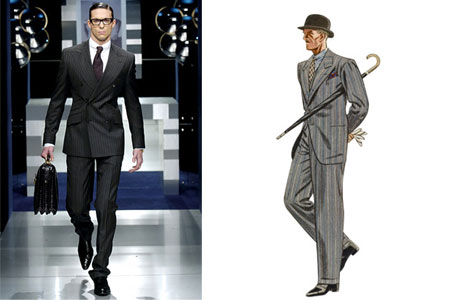
1930s-mens-fashion

On September 3, 1939, England and France declared war on Germany for invading Poland, and refusing to withdraw troops.  Once again, men’s fashion would change as a result of historic events.

1930 GLOSSARY OF TERMS

 Cheviot:  A British breed of sheep known for its heavy fleece.  Cloth produced from this wool is a heavy twill weave.

Gabardine:  A firm, tightly woven fabric of worsted, cotton, wool or other fiber with a twill weave.

Glen plaid:  Vertical and horizontal stripes intersecting at regular intervals to form a houndstooth check.

Herringbone:  A pattern consisting of adjoining vertical rows of slanting lines suggesting a “V” or an inverted “V”.  Also known as chevron.

Houndstooth check:  A pattern of broken or jagged checks.

Saxony:  A fine three-ply yarn.  Cloth produced from the yarn is a soft-finish compact fabric.

Seersucker:  Originally from India and named after a Persian expression, “shirushakar”, meaning milk and sugar.  It is a rippled or puckered cloth resulting from the vertical alternation of two layers of yarn, one taut and one slack, which also creates the characteristic stripe.

Shantung:  A plain weave silk cloth made from yarns with irregular or uneven texture.

Tweed:  A coarse wool cloth in a variety of weaves and colors originally from Scotland.  (Many tweeds are multi-color and textured.)

Twill weave:  One of three basic weave structures in which the filling threads (woof threads) are woven over and under two or more warp yarns producing a characteristic diagonal pattern.

Worsted:  Firmly twisted yarn or thread spun from combed, stapled wool fibers of the same length.  Cloth produced from this yarn has a hard, smooth surface and no nap (like corduroy or velvet).

Written by  Carol Nolan-Edited by  Julie Williams

MEN’S FASHION 1920

1933%20oxford%20bags

During World War I.

Men returning from the war faced closets full of clothes from the teens, which they wore into the early 1920s.

During this time, which had been popular since the mid eighteen-hundreds, constituted appropriate “day” dress for gentlemen. (Edwardian etiquette commanded successive changes of clothing for gentlemen during the day.)  With the suits, colored shirts of putty, peach, blue-gray and cedar were worn.  Shaped silk ties in small geometric patterns or diagonal stripes were secured with tie pins.

The tail coat was considered appropriate formal evening wear, accompanied by a top hat. Starched white shirts with pleated yokes were expected with the tail coat, although bow ties and shirts with white wing collars were also seen.

Black patent-leather shoes  often appeared with formal evening wear. Lace-up style shoes were most in demand. Gentleman’s shoes or boots were the appropriate footwear to coordinate with knickers.Casual clothing demanded two-tone shoes in white and tan, or white and black.

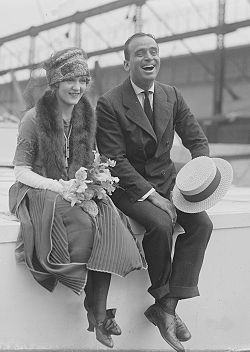
250px-Douglas_Fairbanks_and_Mary_Pickford_02

Knickerbockers, later shortened to “knickers”, were popular casual wear for the well-dressed gentleman.  Variations of knickers included plus-fours, plus- sixes, plus-eights and plus-tens.  The “plus” in the term referred to how many inches below the knee they hung.  Norfolk coats as well as golf coats were worn with knickers.  The coats sported large patch pockets, a belt, usually one button and often a shoulder yoke.

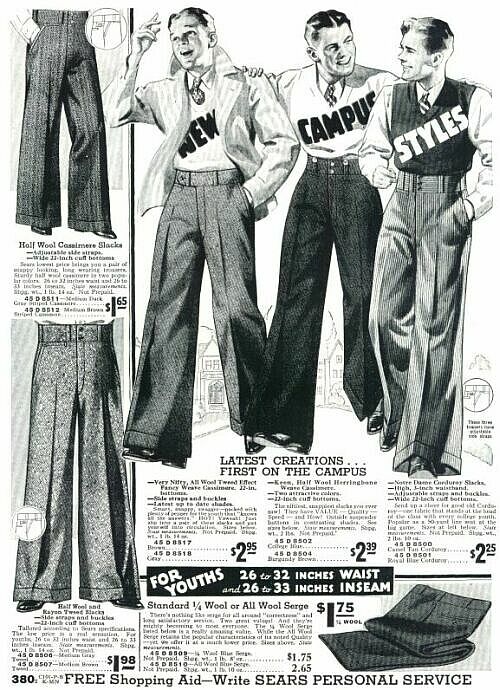
In 1925 the era of the baggy pants dawned.  This fashion would influence men wear for three decades.  Oxford bags were first worn by Oxford undergraduates, eager to circumvent the University’s prohibition on knickers.  The style originated when knickers were banned in the classroom.  As the bags measured anywhere from twenty-two inches to forty inches around the bottoms, they could easily be slipped on over the forbidden knickers.

fashionpierrecardinhy7

John Wanamaker introduced Oxford bags to the American public in the spring of 1925, although Ivy League students visiting Oxford in 1924 had already adopted the style.  The trousers were originally made of flannel and appeared in shades of biscuit, silver gray, fawn, lo-vat, blue gray, and pearl gray.

Jazz clothing passed quickly in and out of fashion during the twenties.  These tightly-fitting suits were considered an expression of passion for jazz music. Jackets were long and tight with long back vents.  The buttons were placed close together whether the jackets were double or single breasted. Trousers were tight and stove-pipe skinny.

Tweed cloth became popular at this time.  The word “tweed” is an English variant of the Scottish word “tweel”, itself a variation of “twill”.  Tweel refers to hand-woven wool fabric from the Scottish highlands and islands. Historians differ on whether tweed originated in the highlands or the south of Scotland.  The name became associated with the Tweed River which forms part of the boundary between England and Scotland.  Tweed eventually became the general term for all carded “homespun” wool, whether it was Scotch tweed, Irish tweed, Donegal tweed, Cheviot tweed or Harris tweed.

Flannel was the other popular fabric of the era.  The word flannel may be derived from the Welsh word “gwalnen”, meaning woolen cloth.  Flannel was originally made as a heavy, comfortable, soft and slightly napped wool cloth. Gray was the most popular color, and thus gray flannel trousers became known as “grayers”.  Other popular colors were white, beige and stripes.  Flannel trousers were traditionally worn in warm weather.

While Paris was unmistakably the world seat of women fashion, for men, it was London.  Tailors in France weren’t quick to admit the fact, however, all men fashion magazines featured styles and trends from London.  During the decade of the twenties, students at Oxford and Cambridge violated – for the first time ever – the Edwardian practice of different types of dress for different times of the day.  The students wore flannel trousers and soft collars all day.  When the English empire stood intact, it was easy for London to dictate men fashion.

The crash of the American stock market on October 24, 1929, marked a change in the worldwide economic situation that had a drastic effect on men clothing.

Written by Carol Nolan
Edited by Julie Williams

WOMEN’S FASHION 1920

1920-746791

Various social trends were at work during the 1920s. Historians have characterized the decade as a time of frivolity, abundance and happy-go-lucky attitudes. In 1920, women got the right to vote, and a year earlier, alcohol had become illegal. World War I had just ended. The 1920’s would mark the first youth revolution, long before the 1960’s.

1922_la_gazette_b

Young people were very indignant after World War I, and felt the older generation had just murdered millions of young boys. So they stopped obeying conventional rules and invented their own liberated culture: driving their own cars, and drinking, and petting with people they weren’t married to. And, for the first time in history, older women started copying younger women. In the late 19th Century, younger women wanted to look like grownups. Now, for the first time, everyone wanted the thinness and relative bosomlessness of early adolescence. People felt free-spirited and wanted to have fun. As a result, fashions became less formal. The biggest phenomenom of the 1920’s was the worship of youth.

1920s inspired vintage

The feminine liberation movement had a strong effect on women’s fashions. Most importantly, the corset was discarded! For the first time in centuries, women’s legs were seen. Women wanted to be “smarty” and/or freewheeling. Talking about Freud and sex were signs of hipness. Young men, “the flaming youth,” wore raccoon coats and drove around in old used Model Ts. Black-influenced jazz music and dance styles (ie. the Charleston and the Black Bottom) captivated white youth to the dismay of their parents. Dating, as we know it today, was invented in the 1920s. Previously, boys had to be courting a girl, they had to be committed, and girls had to be engaged to them in order to go out with them. The unchaperoned date was something new. Dating permitted people to see each other, and discover each other without having to proclaime an intent to marry. When flappers and flaming youth got together, the results was explosive. Petting was a popular and well received pastime for the youth. It allowed a girl to have erotic interaction without endangering herself with an unwanted or out of wedlock child. Petting could mean kisses or fondling, but it stopped just short of intercourse, and while parents equated petting with fornication, teenagers did not, and their peer group would still accept them and respect them. Intimacy and eroticism was explored. “Petting Parties,” where eager, youthful hands explored the nether regions of the opposite sex, was standard college entertainment. “Billing and cooing” (that is, to “bill and coo”) was to whisper sweet nothings while “making whoopee.”

1920s style fashion

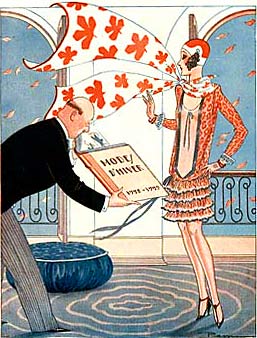
The flapper was the heroine of the Jazz Age. She was the culmination of all the trends of the 20’s. With short hair and a short skirt, rolled hose and powdered knees – the flapper must have seemed like a rebel to her mother (the gentle Gibson girl of an earlier generation). No longer confined to home and tradition, the typical flapper was a young women who was often thought of as a little fast and maybe even a little brazen. She defied conventions of acceptable feminine behavior. The flapper was “modern.” Traditionally, women’s hair had always been worn long. The flapper wore it short, or bobbed. She used make-up (which she might well apply in public). She wore baggy dresses which often exposed her arms as well as her legs from the knees down. Strings of pearls trail from her shoulder or are knotted at the neck and thrown over the right shoulder or under the arm. Silver bracelets are worn on her upper arm. Flappers did more than symbolize a revolution in fashion and mores  they embodied the modern spirit of the Jazz Age.louise_20brooks

1920s fashion, though, was about so much more than fringed flapper dresses and feathered headbands, the cliche that many people associate with the era. As with every decade, the ’20s had its fads as well as its classics, a few of which live on today. It was a romantic era for fashion, which is why people look back at this era with great fondness and still emulate its style. The era set the standard for the modern concept of beauty. The modern supermodel’s figure, is — itself  modeled after the 1920’s ideal of a woman’s figure (that of a thin pre-pubesent girl on the verge of puberty). The central phenomenom of the era was the worship of youth. For the first time in history, older women started copying younger women.1920

The pre-pubesent girl look became popular, including flattened breasts and hips, and bobbed hair. Fashions turn to the “little girl look” in “little girl frocks”: curled or shingled hair, saucer eyes, the turned-up nose, bee-stung mouth, and de-emphasized eyebrows, which emphasize facial beauty. Shirt dresses have huge Peter Pan collars or floppy bow ties and are worn with ankle-strap shoes with Cuban heels and an occasional buckle. Under wear is fashionable in both light colors and black, and is decorated with flowers and butterflies. With the cult of youth and the new spirit of equality come the camisole knickers; also fashionable is no underwear at all. Along with the rage for drastic slimming, women still strive to flatten their breasts and de-emphasize their hips. The cult of the tan begins; lotions to prevent burning and promote tanning appear on the market. Skin stains are also manufactured, as well as moisturizers, tonics, cream rouges, eye shadows, and more varied lipstick shades.

In the 1920s, a lot of clothing was still made at home or by tailors and dressmakers. The brand-name, ready-to-wear industry didn’t really exist until the 1930s, however some ready-made clothing was available from department stores and mail-order catalogs. Several magazines devoted to sewing were sources for patterns, transfers and appliques by mail. However, improved production methods enabled manufacturers to easily produce clothing affordable to working families. Because of this, the average person’s fashion sense became more sophisticated.

1920dresses


In 1923, the boyish bobbed hair transforms into the shingle cut, flat and close to the head, with a center or side part. A single curl at each ear is pulled forward onto the face. New felt cloche hats appear with little or no decoration in colors that match the day’s dress. Hats are pulled down to the eyes, and their brims are turned up in the front or back. In clothing, the straight line still emphasized the pre-pubesent look, but fabrics are now embroidered, striped, printed, and painted, influenced by Chinese, Russian, Japanese, and Egyptian art. Oriental fringed scarves, slave bangles, and long earrings were set off. Artificial silk stockings, later called rayon, are stronger and less expensive that real silk ones, although they are shiny. The new seamless stocking, despite its wrinkling, also makes the leg look naked. At bedtime, girls wear pajama bottoms, halter tops, and boudoir cape to protect their new hairdos.

By 1926, women were wearing skirts, shortest of the decade, stopping just below the knee with flouncing pleats; they are worn with horizontal-striped sweaters and long necklaces. Short and colorful evening dresses have elaborate embroidery, fringes, futuristic designs, beads, and appliques. The cocktail dress is born. The new sex appeal extends from the bee-stung mouth and tousled hair to a new focus on legs, with silk stocking rolled around garters at rouged knees. The “debutante slouch” emerges: hips thrown forward, as the woman grips a cigarette holder between her teeth. Mothers and daughters are flappers, many nearly nude beneath the new, lighter clothing.

Daywear
There were two important ethnic influences on the fabric and prints of the 1920s. One was a Chinese influence, with kimono-styling, embroidered silks, and the color red. The discovery of King Tut’s tomb brought a rash of Egyptian fashion and and accessories, including snake bracelets that encircled the upper arm. Small floral and geometric prints were prevalent throughout the decade, especially toward the latter half.

chettab

Evening Wear
Contrary to popular belief, women didn’t always wear fringed flapper dresses with feathered bandeaux and a long strand of beads. There were many other styles of evening dresses.

300_195685


 Chanel-Vintage-255-Quilted-Bag_10211_front_large

Evening clothes were made of luxurious fabrics — mostly silks — in velvets, taffetas and chiffon. In the mid-1920s, sleeveless silk chiffon dresses were were often embellished with elaborate beadwork. Dresses were designed to move while dancing. Some had long trailing sashes, trains or asymmetric hemlines. Typically, women did not wear hats for evening, but instead wore fancy combs, scarves and bandeaux.

shoe 1920


HALSTON

Superstar Designer’s Legacy  Enduring Fashion Themes, Classic Fragrances

MIAMI LAKES, FL – Only the Age of Aquarius could have produced a designer of such mythic proportions as Halston. Or could it be that Roy Halston Frowick, from Des Moines, Iowa, engineered the entire decade of the ’70s for his own amusement – and his own legacy?

As a force within the fashion industry, Halston’s aura almost eclipsed the reputation of his label. He was the first, true American superstar designer, bringing casual, but luxurious fashion to an enthusiastic audience. At the same time, he was uncanny about cultivating the first designer-as-celebrity reputation, counting among his friends Liza Minnelli, Cher, Lauren Bacall, Andy Warhol and other Studio 54 revelers.

Today, the tremors from the man and his legend are still impacting the fashion world. Jersey, cashmere, and even Ultrasuede are recurring themes on contemporary runways.

From the Top: The ’50s & ’60s

The Halston legend began, appropriately enough, at the top – with hats. After attending the Art Institute of Chicago, Halston designed and sold millinery from inside a Chicago beauty parlor. His best clients were elite dignitaries and celebrities, among them Gloria Swanson and Kim Novak. Foreshadowing, perhaps? It was here that Halston was “discovered” by Lilly Daché who brought him to New York in 1957.

A year later, Halston began a 10-year relationship with Bergdorf Goodman. At first, he designed custom millinery for Bergdorf’s, including such innovations as the scarf hat and Jackie O’s inseparable pillbox. His creations were also quite fanciful, incorporating organdy hair-dryer bonnets, fringed lampshades and mirrored hoods into his designs. During his tenure at Bergdorf’s, Halston won the first of five Coty Awards, this one for innovation in millinery. Then, in 1966, Bergdorf’s put him in charge of his own in-store boutique, an opportunity that represented his first venture into apparel design.

Halston’s clothes were a hit.

So much so, that in 1968, Halston bid farewell to Bergdorf’s and opened Halston Limited, selling apparel and accessories to stores throughout the country, including his own boutique inside Bloomingdale’s. But unlike his fanciful headgear, the apparel designs under Halston’s own label represented a radical, 180-degree turn in mood.

Less is More: The ’70s

Halston’s apparel championed the classic simplicity of soft, unconstructed, pared-down design that would become the hallmark of his career. His clothes were sophisticated, casual and easy to wear. He revolutionized cashmere sweaters by taking them to the floor, brought back turtlenecks, evolved halter-tops into eveningwear and paired short shorts or slim pants with tunics, wrap jackets, coats and capes. In 1974, Halston was inducted into the Coty Hall of Fame, the most prestigious honor in the American fashion industry.

Having risen to the upper echelon of apparel, Halston turned his creative energies toward the fashion of fragrance. In 1975, Halston made headlines with the launch of his signature fragrance, Halston for women. A year later, Halston was back in the news for the simultaneous launch of twin men’s fragrances, Z-14 and 1-12. In each instance, Halston turned to Elsa Peretti, a respected jewelry designer and former Halston model, to develop the packaging designs. Halston was doubly rewarded for his efforts when the Fragrances Foundation honored both Halston and Z-14 with its “Most Successful Launch of the Year” distinction.

To Dress America: The ’80s

The turn of the decade also mirrored a turn in Halston’s attention. From his custom-made background, Halston began expressing a desire to “dress America.” This desire took shape when Halston signed a licensing agreement with JCPenney to create a stylish, yet moderately priced, line of apparel under the Halston III label.

In 1991, a year after his death, the Council of Fashion Designers of America honored Halston with a special tribute and retrospective. But it wasn’t until last year that perhaps the most fitting acknowledgment occurred when a new line of apparel bearing the designer’s name debuted.

Can a rebirth of the Age of Aquarius be far behind?

As “the first designer to realize the potential of licensing himself,” his influence went beyond style to reshape the business of fashion.Through his licensing agreement with JC Penney, his designs were accessible to women at a variety of income levels. Although this practice is not uncommon today, it was a controversial move at the time Halston, his perfume, was sold in a bottle designed by Elsa Peretti and was the second biggest selling perfume of all time.

 Airline uniform designs

Halston was very influential in airline uniform designs. His designs were featured on the now-defunct carrier Braniff. His designs were more muted than the airline’s past uniform designs by Emilio Pucci. He made interchangeable separates in shades of bone, tan, taupe, and brown. He also designed the seat covers that were added on the aircraft and known as the “Ultra look”.

www.halstonfragrances.com
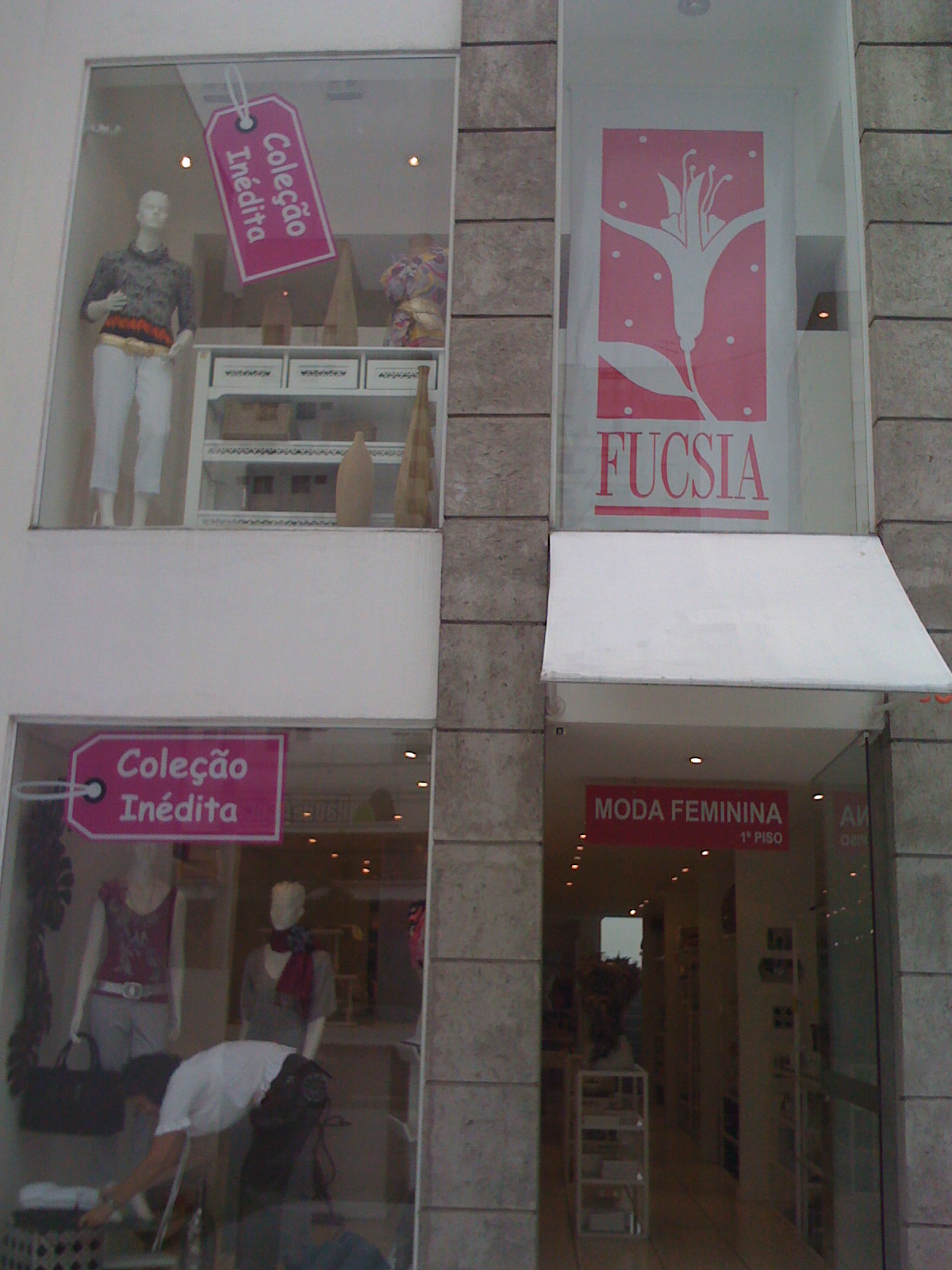
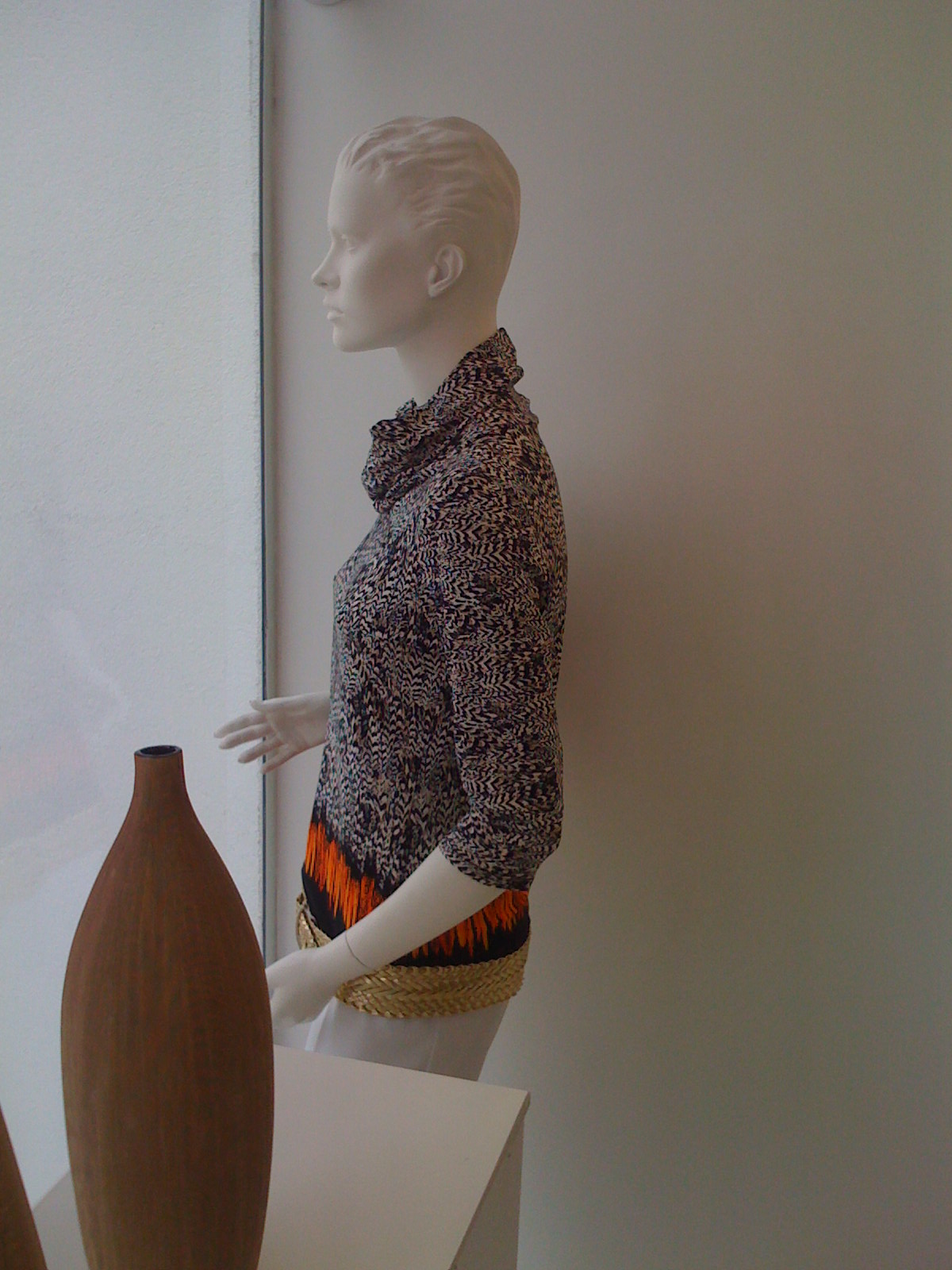
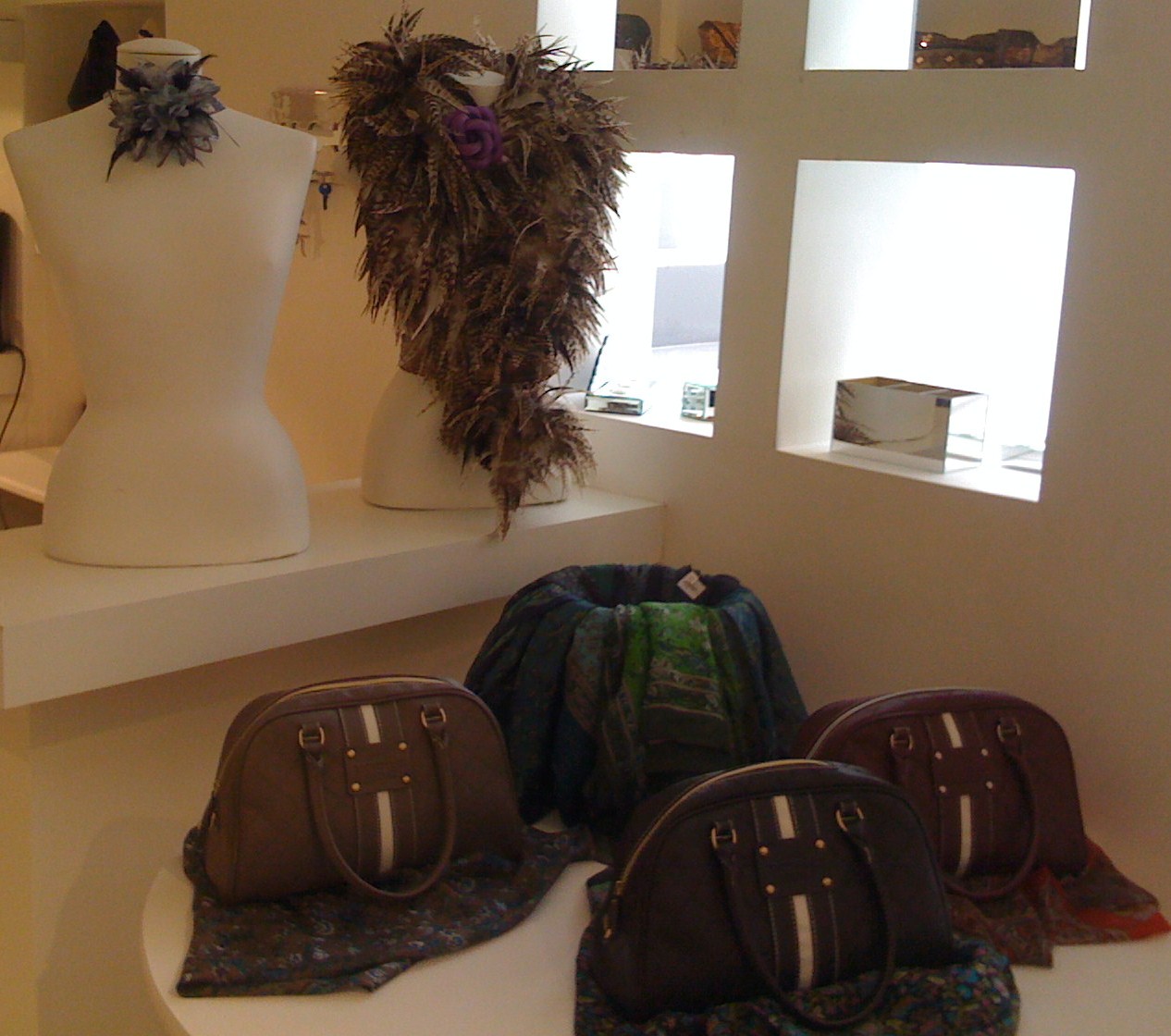
fucsia-0424

FUCSIA

fucsia-0364

Copyright © 2009 ADRIANA SASSOON .All Rights Reserved.

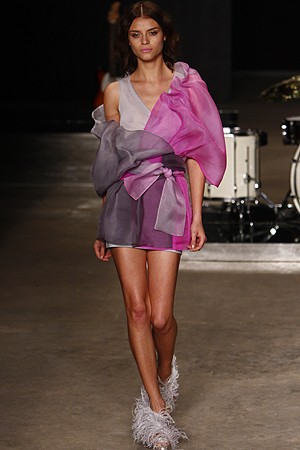
O nome fucsia deriva do apelido do cientista Leonhart Fuchs que descobriu fucsia-0241flores que apresentam essa tonalidade. No mundo da moda a primeira criadora a utilizar este tom foi Elsa Schiaparelli, uma reconhecida estilista italiana que durante as duas guerras mundiais dominou, juntamente com Coco Chanel, a indústria da moda, tornando-as eternas rivais. A colaboração da italiana com artistas surrealistas como Salvador Dalí marcou a sua carreira, deixando para a posteridade pérolas como um vestido gigante com uma lagosta impressa ou ainda um chapéu gigante em forma de sapato. Chanel dirigia-se a Schiaparelli como “a artista italiana que faz umas roupas”. Yves Saint Laurent considerava-a e ao seu rosa-choque “uma provocação”. Actualmente, em termos cromáticos, a grande herdeira da irreverência de Schiaparelli é a espanhola Agatha Ruiz de la Prada. A criadora, conhecida como a fada fucsia, adora a tonalidade “porque é a cor das meias dos toureiros, ainda que seja anti-touradas”, confessou.Porque o fucsia não é um mero rosa, nem é um lilás, porque foi preciso um pouco de arte e de ciência para que esta cor existisse, aqui estou.
fucsia-0073


fucsia-0414

Copyright © 2009 ADRIANA SASSOON .All Rights Reserved.

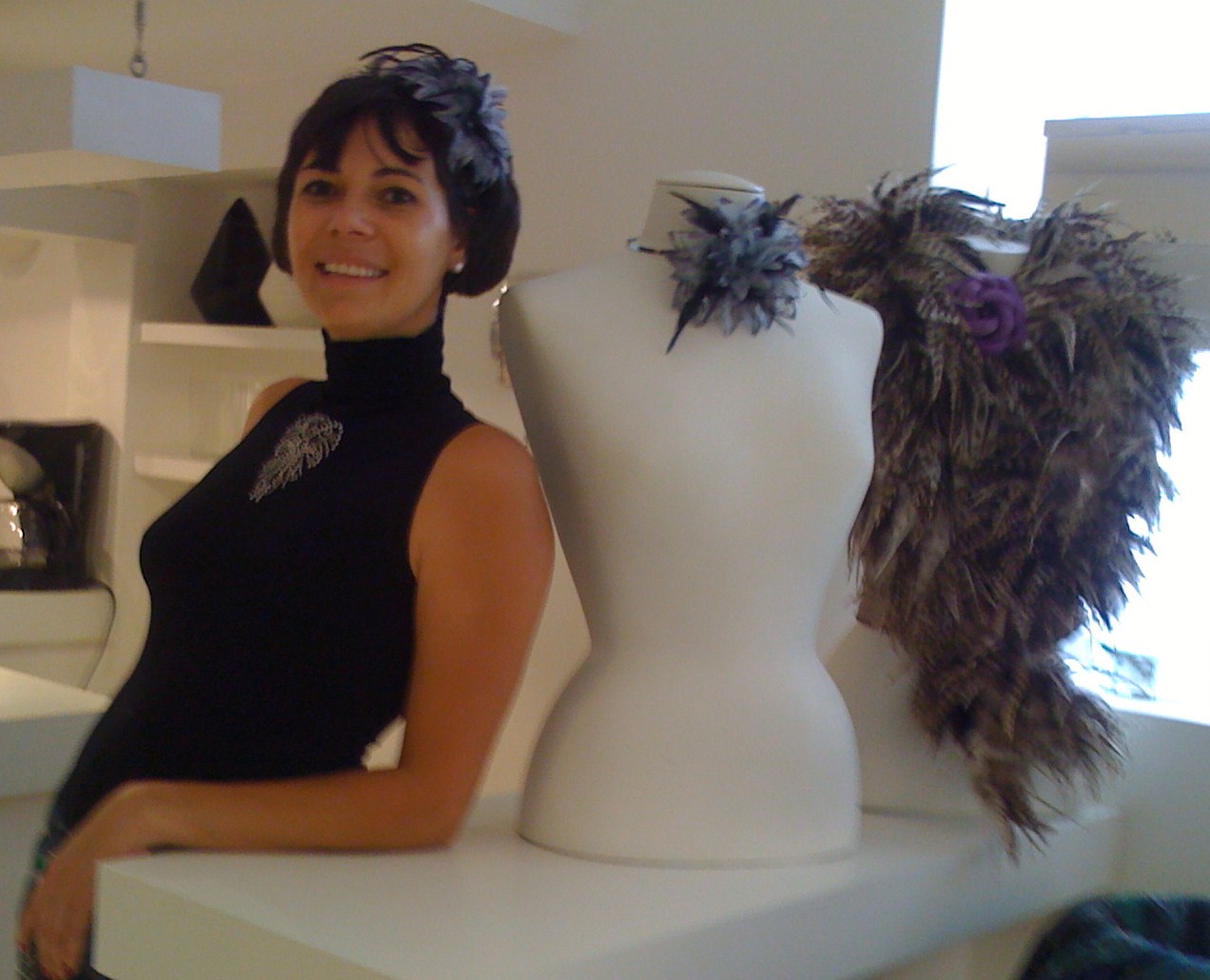
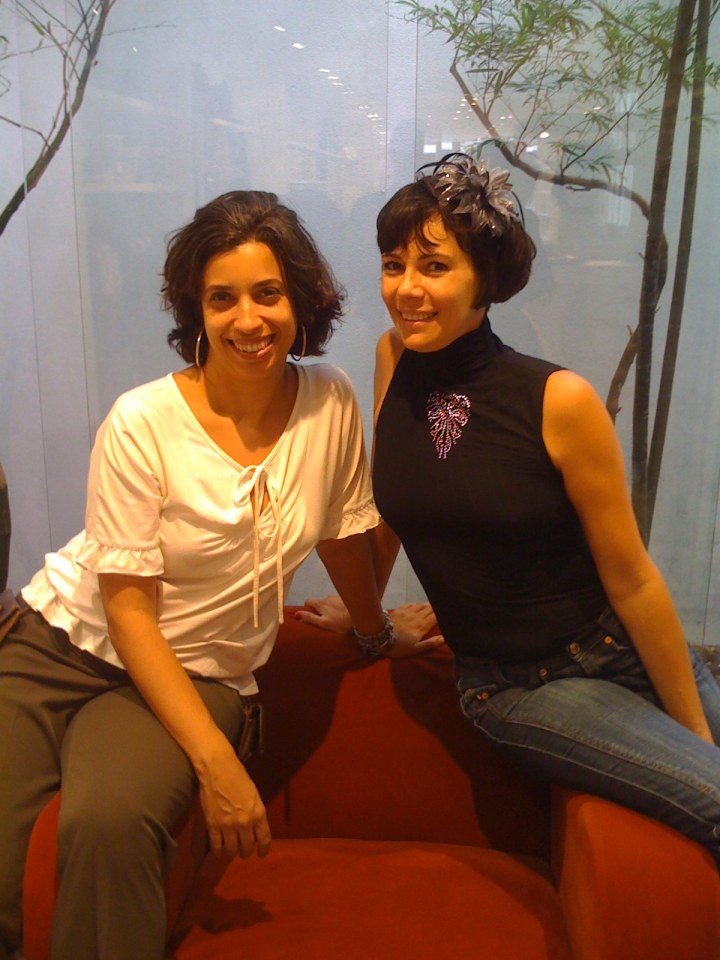
Karla Montenegro de Meneses & Adriana Sassoon


http://www.fucsia.com.br/

* PROJETO DE DECORACAO DE VITRINE, ARRANJOS E FOTOS.By ADRIANA SASSOON


60’S FASHION ICONS

The Mods and Rockers were two conflicting British youth subcultures of the early-mid 1960s.

Gangs of mods and rockers fighting in 1964 sparked a moral panic about British youths, and the two groups were seen as folk devils. The rockers adopted a macho biker gang image, wearing clothes such as black leather jackets. The mods adopted a pose of scooter-driving sophistication, wearing suits and other cleancut outfits. By late 1966, the two subcultures had faded from public view and media attention turned to two new emerging youth subcultures – the hippies and the skinheads

Rockers, who wore leather jackets and rode heavy motorcycles, poured scorn on the mods, who often wore suits and rode scooters. The rockers considered mods to be weedy, effeminate snobs, and mods saw rockers as out of touch, oafish and grubby.[citation needed] Musically, there was not much common ground. Rockers listened to 1950s rock and roll, mostly by white American artists such as Elvis Presley, Gene Vincent and Eddie Cochran. Mods generally favoured 1960s rhythm and blues, soul and ska by black American and Jamaican musicians, although many of them also liked British R&B/beat groups such as The Who, The Small Faces and The Yardbirds.

John Covach’s Introduction to Rock and its History claims that in the UK, rockers were often engaged in brawls with mods.BBC News stories from May 1964 stated that mods and rockers were jailed after riots in seaside resort towns on the south coast of England, such as Margate, Brighton, Bournemouth and Clacton.The mods and rockers conflict led sociologist Stanley Cohen to coin the term moral panic in his study Folk Devils and Moral Panics, which examined media coverage of the mod and rocker riots in the 1960s. Although Cohen admits that mods and rockers had some fights in the mid-1960s, he argues that they were no different than the evening brawls that occurred between youths throughout the 1950s and early 1960s, both at seaside resorts and after football games. He claims that the UK media turned the mod subculture into a negative symbol of delinquent and deviant status.

Fights occurred where territories overlapped or rival factions happened upon each other. As noted above, there was an urban/rural split, meaning that the groups could only fight if brought together for some reason – most often the seaside during summer. The film Quadrophenia, on the other hand, depicts some violence within London. Mods sometimes sewed fish hooks into the backs of their lapels to shred the fingers of assailants. Weapons were often in evidence; coshes and flick knives being favoured. The conflict came to a head at Clacton during the Easter weekend of 1964.

Round two took place on the south coast of England, where Londoners head for seaside resorts on Bank Holidays. Over the Whitsun weekend (May 18 and 19, 1964), thousands of mods descended upon Margate, Broadstairs and Brighton to find that an inordinately large number of rockers had made the same holiday plans. Within a short time, marauding gangs of mods and rockers were openly fighting, often using pieces of deckchairs. The worst violence was at Brighton, where fights lasted two days and moved along the coast to Hastings and back; hence the Second Battle of Hastings tag. A small number of rockers were isolated on Brighton beach where they – despite being protected by police – were overwhelmed and assaulted by mods. Eventually calm was restored and a judge levied heavy fines, describing those arrested as Sawdust Caesars.

Newspapers described the mod and rocker clashes as being of “disastrous proportions”, and labelled mods and rockers as “sawdust Caesars”, “vermin” and “louts”. Newspaper editorials fanned the flames of hysteria, such as a Birmingham Post editorial in May 1964, which warned that mods and rockers were “internal enemies” in the UK who would “bring about disintegration of a nation’s character”. The magazine Police Review argued that the mods and rockers’ purported lack of respect for law and order could cause violence to “surge and flame like a forest fire”.

Cohen argues that as media hysteria about knife-wielding, violent mods increased, the image of a fur-collared anorak and scooter would “stimulate hostile and punitive reactions” amongst readers.As a result of this media coverage, two British Members of Parliament travelled to the seaside areas to survey the damage, and MP Harold Gurden called for a resolution for intensified measures to control hooliganism. One of the prosecutors in the trial of some of the Clacton brawlers argued that mods and rockers were youths with no serious views, who lacked respect for law and order. Cohen says the media used possibly faked interviews with supposed rockers such as “Mick the Wild One”.As well, the media would try to get mileage from accidents that were unrelated to mod-rocker violence, such as an accidental drowning of a youth, which got the headline “Mod Dead in SeA”

Eventually, when the media ran out of real fights to report, they would publish deceptive headlines, such as using a subheading “Violence”, even when the article reported that there was no violence at all.  Newspaper writers also began to use “free association” to link mods and rockers with various social issues, such as teen pregnancy, contraceptives, amphetamines, and violence


More Than Just a Pretty Swingin’ Sixties Face

Hers is the face that launched a thousand ripples through the fashion world when she wore the world’s first topless bathing suit. “Designer of the future” Rudi Gernreich considered Peggy Moffitt to be his muse and model of choice for his controversial designs. With her Kabuki-inspired face painting, Peggy created her own unique look in the Sixties. Gernreich collaborated with super hair stylist Vidal Sassoon to create Peggy’s trademark hairstyle. He gave her a short helmet haircut, with precise geometric bangs cut right to her eyebrows. She also created her own makeup style with heavy black and white eyeliner and long false eyelashes to exaggerate her huge dark eyes. She took the term “strike a pose” very seriously in front of the camera. She made Gernreich’s clothes all the more extreme with her striking presence.

FIDM was recently treated to a visit from Peggy when she came to sign copies of The Rudi Gernreich Book, a chronicle of the fashion designer’s life and work. Peggy and her photographer husband, William Claxton, produced and wrote the colorful homage to Gernreich. Both Peggy and her husband discussed the book and their experiences with sixties swingin’ fashion. She has not abandoned her famous look to time!

Peggy Moffitt is an icon and innovator of fashion who didn’t just wear designs, she inspired them. Even super sixties model Twiggy said, “She taught me how much more a model puts in her work than just a pretty face.”