DANA FARBER

dana farber

The mission of Dana-Farber Cancer Institute is to provide expert, compassionate care to children and adults with cancer while advancing the understanding, diagnosis, treatment, cure, and prevention of cancer and related diseases. As an affiliate of Harvard Medical School and a Comprehensive Cancer Center designated by the National Cancer Institute, the Institute also provides training for new generations of physicians and scientists, designs programs that promote public health particularly among high-risk and underserved populations, and disseminates innovative patient therapies and scientific discoveries to our target community across the United States and throughout the world.

History

In 1947, the late Sidney Farber, MD, founded a Children’s Cancer Research Foundation dedicated to providing children with cancer with compassionate, state-of-the-art treatment and simultaneously developing the cancer preventatives, treatments, and cures of the future. The Institute officially expanded its programs to include patients of all ages in 1969, and in 1974 became known as the Sidney Farber Cancer Center in honor of its founder. The long-term support of the Charles A. Dana Foundation was acknowledged by incorporating the Institute under its present name in 1983.

Today, the Institute employs about 4,000 people supporting more than 200,000 patient visits a year, is involved in some 600 clinical trials, and is internationally renowned for its blending of research and clinical excellence. The Institute’s expertise in these two arms of the fight to eradicate cancer uniquely positions it to bring novel therapies that prove beneficial and safe in the laboratory setting into clinical use.

Dana-Farber Cancer Institute is a principal teaching affiliate of Harvard Medical School, a federally designated Center for AIDS Research, and a founding member of the Dana-Farber/Harvard Cancer Center (DF/HCC), a federally designated comprehensive cancer center. Providing advanced training in cancer treatment and research for an international faculty, the Institute conducts community-based programs in cancer prevention, detection, and control throughout New England, and maintains joint programs with other Boston institutions affiliated with Harvard Medical School and the Partners Health Care System, including Brigham & Women’s Hospital, Children’s Hospital, and Massachusetts General Hospital.

Dana-Farber Cancer Institute is supported by the National Cancer Institute, the National Institute of Allergy and Infectious Diseases, and the generous support of numerous foundations and individuals, who contribute to the Institute’s individual research and clinic programs or to the Jimmy Fund, the principal charity of the Institute named for one of its child patients.

http://www.dana-farber.org 


THIRD EYE BLIND


jt5

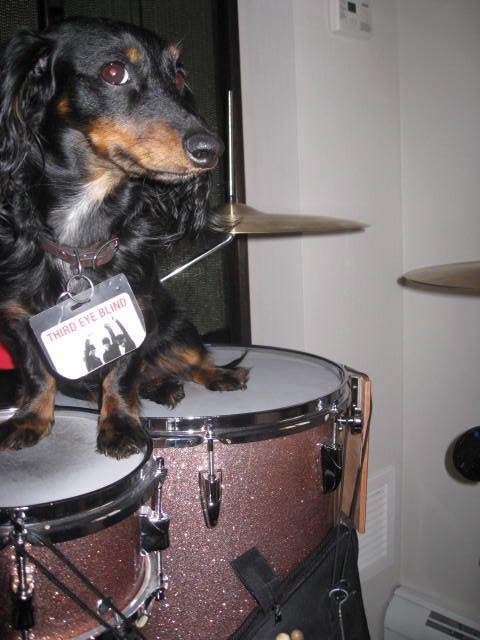
BRAD HARGREAVES lives in the Hollywood Hills, enjoys learning new things, and has a powerful Dachshund named Shelby. They are both secretly slipping off the world.

shelby 3eb drum

Shelby


The Band

Beginnings (1993–1996)

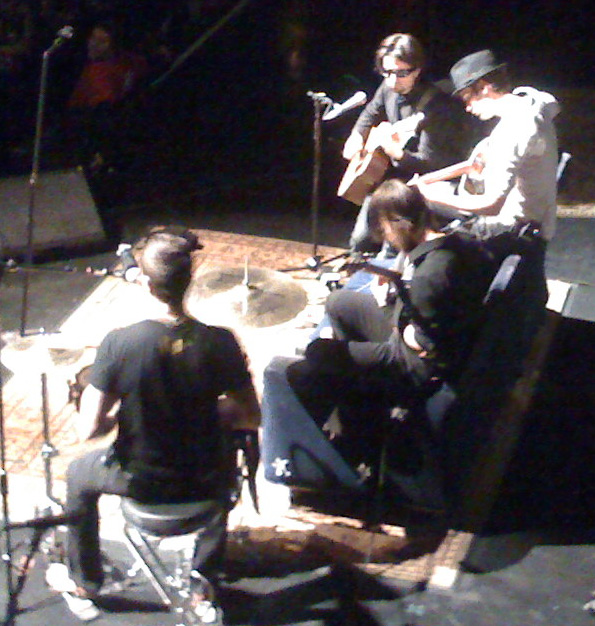
Third Eye Blind recorded their first demo in 1993. The band gained major label attention after their second demo was released in 1995, including that of Clive Davis, who invited the band to perform a showcase for Arista Records in New York City. During Third Eye Blind concerts at the time, it was customary for the band to have a piñata release candy above their mosh pits, yet at the showcase for the record executives, lead singer Stephan Jenkins released live crickets from the piñata instead.With regard to the name of the band, Jenkins indicated during a radio interview that the name came from the metaphysical idea of a mind’s eye, a topic of a book he had read. The other group members liked it and chose it as the official name. In the past, Stephan Jenkins has also joked about a Ouija board and vodka being the sources of the name. In April 1996, after Jenkins had challenged Epic Records executive Dave Massey in a meeting, the band landed an opening gig for Oasis at the San Francisco Civic Auditorium. In an unlikely scenario for an opening act, the band was invited back for an encore after playing their initial set and was paid double by the concert promoter.In addition, Stephan Jenkins’ production of The Braids’ cover of Queen‘s “Bohemian Rhapsody” gained major-label attention. Afterwards, the band found themselves in a bidding war among record labels, and after a showcase in Los Angeles, signed with Sylvia Rhone of Elektra Records because they believed it offered the most artistic freedom.

Ursa Major and Ursa Minor (2009)

Third Eye Blind has announced a fourth studio album titled Ursa Major. The album has been anticipated since mid-2007 and was previously expected to be named The Hideous Strength.  The current scheduled date as given by Stephan Jenkins is June 2009.  The album will be produced under the Sony label. Jenkins has stated that this album will be “more political” than previous Third Eye Blind works.Jenkins said the fourth album has taken so long to complete because he experienced difficulty finishing the lyrics.

Also announced recently is a possible fifth album titled Ursa Minor, that may be released following Ursa Major. Jenkins said that Ursa Minor will consist of tracks that did not make the cut for Ursa Major. Leo Kremer, who has been filling in for Arion Salazar during recent shows is going to be playing his last time with the band after they tour Japan this Summer. Ari Ingber, from band The Upwelling, co-wrote “Break Like a Fever” with Jenkins, a new track from Ursa Major. John Evans (Vanessa Carlton) and Juan Alderette (The Mars Volta) will reportedly take over bass duties for the recording of this next album, according to Tony Fredianelli.

The first single from the album, “Non-Dairy Creamer”, was released in November 2008. This song was released as an Internet exclusive track on the digital EP Red Star.

A number of previously unreleased recordings were made available on Facebook and MySpace, including “Persephone”, “Carnival Barker” (an instrumental), and numerous instrumental sessions declined by Jenkins for inclusion on the fourth album.

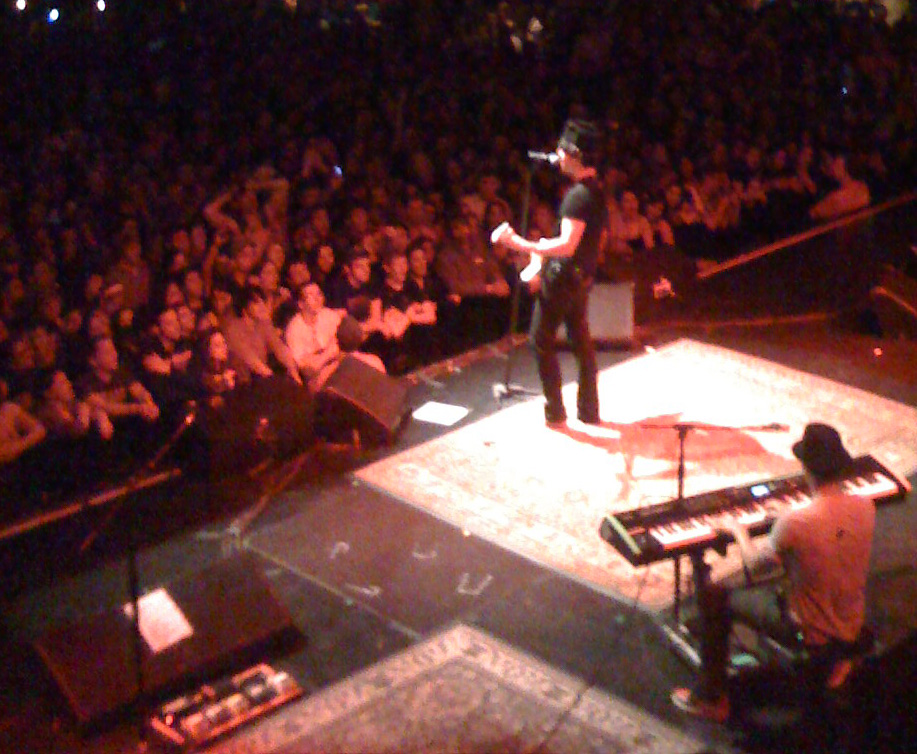
For the 10th anniversary of the release of Third Eye Blind’s debut album, the band performed at the Fillmore on March 13 and 14. The shows were filmed for broadcast on HDNet on December 2, as well as normal broadcast and release on DVD and as a live album tentatively to be released in early 2008, as announced by Jenkins on November 9, 2007, on DC101’s “Elliot In The Morning”. However, at a concert in Newport, Kentucky in February, Jenkins announced a live cd was being recorded that evening.

Between April and November 2007, Third Eye Blind toured extensively throughout the US, playing dozens of sold-out shows as a build-up for the release of their new album. They played 2 shows with 1990s acts Counting Crows and Collective Soul during the summer of 2007. Their Fall 2007 tour consisted of nine shows, beginning on November 9, at the University of Maryland College Park (which sold out the presale and general sale in a matter of hours), and ending on November 18 at the University of Rhode Island Ryan Center. The band also toured in the winter of 2007, and played numerous shows in 2008. Several performances on the tour were recorded for possible use on a future live album.

Towards the end of September 2008, Third Eye Blind released the song “Non-Dairy Creamer” to fans. It was released as six individual tracks (lead vocal, background vocal, drums and clap, bass, guitars, and violin) as a competition for fans to remix the song for Third Eye Blind. On October 16th, the day that the “Non-Dairy Creamer” contest ended, another song “Don’t Believe a Word”, was released in stem format, again for the purpose of remixing the song. On November 6th the stems for “Red Star” were released to Indaba users. The winner for “Don’t Believe a Word” was chosen on the 23rd of November and the voting for “Red Star” started shortly after that on the 27th of November. The voting ended sometime in December after getting pushed back a few times. Ultimately, the band Third Eye Blind will pick their favorite submissions for each song and a grand prize winner will get the opportunity to perform live on stage with Third Eye Blind. The winner of each song will have their version released on an alternate mix album, which will be included as a companion digital album to the band’s own release of Ursa Major. Contestants get to vote for their favorite submissions and the top 3 of each contest will receive an autographed copy of the album when it is released.

An EP titled Symphony of Decay has also been completed. The band reportedly has a contractual obligation to deliver the EP.

www.3eb.com

COMMUNITY BOATING

5

Copyright © 2009 ADRIANA SASSOON .All Rights Reserved.

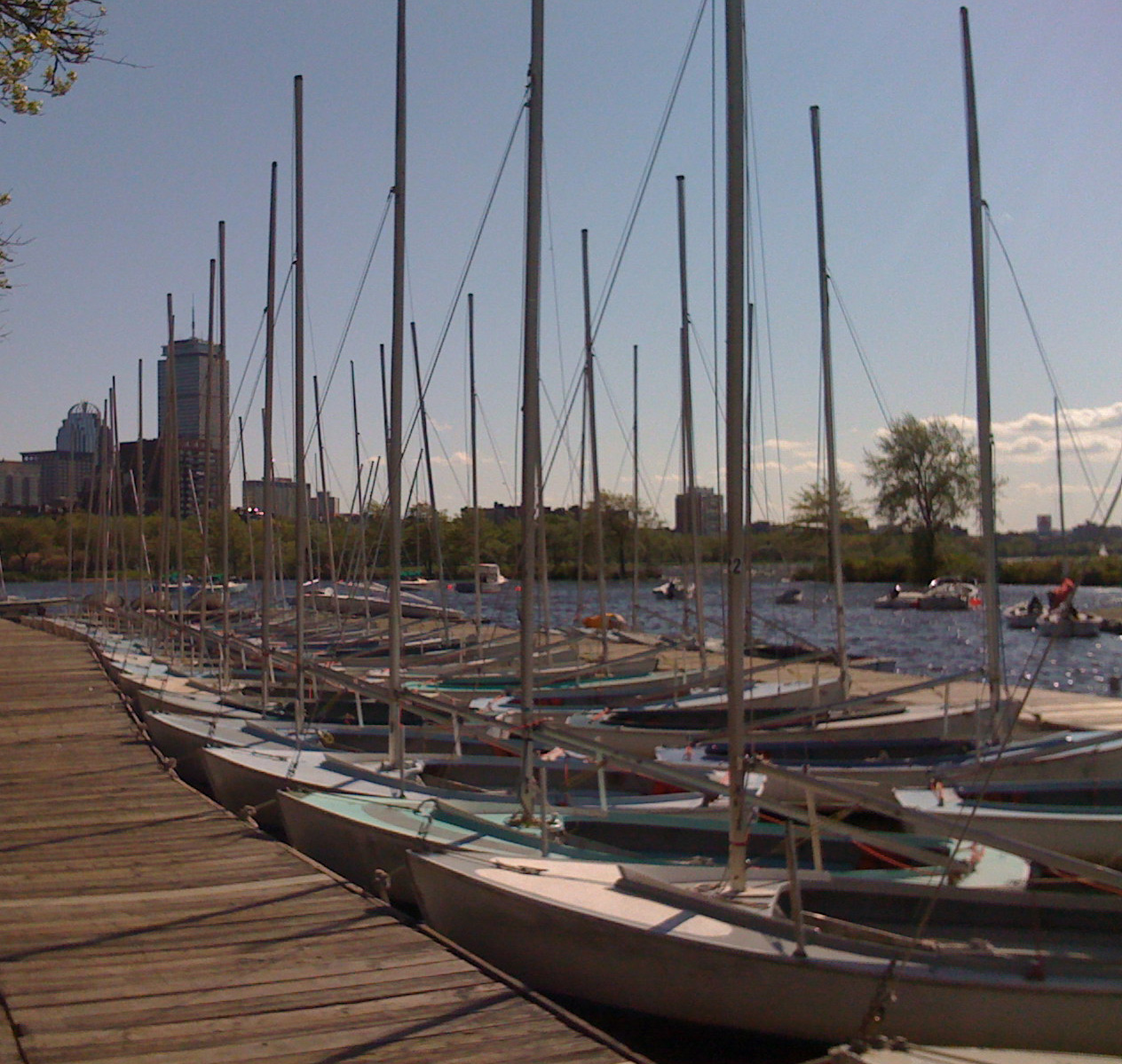
LEARN ABOUT SAILING ON THE CHARLES RIVER AT COMMUNITY BOATING INC. (CBI). Sailing on the Charles River is without a doubt one of those iconic Boston experiences and it has never been easier to get started. Join CBI . Open House to learn more about Boston’s greatest resource for sailing, windsurfing, and kayaking.

Complimentary Orientations, Rigging classes, or Shore School, and meet the staff and some of the dedicated volunteer instructors.CBI serve light refreshments. The adult full year membership cost only $240 and includes use of boats, equipment and all classes.

For the experienced dinghy sailor they have a great fleet of 420s, Lasers, and windsurfers and a full summer schedule of racing and advanced clinics.

 Copyright © 2009 ADRIANA SASSOON .All Rights Reserved.


WWW.COMMUNITY-BOATING.ORG


BOSTON BY BICYCLE

Boston area transit advocates are livid over the state’s attempts to weasel its way out of commitments made two decades ago to expand public transit as a requirement for building the $15 billion dollar central artery highway. Fred Salvucci, the former state transportation chief who championed the Big Dig, recently told the Boston Globe, “We always knew that this thing would create a very brief improvement and things would recongest if we did not improve public transportation.” Bicycling and pedestrian advocates, too, are disappointed that little money and attention has been allocated to their modes.

Advocates for safer road conditions for cyclists and the creation of off-road bicycle paths in Boston feel they have had limited success over the past several decades. “Bicyclists are a tiny minority of transportation mode users. We cannot rely on our numbers alone, rather on having the public and decision-makers realize that the entire community benefits when other modes of transportation receive necessary funding,” says Doug Mink, long time Boston bicycle advocate and MassBike Board member. In rethinking a strategy toward making Boston a more bicycle-friendly city, Mink believes that, “success requires proven coalitions with other groups, such as health and parks advocates, and acting opportunistically on as broad a field of issues as possible.”

Contemporary bicycle advocacy was born with the oil crisis and surge of environmentalist activity in the 1970s. Concerns were over the reliance on oil from governments we would rather not support, automobile pollution, and urban sprawl. Also touted were the positive benefits bicycling brings to health and community noting that a significant number of trips in Boston are under 5 miles. Early on, cyclists were simply fighting for their right to share the road. In 1990, an average of only $2 million out of an approximate $400 billion in Federal transportation funds were spent each year nationwide on bicycle and pedestrian projects, and only a handful of states and cities had bicycle coordinators.

Today, cycling has entered the mainstream of transportation planning concepts, at least as far as words and potential funding are concerned. After decades of highway-only federal spending, in 1990 the Federal Highway Administrator described bicycling and walking as “the forgotten modes” of transportation. For the first time, U.S. Department of Transportation adopted a national transportation policy to “increase use of bicycling, and encourage planners and engineers to accommodate bicycle and pedestrian needs in designing transportation facilities for urban and suburban areas.” 1998’s Transportation Equity Act for the 21st Century (TEA-21) allows states to apply for federal transportation dollars for a variety of modes, including biking, public transit and pedestrian facilities. By 2003, Federal spending on bicycle and pedestrian improvements reached over 400 million dollars per year. Tim Blumenthal, Executive Director of Bikes Belong, a bicycle industry group, is optimistic. “The past two years of strategic advocacy may result in the next Federal Transportation Authorization bill including twice the funding for bicycle facilities and programs,” he asserts.

At the local level, several cities such as London, Bogotá, and Chicago have emerged as visionary leaders in integrating bicycling into transportation policy, in partnership with hard-working bike advocate organizations. Chicago’s ambitious, multi-million dollar program with a staff of six has established 100 miles of new bike lanes, installed 10,000 bike racks, and will be installing 100 miles of signed bike routes in 2005. “My goal is to make the City of Chicago the most bicycle-friendly city in the U.S.” asserts Richard Daley, Mayor of Chicago. Their new Millennium Park Bicycle Station offers free indoor secure bike parking, showers, lockers, bike rentals, tours, snack bar, and repair shop. “We’re not telling people to get out of the car, but we’re trying to provide incentives and encouragement to make the city more bicycle-friendly,” says Ben Gomberg, the city’s bicycle program coordinator.

Bostonians want more opportunities to bicycle. According to a January 2005 report, part of MetroFuture: Making a Greater Boston Region, a project of the Metropolitan Area Planning Council (MAPC), support for bicycle commuting was identified in a list of most critical issue facing Metropolitan Boston today. “We found that in nearly every community, people see a need for more sidewalks and bike paths to get around safely without a car,” says Tim Reardon, a Regional Planner at MAPC. “And when people talk about dealing with the region’s transportation problems, they don’t talk about new highways and wider roads–they talk about transit, bike paths, and walkable communities.” And with its compact nature and existing greenway bike paths, Boston is ripe for increased bicycling for transportation and recreation.

Founded in 1977, the Boston Area Bicycle Coalition became a statewide advocacy group in 1993 and changed its name to MassBike in 1998. Dorie Clark, MassBike’s executive director, says they are working on state-wide issues that have an impact on local bicycling advocacy. “We are actively involved in the State Highway Manual redesign which will bring modern standards into the document, last updated in the 1960s, that guides every new and reconstructed roadway in the Commonwealth,” Clark says.

“However,” says Jeffrey Ferris, Boston bicycle shop owner and activist, “MassBike’s focus on statewide bicycle issues has left a noticeable void in organized local Boston-area bicycle advocacy.” In 2001, the Boston Transportation Department, in collaboration with the Mayor-appointed Boston Bicycle Advisory Committee, published the “Boston Bicycle Plan” as part of the city 2000-2010 transportation plan. Sadly, four years later, few of the plan’s key recommendations have been implemented. There is currently no Bicycle Program Manager and no Interdepartmental Bicycle Task Force. To its credit, the City has adopted a bicycle parking ordinance to ensure adequate bicycle parking facilities in new buildings, but without adequate enforcement provisions.

In late January, Mayor Thomas Menino convened a high-level meeting to announce his support for the upcoming Boston Bicycle Festival, planned for Sunday October 2, 2005. This suggests a “renewed effort in giving bicycling legitimacy within City government,” says Steve Miller, Festival Director. Boston City Councilor Hennigan held a public hearing in November 2004 on the importance of reinstituting a Bicycle Program Manager. A newly formed organization called the Boston Bicycle Planning Initiative (BBPI) gave a coordinated formal testimony to a packed audience at the hearing, and is spearheading follow-up advocacy in collaboration with MassBike, Bikes Not Bombs, and WalkBoston.

But what can this new bike advocacy attempt do differently to get city officials to take bicycling seriously? New York’s advocacy group Transportation Alternatives appeals to a wider car-alternative audience by working toward “better bicycling, walking and public transit, and fewer cars; safer, calmer neighborhood streets and car-free parks.” “But Bike advocates don’t win by themselves,” says Noah Budnick, Projects Director of Transportation Alternatives and Board Member of Thunderhead Alliance, a national coalition of bicycle and pedestrian advocacy organizations. “Bike advocates and parents and health professionals and park users and businesses and block associations win when they work together.”

Bikes Not Bombs helped create and is on the steering committee of “On the Move: Greater Boston Transportation Justice Coalition,” a two-year old group consisting of 50 community organizations focusing on improved transportation services in low-income neighborhoods and communities of color. The advocacy group BBPI has been pushing the message of “Complete Streets,” arguing that all road users must accommodated, including handicapped, transit users, pedestrians, bicyclists, and automobiles. “The incremental costs of bike, pedestrian, and traffic calming measures are very low when considered during routine road redesign,” says Larry Slotnick, BBPI board member.

Groundwork Somerville, a group working toward healthier, greener neighborhoods, leads the Somerville Active Living by Design Partnership. With a grant from the Robert Wood Johnson Foundation, the Partnership supports the completion of the Somerville Community Path to Boston and sponsors urban cycling skills workshops in collaboration with MassBike. “People are more likely to be physically active if the exercise happens naturally in daily routines, for example walking up stairs or bicycling to work,” says their Executive Director Jennifer Hill. “That’s why the Partnership includes bike advocates, City planning agencies, and social service and public health agencies, to bring together the people who can make those changes happen.” With funding from the Center for Disease Control, Boston Public Health Commission’s new “Boston STEPS” program aims to reduce the burden of diabetes, asthma, and obesity for residents in seven Boston neighborhoods, and “bike advocates are urging them to develop programs to increase bicycling among their target populations,” says Mink.

BNB’s former Transportation Organizer, Mira Brown, says the challenges before bike advocates are formidable, but exciting. “We cyclists, have to get the entire community to realize that everyone benefits from improved cycling facilities, in combination with more walkable streets and better public transportation. To do this, cyclists have to listen a lot more to our natural allies – transit users and people stuck in cars they really can’t afford or don’t want. Then we have to work together in a diverse movement to force the city, state and federal governments to allocate transportation dollars wisely.”

6

7 

REFERENCED LINKS

MassBike
http://www.massbike.org

History of Boston Area Bicycle Coalition
http://www.massbike.org/groups/massbike/babchist.htm

City of Boston Bicycle Plan
http://www.cityofboston.gov/accessBoston/bicycle.asp

Boston Phoenix Article (May 2004) on loss of Boston’s Bicycle Program Manager
http://www.bostonphoenix.com/boston/
news%5Ffeatures/top/features/documents/03806097.asp

Boston Bicycle Festival
http://www.bostonbikefestival.org

Boston Bicycle Planning Initiative (BBPI)
http://www.bikethehub.org

BALLET RUSSES

“Ballet Russes” by August Macke, 1912

The Ballets Russes (French for The Russian Ballets) was an itinerant ballet company which performed under the directorship of Sergei Diaghilev between 1909 and 1929. Some of their places of residence included the Théâtre Mogador and the Théâtre du Châtelet, though they worked in many countries, including England, the U.S.A., and Spain. Many of its dancers originated from the Imperial Ballet of St. Petersburg. Younger dancers were trained in Paris, within the community of exiles after the Russian Revolution of 1917. The company featured and premiered now-famous (and sometimes infamous) works by the great choreographers Marius Petipa, Michel Fokine, Bronislava Nijinska, Leonide Massine, Vaslav Nijinsky, and a young George Balanchine at the start of his career.

Ballet Russes poster, 1911

It created a huge sensation around the world, altering the course of musical history, bringing many significant visual artists into the public eye, and completely reinvigorating the art of performative dance. The Ballets Russes was one of the most influential theatre companies of the twentieth century, in part because of its ground-breaking artistic collaboration among contemporary choreographers, composers, artists, and dancers. Its ballets have been variously intepreted as Classical, Neo-Classical, Romantic, Neo-Romantic, Avant-Garde, Expressionist, Abstract, and Orientalist. The influence of the Ballets Russes lasts to this day in one form or another.

After Diaghilev’s early death in 1929, the dancers were scattered, and the company’s property was claimed by creditors. Colonel Wassily de Basil and his associate René Blum revived the company under the name Ballets Russes de Monte Carlo. George Balanchine and Leonide Massine worked with them as choreographers, and Tamara Toumanova as a principal dancer. De Basil and Blum argued constantly, so Blum founded another company under the name Original Ballet Russe.

During World War II the Ballets Russes de Monte Carlo toured extensively in the United States. When dancers retired and left the company, they often founded dance studios in the United States or South America, or taught at other dancers’ studios. With Balanchine’s founding of the New York City Ballet, many former Ballet Russes de Monte Carlo dancers went to New York to teach.

The Original Ballet Russe toured mostly in Europe. Its alumni were influential in teaching classical Russian ballet technique in European and British schools.

The Serge Lifar collection of Ballets Russes costumes and other memorabilia is on display at the Wadsworth Atheneum in Hartford, Connecticut.

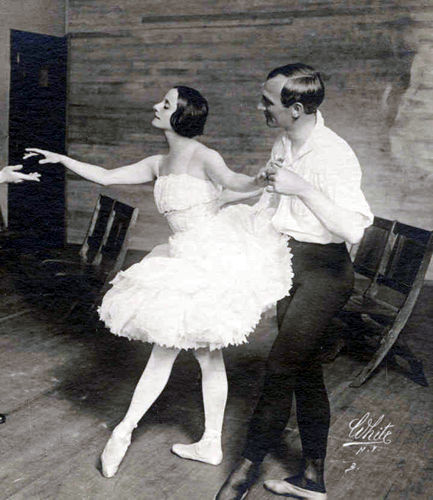
Two of the male stars of Diaghilev’s Ballets Russes in 1909 were Adolph Bolm (1884-1951) and Mikhail Mordkin (1880-1944). Bolm was a student at the Imperial School in St. Petersburg and Mordkin was trained at the Bolshoi, in Moscow. They both joined Diaghilev for his Paris season as leading dancers although they ranked above Nijinsky. Diaghilev made sure that the press wrote more about his young favorite.

mordkin_mikhail

Mikhail Mordkin graduated from the Bolshoi Ballet School in 1899, and in the same year was appointed ballet master. He joined Diaghilev’s ballet in 1909 as a leading dancer. After the first season he remained in Paris to dance with Pavlova. He then formed his own company, All Star Imperial Russian Ballet, which toured America in 1911 and 1912. Mikhail returned to the Bolshoi and was appointed its director in 1917. He left Russia after the October Revolution, first working in Lithuania, and finally settling in the United States in 1924. He founded the Mordkin Ballet in1926, for which he choreographed a complete Swan Lake and many other ballets. His company included such distinguished artists as Hilda Butsova, Felia Doubrovska, Pierre Vladimiroff, and Nicholas Zvereff. After a European tour the company disbanded in 1926. Mordkin continued to be a freelance artist and teacher. From among his students in America he formed a new Mordkin Ballet in 1937, the forerunner of Ballet Theatre (now American Ballet Theatre). His student Lucia Chase helped finance his company and after the first season of Ballet Theatre, she and Richard Pleasant took over the management from Mordkin because they thought his plans lacked ambition. Although he had been pushed into the background, Mordkin, like Bolm, helped build the foundation for ballet in America.

massine-leonide-laleggendadi-giuseppe

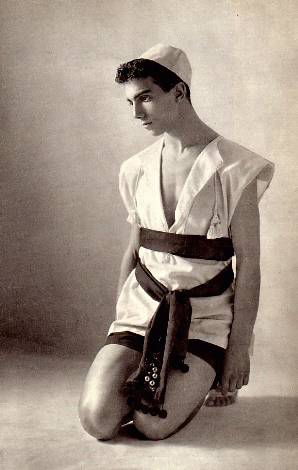
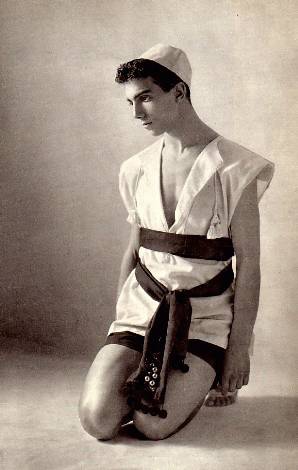
You may remember one of Diaghilev’s most famous dancers, Leonide Massine (1895-1979), because of his portrayal of the ballet master and shoemaker in the 1948 film The Red Shoes . Massine studied at the Moscow Bolshoi School, graduated in 1912 and joined the Bolshoi Ballet.

When Diaghilev fired Nijinsky after his marriage a void was left both in the ballet company, and Diaghilev’s life. Mikhail Fokine was working on a new ballet, The Legend of Joseph. While visiting in Moscow Diaghilev saw the Bolshoi Ballet, and noticed in Don Quixote and Swan Lake a handsome young man with big dark eyes who reminded him of St. George in an ikon. This was Leonide Massine not a particularly good dancer (with poorly shaped legs), but who had stage presence that would make him into a great star. Diaghilev became infatuated with Massine and persuaded him to leave the Bolshoi and join his company. It was understood that he would replace Nijinsky on and off the stage. Massine immediately began to work with the Ballets Russes’ teacher Enrico Cecchetti and was soon ready to star in Fokine’s new ballet.

Massine became an outstanding-actor dancer. Before joining the Ballets Russes, Massine had considered giving up dance and becoming an actor. He had even been offered the role of Romeo in Shakespeare’s play at the Maly Theatre in Moscow.

Massine joined the company in 1914 and by 1915 he had choreographed his first ballet for the Ballets Russes. To Diaghilev’s dismay Massine followed the same path as his predecessor and got married to the first of four wives in 1921. Diaghilev called him an ingrate, saying, “Nothing but a good-looking face and poor legs.” Massine continued to choreograph for every major company including three years as lead dancer and choreographer for the Roxy Theatre in New York City. In 1945 and 46 he formed his own company called Ballet Russe Highlights.

He was a prolific choreographer  he created 50 ballets. His greatest achievement is considered by many to be the development of the symphonic ballet as a separate art form.

To list all his ballets would take a whole page. A few are: The Good-Humored Ladies, La Boutique Fantasque, The Three Cornered Hat, Les Presages, Jeux d’enfants, and Gaîte Parisienne.

Massine was for twenty years considered the Western world’s greatest choreographer, but in later life he was overshadowed by George Balanchine .

http://ballets-russes.com

* The Ballet Rousses at Wang Theater Boston.Oh my god! I am speechless.Centenial Anniversary of Diaglev’s Ballet Company. Mikko, great job. What a surprise at the end Fire red costumes and real fire created a sensuous scenery. The illusion of 3D. A true CLASSIC.

AYRTON SENNA


“Meu principal objetivo é ser reconhecido no mundo do automobilismo como um bom profissional, ser visto como alguém que conquistou algo. Também quero que valorizem o esforço que aplico no meu trabalho” (1983)

“Eu quero ser um piloto de Fórmula 1 vencedor. Não quero competir por competir, vencer vai ser parte da minha filosofia” (1983)

“A Fórmula 1 é um salto muito grande para quem vem da F3 e preciso de tempo para me adaptar. Devo ter uma base sólida antes de uma possível mudança de categoria. Até agora tenho apenas três anos de experiência (na F3), porém conto com grande experiência nos karts. Tudo bem que tenho 23 anos, mas tenho tanta experiência como alguns pilotos de 30” (1983)

“Quando eu me tornar campeão não vou deixar de ser eu mesmo” (1984)


“Eu vi Deus, foi ele quem me guiou. Tive sinais que indicaram seus desejos e poder. Acima de tudo, seu poder de controlar o que está a sua volta, tudo. Algumas pessoas nunca têm a experiência que eu vivi, e não acreditam no que eu digo. Eu rezava, agradecendo a Deus que eu seria campeão mundial. Quando, concentrado ao máximo, eu fazia uma curva a 180 graus, eu vi uma foto dele, grande, ali, suspensa, subindo para o céu. Tudo isso ao mesmo tempo em que me concentrava, conduzindo o carro. Este contato com Deus foi uma experiência maravilhosa” (1988)

“A Xuxa gostava muito de sua profissão e não tínhamos tempo para estarmos juntos, por isso tivemos que nos separar” (1989)

“Antes de me aposentar, eu vou pilotar para a Ferrari” (1989)

“Tem provas que terminam faltando seis voltas e outras na primeira curva…” (sobre o acidente com Alain Prost no GP do Japão de 1990)

“Meu maior erro? acho que ainda não o cometi…” (1991)

“Deixar de correr porque é perigoso? Também posso ser atropelado” (1991)

“Nós corremos mais riscos que as pessoas de outras profissões e, por isso, sabemos lidar melhor com o medo” (1991)

“O sentimento de chegar quase ao seu limite é fascinante” (1991)

“Quando Deus quer algo, nada pode-se contra” (a alguns jornalistas depois da vitória em Interlagos, em 1991)

“Eu corro para disputar, não para ganhar dinheiro…” (diante da oferta da Ferrari para ter o piloto brasileiro, em 1992)

“Para a Williams, eu até correria de graça” (1992)

“Superstições? Não acredito nelas, só creio no trabalho” (1993)

“O que eu quero, acima de tudo, é voltar a pilotar um carro competitivo, que tenha possibilidade de ganhar e lutar pelo título. Não quero uma temporada como a de 1992. Quero ser competitivo” (1993)

“Ele não é um piloto, é um idiota” (em referência a Eddie Irvine por um incidente em Suzuka, em 1993)

“É o sonho da minha vida. Frank (Williams) foi o primeiro a me dar uma oportunidade na F1, em 1983, e agora, finalmente, estaremos juntos” (1993)

“Quero sair deste buraco em que me encontro. Creio que posso correr até o ano de 2000. Posso chegar, inclusive, ao pentacampeonato mundial, como Fangio” (1994)

“Ganhar uma corrida é um desafio muito maior do que ganhar US$ 1 milhão” (1994)

“Ceccoto, De Angelis, Dumfries, Nakajima, Berger, Andretti, Hakkinen: nunca tive nenhum problema com eles. Só tive problemas com um piloto (Prost)” (1994)

“Campeão mundial antecipado? É fácil dizer, mas esse ano está muito difícil” (1994)

BIOGRAPHY

Ayrton Senna da Silva, (pronounced [aˈiɾtõ ˈsenɐ da ˈsiwvɐ] (help·info), March 21, 1960 – May 1, 1994) was a Brazilian race car driver and three-time Formula One world champion. He died while leading the 1994 San Marino Grand Prix and is the most recent Grand Prix driver to die at the wheel of a Formula One car.

Senna began his motorsport career in karting and moved up the ranks to win the British Formula 3 championship in 1983. Making his Formula One debut with Toleman in 1984, he moved to Lotus-Renault the following year, and won six Grands Prix over the next three seasons. In 1988 he joined Frenchman Alain Prost at McLarenHonda. Between them, Senna and Prost won fifteen out of the sixteen Grands Prix which took place that season, with Senna winning his first World Championship, a title he would go on to win again in 1990 and 1991. McLaren’s performance declined in 1992, as the WilliamsRenault combination began to dominate the sport, although Senna finished runner-up in 1993. He moved to Williams in 1994, but suffered a fatal accident at the third race of the season at the Autodromo Enzo e Dino Ferrari in Italy.

Senna is regarded as one of the greatest drivers in the history of Formula One. He was recognised for his qualifying speed over one lap and held the record for most pole positions from 1989 to 2006. He was among the most talented drivers in extremely rain-affected conditions, as show by his performances in the 1984 Monaco Grand Prix, the 1985 Portuguese Grand Prix, and the 1993 European Grand Prix. He also holds the record for most victories at the prestigious Monaco Grand Prix (6) and is the third most successful driver of all time in terms of race wins.

Senna courted controversy throughout his career, particularly during his turbulent rivalry with Alain Prost, which was marked by two championship-deciding collisions at the 1989 and 1990 Japanese Grands Prix. Being competitive and unwilling to settle for second, Senna’s style consisted of pushing the car to its limits and going flat out, a stark contrast to the relaxed intellectual style of his nemesis Prost.  Senna’s aggression had inspired Michael Schumacher, another F1 great who idolized Senna and had who also courted similar controversy through his career.

BOSTON MARATHON 2009

JASON PISANO

img_0124

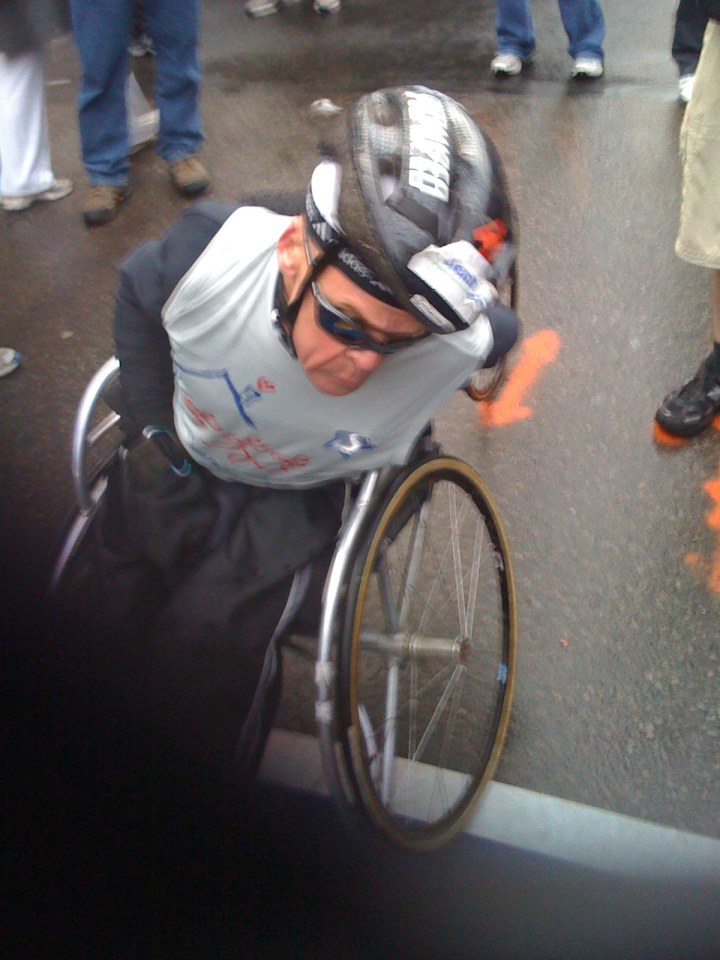
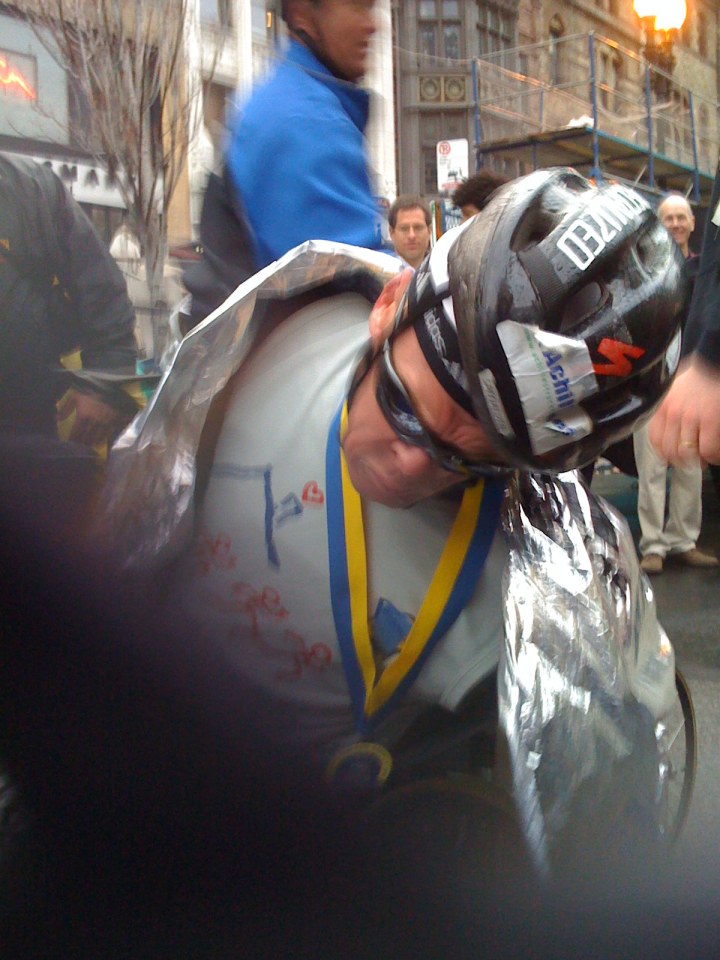
Jay Pisano Boston Marathon 2009

img_0127

 Hello, my name is Jason and I am 36 and I have Cerebral Palsy. I joined this site about two-and-a-half years ago. Before joining Lovebyrd I had never dated a physically challenged girl, but then it happened. I found a girl I connected with, but over time our personalities clashed and the fact that we live far apart eventually ended this relationship.

I thought I would give up on Lovebyrd and just go back to looking for relationships for myself, but then I decided to give this site one more try. One day early this fall I was just searching to see if any local girl joined the site that was “my type”. Sure enough there was a new member who joined and it said she was from the next town from me, but come to find out she currently lives in the virgin Islands and is awaiting housing here. Her name was Nina and she was very pretty and sounded like we had a lot in common. I immorally sent her a little note and a few days later she replied! From that day we have chatted and talked on the phone daily for the past four months. We really developed a close relationship.

Last week Nina and her wonderful came to Rhode Island to visit me for a week. We both were very nervous to meet face to face. We hoped the chemistry we had chatting would be as great as it was on the phone/computer. To our surprise we clicked even better than we ever expected. We were together the entire 7 days. We went shopping with her parents, out to eat with my friends, and even spent a cozy New Year’s Eve together just watching TV and talking at my house. To be honest I think that was one of the best weeks of my live.

I never thought I could ever be so in love with a woman with a disability. I hope in the not to off future to ask Nina to get engaged. I know we will have our struggles and we will not be rich but I feel our love for each other will help us overcome all the obstacles!

I love you Nina and thanks Mr. and Mrs. Garcia for accepting me as I am!

Jason Pisano.

http://teampisano.blogspot.com/


* I have being blessed to be at Boylston Street, with my friend Diane. Jason was about to cross the finish line. I cannot describe my emotions as my tears were rolling down my eyes. From time to time, we have these encounters with these so-called special beings. I had my encounters. Jason thank you, for being so special. It was a pleasure meeting you. Success!

FUELING UP

 By Inside Track  |   Tuesday, April 21, 2009  |  http://www.bostonherald.com  |  The Inside Track


Photo
Photo by Matthew Healey

While 26,386 Boston Marathoners braved blisters, cramps and dehydration during their self-imposed 26.2-mile trek to Copley Square yesterday, hundreds of Hub boldfacers partied ’til the last soul crossed the finish line.

And wasn’t that nice of them?

The new entry into race route parties this year was the swish Mandarin Oriental hotel on Boylston Street where GM Susanne Hatje hosted Red Sox [team stats] big guns John Henry and Tom Werner, who popped in after the team took its fourth game from the Orioles 12-1; Bryan Koop of Boston Properties; Mass Sports Partnership chief Paul Foster; Union Oyster House honcho Joe Milano and Mandarin man Richard Baker who flew in from the Left Coast for the foot-race festivities.

Over at PR princess Marlo Fogelman’s shop in the 600 block of Boylston, she broke out the Narragansett beer, shrimp cocktail and lobster sliders from Eastern Standard and whoopie pies from Baker’s Best at her third-floor digs.

On hand for the Marlo madness were real estate guy Mark Goldweitz and his wife, Joyce; Boston Music Awards ace Chip Rives; high-flying Cape Air gal Michelle Haynes; city events cheese Tony Nunziante; Nokona Brand mainman Josh Fink; XV Beacon GM Amy Finsilver; actor/bon vivant Richard DeAgazio and many, many more.

At Abe & Louie’s, “TV Diner” host Billy Costa and rival “Phantom Gourmet” foodie Dan Andelman toasted the runners with Boston Common publisher Glen Kelley and car czar Herb Chambers at a bash thrown by Mercedes Benz .

Then, across the street, there was a smattering of names and faces who gathered on the windy rooftop at the Lenox Hotel for what was billed by the Saunders Family as “the Longest Running Party.”

Spotted amongst the crowd schmoozing Jeff, Tedd and Todd Saunders were: New England Patriots [team stats] linebacker Tedy Bruschi [stats]; Boston City Councilor and mayoral candidate Sam Yoon; state Sen. Sonia Change Diaz; hair honchess Adriana Sassoon; State Room sweeties Jim and Alina Apteker; Boston Ballet artistic director Mikko Nissinen; attorney Tom Dwyer; Newsie Janet Wu; and a few Maggie Inc. models.

Cheers to all!

Article URL: http://www.bostonherald.com/track/inside_track/view.bg?articleid=1166991

BONE MARROW TRANSPLANT

 Marrow types

Section through the femur head, showing the cortex, the red bone marrow and a spot of yellow bone marrow. The white bar represents 1 centimeter.

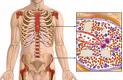
There are two types of bone marrow: red marrow (consisting mainly of myeloid tissue) and yellow marrow (consisting mainly of fat cells). Red blood cells, platelets and most white blood cells arise in red marrow. Both types of bone marrow contain numerous blood vessels and capillaries.

At birth, all bone marrow is red. With age, more and more of it is converted to the yellow type. About half of adult bone marrow is red.  Red marrow is found mainly in the flat bones, such as the hip bone, breast bone, skull, ribs, vertebrae and shoulder blades, and in the cancellous (“spongy”) material at the epiphyseal ends of the long bones such as the femur and humerus. Yellow marrow is found in the hollow interior of the middle portion of long bones.

In cases of severe blood periods, the body can convert yellow marrow back to red marrow to increase blood cell production.


 Stroma

The stroma of the bone marrow is all tissue that isn’t directly involved in the primary function of hematopoiesis. The yellow bone marrow belongs here, and makes the majority of the bone marrow stroma, in addition to stromal cells located in the red bone marrow. Yellow bone marrow is found in the Medullary cavity.

Still, the stroma is indirectly involved in hematopoiesis, since it provides the hematopoietic microenvironment that facilitates hematopoiesis by the parenchymal cells. For instance, they generate colony stimulating factors, affecting hematopoiesis.

Cells that constitute the bone marrow stroma are:

Macrophages contribute especially to red blood cell production. They deliver iron for hemoglobin-production.


 Bone marrow barrier

The blood vessels constitute a barrier, inhibiting immature blood cells from leaving the bone marrow. Only mature blood cells contain the membrane proteins required to attach to and pass the blood vessel endothelium.

Hematopoietic stem cells may also cross the bone marrow barrier, and may thus be harvested from blood .

 Stem cells

The bone marrow stroma contain mesenchymal stem cells (also called marrow stromal cells). These cells are multipotent stem cells that can differentiate into a variety of cell types. Cell types that MSCs have been shown to differentiate into in vitro or in vivo include osteoblasts, chondrocytes, myocytes, adipocytes, and, as described lately, beta-pancreatic islets cells. They can also transdifferentiate into neuronal cells.


 Compartmentalization

There is biologic compartmentalization in the bone marrow, in that certain cell types tend to aggregate in specific areas. For instance, erythrocytes, macrophages and their precursors tend to gather around blood vessels, while granulocytes gather at the borders of the bone marrow.


 Types of stem cells

Bone marrow contains three types of stem cells:


 Diseases involving the bone marrow

The normal bone marrow architecture can be displaced by malignancies or infections such as tuberculosis, leading to a decrease in the production of blood cells and blood platelets. In addition, cancers of the hematologic progenitor cells in the bone marrow can arise; these are the leukemias.

To diagnose diseases involving the bone marrow, a bone marrow aspiration is sometimes performed. This typically involves using a hollow needle to acquire a sample of red bone marrow from the crest of the ilium under general or local anesthesia. The average number of cells in a leg bone is about 440,000,000,000.

Exposure to radiation or chemotherapy will kill many of the rapidly dividing cells of the bone marrow and will therefore result in a depressed immune system. Many of the symptoms of radiation sickness are due to damage to the bone marrow cells.


 Examination

A Wright’s stained bone marrow aspirate smear from a patient with leukemia.

Bone marrow examination is the pathologic analysis of samples of bone marrow obtained by bone marrow biopsy and bone marrow aspiration. Bone marrow examination is used in the diagnosis of a number of conditions, including leukemia, multiple myeloma, anemia, and pancytopenia. The bone marrow produces the cellular elements of the blood, including platelets, red blood cells and white blood cells. While much information can be gleaned by testing the blood itself (drawn from a vein by phlebotomy), it is sometimes necessary to examine the source of the blood cells in the bone marrow to obtain more information on hematopoiesis; this is the role of bone marrow aspiration and biopsy.


 Donation and transplantation of bone marrow

Bone marrow harvest

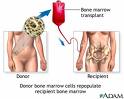
It is possible to take hematopoietic stem cells from one person and then infuse them into another person (Allogenic) or into the same person at a later time (Autologous). If donor and recipient are compatible, these infused cells will then travel to the bone marrow and initiate blood cell production.

Transplantation from one person to another is performed in severe cases of disease of the bone marrow. The patient’s marrow is first killed off with drugs or radiation, and then the new stem cells are introduced.

Before radiation therapy or chemotherapy in cases of cancer, some of the patient’s hematopoietic stem cells are sometimes harvested and later infused back when the therapy is finished to restore the immune system.

The Anthony Nolan Trustplays a vital role with regards to finding donors. They connect one person, whose immune system needs a boost – with another person, who is prepared to share a little of theirs. Matching patients with donors.

Harvesting

The stem cells are harvested directly from the red marrow in the crest of the ilium, often under general anesthesia. The procedure is minimally invasive and does not require stitches afterwards. Depending on the donor health and reaction to the procedure, the actual harvesting can be an outpatient procedure or requiring 1-2 days of recovery in the hospital. Another option is to administer certain drugs that stimulate the release of stem cells from the bone marrow into circulating blood. An IV is inserted into the donor’s arm, and the stem cells are filtered out of the blood. The procedure is similar to donating blood or platelets.

It may also be taken from the sternum. The tibia may seem a good source, since it is very superficial. However, except in children, this bone marrow doesn’t contain any substantial amount of red bone marrow, but rather only yellow bone marrow.

In newborns, stem cells may be retrieved from the umbilical cord.


 Bone marrow as a food

Many cultures utilize bone marrow as a food. The Vietnamese prize bone as the soup base for their national staple phở; Alaskan Natives eat the bone marrow of caribou and moose; Indians use slow-cooked marrow as the core ingredient of the Indian dish Nalli Nihari; Mexicans use beef bone marrow from legs bones, called tuetano, which is cooked and served as filling for tacos or tostadas; it is also considered to be the highlight of the Italian dish ossobuco (braised veal shanks). Though once used in various preparations, including pemmican, bone marrow for human consumption in the United States has recently fallen out of favor as a food.

One fan of this delicacy is noted chef and author Anthony Bourdain, who has stated that if he were on death row, his last meal would consist of bone marrow. He considers the delicacy to be his number-one comfort food.

Bone marrow is a source of protein and high in monounsaturated fats.[citation needed] These fats are known to decrease LDL cholesterol levels resulting in a decreased risk of cardiovascular disease, prompting some to make bone marrow a dietary staple. The actual health effects of the addition of bone marrow to the diet remain unclear.[citation needed]

Diners in the 18th century used a marrow scoop (or marrow spoon), often of silver and with a long thin bowl, as a table implement for removing marrow from a bone.

Some anthropologists believe that early humans were scavengers rather than hunters. Marrow would then have been a major protein source for tool using hominids, who were able to crack open the bones of carcasses left by top predators such as lions.


http://massgeneral.org/cancer/services/treatmentprograms.aspx?id=1181

http://www.nature.com/bmt/index.html

MIKKO NISSINEN

backtalk_mikko_ericantoniou

Mikko Nissinen (born March 4, 1962) is a Finnish ballet dancer. He has danced with the Dutch National Ballet and San Francisco Ballet. He is currently the Artistic Director of Boston Ballet, a position he has held since 2002.

Born and raised in Finland, Nissinen started his training at age ten with the Finnish National Ballet School, continuing his studies at the Kirov Ballet School. His primary teachers were Jacobson, Damianov, Sokolov, and Terasveori. In 1978, he won First Prize at The National Ballet Competition in Kuopio, Finland. Launching his professional dance career at the age of fifteen, Nissinen went on to perform with the Dutch National Ballet, Basel Ballet and San Francisco Ballet, where he was Principal Dancer for nine years. After retiring from his performing career, he was Artistic Director for Marin Ballet and Alberta Ballet before coming to Boston.

VIDEOS