Apesar de ser originária na China, foi no Japão que o Shiatsu se tornou a terapia corporal do modo como é conhecida hoje. Ideal para tratar dores no pescoço, costas e joelho, a massagem utiliza o toque das mãos para reequilibrar a energia vital que circula pelo corpo em canais chamados de meridianos.
Shiatsu é derivada do japonês e quer dizer “pressão dos dedos” (SHI significa “dedo” e ATSU “pressão”). Tem uma abordagem terapêutica semelhante à usada na acupuntura e além da sua eficácia no tratamento de dores e mal-estar físico ou psicológico, o Shiatsu é tem também um efeito preventivo.
A terapia é baseada na medicina oriental, que acredita que da mesma forma que o homem recebe a energia positiva da terra, o Yin, também está relacionado à energia negativa do cosmos, o Yang. Para o Shiatsu, os pontos doloridos no nosso corpo são, portanto, resultado do desequilíbrio entre os dois pólos energéticos, causando bloqueio de energia vital e dor.
Por isso a massagem utiliza pressão, ficção e movimentação de articulações e estruturas musculoesqueléticas, entre outras técnicas, a fim de promover a circulação da energia obstruída. O Shiatsu pode ser aplicado em pessoas de qualquer idade e não apresenta efeitos colaterais, desde que feito corretamente.
A massagem de drenagem linfática manual é um método de massagem altamente especializado, realizado com pressões suaves, lentas, intermitentes e relaxantes, que seguem o trajeto do sistema linfático (Awada, 2003), mobilizando a linfa até os gânglios linfáticos. (Garcia, 2004). Ela drena o líquido acumulado em determinadas regiões, melhorando a circulação e a oxigenação desse tecido, seja abdome, coxa, glúteos, etc. (Bassalobre, 2004).
A drenagem linfática pelo método Dr. Vodder utiliza pressões graduadas e constantemente alteradas, imitando as contrações próprias da musculatura lisa dos vasos linfáticos e acompanhando o ritmo dos mesmos; objetivando diretamente o aumento do volume de linfa admitido pelos capilares linfáticos e o aumento da velocidade de seu transporte através dos vasos e ductos linfáticos.
A linfa desempenha um importante papel no transporte de algumas substâncias, ajuda a eliminar o excesso de líquido e produtos que deixaram a corrente sangüínea, tendo ação imunológica, isto é, a linfa é enriquecida por anticorpos, funcionando como uma verdadeira “lixeira” do organismo. Quando o sistema circulatório e/ou linfático não cumpre corretamente suas funções, o corpo fica sobrecarregado por excesso de líquido que não consegue absorver. Na maioria dos casos, esse fenômeno se traduz por sintomas como celulite, retenção de líquidos, peso nas pernas e aparecimento de edema (inchaço), mais conhecido como linfedema. (Bassalobre, 2004).
O surgimento de edema está ligado à circulação linfática, seja diretamente em conseqüência do aumento do aporte líquido ou, indiretamente, em conseqüência de uma patologia linfática específica.
Em pessoas sedentárias ou com uma alimentação muito tóxica, a linfa é mais espessa e o fluxo se torna mais lento, levando a formação de edemas, celulites e até uma baixa imunológica geral.
As manobras de drenagem linfática exercem influência sobre algumas estruturas e funções biológicas, direta e indiretamente, tais como estimula a contração da musculatura lisa dos vasos linfáticos, aumenta a velocidade de transporte da linfa, aumenta a capacidade de processamento da linfa no interior dos gânglios linfáticos, melhora as condições de absorção intestinal, melhora a atuação do sistema nervoso vegetativo, aumenta a captação de oxigênio pelos tecidos, fornece a nutrição celular pelo maior aporte sangüíneo, fornece a eliminação dos produtos finais resultantes do metabolismo tecidual, aumenta a absorção dos nutrientes e princípios ativos através do trato digestivo, aumenta a quantidade de líquidos a serem eliminados.(Winter, 1973).
Em conseqüência de todos estes fenômenos temos o aumento do grau de hidratação e nutrição da célula, aumento da velocidade de cicatrização de ferimentos pelo aumento da vascularização arterial e venosa, aumento da capacidade de absorção de hematomas e equimoses, melhora do retorno de sensibilidade em cirurgias plásticas, diminuição de retenção de líquido nos tecidos prevenindo a formação de celulites, produz relaxamento. (Bassalobre, 2004).
A drenagem linfática manual é indicada em linfedema primário e secundário, celulite, linfedema de braço posterior a mastectomia, edema pós-operatório e pós- traumáticos, problemas circulatórios, pós-cirurgia plástica, pós-lipoaspiração, sinusite, rinite e otite, enxertos, varizes e pernas cansadas, edemas da gravidez e síndrome pré-menstrual, enxaquecas, artrose, artrite e gota, tendinite;tratamento de acne e rosácea, envelhecimento cutâneo.(Winter, 1973; Guirro, 2000)
As contra-indicações são trombose venosa profunda, tromboflebites, erisipela,infecção aguda, neoplasias malignas e diagnosticadas em atividade, insuficiência cardíaca congestiva (descompensada), história de hipertensão arterial e sintomas vagotômicos, asma brônquica de evolução grave e crises freqüentes, arteriosclerose em processo avançado, hipertireoidismo.(Winter, 1973; Guirro, 2000).
O lançamento do programa associativo não governamental Viva Mundo do Instituto Triangulo que ocorreu no buffet Parmênion movimentou Santo André.
O objetivo do Vivamundo é o desenvilvimento sustentável através da mobilização no ambiente urbano com campanhas de mobilização incorporando atitudes sutentaveis em casa, na escola e no trabalho.
A coordenação do Intituto Triangulo tem a liderança de Eduardo Shiguemi Maki que é filho de Hanji Maki e sobrinho dos irmãos Hiroyuki e Issao Minami.
Eduardo é pioneiro no programa de reciclagem de óleo vegetal usado desde 2003, contribuindo para que toneladas deste residuo não seja jogado na rede de esgotos das cidades.
O lançamento do projeto foi prestigiado por ínumeras lideranças ambientalistas dentre os que se destacam pelo seu trabalho em prol da qualidade de vida da região do ABC e de São Paulo.
Because we are killing it!How does it make you feel?
Please post your comments……………
RE:flection
” IF OUR OCEANS DIE WE WILL BE NEXT ! ” AKS.
California Coastal Commission in San Francisco
Chris Parry with the California Coastal Commission in San Francisco said the so-called Great Pacific Garbage Patch, has been growing a brisk rate since the 1950s, The San Francisco Chronicle reported Friday. The trash stew is 80 percent plastic and weighs more than 3.5 million tons. “At this point, cleaning it up isn’t an option,” Parry said. “It’s just going to get bigger as our reliance on plastics continues.” Parry said using canvas bags to cart groceries instead of using plastic bags is a good first step to reducing reliance on plastics, the newspaper said.
What is the state of the ocean today?
It’s actually very bad. It’s probably worse in many ways than the state of conservation on land, but we don’t think about it because we don’t live in it.
Basically it comes down to what we put into the atmosphere and ocean and what we take out of the ocean. What we put into the atmosphere is carbon dioxide, which makes the ocean hotter. And when it dissolves in the oceans themselves, it makes them more acidic. From the land, you’re getting all this runoff into the oceans—vast amounts of nutrients associated with excess fertilizer, pesticides, industrial waste, waste from cars and city streets. There’s a lot of stuff that fertilizes the ocean and causes bacteria and other slimy stuff to proliferate, plus things that actually poison the ocean.
We also have the massive scale of fisheries. We’re pulling out the tops of the food chain. Most of the big fish in the ocean are already gone. We’ve also strip-mined the bottom of the sea floor with trawls.
We’ve basically created a massive disturbance to the ocean, which is resulting in collapsing ecosystems, failing fisheries, toxic blooms.
When did scientists realize the damage we’re causing the ocean?
In the last 50 years, things have really deteriorated. People have had some impact for a long time, but the ocean can suffer a certain amount of assault from human activity and not have a major problem with it. Now everything is increasing. Carbon dioxide is increasing dramatically. Industrial fisheries, since about the 1950s, have increased dramatically.
We’re starting to really reach what people sometimes call a “tipping point,” where whole ecosystems slip into much, much less desirable states. For example, many coral reefs around the world have gone from coral reefs to a rubble bottom covered with seaweed, with very little living coral. That’s happened place after place after place.
The ocean is so big that most of the ocean bottom has never even been examined, and we’re destroying it. Even presumably well-known marine creatures are not nearly as well-known as we think they are. For example, it’s only in the last 20 years that we found out that common mussels that we used to think were one species are actually three species. Turns out there are multiple species of killer whales, not one. And there are vast numbers of species that have never been catalogued or described.
How will these changes affect the planet?
The oceans provide a lot of important things to people. In many places, seafood is the most important high-quality protein. A lot of countries, the United States included, depend on coastal activities for tourism. A big chunk of the world’s population—somewhere close to 50 percent—lives close to the oceans. So when the oceans don’t work the way they should, there are all sorts of impacts economically and also aesthetically. When beaches are closed due to toxic blooms, it has an economic impact, and it diminishes people’s quality of life.
And the idea that people could have such a devastating impact that they rival the effects of an asteroid hitting the planet, in terms of extinction and ecosystem collapse, is upsetting, even apart from the strictly dollars and cents issue.
What can people do to save the ocean?
You can reduce your ecological footprint. If everyone individually were to really take serious steps in terms of energy conservation, we wouldn’t solve the CO2 problem, but we’d make an important contribution.
It’s not just what we can do ourselves. If the United States takes CO2 seriously, we’ll pave the way for other countries to do it.
You can also support industries that are environmentally progressive.
What will happen if changes aren’t made?
A lot of the damage has already been done. Every year in the Gulf of Mexico, there’s a giant dead zone that forms. The North Atlantic cod collapse cost a fortune in lost jobs in northern New England and Canada, and it’s never really recovered. Without action, it’s all going to keep getting worse. More fisheries are going to collapse. The beaches will be unusable. It’s pretty bad. We have to do something.
What species are in the most trouble?
There’s real concern the white abalone could go extinct. The same goes for some shark species, some species of marine mammals and some corals. Once things get really rare, males and females can’t find each other to mate. So even though there a few individuals left, they don’t reproduce and eventually the population dwindles to extinction. Or, if things really get rare, other things take their place, so it’s harder for them to build back up in the ecosystem.
Are there any ocean conservation success stories?
There are lots of waterways that are being cleaned up. Also, there are more marine protected areas, which are a big tool we have to manage things effectively. One-third of the Great Barrier Reef is now a no-take marine reserve. Similarly, the Northwest Hawaiian Islands have been brought into a major reserve system. And California now has a new reserve system. So people are really starting to effectively protect marine areas, which I think is probably one of the most important things we can do for the short term.
There’s a lot to be done still. Some fisheries have started to come back, and some fisheries are much better managed than they used to be. It’s slow getting people to do things, so the first step is for people to realize the problem. The public awareness of issues associated with climate change has increased enormously in the last five years. But that’s the first step. Just being aware of the problem isn’t going to solve it.By Cate Lineberry
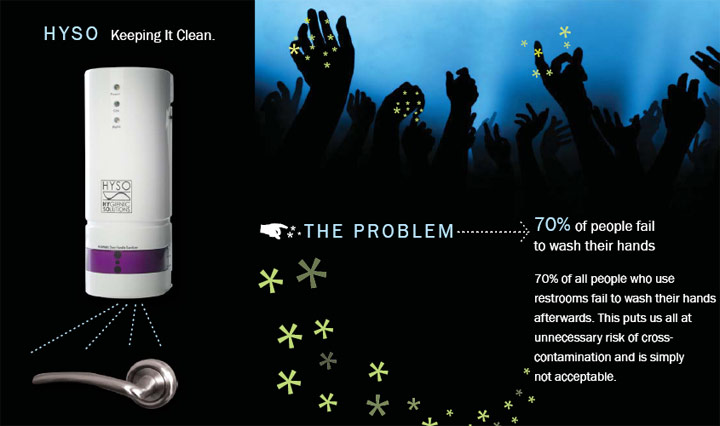
Abro o The New York Times e descubro que um certo Simon Sassoon de Nova York está ganhando a maior grana com o seguinte produto: um desinfetante de maçanetas de portas de banheiro. Trata-se de um aparelhinho que fica borrifando desinfetante hospitalar na maçaneta. Aparentemente, as pessoas morrem de nojo de encostar em maçaneta de porta de banheiro em restaurante, escola, escritório, etc.
Outro produto muito vendido, diz o diário, é uma alça portátil, para que você não precise encostar naquelas barras do metrô ou ônibus. Naquelas onde TODO mundo segura, eca….
Mas o meu favorito é um chamado Excuse Me – trata-se de uma bandeira com uma hastezinha, que a pessoa fixa na cintura. Se alguma pessoa se aproxima demais de você, leva uma bandeirada na cara – “O Excuse Me cria um espaço de 90 centímetros entre você e um possível espirro”, esclareceu ao NYT a criadora do artefato, Emily Beck. “O produto permite que você não tenha que encostar em ninguém e nem falar com ninguém em Nova York.” Presente perfeito para misantropos e hipocondríacos – ou talvez para altruístas que têm mau hálito e não querem que a humanidade sofra.
Os Estados Unidos são uma nação com fobia de micróbios. Trata-se de uma enorme aglomeração de Monks (aquele detetive obsessivo-compulsivo, que passa a vida limpando tudo, da série homônima de TV a cabo). Eles já têm teoria de conspiração para tudo, os hackers das urnas eletrônicas (culparam até o Chávez), o assassino do John Kennedy, a mídia sionista….e também os fungos, vírus e bactérias terroristas…. estão todos à espreita….os germes e o bin Laden querem te pegar…..
Eu já tinha vivido essa histeria anti-germes antes. Morei com uma colega de quarto da Pensilvânia que tinha verdadeiro pânico de infecções variadas. Ela desinfetava tudo a cada cinco minutos. Depois do 11 de setembro, quando houve a ameaça de antraz, eu fiquei encarregada de abrir toda a correspondência por meses – ela tinha certeza de que todas as cartas estavam contaminadas.
E ela me contou – depois descubro que é bastante comum por aqui, segundo o NYT –
que enrolava o dedo em papel higiênico antes de apertar a descarga.
Veio-me à cabeça uma palavra interessante: anal retentive, ou seja, indivíduo que tem retenção anal. Eh, parece um pouco rude, mas as pessoas falam isso aqui, normalmente: Fulano, você é anal! A origem é de fato psicanalítica. Segundo o Webster, uma pessoa anal tem fixação na fase anal, e, como conseqüência, é metódica, com mania de limpeza, compulsiva.
I think we’ve gone a little too far when we feel the need to have our doorknobs automatically sanitized every 15 minutes to feel clean.
SIMON SASSOON saw the future in a dream. Mr. Sassoon, a former watch designer, dreamed he was standing in a women’s public restroom, which his hygiene-conscious girlfriend had just left. Attached to the door above the knob was a white plastic box.
As Mr. Sassoon’s dream self watched, the box made a gushing sound. Out from the bottom sprayed a fine dry mist, which bathed the metal knob and killed every germ on it.
The girlfriend is now an ex, but two years and $250,000 of investment capital later, the HYSO, an acronym for Cantonese words meaning “happy hands,” is starting to roll off production lines. Mr. Sassoon, 49, a nephew of the hairdresser Vidal Sassoon, is betting there is a vast and rapidly expanding market for a $60 device that sprays a hospital-grade disinfectant on doorknobs every 15 minutes.
I sure hope this spray dries quickly because I’m not real keen on touching wet doorknobs, regardless of what the fluid is.
For this and other crazy sanitary gadgets, go here . . .
By Dr. Chitti Moorthy -Director, Departments of Radiation Medicine and Radiology,
New York Medical College, Valhalla , NY
The cause of cancer lies deep within the building blocks of a person’s cells (genes and DNA). If these blocks become disorganized, cancer may develop.
Some forms of cancer may be inherited; they are passed down from parents to their children. For example, if a woman has close family members who have had breast cancer, she is more likely to get breast cancer.
Some cancers are caused by outside factors. For example, anyone who smokes is more likely to get lung throat or mouth cancer.
A tumor is a mass of abnormal cells. Tumors are either benign or malignant. Benign tumors usually grow very slowly and generally do not spread. Doctors can remove most of them. In the beginning, cancerous (malignant) tumors, usually stay in the organ where the cancer started. This is called localized disease. As cancers continue to grow, they are more likely to spread, or metastasize into the lymph nodes. This is called regional disease. When the cancer spreads beyond the nearby lymph nodes it is called distant disease. The more advanced the cancer (the more the cancer has spread) the more difficult it is to control or cure.
Doctors usually cannot tell if a tumor is cancer until a biopsy test is done. A tiny piece of tissue is removed with a needle or by surgery. A special doctor called a pathologist studies the tissue under a microscope to see if it is cancer. Often, more tests are done on the tissue if it is cancer. These tests let the doctor know more about the cancer. This information guides treatment. The pathologist might “grade” cancer from one to four. Grade one tumors have cells that look very similar to normal cells. Grade four tumors have cells that look very different from normal cells. Higher grade tumors are more likely to grow and spread.
Tumors also are “staged” to indicate the extent of the tumor. For example, tumors may be “called” stage one to stage four. The oncologist stagers a tumor based on the pathology report and other tests. Patients with the same stage and type of cancer have similar treatment in general, the higher the stage of cancer the more difficult it is to treat.
There are hundreds of different types of cancer. They are identified by the type of body tissue involved or by the body part involved. The major classifications of cancer are:
Carcinoma is a malignant tumor found in the outermost covering or lining of body surfaces or organs. These tumors are found on the skin, in the mouth and throat, stomach and bowel, or in organs like the breast, prostate, colon, lung or bladder.
Sarcoma is a malignant tumor found in connective tissues such as bone, muscle and cartilage.
Leukemia is a malignant disease found in bone marrow and other blood forming organs.
Glioma is cancer in the brain, spinal cord or nerves.
Lymphoma is a malignant tumor of the lymph glands or other lymphatic tissues.
“Treating” cancer is one of the most lucrative business on earth.
For years, cancer has been called a “mystery.”
After spending billions of dollars over many decades, the medical establishment claims not to know the cause of cancer, not to understand its nature, and can only offer expensive and invasive treatments like radiation and highly toxic drugs to treat it.
The strikes me as willful stupidity that conveniently happens to generate many billions of dollars each year that is spread out annually among many tens of thousands of employees of the cancer industry.
Water is a network of hydrogen-bonded molecules. It can form numerous structures, depending on how the individual molecules bond together.The most recent scientific findings indicate that biological organisms prefer the six-sided (hexagonal) ring-structure, found naturally in snow water.
This Hexagonal Water forms a liquid crystalline lattice that is involved in cellular communication, intracellular water movement, enzyme function and many other metabolic processes.
The amount of Hexagonal Water in the body has been correlated with aging. It has also been found to form the initial layer of water surrounding healthy cells. On the other hand, unorganized water has been described surrounding diseased and abnormal cells.
As shown above, Hexagonal Water is composed of six individual molecules of water, held together by common hydrogen bonds. This unique water structure is capable of rapid penetration within the cells of the body. Most tap water and bottled water is composed of large water conglomerates which are too large to move freely into the cells. It must be re-structured within the body to penetrate the cells (a time-consuming and energy-consuming process).
For many years, Dr. Mu Shik Jhon has known that the regular consumption of Hexagonal Water could provide innumerable health benefits.
Measurement of Hexagonal Water Structures and Determination of Healthy Cells One of the tools Dr. Mu Shik John used extensively in his research of hexagonal water is Nuclear Magnetic Resonance (NMR). NMR has the ability to measure molecular size and has been recently employed to determine the structure of the water inside the body.Dr. Jhon clearly demonstrates that the NMR spin lattice relaxation time of the protons in healthy cells is different from that of unhealthy cells.
The scientific consensus of those scientists familiar with cellular water structure and NMR is that the water environment surrounding unhealthy cells is less structured and thus able to move more freely than the water environment around healthy cells.
According to Dr. Jhon’s (and other researchers), hexagonal water forms a protective layer immediately around healthy proteins. This same type of protection does not exist around unhealthy proteins in the body.
What is Hexagonal Water? Hexagonal Water
is a specific arrangement of individual water molecules where 6 H2O units consistently link to form a ring-like structure. This unique arrangement is the basis of a more complex crystalline network that is formed when numerous hexagonal units join together.All water contains a certain percentage of hexagonalunits – some sources more than others. The percentage of hexagonal units appears to depend on a number of factors, including the energetic influences that water is exposed to. For example: chlorine, fluoride and many pollutants typically found in municipal water sources reduce the number of hexagonal units. Tap water typically has a very low percentage of hexagonal structures.
On the other hand, there are a number of places throughout the world where the water has a high concentration of hexagonal structures. Many of these places are known as “healing springs.” Others are known for producing inhabitants that live long and disease-free lives.
How do we know when water is hexagonally structured?
Nuclear Magnet Resonance (NMR) is one of very few methods that can verify molecular size. NMR analysis shows that ordinary tap water is composed of large molecular units (between 12 and 20 individual H2O units). These unorganized molecular conglomerations are not nearly as supportive of biological functions as Hexagonal Water is now being shown to be.
Hexagonal Water moves easily into the cellular environment
There is significant evidence that Hexagonal Water moves within biological organisms with greater ease. It appears to enhance nutrient absorption and the removal of metabolic wastes. (Many who consume Hexagonal Water report a cleansing reaction within days or weeks.) This may be due to the smaller size of the molecular unit and its ability to enter and exit the cellular environment with greater ease. It may also be due to the specific organization of the hexagonal network which appears to enhance cellular communication and to support other structures within biological organisms. For example: according to The Water Puzzle, Hexagonal Water is found surrounding healthy DNA, whereas unorganized water is found surrounding the DNA of diseased tissue.
Hexagonal Water enhances metabolic efficiency There is also evidence that Hexagonal Water activates enzymes to a greater degree than ordinary water – and that it enhances metabolic efficiency.
The Water Puzzle
Dr. Jhon explains why Hexagonal Water is energetically more powerful and why it has the capacity to improve metabolic efficiency. According to his book, Hexagonal Water has the capacity to perform more work and to transfer a greater amount of energy within the body.
Hexagonal Water decreases as we age We know that the total amount of water within the human body decreases as we age, but it is also being shown that the amount of Hexagonal Water decreases as well. In one significant study conducted in Japan, Magnetic Resonance Imaging was used to show that the amount of structured water in the body is directly correlated with age. This same study presents evidence that biological molecules require structured water in order to perform their functions. According to the paper, when biological molecules are found in unstructured water, they are just compounds – they have a decreased ability to perform their intended functions.
HUMAN PAPILLOMA VIRUS (HPV) *HPV infection is a sexually transmitted viral disease effecting primarily the cervix, but also the male genitalia, oral cavity, and esophagus D’Souza G, 2007). Viral changes in cervical cells can often be detected on routine Pap tests. The virus is more commonly seen in anemic younger women (>30 years old), contraceptive hormone users, smokers, alcohol users, the poor, during late pregnancy, and in periods of low immunity (Moreno V, 2002, Santos C, 2001, Broker TR, 2001, Thomson SW, 2000). *HPV has been found in association with low folic acidand antioxidant micronutrient status (Hernandez BY, 2003, Kwasniewska A, 2002 & 1997, Harper JM, 1994). Folic acid has been shown to have a protective effect against the development of HPV, and improving folate status in people at risk of getting infected or who are already infected may have a beneficial impact in the prevention of cervical cancer (Piyathilake CJ, 2004). *Many cases of HPV resolve on their own but certain strains, such as HPV-16, 18, 30, 33, and 45, are considered more aggressive and may lead to cervical cancer. HPV-DNA testing has shown that virtually all cervical cancers test positive for HPV with over 90% of them testing positive for HPV-16, 18, and 45(Munoz N, 2003, Ngelangel C, 1998). Women who are HIV positive are particularly vulnerable to HPV and often have unrelenting reoccurrences that quickly progress to invasive cervical cancer (Lee YC, 2000). HPV is so common in HIV positive women, it is now listed as an AID’s defining illness. HPV is at epidemic proportions, although early detection through Pap tests is helping to reduce its occurrence and deaths from cervical cancer worldwide (Lambert EC, 2001). Cervical cancer kills approximately 300,000 women worldwide. Recent studies have also strongly linked certain strains of HPV, especially HPV-16, with the pathogenesis of squamous cell carcinoma of the throat in both men and women (D’Souza G, 2007). *A major breakthrough in the prevention of cervical cancer has recently been made as there are now two approved vaccines, Gardasil and Cervarix, that will provide substantial protection against the most common high risk types of HPV (HPV16 and 18, which cause about 70% of cervical cancers, and HPV 6 and 11, which cause approximately 90% of genital warts) in girls and young women (9-26 years of age) who have not yet been exposed to the virus. While the vaccines provide almost 100% protection against the above four HPV strains, they may increase the risk of developing lesions that lead to cervical cancer in women already exposed to the virus. Therefore, the vaccines are not recommended for women who test positive for HPV-DNA. Furthermore, the vaccines do not protect against less common strains of HPV that may lead to cervical cancer such as HPV-30 and HPV-33 so regular Pap tests will still be required to detect precancerous changes in the cervix to allow treatment. The effectiveness of the vaccines are thought to be only for about 3 1/2 years so a booster may be required after that time. It has been estimated that the full effect of these vaccines against HPV in the general population will probably take about three decades to accomplish. Makers of the vaccines are also working on a version for boys and young men (WP Report , FDA Report) who harbor the virus and test positive for HPV-DNA at about equal rates to that of women and who can spread the virus as well. Vaccinating not only girls, but also boys, will help boost protect against not only cervical cancer but also oral cancer. Currently, some countries, such as Scotland, are offering the HPV vaccine to school girls as part of their government immunization program (Lyndsay M, 2007). The vaccine has been shown to be almost 100% effective in providing immunity to the most common forms of the virus that can lead to cervical cancer. A more recent development is a blood test for cancer causing strains of HPV. It is now patented and waiting additional approval for use (see Grant Life Sciences, 2007). *Hallmark cellular changes in epithelial cells of the cervix are mild to moderate dysplasia with koilocytotic atypia (a peculiar wide clearing of the cytoplasm around the nucleus). Koilocytotic atypia is pathognomonic of HPV. Identification of HPV on Pap tests is always given an abnormal interpretation. Frequent repeat smears and other follow-up tests are often recommended for several years after an HPV lesion is initially diagnosed. A new study published in the British Journal of Medicine in October, 2007 found the risk of cervical cancer after initial detection of a high grade HPV lesion still remains high 25 years after treatment. In this study the risk of cervical cancer was shown to have increased since the 1960s and to be pronounced in women over age 50 (Strander B, 2007). It should be noted that starting in the 1960’s significant use of and exposure to synthetic steroid hormones (estrogen and progesterone) began in women of developed countries starting with DES in-utero exposure, then birth control pills, and finally hormone replacement therapy. Various estrogen or estrogen and progesterone combinations were also given liberally to many of these women to stop lactation after child birth (estrogen) and for ovarian and menstrual disorders (The Pill).
THE HPV VIRUS hits males and females of all ages but is most commonly found in the 15-24 age group. In women, the highest and deadliest form of the virus can lead to cervical cancer and thousands of needless deaths each year. (Photos are generic representations of age groups more susceptible to the virus and are notactual victims.)
Before the year is over, approximately 288,000 women worldwide will die unnecessarily from the genital Human Papillomavirus (HPV). We know these women. Some of them are our mothers, sisters, cousins, and best friends. Even you could be a potential victim of this prevalent, yet preventable genital virus.
The HPV is easily contracted by a male/female who carries this disease through any type of genital skin-to-skin contact. Condoms and other forms of birth control won’t prevent or reduce the spread of this virus.
During the course of the HPV’s lengthy history, a recent discovery linked the virus with other sexually transmitted diseases. In 2005, alarming statistics revealed that up to 20 million people carried this virus at any given time and many unknowingly passed it on to their partner, according to the Centers for Disease Control and Prevention. By getting to the root of this problem, we are finding out how to prevent more deaths from occurring and disease from spreading.
Over the 100 different types of the HPV (varying in severity), about 30 strains of this disease are sexually transmitted. These 30 strains are broken down into two categories of low and high risk. For women, the highest and deadliest form of this virus can lead to cervical cancer.
This cancer is almost always caused by the HPV infection, which is predominately in those with an immune disorder. For others infected, this virus can cause genital disease, developing into pre-cancerous legions. For men and women, this virus can turn into genital warts (a low- risk strain).
Some HPV strains are harmless and for most people infected the virus eventually goes away, especially in women under 30. Yet there are still repercussions in having this virus, so why even take the risk?
The incubation period of the HPV is from the beginning of infection until any symptoms appear. This incubation period may be anywhere from a few weeks to a full year. Because there are no obvious symptoms of the HPV (except visible genital warts), the virus goes unnoticed in some women until it is too late.
Is that possibly why the HPV spreads rapidly, because it is sometimes overlooked and underestimated? Whatever the answer is, 5,000 women in the United States are still dying annually as a result. Cervical cancer is the second leading cause of death in women; and “HPV is the cause of virtually all cancers of the cervix, about 80 percent of vaginal cancers, 50 percent of penile cancers and a majority of anal cancers,” states the American Society for Colposcopy and Cervical Pathology.
Although there is no cure for HPV, one of the best solutions for women over 30 years old who have the virus is the same for women who are unaware of what HPV is: visit the OB/GYN to schedule a Pap test and HPV DNA test. Studies prove that scheduling both tests are the complete, and accurate way to find out if one has HPV, and to reduce further risks.
A Pap test is a screening to search for abnormal cell changes in the cervix while the HPV DNA test looks for the specific DNA of the HPV inside the cells and can check for high-risk HPV types related to cervical cancer.
For younger women 15-24 years old, about 70 percent of them make up approximately the six million new cases of genital HPV every year in the United States. These staggering numbers reveal that we need solutions and HPV vaccination options available to the young people; the same goes for girls 9-13 years old.
Some of our children are growing up too fast, experiencing too much and there is not one answer to solve all the problems we may be facing.
But one of the best ways to prevent future exposure of the HPV in young girls and boys is to consult with a health care provider about vaccination treatments at the parents’ discretion.
Aside from these examinations and consultations, the real prevention methods start with knowledge.
Realizing that abstinence is the ideal method for avoiding the HPV altogether, taking precautionary methods means preventing the further spreading of disease, such as scheduling regular doctor visits and maintaining a clean lifestyle while being aware that the wide spread of HPV is real and, for some, fatal.
Before any more deaths occur, we can put an end to this virus. Instead of spreading the HPV, let’s spread the word that this virus exists and hopefully end this deadly cycle.








 ADRIANA SASSOON