TOPIARY

Topiary Origin

European topiary dates from Roman times.
Pliny’s Natural History and the epigram writer Martial both credit Cnaeus Matius Calvinus, in the circle of Julius Caesar, with introducing the first topiary to Roman gardens, and P…liny the Younger describes in a letter the elaborate figures of animals, inscriptions, cyphers and obelisks in clipped greens at his Tuscan villa (Epistle vi, to Apollinaris).

Within the atrium of a Roman house or villa, a place that had formerly been quite plain, the art of the topiarius produced a miniature landscape (topos) which might employ the art of stunting trees, also mentioned, disapprovingly, by Pliny (Historia Naturalis xii.6).
Topiary is the horticultural practice of training live perennial plants by clipping the foliage and twigs of trees, shrubs and subshrubs to develop and maintain clearly defined shapes, perhaps geometric or fanciful; the term also refers to plants which have been shaped in this way.
As an art form it is a type of living sculpture.
The word derives from the Latin word for an ornamental landscape gardener, topiarius, a creator of topia or “places”, a Greek word that Romans also applied to fictive indoor landscapes executed in fresco.
No doubt the use of a Greek word betokens the art’s origins in the Hellenistic world that was influenced by Persia, for neither Classical Greece nor Republican Rome developed any sophisticated tradition of artful pleasure grounds.[citation needed]
The plants used in topiary are evergreen, mostly woody, have small leaves or needles, produce dense foliage, and have compact and/or columnar (e.g., fastigiate) growth habits.
Common species chosen for topiary include cultivars of European box (Buxus sempervirens), arborvitae (Thuja species), bay laurel (Laurus nobilis), holly (Ilex species), myrtle (Eugenia or Myrtus species), yew (Taxus species), and privet (Ligustrum species).
Shaped wire cages are sometimes employed in modern topiary to guide untutored shears, but traditional topiary depends on patience and a steady hand; small-leaved ivy can be used to cover a cage and give the look of topiary in a few months.
The hedge is a simple form of topiary used to create boundaries, walls or screens.

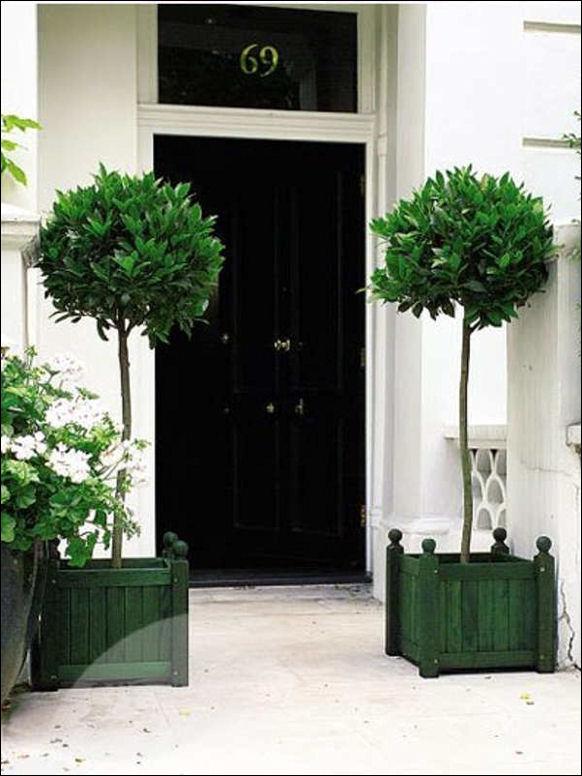
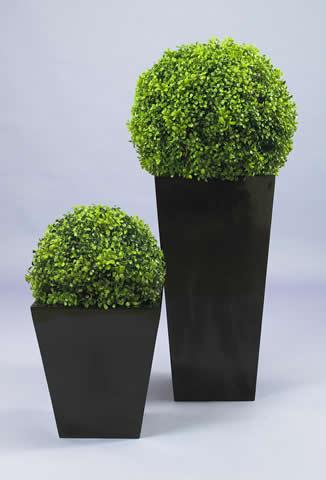
topiary brick topiary decor topiary front door topiary garden topiary hanger topiary interior decor topiary plant topiary sizes topiary

BLACK AND WHITE ARCHITECTURE

BLACK AND WHITE SASSOON ARCHITECTURE

The Black-and-white Revival was an architectural movement from the middle of the 19th century which revived the vernacular elements of the past, using timber framing. The wooden framing is painted black and the panels between the frames are painted white. The style was part of a wider Tudor Revival in 19th-century architecture.

Nikolaus Pevsner describes the movement as a “Cheshire speciality”,but states that it was not created in Cheshire and is not confined to the county. The earliest example noted by Pevsner is the Henry VII Lodge in Woburn Sands, Bedfordshire, built in 1811. The other example he gives is the Court House in Worsley, which was built in 1849.The first Cheshire architect to be involved in the movement was T. M. Penson who restored the house at No. 22 Eastgate Street, Chester in 1852 in the black-and-white style. This was followed by his further restorations in Eastgate Street, at Nos. 34–36 in 1856and No. 26 in 1858.However Pevsner considers that Penson’s works were “moderate in size and not very knowledgeable in detail”.

The movement was improved when John Douglas and T. M. Lockwood “discovered the medium”. They were the principal architects of the movement and they “transformed the street frontages of the city with their black and white buildings”. Major examples of their work are Lockwood’s building opposite Chester Cross at No. 1 Bridge Street of 1888and the terrace of buildings on the east side of St Werburgh Street of 1895–99 by Douglas.The black-and-white tradition in Chester continued into the 20th century.

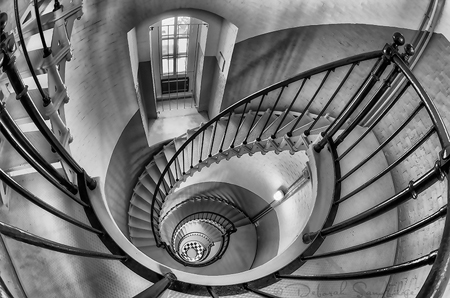
SPIRAL BLACK AND WHITE

vernacular

SASSOON ACADEMY

sassoon

adriana sassoon

Our aim is to share the knowledge that we gain in the development of our craft.

From the heart of our creative system in London, the Sassoon courses are developed, honed and delivered around the globe through our schools, academies and education centres, ensuring that not only will you gain real commercial skills from our courses, you will also take away with you a piece of the culture that created Sassoon.

Our courses are developed and designed to be contemporary, relevant and forward thinking and are delivered with passion, commitment and technical excellence. You will leave inspired, with real commercial skills and receive an insight into the unique culture that is Sassoon.

We look forward to welcoming you at one of our International Academies.

abc Colouring Hair the Sassoon Way

abc Cutting Hair the Sassoon Way

http://www.sassoon.com/academy/new-london-academy.php

MUSEUMS IN MIAMI

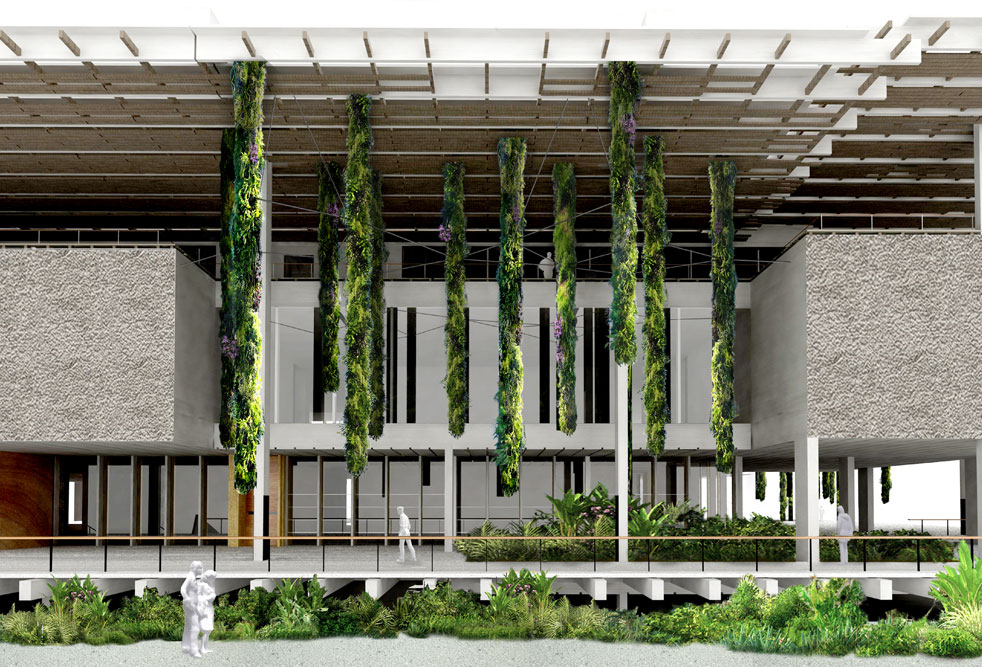
sassoon perez museum miami

“I believe people of success should give back and I think that’s what Jorge is doing,” Podhurst said. “To me, this is the American dream in action.”

Joining the ranks of major givers in Miami, developer Jorge Pérez has pledged to donate $35 million in cash and art from his personal collection to the new Miami Art Museum, which will bear his name when it opens in two years. The donation includes $5 million that Pérez has already pledged and partially paid; an additional $15 million for the capital campaign and $15 million worth of Latin American art to be chosen by the museum.

A $35 million gift from billionaire entrepreneur Phillip Frost and his wife, Patricia, will see the Miami Science Museum renamed the Patricia and Phillip Frost Museum of Science when its new building opens in 2014. The couple also gave a $33 million naming gift to the Frost School of Music at the University of Miami in 2003 and a $2 million naming gift to the Frost Museum of Art at Florida International University in 2002.

sassoon art perez art museum

VIDAL SASSOON THE LIBRARY SPACE

adriana sassoon

Ariel Sassoon & Vidal Sassoon

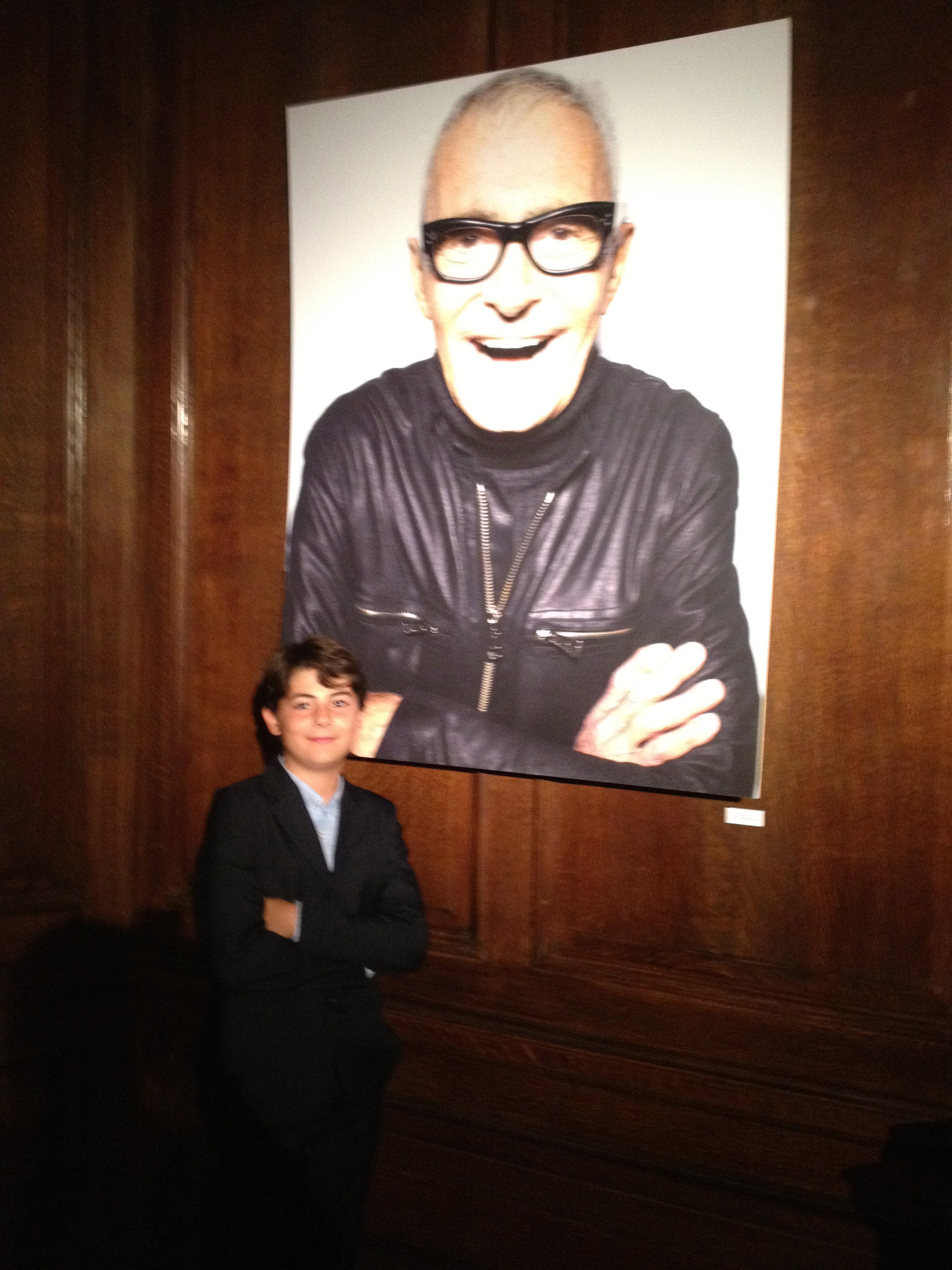
Vidal Sassoon Memorial Evening hosted by Behind The Chair Magazine

11 October 2012


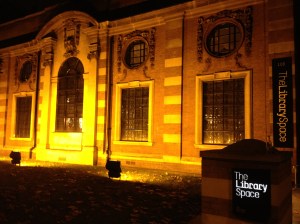
Behind the Chair Magazine hosts a memorial event in honour of Vidal Sassoon, prior to the memorial service at St Paul’s Cathedral on the 12th October 2012.

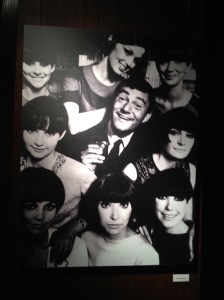
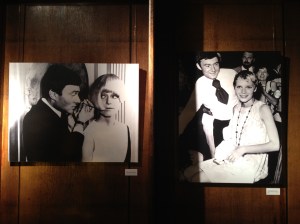
Featuring iconic shots of Vidal Sassoon throughout his career, as well as pictures of Behind The Chair Magazine’s Vidal Sassoon issue, shot by Anthony Mascolo in 2010.

For more information visit: http://www.facebook.com/media/set/?set=a.546642418685349.146269.182807998402128&type=1


1adriana sassoonadriana sassoonadriana sassoonadriana sassoonadriana sassoon

adriana sassoonadriana sassoonadriana sassoonadriana sassoonadriana sassoonadriana sassoon

adriana sassoonadriana sassoonadriana sassoonadriana sassoonadriana sassoon

http://thelibraryspace.com/art-past

SASSOON HAIR DESIGN ACADEMY

academy_sassoon

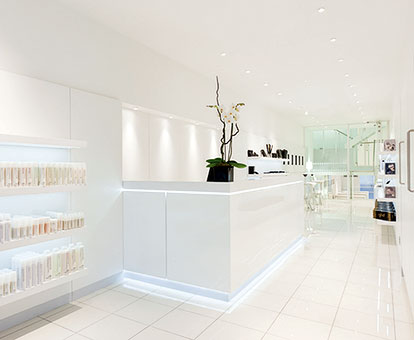
At The SASSOON Academy our aim is to share the knowledge that we gain in the development of our craft.

From the heart of our creative system in London, the Sassoon courses are developed, honed and delivered around the globe through our schools, academies and education centres, ensuring that not only will you gain real commercial skills from our courses, you will also take away with you a piece of the culture that created Sassoon.

Our courses are developed and designed to be contemporary, relevant and forward thinking and are delivered with passion, commitment and technical excellence. You will leave inspired, with real commercial skills and receive an insight into the unique culture that is Sassoon.We look forward to welcoming you at one of our International Academies.

Understand the dynamics of cutting and colouring hair the Sassoon Way.

Forming a complete education system this course is devoted to the fundamental cutting and colouring techniques that are based on the training of the Sassoon International team. Suitable for either the beginner looking for the perfect start to their career, or for an experienced stylist/colourist looking for a new insight into these touchstone techniques, this is your chance to understand how these two unique disciplines combine to compliment one another. Immerse yourself in hands-on practical work sessions, perfectly suited for classic salon work and detailed demonstrations that will leave you inspired, motivated and empowered.

– A knowledge and understanding of ABC | Cutting Hair the Sassoon Way

– The ABC | Cutting Hair the Sassoon Way DVD set

– The ABC | Cutting Hair the Sassoon Way Manual

– A Sassoon Academy Seminar diploma

– A 15 per cent credit towards further Sassoon Academy

SASSOON ACADEMY COURSE LIST

https://sassoon.com/academy/short-term-courses/uk/post-graduate.php

Are you looking for the purest form of haircutting available?

Then the abc cutting course is for you. One week devoted to the touchstone techniques used by Sassoon trained stylists, allowing you the time and space to truly perfect lines, graduation and layering and their combinations. This course provides the very best foundation for boosting your skills and knowledge, by immersing yourself in hands-on practical work sessions and detailed tutorials from highly qualified instructors. So choose abc cutting to give yourself the confidence to expand your repertoire and develop your talents.

Do you want the ultimate in hair inspiration?

The International Masters course, led by Sassoon International Creative Director, Mark Hayes, globally recognised as the driving force behind the Sassoon world famous seasonal collections, will take you deep inside the Sassoon ethos. You will receive a unique insight into the thought processes of the Sassoon International Creative Team working side by side with a maximum of five students per teacher in an Atelier setting. Mark Hayes, plus key team leaders from around the world will share their personal inspirations and skills adding up to an exciting approach to Sassoon education.

The International Colour Team will guide you through the ingenious colouring techniques that have consistently redefined the Sassoon look. The inspiration and theory behind these techniques will show you how Sassoon create precision colour.

This three day event is comprised of stunning model presentations, fascinating interactive lectures delivered by renowned fashion historian Caroline Cox, guided work sessions and demonstrations that include both cut and colour. The team will strive to ensure that you are involved at every stage, allowing you to make the most of the unique talent available to you.

sassoon_abc

SASSOON ARCHITECTURE

shapes-bauhaus

‘Bauhaus’ utopian vision to change society in the aftermath of the First World War

tate-bridge

Modernism to Postmodernism

The Bauhaus school was founded by Walter Gropius in Weimar. In spite of its name, and the fact that its founder was an architect, the Bauhaus did not have an architecture department during the first years of its existence. Nonetheless it was founded with the idea of creating a ‘total’ work of art in which all arts, including architecture would eventually be brought together. The Bauhaus style became one of the most influential currents in Modernist architecture and modern design. The Bauhaus had a profound influence upon subsequent developments in art, architecture, graphic design, interior design, industrial design, and typography.

The school existed in three German cities (Weimar from 1919 to 1925, Dessau from 1925 to 1932 and Berlin from 1932 to 1933), under three different architect-directors: Walter Gropius from 1919 to 1928, Hannes Meyer from 1928 to 1930 andLudwig Mies van derRohe from 1930 until 1933, when the school was closed by its own leadership under pressure from the Nazi regime.The Bauhaus had a major impact on art and architecture trends in Western Europe, the United States, Canada and Israel in the decades following its demise, as many of the artists involved fled, or were exiled, by the Nazi regime. Tel Aviv, in fact, in 2004 was named to the list of world heritage sites by the UN due to its abundance of Bauhaus architecture; it had some 4,000 Bauhaus buildings erected from 1933 on.One of the main objectives of the Bauhaus was to unify art, craft, and technology. The machine was considered a positive element, and therefore industrial and product design were important components. Vorkurs (“initial” or “preliminary course”) was taught; this is the modern day “Basic Design” course that has become one of the key foundational courses offered in architectural and design schools across the globe. There was no teaching of history in the school because everything was supposed to be designed and created according to first principles rather than by following precedent.

The White City

The White City of Tel Aviv (Hebrew: העיר הלבנה‎, Ha-Ir HaLevana) refers to a collection of over 4,000 Bauhaus or International style buildings built in Tel Aviv from the 1930s by German Jewish architects who immigrated to the British Mandate of Palestine after the rise of the Nazis. Tel Aviv has the largest number of buildings in this style of any city in the world. In 2003, the United Nations Educational, Scientific and Cultural Organization (UNESCO) proclaimed Tel Aviv’s White City aWorld Cultural Heritage site, as “an outstanding example of new town planning and architecture in the early 20th century.”

http://www.bauhaus-dessau.de/

PIET MONDRIAN

mondrian-art

design-piet-mondrian

Yves Saint Laurent dress tribute to Piet Mondrian

Piet Mondrian-(1872-1944)
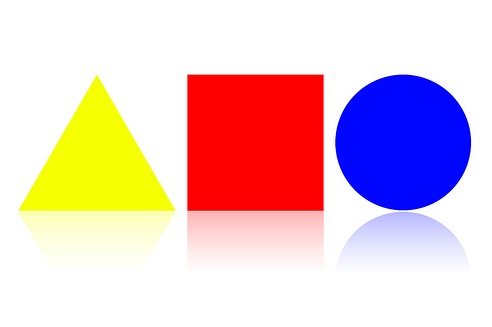
Pieter Cornelis “Piet” Mondriaan, was a Dutch painter and a follower of the Bauhaus.  HE was also an important contributor to the De Stijl art movement and group, which was founded by Theo van Doesburg. He evolved a non-representational form which he termed Neo-Plasticism. This consisted of white ground, upon which was painted a grid of vertical and horizontal black lines and the three primary colors.

Mondrian’s paintings are not composed of perfectly flat planes of color, as one might expect. Brush strokes are evident throughout, although they are subtle, and the artist appears to have used different techniques for the various elements.The black lines are the flattest elements, with the least amount of depth. The colored forms have the most obvious brush strokes, all running in one direction. Most interesting, however, are the white forms, which clearly have been painted in layers, using brush strokes running in different directions. This generates a greater sense of depth in the white forms, as though they are overwhelming the lines and the colors, which indeed they were, as Mondrian’s paintings of this period came to be increasingly dominated by white space.His art and theory influenced the Bauhaus movement and the development of the International style in architecture. In 1940 he settled in New York City.

http://www.mondriantrust.com/

mondrian

SASSOON HAIR DESIGN

FORM EVER FOLLOWS FUNCTION

 Showing Sassoon Creative Team members Mark Hayes, Bruce Masefield, Peter Dawson and Edward Darley and how the Sassoon philosophy comes to live in Sassoon Professional. This is Sassoon this is Hair Design.

louis-sullivan

The original wording was “form ever follows function.” It is also routinely misattributed, mostly to 20th-century modernist grandees, like Le Corbusier and Mies van der Rohe, but was actually coined by the less famous American architect, Louis Sullivan. Misused though Sullivan’s quote has been, his point, that the style of architecture should reflect its purpose, made sense at the time, and continued to do so for much of the last century, not just for buildings, but objects too.

Chicago, we love you. Not only do you have architectural boat tours, skyscrapers and public art galore, you hosted what was probably the best World’s Fair and your art museum supports architecture, too.

The Art Institute of Chicago just opened a small photography show this weekend featuring the architectural photographs of John Szarkowski, Aaron Siskind, and Richard Nickel, who all worked during the 1950s, shooting the buildings of the late, great Louis Sullivan.

Demonstrating the role that the three held in maintaining Sullivan’s legend for modern audiences — then attracted the Modernism (capital “M”) so prevalent in the mid-century — the curators outline a thesis as follows:

In the 1950s, the photographers John Szarkowski, Aaron Siskind, and Richard Nickel embarked on in-depth photographic explorations of structures designed by the renowned architect Louis Sullivan, whose commercial buildings and theaters of the 1880s and early 1890s broke with historical precedents, displaying a radical, organic fusion of formal and functional elements. Attracted to Sullivan’s renegade American spirit and uncompromising values, Szarkowski, Siskind, and Nickel also found inspiration in the play of light over his ornamented facades and the dynamism of his buildings within the bustling city of Chicago. The interest of these photographers came at a critical moment, when many of Sullivan’s most important structures were being threatened with demolition in the service of urban renewal; their photographs illustrated the fragile existence 

STUDIO LLADRO

The spanish designer jaime hayon has created ‘the guest’, a collection of decorated porcelain characters for lladró atelier. on display at maison et objet 2012, the project was created by hayon with the intention to invite the sensibility of numerous artists and designers external to the porcelain manufacturer to participate in personalizing their own ‘guest’ figurine at lladró atelier’s studio in valencia, spain.
the lladró atelier booth designboom visited at the design show featured the designs of jaime hayon, santa monica, california-based artist tim biskup, and tokyo-based design team devil robots. the first pieces of the collection include three designs in two sizes. the larger sized ‘guests’ have been created in a limited edition of 250 units, with figurine having been crafted by hand.

Launch Of Lladro’s New Collection The Guest

thegustlladro

Avant Gallery 309 23rd Street Miami Beach

Avant Gallery invites you to the presentation of the most surprising porcelain creation, The Guest, a ground-breaking character conceived by Lladro and Jaime Hayon, with the collaboration of top artists Tim Biskup and Devilrobots.

The new collection, The Guest by Lladro Atelier, will be introduced by Rosa Lladro, President of Lladro.Also on view during this special event, two unique artist’s proofs by Spanish designer Jaime Hayon and Californian artist Tim Biskup.

www.lladro.com

The Guest by Lladro Atelier

                         Edward Oberle, Adriana Sassoon & Nick Betancourt

Adriana Sassoon, Nick Betancourt & Lladro directors

Photo credit to:  www.realmemoriesphoto.com

Avant Gallery hosted an intimate soiree to officially present the most surprising porcelain creation, The Guest, a ground-breaking character conceived by Lladro and Jaime Hayon, with the collaboration of top artists Tim Biskup and Devilrobots. The collection was introduced by Rosa Lladro, President of Lladro. Also on view during the event were two unique artists proofs by Spanish designer Jamie Hayon and Californian artist Tim Biskup.

http://www.modernluxury.com/miami/scene/the-guest-lladro-atelier-launch/img43345