COLON HYDROTHERAPY

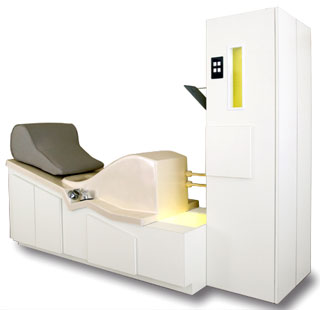
Hydrotherapy Machine

Colon Hydrotherapy Machine


COLON HYDROTHERAPY

Other common name(s): colonic irrigation, high colonic, detoxification therapy, colon hydrotherapy, coffee enemas, enema irrigation, hydro-colon therapy, high enema

Scientific/medical name(s): none

Description

Colon therapy is the cleansing of the large intestine (colon) through the administration of water, herbal solutions, enzymes, or other substances such as coffee.

Overview

Available scientific evidence does not support claims that colon therapy is effective in treating cancer or any other disease. Colon therapy can be dangerous and can cause infection or death.

How is it promoted for use?

Proponents of colon therapy consider it to be a method of detoxifying the body through the removal of accumulated waste from the colon. Because they claim detoxification increases the efficiency of the body’s natural healing abilities, it is sometimes promoted as a treatment for illness. It is often promoted as a general preventive health measure or as part of a routine internal hygiene regimen.

Coffee enemas have been promoted as part of several controversial cancer treatment regimens. People who promote the use of coffee enemas to detoxify the body claim that an “unpoisoned” body or a “clean” colon has the ability to recognize and destroy cancer cells. Practitioners claim coffee enemas can stimulate the liver and gallbladder into releasing toxins and flushing them from the body, allowing the body’s immune system to battle malignant cells (see Gerson Therapy and Metabolic Therapy).

What does it involve?

Colon therapy is given by a colonic hygienist or colon therapist, through the use of plastic tubes inserted through the rectum and into the colon. A machine or gravity-driven pump sends large quantities of liquid (up to 20 gallons) into the large intestine. In contrast, regular enemas only flush out the rectum, and generally use about a quart of fluid. After filling the colon with water, the therapist massages the abdomen to help the removal of waste material from the colon wall, and then fluid and waste are carried out of the body through another tube. The procedure is generally repeated several times, and the average session lasts from 45 to 60 minutes. Coffee enemas may be included in the treatment program.

What is the history behind it?

As far back as the ancient Egyptians, enemas and other “cleansing rituals” were commonly used to rid the body of toxic waste products believed to cause disease and death. In the 19th century, proponents described the large intestine as a sewage system and claimed stagnation caused toxins to form and be absorbed by the body, which led to the theory of “autointoxication.” Laxatives, purges, and enemas were routinely recommended to prevent the accumulation of waste

Colon therapy became very popular in the United States in the 1920s and 1930s, when irrigation machines were commonly found in hospitals and physicians’ offices. Although the procedure became less popular when advances in science and medicine did not support its founding theory, colon therapy has recently shown an increase in popularity.

In 1985, the California Department of Health Services issued a statement that listed some of the potential hazards of colon therapy, including infection and death from contaminated equipment, death from electrolyte depletion, and perforation (puncture) of the intestinal wall leading to life-threatening infection or death. The Food and Drug Administration (FDA) considers colonic irrigation machines to be Class III devices which means they cannot be legally marketed except for medically needed colon cleansing (such as before an x-ray or endoscope exam). The FDA forbids practitioners and sellers from making unsubstantiated claims that have not been proven in scientific studies about their services. The FDA has warned several companies to stop making such claims. No colonic irrigation machine or system has been approved for routine use.

What is the evidence?

Available scientific evidence does not support the claims on which colon therapy is based. It is known that most digestive processes take place in the small intestine, where nutrients are absorbed into the body. What remains enters the large intestine, where it passes to the rectum for elimination after water and minerals are extracted. Available scientific evidence does not support the premise that toxins accumulate on intestinal walls or that toxicity results from poor elimination of waste from the colon.

Are there any possible problems or complications?

The machines used for colon therapy are illegal unless used during conventional medical treatment. Colon therapy can be dangerous. Illness and even deaths have resulted from contaminated equipment, electrolyte imbalance, or perforation of intestinal walls. People with diverticulitis, ulcerative colitis, Crohn’s disease, severe hemorrhoids, rectal or colon tumors, or who are recovering from bowel surgery may be at higher risk of bowel injury. People with kidney or heart failure may be more likely to experience fluid overload or electrolyte imbalances. In addition, many substances can be absorbed into the body from the colon walls and cause toxic or allergic reactions. Colon therapy can also cause discomfort and cramps. Relying on this type of treatment alone and avoiding or delaying conventional medical care for cancer, may have serious health consequences.

Additional Resources

More information from your American Cancer Society

The following information on complementary and alternative therapies may also be helpful to you. These materials may be found on our Web site (www.cancer.org) or ordered from our toll-free number (1-800-ACS-2345).

Note: This information may not cover all possible claims, uses, actions, precautions, side effects or interactions. It is not intended as medical advice, and should not be relied upon as a substitute for consultation with your doctor, who is familiar with your medical situation

 *Do not eat for two hours before colonic appointment. Clients typically can return to normal activities within 15 minutes after session. Sessions are private with limited staff intrusion.It is generally suggested that Clients have two back to back sessions (two days in a row), to get things started;followed by changes in diet with subsequent sessions scheduled one a week for three weeks.



DISEASES  SPREAD THROUGH MAKEUP

makeupvideohomepagepicture

Although a group makeover can seem like fun at the time, an outbreak of pink eye or another infection is not. Diseases aren’t just spread through close friends; you can also pick them up if you use the tester products at the local beauty counter, or if you have a department store makeup consultant give you a makeover. In fact, one study found staph, strep and E. coli bacteria in department store makeup tester products . Without safety precautions, a carefree makeover day can turn into a visit to the doctor.

One potential, and particularly pesky, result of sharing eye makeup is getting pink eye, also known as conjunctivitis. This infection of the lining of the eyelid results in red, itchy, watery eyes and can last for up to two weeks [source: Mayo Clinic]. Pink eye is very contagious, so it is easy to spread among people sharing the same makeup. If you come down with this disease, a doctor can prescribe medicated eye drops to clear it up within a few weeks, but you won’t be able to wear eye makeup or contact lenses in the meantime.

Swapping lipstick with a friend who is infected with the herpes simplex virus, which causes cold sores, can pass the virus on to you. You can contract herpes even without visible cold sores present on the infected person — and remember, there’s no cure for the herpes viruses. Just one incidence of sharing your lipstick can lead to a lifetime of contending with the condition if you contract the virus.

In addition to keeping your cosmetics to yourself, ensuring that what you own is still in working order can also prevent disease. Keep reading to learn how to avoid makeup contamination.

 IS IT BAD TO SHARE MAKEUP?

You can share your secrets, your hopes and your dreams with your friends. However, dermatologists caution, you should never share your makeup.

Simply put — swapping cosmetics can mean trading germs. Makeup brushes and applicators can easily carry bacteria from one person to another, and moist, dark containers allow such germs to thrive. You especially should never share lip and eye products, which come in frequent contact with more easily infected areas of the body. Think about it — that’s why you usually see disposable applicators on hand at most cosmetics counters. It’s so the testers won’t become contaminated.

Not disposing of makeup within a certain time limit, depending on the product, can also cause infections. Old cosmetics should be thrown out and replaced as needed. Recommended expiration dates vary between products, with liquid makeup getting older faster than powder. Mascara is especially important, as it comes in close contact with your eyes and can easily cause an infection. This may mean cleaning out your makeup collection on a regular basis, but the extra effort is well worth it to keep your skin and eyes healthy.

If you do share makeup or keep it for longer than recommended, you may develop a skin or eye infection. Other diseases associated with sharing makeup include the herpes virus, which causes cold sores, and dermatitis.

Keeping your makeup fresh and your skin clean can help you avoid illness.

makeup-main_Full

AVOIDING MAKE UP CONTAMINATION

Open up that bathroom drawer, and you may discover makeup that is well beyond its normal usage date. However, the U.S. Food and Drug Administration, which oversees cosmetics, does not require that manufacturers set an expiration date for such products. On top of that, some types of makeup can expire faster than normal if they are stored incorrectly. That means that it’s up to you to decide when it’s time to toss your beauty products.

Since eyes are one of the areas of the body that are most susceptible to disease, you should be especially careful when keeping track of how long you’ve had your current mascara. The closed container creates a dark environment that allows germs to thrive. Most manufacturers suggest tossing mascara just after the three-month mark. Of course, if it smells odd, has become dried out or has been exposed to drastic temperature changes, you might want to chuck it sooner than that. And if you’ve had a recent eye infection, no matter how long (or little) you’ve had it — you should replace all of your eye makeup [source: FDA].

Other liquid products, or those that contain a large amount of water, also are breeding grounds for bacteria and should be replaced on a regular basis. After six months, get rid of liquid foundation, creamy-formula eye shadow and blush. And, like mascara, after three months, discard liquid eyeliner [source: Matlin].

Powder-based products, which contain little water, can last for up to two years. These include pencil eyeliner and lip liner, and powder eye shadow, foundation, blush and bronzer. But this doesn’t mean that every type of makeup will necessarily last this long. If a cosmetic changes color or starts to smell, throw it out right away.

MAKE UP & HYGENE

Using makeup in a hygienic way can help you avoid picking up an unpleasant disease. Many women get so involved in their routines that they may not even realize that what they’re doing each morning is, in fact, putting them at risk of infection.

First, examine how you store your cosmetics. Make sure that you close your makeup containers tightly after using them each day. This helps keep the product in good, safe condition for a longer period of time. Cosmetics normally contain preservatives that help prevent bacteria growth, but storing products incorrectly can mean germs will be able to grow. An important aspect of this is keeping products at room temperature; storing them in a hot place or in direct sunlight will make it much easier for bacteria to thrive. Anything above 85 degrees Fahrenheit (29 degrees Celsius) becomes dangerous for makeup storage [source: FDA].

You should never add water to makeup, either, as this can spur germ growth in a previously clean environment and lessen the effects of any preservatives added to the makeup that keep it more sanitary. And using saliva is an even bigger makeup don’t: It can spread bacteria from your mouth, where they are harmless, to your eyes, which are much more sensitive [sources: Connolly and FDA].

Now you know not to share makeup with friends — but what about with strangers? Sounds obvious, right? Well, what do you think you’re doing when you try the latest lipstick shade at your local department store’s makeup counter? If you must use a tester or plan to have a makeover done by a department store makeup consultant, insist on disposable applicators, learn about cleaning procedures (make sure they follow them) and request a new tester product, if necessary .

Wondering what could be lurking on that lipstick tester? Read on to learn about the different infections that can be spread via makeup.by Sarah Siddons

COLON AND KIDNEY DETOX

What Is Detoxification? Detoxification is the process of clearing toxins from the body or neutralizing or transforming them, and clearing excess mucus and congestion. Many of these toxins come from our diet, drug use, and environmental exposure, both acute and chronic. Internally, fats, especially oxidized fats and cholesterol, free radicals, and other irritating molecules act as toxins. Poor digestion, colon sluggishness and dysfunction, reduced liver function, and poor elimination through the kidneys, respiratory tract, and skin all add to increased toxicity. Detoxification involves dietary and lifestyle changes, which reduce intake of toxins and improve elimination. Avoidance of chemicals, from food or other sources, refined food, sugar, caffeine, alcohol, tobacco, and many drugs helps minimize the toxin load. Those lifestyle changes are a direct result of choices you make in your life. Transcendental meditation has helped me make marked improvements in not only my health and behavior but also all aspects of my life. I highly recommend you look into it. When detoxifying your colon, it is also important to incorporate probiotics in your diet to replenish your intestinal flora. Colon cleansing Bowel movements are the basis of your health. If you do not have at least one bowel movement per day, you are already walking your way toward disease. Man’s body has not changed very much in the past several thousand years… however, man’s diet has certainly changed a lot. All the refined sugar, white flour, hormone/antibiotics-filled meats we constantly ingest constitute an assault on our bodies. We are continuously violating our bodies by eating terrible foods. Colon cancer is the second leading cause of cancer deaths in the U.S. Therefore, all congestion and toxins must be removed, and it must begin with cleansing of the bowel. One of the most frequent bowel problems that people experience today is constipation. A constipated system is one in which the transition time of toxic wastes is slow. The longer the “transit time,” the longer the toxic waste matter sits in our bowel, which allows them to putrefy, ferment and possibly be reabsorbed. The longer your body is exposed to putrefying food in your intestines, the greater the risk of developing disease. Even with one bowel movement per day, you will still have at least three meals worth of waste matter putrefying in your colon at all times. Disease usually begins with a toxic bowel. Those having fewer bowel movements are harboring a potentially fertile breeding ground for serious diseases. Infrequent or poor quality bowel movements over an extended period may be very hazardous to your health.

REMOVING MUCOID PLAQUE FROM COLON

Even a thin layer of mucoid plaque weakens the body. Nature intended mucoid plaque to be sloughed off. However, due to stress and diet, most Americans have many hardened layers of mucoid plaque. The healthy colon weighs about 4 pounds. One autopsy revealed a colon choked with 40 pounds of impacted mucoid plaque! A proper colon cleanses and detoxification program prepares your body for optimal health by removing the mucoid plaque.

Begin transitioning to a diet rich in raw fruits and vegetables with very few cooked or processed foods to help keep your digestive system free of mucoid plaque. Regular and easy elimination will be the rule, toxins will not build up and foods will be fully digested and utilized. This optimum nutrition allows rejuvenation and peak vitality. Of course, it was a process of years or decades to get the body so full of plaque and toxins, so it will be a process, although faster, to detoxify and get your body pure and back to its highest possible state of health.

Colon cleansing is a procedure, which may include the use of many different supplements, and few days of FASTING. A good intestinal cleanse will also include a parasite cleanse.

NATURAL COLON CLEANSING

More often than not, natural colon cleansing means following a colon cleansing diet along with taking some colon cleansing supplements which may include herbs which are known to kill parasites and worms, contain digestive enzymes, contain probiotics (beneficial bacteria), contain herbs that stimulates liver, gallbladder and intestines, also psyllium husk or seeds, Cascara Sagrada, or flax seeds, or slippery elm, and others.

The person on a typical American diet holds eight meals of undigested food and waste material in the colon, while the person on the high fiber diet holds only three. The herbal colon-cleansing page and the colon health page explain in detail how you can embark on a good colon-cleansing program for yourself.

START A DETOX FOR YOUR COLON

A good cleansing program should always begin by removing the waste in your colon, the last portion of your food processing chain. If you attempt to clean your liver, blood, or lymph system without first addressing a waste-filled bowel, the excreted toxins will only get recycled back into your body.

INTESTINAL CLEANSE

Constipation and diarrhea are also indications of foul matter in your intestines. Furthermore, the much more serious problems of cancer and immune system dysfunctions begin with a toxic bowel.

Once we truly understand that the “single greatest challenge our bodies face is the effective removal of wastes and toxins”, we will never again undermine the importance of frequent bowel movements.

As the colon becomes impacted with dry putrefactive waste, its shape and function are affected in numerous ways. It may stretch like a balloon in certain areas, or develop something called “diverticula” (pouches on the intestinal wall which may become infected), or fall down upon itself (prolapsed colon). All of these colon malformations greatly impair your large intestine’s ability to function, which in turn places severe strain on your digestive organs and glands and affects nutrient assimilation and absorption. The colon is the body’s “sewer system”, and if not treated properly can accumulate toxic poisons, which are absorbed into the bloodstream. This in turn can cause many diseases.

A standard bowel cleanse contains:

Bentonite clay and flaxseeds assist with the colon cleansing process. Bentonite is a type of edible clay that acts as a bulk laxative by absorbing water to form a gel. It binds toxins such as pesticides and helps to carry them out of the colon. Flaxseeds also absorb water and expand in the colon, allowing toxins and mucus to be removed. In addition, flaxseeds have been found to lower cholesterol levels.

As part of your colon-cleansing program, take 1 tablespoon of liquid bentonite and one tablespoon of ground flaxseeds in a glass of water first thing in the morning (wait at least 1/2 hour before eating) and before bed. Drink at least eight glasses of water per day or constipation may result. You should take the bentonite separate from medications or supplements because it may interfere with absorption. I find the best price for a high quality colon-cleaning product containing bentonite clay is here.

An important component of a colon-cleansing program is the use of probiotics to help replenish the population of friendly bacteria, which resides in your colon.


KIDNEY CLEANSE

Now let’s turn to kidney cleansing. Did you know that your chances of developing a kidney stone in your lifetime are 1 in 10? More than 300,000 people in the U.S. suffer from renal failure each year and undergo dialysis or await a kidney transplant.

Your kidneys are two bean-shaped organs, each about the size of your fist. Although the kidneys are small organs by weight, they receive a huge amount – about 20% – of the blood pumped by the heart. Every day, your kidneys process about 200 quarts of blood to sift out about 2 quarts of waste products and extra water.

The actual filtering occurs in tiny units inside your kidneys called ‘nephrons’. Every kidney has about a million nephrons. In the nephron, a glomerulus–which is a tiny blood vessel or capillary–intertwines with a tiny urine-collecting tube called a tubule. A complicated chemical exchange takes place, as waste materials and water leave your blood and enter your urinary system.


The large blood supply to your kidneys enables them to do the following tasks:


Regulate the composition of your blood

Keep constant the concentrations of various ions and other important substances

Keep constant the volume of water in your body

Remove wastes from your body (urea, drugs,toxic substances)

Keep the acid/base concentration of your blood

constant

Help regulate your blood pressure

Stimulate the production of red blood cells

Maintain your body’s calcium levels

Your kidneys receive the blood, they process the blood by removing the wastes and then return the processed blood to the body and the unwanted substances end up in the urine. Urine flows from the kidneys through the ureters into the bladder. In the bladder, the urine is stored until it is excreted from the body through the urethra.


The easiest way to do a kidney cleanse is to purchase 20 to 100 pounds of watermelon (a few huge melons), sit in a bath filed with water, eat as much of the watermelon as you can throughout the day, while regularly emptying your bladder. Using this procedure, people have dissolved big stones, and then passed small kidney stones out of their body. Note that this kidney cleanse is not suitable for diabetics.

An effective kidney cleanse is discussed in more detail here.

WWW.BETWEENTWOWORLDS.INFO

DANA FARBER

dana farber

The mission of Dana-Farber Cancer Institute is to provide expert, compassionate care to children and adults with cancer while advancing the understanding, diagnosis, treatment, cure, and prevention of cancer and related diseases. As an affiliate of Harvard Medical School and a Comprehensive Cancer Center designated by the National Cancer Institute, the Institute also provides training for new generations of physicians and scientists, designs programs that promote public health particularly among high-risk and underserved populations, and disseminates innovative patient therapies and scientific discoveries to our target community across the United States and throughout the world.

History

In 1947, the late Sidney Farber, MD, founded a Children’s Cancer Research Foundation dedicated to providing children with cancer with compassionate, state-of-the-art treatment and simultaneously developing the cancer preventatives, treatments, and cures of the future. The Institute officially expanded its programs to include patients of all ages in 1969, and in 1974 became known as the Sidney Farber Cancer Center in honor of its founder. The long-term support of the Charles A. Dana Foundation was acknowledged by incorporating the Institute under its present name in 1983.

Today, the Institute employs about 4,000 people supporting more than 200,000 patient visits a year, is involved in some 600 clinical trials, and is internationally renowned for its blending of research and clinical excellence. The Institute’s expertise in these two arms of the fight to eradicate cancer uniquely positions it to bring novel therapies that prove beneficial and safe in the laboratory setting into clinical use.

Dana-Farber Cancer Institute is a principal teaching affiliate of Harvard Medical School, a federally designated Center for AIDS Research, and a founding member of the Dana-Farber/Harvard Cancer Center (DF/HCC), a federally designated comprehensive cancer center. Providing advanced training in cancer treatment and research for an international faculty, the Institute conducts community-based programs in cancer prevention, detection, and control throughout New England, and maintains joint programs with other Boston institutions affiliated with Harvard Medical School and the Partners Health Care System, including Brigham & Women’s Hospital, Children’s Hospital, and Massachusetts General Hospital.

Dana-Farber Cancer Institute is supported by the National Cancer Institute, the National Institute of Allergy and Infectious Diseases, and the generous support of numerous foundations and individuals, who contribute to the Institute’s individual research and clinic programs or to the Jimmy Fund, the principal charity of the Institute named for one of its child patients.

http://www.dana-farber.org 


BONE MARROW TRANSPLANT

 Marrow types

Section through the femur head, showing the cortex, the red bone marrow and a spot of yellow bone marrow. The white bar represents 1 centimeter.

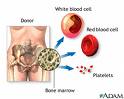
There are two types of bone marrow: red marrow (consisting mainly of myeloid tissue) and yellow marrow (consisting mainly of fat cells). Red blood cells, platelets and most white blood cells arise in red marrow. Both types of bone marrow contain numerous blood vessels and capillaries.

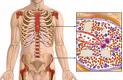
At birth, all bone marrow is red. With age, more and more of it is converted to the yellow type. About half of adult bone marrow is red.  Red marrow is found mainly in the flat bones, such as the hip bone, breast bone, skull, ribs, vertebrae and shoulder blades, and in the cancellous (“spongy”) material at the epiphyseal ends of the long bones such as the femur and humerus. Yellow marrow is found in the hollow interior of the middle portion of long bones.

In cases of severe blood periods, the body can convert yellow marrow back to red marrow to increase blood cell production.


 Stroma

The stroma of the bone marrow is all tissue that isn’t directly involved in the primary function of hematopoiesis. The yellow bone marrow belongs here, and makes the majority of the bone marrow stroma, in addition to stromal cells located in the red bone marrow. Yellow bone marrow is found in the Medullary cavity.

Still, the stroma is indirectly involved in hematopoiesis, since it provides the hematopoietic microenvironment that facilitates hematopoiesis by the parenchymal cells. For instance, they generate colony stimulating factors, affecting hematopoiesis.

Cells that constitute the bone marrow stroma are:

Macrophages contribute especially to red blood cell production. They deliver iron for hemoglobin-production.


 Bone marrow barrier

The blood vessels constitute a barrier, inhibiting immature blood cells from leaving the bone marrow. Only mature blood cells contain the membrane proteins required to attach to and pass the blood vessel endothelium.

Hematopoietic stem cells may also cross the bone marrow barrier, and may thus be harvested from blood .

 Stem cells

The bone marrow stroma contain mesenchymal stem cells (also called marrow stromal cells). These cells are multipotent stem cells that can differentiate into a variety of cell types. Cell types that MSCs have been shown to differentiate into in vitro or in vivo include osteoblasts, chondrocytes, myocytes, adipocytes, and, as described lately, beta-pancreatic islets cells. They can also transdifferentiate into neuronal cells.


 Compartmentalization

There is biologic compartmentalization in the bone marrow, in that certain cell types tend to aggregate in specific areas. For instance, erythrocytes, macrophages and their precursors tend to gather around blood vessels, while granulocytes gather at the borders of the bone marrow.


 Types of stem cells

Bone marrow contains three types of stem cells:


 Diseases involving the bone marrow

The normal bone marrow architecture can be displaced by malignancies or infections such as tuberculosis, leading to a decrease in the production of blood cells and blood platelets. In addition, cancers of the hematologic progenitor cells in the bone marrow can arise; these are the leukemias.

To diagnose diseases involving the bone marrow, a bone marrow aspiration is sometimes performed. This typically involves using a hollow needle to acquire a sample of red bone marrow from the crest of the ilium under general or local anesthesia. The average number of cells in a leg bone is about 440,000,000,000.

Exposure to radiation or chemotherapy will kill many of the rapidly dividing cells of the bone marrow and will therefore result in a depressed immune system. Many of the symptoms of radiation sickness are due to damage to the bone marrow cells.


 Examination

A Wright’s stained bone marrow aspirate smear from a patient with leukemia.

Bone marrow examination is the pathologic analysis of samples of bone marrow obtained by bone marrow biopsy and bone marrow aspiration. Bone marrow examination is used in the diagnosis of a number of conditions, including leukemia, multiple myeloma, anemia, and pancytopenia. The bone marrow produces the cellular elements of the blood, including platelets, red blood cells and white blood cells. While much information can be gleaned by testing the blood itself (drawn from a vein by phlebotomy), it is sometimes necessary to examine the source of the blood cells in the bone marrow to obtain more information on hematopoiesis; this is the role of bone marrow aspiration and biopsy.


 Donation and transplantation of bone marrow

Bone marrow harvest

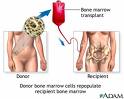
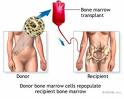
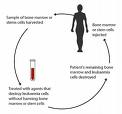
It is possible to take hematopoietic stem cells from one person and then infuse them into another person (Allogenic) or into the same person at a later time (Autologous). If donor and recipient are compatible, these infused cells will then travel to the bone marrow and initiate blood cell production.

Transplantation from one person to another is performed in severe cases of disease of the bone marrow. The patient’s marrow is first killed off with drugs or radiation, and then the new stem cells are introduced.

Before radiation therapy or chemotherapy in cases of cancer, some of the patient’s hematopoietic stem cells are sometimes harvested and later infused back when the therapy is finished to restore the immune system.

The Anthony Nolan Trustplays a vital role with regards to finding donors. They connect one person, whose immune system needs a boost – with another person, who is prepared to share a little of theirs. Matching patients with donors.

Harvesting

The stem cells are harvested directly from the red marrow in the crest of the ilium, often under general anesthesia. The procedure is minimally invasive and does not require stitches afterwards. Depending on the donor health and reaction to the procedure, the actual harvesting can be an outpatient procedure or requiring 1-2 days of recovery in the hospital. Another option is to administer certain drugs that stimulate the release of stem cells from the bone marrow into circulating blood. An IV is inserted into the donor’s arm, and the stem cells are filtered out of the blood. The procedure is similar to donating blood or platelets.

It may also be taken from the sternum. The tibia may seem a good source, since it is very superficial. However, except in children, this bone marrow doesn’t contain any substantial amount of red bone marrow, but rather only yellow bone marrow.

In newborns, stem cells may be retrieved from the umbilical cord.


 Bone marrow as a food

Many cultures utilize bone marrow as a food. The Vietnamese prize bone as the soup base for their national staple phở; Alaskan Natives eat the bone marrow of caribou and moose; Indians use slow-cooked marrow as the core ingredient of the Indian dish Nalli Nihari; Mexicans use beef bone marrow from legs bones, called tuetano, which is cooked and served as filling for tacos or tostadas; it is also considered to be the highlight of the Italian dish ossobuco (braised veal shanks). Though once used in various preparations, including pemmican, bone marrow for human consumption in the United States has recently fallen out of favor as a food.

One fan of this delicacy is noted chef and author Anthony Bourdain, who has stated that if he were on death row, his last meal would consist of bone marrow. He considers the delicacy to be his number-one comfort food.

Bone marrow is a source of protein and high in monounsaturated fats.[citation needed] These fats are known to decrease LDL cholesterol levels resulting in a decreased risk of cardiovascular disease, prompting some to make bone marrow a dietary staple. The actual health effects of the addition of bone marrow to the diet remain unclear.[citation needed]

Diners in the 18th century used a marrow scoop (or marrow spoon), often of silver and with a long thin bowl, as a table implement for removing marrow from a bone.

Some anthropologists believe that early humans were scavengers rather than hunters. Marrow would then have been a major protein source for tool using hominids, who were able to crack open the bones of carcasses left by top predators such as lions.


http://massgeneral.org/cancer/services/treatmentprograms.aspx?id=1181

http://www.nature.com/bmt/index.html

POSTURA CORRETA

A má postura pode ser causa de várias lesões. Cuidar da postura no trabalho, no lazer e em casa, fazer caminhadas e alongamentos são atitudes que promovem a saúde e ajudam a combater as lesões posturais. Muitas pessoas são acometidas de dores no corpo, principalmente nas costas, e somente depois de algum tempo percebem que sua postura estava errada. A educação postural é algo que se deve perseguir desde a infância, para evitar problemas na idade adulta. 

A postura correta 

O Dr. Mauro Bosi, ortopedista do Fusame – Hospital Municipal de Americana, interior de São Paulo explica que para se ter uma postura correta é preciso praticar atividade física regularmente, corrigir sempre a própria postura nas atividades diárias domésticas e/ou profissionais, mantendo a coluna ereta o tempo todo. 

Existem três desvios na coluna, relata Dr. Bosi, que são a escoliose, a cifose e a lordose, os quais podem ser congênitos ou adquiridos. Segundo ele, são problemas físicos que podem ser tratados conservadoramente com fisioterapia e/ou coletes, ou, quando o caso requer, com tratamento cirúrgico. A má postura leva inicialmente a dor e depois a uma deformidade que pode tornar-se irreversível (geralmente em pacientes idosos), acrescenta. 

Atividades e postura 

São vários os tipos de trabalho que obrigam a pessoa a manter certas posições do corpo durante muito tempo e que podem acarretar problemas posturais. Os dentistas, os ourives, os digitadores, os estivadores, entre outros, podem ter sua postura afetada pelo trabalho. Dr. Bosi lembra que, na verdade, todos os trabalhos, sejam eles em pé ou sentados, necessitam de uma ergometria correta (posição e tamanho da cadeira, da mesa, do computador, do teclado, etc…) para prevenir defeitos posturais. Assim, qualquer postura que não obedeça a esses princípios pode acarretar problemas. 

Uma pessoa que se senta de maneira encurvada, em uma cadeira inadequada para costurar ou digitar pode vir a ter problemas no cóccix. Esse problema pode ser corrigido como? A dor no cóccix pode acontecer por sobrecarga local (sentar-se por muito tempo) ou queda sentado, responde Dr. Bosi. O tratamento é feito com analgésicos, antiinflamatório e calor local. A pessoa deve ainda procurar sentar-se, daí por diante, em lugar macio. 

Que são métodos cinésioterapêuticos e como se aplicam para a postura? Cinesioterapia é a terapia através dos movimentos (exercícios de uma forma geral) e amplamente utilizada na correção da postura, relata o médico. Além disso, ioga, alongamentos musculares, reeducação postural global (da Escola Francesa), hidroterapia, são recursos que podem auxiliar. 

As crianças, a escola e o lazer 

O que os pais devem ensinar à criança para que ela tenha uma boa postura? O pé chato tem alguma relação com isto?, são perguntas que os pais se fazem. O Dr. Bosi diz que o pé chato nada tem a ver com postura incorreta. As crianças devem ser alertadas ao sentar para estudar, ver tv e vídeo games, carregar materiais escolares pesados de um lado só do corpo, e outras posturas incorretas do dia-a-dia. Devem ter o hábito de praticar qualquer atividade física o mais precocemente possível, dando preferência a esportes aquáticos. 

O peso das mochilas deve ser regularmente vistoriado pelos pais, pois este é um problema muito sério e que as escolas devem prestar bastante atenção. Uma criança que porta quatro cadernos e mais quatro livros didáticos, além de lanche e outros acessórios, está carregando diariamente um peso demasiado grande para seu porte físico. É preciso uma campanha junto a pais e professores e é direito dos pais questionarem a escola sempre que a criança for obrigada a transportar (muitas vezes em longos trajetos da casa até a escola) um volume excessivo de material escolar. 

Em casa, outro problema que pode influir na postura é a permanência da criança em frente ao computador, jogando vídeo game ou navegando na Internet. Essa criança – isso vale também para o adulto – deve ser ensinada a ter os pés apoiados em uma superfície sólida, coxas paralelas ao solo e ajustar a cadeira de modo que fique bem encostado na parte de trás, com os joelhos dobrados em ângulo de 90º, diz a Dra. Tricia Lyons, fisioterapeuta da Health Corp. Consulting, na California State University, EUA. 

Doenças ligadas à postura 

Uma doença se desenvolve como resultado do desgaste dos tecidos do corpo – juntas, ligamentos, tendões, nervos e músculos, relata Dra. Tricia. A postura, a repetição e os movimentos onde há constante esforço são fatores que propiciam a LER (Lesão por Esforço Repetitivo), como os vídeo games. 

Normalmente, afirma a médica, duas horas por dia de trabalho no computador não significarão um risco de adquirir LER. No entanto, a maioria das pessoas usa computador pelo menos de quatro a dez horas por dia, pois o fazem tanto em casa quanto no trabalho. A Dra. Tricia recomenda que essas pessoas façam um registro do tempo que despendem no computador. Com isso, ela acredita que vão perceber que passam tempo demais na posição sentada e que precisam intercalar atividades para não contraírem LER ou outra doença relacionada à postura. 

Escolhendo um profissional 

Encontrar o profissional ideal para tratar de assuntos relacionados às dores e aos problemas de coluna, à má postura, e principalmente às lesões por esforço repetitivo (LER) não é tarefa tão fácil. Dependendo do problema, ele pode ser mais bem detectado pelo ortopedista, reumatologista, pelo fisioterapeuta, por um médico do trabalho, um clínico geral ou um neurologista. Como as dores lombares e outros males afetando a coluna podem ter diversas causas, é preciso encontrar um profissional que dê um diagnóstico 100% eficaz. 

Nesse caso, as perguntas que uma pessoa deve fazer a si mesma são: 

– Meu médico faz parte do plano de saúde que eu possuo? (caso tenha plano de saúde). 

– Meu médico tem horários compatíveis com os meus? 

– Onde posso encontrar meu médico, em caso de emergência? 

– Tenho tempo durante a consulta, ou sinto que estou sendo apressado? 

– Posso abrir-me com ele naturalmente? 

– Ele me explica e me faz perguntas de maneira que eu possa entender? 

– Sinto-me confortável durante a consulta e recebo atenção? 

Cuidados no trabalho 

Pessoas que executam serviço repetitivo (digitar, levantar e abaixar maquinários, etc) tendem a ser acometidas de LER. As empresas já estão se dando conta de que os afastamentos e as trocas de funcionários por lesões repetitivas não trazem benefício nem a elas próprias, nem aos empregados. Para que isto não ocorra, há corporações hoje que já se preocupam com a altura certa das cadeiras, das bancadas, dos maquinários, e fazem um acompanhamento mais acurado quanto à postura e a força do empregado no momento do trabalho. Outras empresas chegam a contratar especialistas para promover momentos de alongamento entre os funcionários, o que pode ser muito útil na prevenção postural e de doenças da LER. 

Além disto, mudar o empregado de setor é uma alternativa, bem como oferecer intervalos regulares no trabalho. Esses intervalos, ao contrário do que pensam alguns empresários, fazem com que o rendimento e a atenção do trabalho aumentem. 

O repouso 

O sono mal dormido (tenso) pode influir na postura? Qual o tipo de colchão mais adequado para um bom repouso? O que há de verdade e de mentira nos anúncios sobre colchões? 

O Dr. Bosi diz que o colchão tem que ser plano, não duro, e o estrado reto. Não há necessidade de comprar “colchão ortopédico”, mas um bom colchão, que a pessoa mesma deve experimentar ou vistoriar atentamente no ato da compra. Por outro lado, um colchão de má qualidade, com espuma muito fina, por exemplo, em pouco tempo pode ser responsável pelo cansaço que a pessoa tem na hora de acordar e ao longo do dia, prejudicando sua saúde e suas atividades. O período de repouso também é importante, preferencialmente intercalado entre os períodos de trabalho, dando oportunidade aos músculos para relaxarem.

Fonte: Bibliomed
Crédito: http://www.portalfisioterapia.com.br
Foto: Michal Zacharzewski

Apesar de ser originária na China, foi no Japão que o Shiatsu se tornou a terapia corporal do modo como é conhecida hoje. Ideal para tratar dores no pescoço, costas e joelho, a massagem utiliza o toque das mãos para reequilibrar a energia vital que circula pelo corpo em canais chamados de meridianos.

Shiatsu é derivada do japonês e quer dizer “pressão dos dedos” (SHI significa “dedo” e ATSU “pressão”). Tem uma abordagem terapêutica semelhante à usada na acupuntura e além da sua eficácia no tratamento de dores e mal-estar físico ou psicológico, o Shiatsu é tem também um efeito preventivo. 

A terapia é baseada na medicina oriental, que acredita que da mesma forma que o homem recebe a energia positiva da terra, o Yin, também está relacionado à energia negativa do cosmos, o Yang. Para o Shiatsu, os pontos doloridos no nosso corpo são, portanto, resultado do desequilíbrio entre os dois pólos energéticos, causando bloqueio de energia vital e dor.

Por isso a massagem utiliza pressão, ficção e movimentação de articulações e estruturas musculoesqueléticas, entre outras técnicas, a fim de promover a circulação da energia obstruída. O Shiatsu pode ser aplicado em pessoas de qualquer idade e não apresenta efeitos colaterais, desde que feito corretamente.

Fonte: Portal da Fisioterapia

 OS SETE SENTIDOS

Os sentidos humanos são em número de 7, divididos em dois grupos, à saber:

  • Sentidos Extra Sensoriais
  • Sentidos Materiais

Os sentidos humanos, têm relação direta com os ORIXÁS, e na Umbanda se relacionam da seguinte forma:

SENTIDOS TIPO ORIXÁ
1. PALADAR MATERIAL ALMAS, PRETO-VELHOS
2. OLFATO MATERIAL OXÓSSI
3. VISÃO MATERIAL OGUM
4. AUDIÇÃO MATERIAL XANGÔ
5. TATO MATERIAL IBEJI
6. CLARIVIDÊNCIA EXTRA SENSORIAL SENHORAS (OXUM, IEMANJÁ, IANSÃ, NANÃ)
7. INTUIÇÃO MATERIAL OXALÁ

* A voz é o elo de complementação entre todos os sentidos.

A Intuição é um sentido extra sensorial que faz a ligação direta entre os Espíritos Protetores (ELEDÁ) e o espírito do ser encarnado, através de ordens, conselhos, advertências e avisos, muita vez confundido com a própria consciência do ser encarnado. É este sentido que nos faz, as vezes, ouvir vozes interiores, à zelar por nossos passos.


  • Clarividência espontânea
  • Clarividência provocada

A Clarividência espontânea é aquela que, acontece independente da nossa vontade, formando quadros de advertência, nas ocasiões e lugares menos esperados.

A Clarividência provocada o é através de duas formas diferentes: a Mentalização e a Vidência.
A Mentalização é a forma, grosseiramente material da clarividência em si, e consiste em mentalizar à quem se deseja falar, ou ver, tentando fazê-lo de olhos cerrados, até conseguir.
A Vidência é a faculdade que todos têm inata, podendo ser desenvolvida, através de exercícios especiais, para que possa ver (de olhos abertos), à sua frente ou através de Copo com Água, Bola de Cristal, Fumaça, etc., as Forças de Vibração Espirituais ou também Forças de Vibração Materializadas.

img149

Os Doze Sentidos E Os Sete Processos Vitais

by Rudolf Steiner

Rudolf Steiner nasceu em 27 de Fevereiro de 1861 em Kraljevec (Áustria). Tendo cumprido em Viena estudos superiores de ciências exatas, foi solicitado a dedicar-se, a partir de 1883, à edição dos escritos científicos de Goethe na coleção Deutsche National-literatur (Literatura Nacional Alemã). Atendendo ao convite para trabalhar no Arquivo Goethe-Schiller em Weimar, transferiu-se para essa Cidade em 1890, onde residiu até 1897, desenvolvendo um grande interesse cognitivo e uma conseqüente atividade literário-filosófica. É dessa época sua obra básica – A Filosofia da Liberdade (1894). Depois de alguns anos em Berlim como redator literário, Steiner passou a dedicar-se a uma intensa atividade como conferencista e escritor, no intuito de expor e de divulgar os resultados de suas pesquisas científico-espirituais, de início no âmbito da Sociedade Teosófica e mais tarde na Sociedade Antroposófica, por ele fundada. Em Dornach (Suíça) ele construiu em madeira o Goethanum, sede da Sociedade (e mais tarde também da Escola Superior Livre de Ciência Espiritual), edifício destruído em 31 de Dezembro de 1922 por um incêndio e posteriormente substituído pelo atual modelo em concreto. Foi em Dornach que ele faleceu em 1925, após realizar extraordinárias contribuições nos campos das artes, da organização social, da Pedagogia, da Medicina, da Farmacologia, da Agricultura, no tratamento de crianças excepcionais etc., com princípios adotados por instituições em todo o mundo.

 http://sab.org.br/antrop/GA-107-DezMandamentos.htm

http://www.ewrs.com.br

rudolf-steiner

by Rudolf Steiner

Rudolf Steiner (25 February 1861– 30 March 1925) was an Austrian philosopher, literary scholar, educator, architect, playwright, social thinker, and esotericist. After gaining initial recognition as a literary critic and cultural philosopher, at the beginning of the twentieth century he founded a new spiritual movement, Anthroposophy, as an esoteric philosophy growing out of European transcendentalist roots yet with links to the more Eastern-influenced Theosophy.

Steiner led this movement through several phases. In the first, more philosophically-oriented phase, Steiner attempted to find a synthesis between science and mysticism; his philosophical work of these years, which he termed spiritual science, sought to provide a connection between the cognitive path of Western philosophy and the inner and spiritual needs of the human being. In a second phase, beginning around 1907, he began developing artistic impulses that would transform drama, the movement arts (developing a new artistic form, Eurythmy) and architecture, culminating in the building of a cultural center to house all the arts, the Goetheanum. In a third phase, beginning after the First World War, Steiner worked to find practical manifestations of his philosophy; in cooperation with educators, farmers, doctors, etc. he founded Waldorf education, biodynamic agriculture, anthroposophical medicine as well as new directions in numerous other professions.

Steiner advocated a form of ethical individualism, to which he later brought a more explicitly spiritual component. He derived his epistemology from Johann Wolfgang Goethe‘s world view, where “Thinking… is no more and no less an organ of perception than the eye or ear. Just as the eye perceives colours and the ear sounds, so thinking perceives ideas.”A consistent thread that runs from his earliest philosophical phase through his later spiritual orientation is the goal of demonstrating that there are no essential limits to human knowledge.

http://www.rudolfsteiner.com.br/

Germes, Fungos e Micróbios à Espreita

por Patricia Campos Mello,

Abro o The New York Times e descubro que um certo Simon Sassoon de Nova York está ganhando a maior grana com o seguinte produto: um desinfetante de maçanetas de portas de banheiro. Trata-se de um aparelhinho que fica borrifando desinfetante hospitalar na maçaneta. Aparentemente, as pessoas morrem de nojo de encostar em maçaneta de porta de banheiro em restaurante, escola, escritório, etc.

Outro produto muito vendido, diz o diário, é uma alça portátil, para que você não precise encostar naquelas barras do metrô ou ônibus. Naquelas onde TODO mundo segura, eca….

Mas o meu favorito é um chamado Excuse Me – trata-se de uma bandeira com uma hastezinha, que a pessoa fixa na cintura. Se alguma pessoa se aproxima demais de você, leva uma bandeirada na cara – “O Excuse Me cria um espaço de 90 centímetros entre você e um possível espirro”, esclareceu ao NYT a criadora do artefato, Emily Beck. “O produto permite que você não tenha que encostar em ninguém e nem falar com ninguém em Nova York.” Presente perfeito para misantropos e hipocondríacos – ou talvez para altruístas que têm mau hálito e não querem que a humanidade sofra.

Os Estados Unidos são uma nação com fobia de micróbios. Trata-se de uma enorme aglomeração de Monks (aquele detetive obsessivo-compulsivo, que passa a vida limpando tudo, da série homônima de TV a cabo). Eles já têm teoria de conspiração para tudo, os hackers das urnas eletrônicas (culparam até o Chávez), o assassino do John Kennedy, a mídia sionista….e também os fungos, vírus e bactérias terroristas…. estão todos à espreita….os germes e o bin Laden querem te pegar…..

Eu já tinha vivido essa histeria anti-germes antes. Morei com uma colega de quarto da Pensilvânia que tinha verdadeiro pânico de infecções variadas. Ela desinfetava tudo a cada cinco minutos. Depois do 11 de setembro, quando houve a ameaça de antraz, eu fiquei encarregada de abrir toda a correspondência por meses – ela tinha certeza de que todas as cartas estavam contaminadas.

E ela me contou – depois descubro que é bastante comum por aqui, segundo o NYT –
que enrolava o dedo em papel higiênico antes de apertar a descarga.

Veio-me à cabeça uma palavra interessante: anal retentive, ou seja, indivíduo que tem retenção anal. Eh, parece um pouco rude, mas as pessoas falam isso aqui, normalmente: Fulano, você é anal! A origem é de fato psicanalítica. Segundo o Webster, uma pessoa anal tem fixação na fase anal, e, como conseqüência, é metódica, com mania de limpeza, compulsiva.

Pois é, Excuse Me pra esse pessoal com retenção.

hyso

Germophobia is Out of Control

I think we’ve gone a little too far when we feel the need to have our doorknobs automatically sanitized every 15 minutes to feel clean.

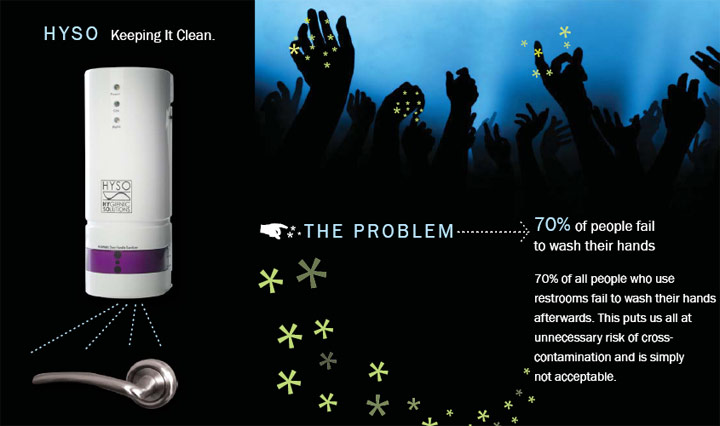
SIMON SASSOON saw the future in a dream. Mr. Sassoon, a former watch designer, dreamed he was standing in a women’s public restroom, which his hygiene-conscious girlfriend had just left. Attached to the door above the knob was a white plastic box.

As Mr. Sassoon’s dream self watched, the box made a gushing sound. Out from the bottom sprayed a fine dry mist, which bathed the metal knob and killed every germ on it.

The girlfriend is now an ex, but two years and $250,000 of investment capital later, the HYSO, an acronym for Cantonese words meaning “happy hands,” is starting to roll off production lines. Mr. Sassoon, 49, a nephew of the hairdresser Vidal Sassoon, is betting there is a vast and rapidly expanding market for a $60 device that sprays a hospital-grade disinfectant on doorknobs every 15 minutes.


I sure hope this spray dries quickly because I’m not real keen on touching wet doorknobs, regardless of what the fluid is.

For this and other crazy sanitary gadgets, go here . . .

(hat tip: Kevin MD)

hyso

http://www.hysonow.com/

By Dr. Chitti Moorthy -Director, Departments of Radiation Medicine and Radiology,
New York Medical College, Valhalla , NY

The cause of cancer lies deep within the building blocks of a person’s cells (genes and DNA). If these blocks become disorganized, cancer may develop.

Some forms of cancer may be inherited; they are passed down from parents to their children. For example, if a woman has close family members who have had breast cancer, she is more likely to get breast cancer.

Some cancers are caused by outside factors. For example, anyone who smokes is more likely to get lung throat or mouth cancer.

A tumor is a mass of abnormal cells. Tumors are either benign or malignant. Benign tumors usually grow very slowly and generally do not spread. Doctors can remove most of them. In the beginning, cancerous (malignant) tumors, usually stay in the organ where the cancer started. This is called localized disease. As cancers continue to grow, they are more likely to spread, or metastasize into the lymph nodes. This is called regional disease. When the cancer spreads beyond the nearby lymph nodes it is called distant disease. The more advanced the cancer (the more the cancer has spread) the more difficult it is to control or cure.

Doctors usually cannot tell if a tumor is cancer until a biopsy test is done. A tiny piece of tissue is removed with a needle or by surgery. A special doctor called a pathologist studies the tissue under a microscope to see if it is cancer. Often, more tests are done on the tissue if it is cancer. These tests let the doctor know more about the cancer. This information guides treatment. The pathologist might “grade” cancer from one to four. Grade one tumors have cells that look very similar to normal cells. Grade four tumors have cells that look very different from normal cells. Higher grade tumors are more likely to grow and spread.

Tumors also are “staged” to indicate the extent of the tumor. For example, tumors may be “called” stage one to stage four. The oncologist stagers a tumor based on the pathology report and other tests. Patients with the same stage and type of cancer have similar treatment in general, the higher the stage of cancer the more difficult it is to treat.

There are hundreds of different types of cancer. They are identified by the type of body tissue involved or by the body part involved. The major classifications of cancer are:

Carcinoma is a malignant tumor found in the outermost covering or lining of body surfaces or organs. These tumors are found on the skin, in the mouth and throat, stomach and bowel, or in organs like the breast, prostate, colon, lung or bladder.

Sarcoma is a malignant tumor found in connective tissues such as bone, muscle and cartilage.

Leukemia is a malignant disease found in bone marrow and other blood forming organs.

Glioma is cancer in the brain, spinal cord or nerves.

Lymphoma is a malignant tumor of the lymph glands or other lymphatic tissues.

http://www.spinaldiscdecompression.com/doctor_story.php?storyid=737&id=4303