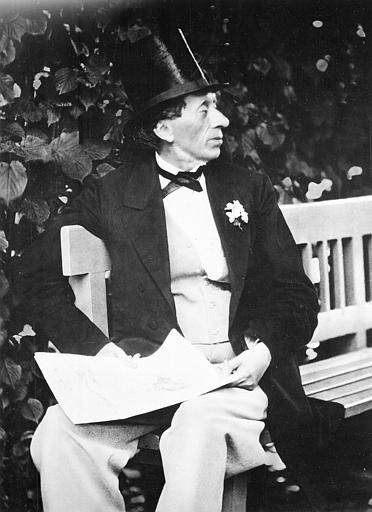
It was during 1835 that Andersen published the first installment of his immortal Fairy Tales (Danish: Eventyr). More stories, completing the first volume, were published in 1836 and 1837. The quality of these stories was not immediately recognised, and they sold poorly. At the same time, Andersen enjoyed more success with two novels: O.T. (1836) and Only a Fiddler. His Specialty book that is still known today was the Ugly Duckling (1837).
Meetings with Dickens
In June 1847, Andersen paid his first visit to England and enjoyed a triumphal social success during the summer. The Countess of Blessington invited him to her parties where intellectual and famous people could meet, and it was at one party that he met Charles Dickens for the first time. They shook hands and walked to the veranda which was of much joy to Andersen. He wrote in his diary “We had come to the veranda, I was so happy to see and speak to England’s now living writer, whom I love the most.”
Ten years later, Andersen visited England, primarily to visit Dickens. He stayed at Dickens’ home for five weeks, oblivious to Dickens’ increasingly blatant hints for him to leave. Dickens’ daughter said of Andersen, “He was a bony bore, and stayed on and on. Shortly after Andersen left, Dickens published David Copperfield, featuring the obsequious Uriah Heep, who is said to have been modeled on Andersen. Andersen himself greatly enjoyed the visit, and never understood why Dickens stopped answering his letters.
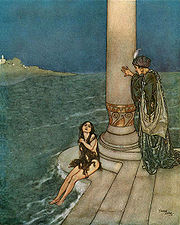
“The Little Mermaid” (Danish: Den lille havfrue) is a fairy tale by the Danishpoet and authorHans Christian Andersen about a young mermaid willing to give up her life in the sea and her identity as a mermaid to gain a human soul and the love of a human prince. The tale was first published in 1837 and has been adapted to various media including musical theater and animated film.
The tale of The Snow Queen is one of the best known children’s fairytales written by the outstanding Danish storyteller, Hans Christian Andersen (1805-1875). The Snow Queen was first published in 1845. Like all of Andersen’s fairy stories, the story of the Snow Queen teaches children good moral values through the triumph of good over evil, proving that love conquers all. This magical adventure is about two poor children, a boy and a girl, who are best friends until the bitter Snow Queen takes Kay away to her palace, and turns his heart to ice. Gerda, determined to find him, is challenged by many obstacles as she embarks on an unforgettable journey to rescue her kidnapped friend.
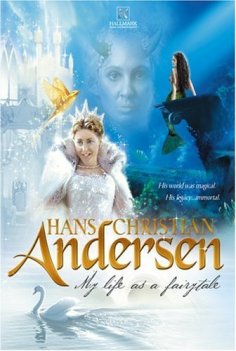
My life as a Fairy Tale. The lifestory of Hans. I got it from Netflix many years ago. I am thinking of renting it again.It is beautiful.The content is great the Photograpy, the Set Design, the Costume Design. ***** For all ages. A keeper.
A new display at the National Portrait Gallery will celebrate Twiggy’s 60th birthday and the publication of a new photographic biography of her life. One of the best-known and most respected models of all time Twiggy has worked with many of the world’s leading photographers and a selection of the most iconic and important of these portraits will be on show at the Gallery.
Twiggy by Barry Lategan in 1966 – the picture which made her career
Twiggy by Cecil Beaton
Twiggy by Richard Avedon
Launched with a famous haircut by Leonard and photographs by Barry Lategan in 1966, Twiggy was the world’s first supermodel. It was Lategan’s studies of her in the Daily Express that launched her as ‘the Face of 1966.’ For the next three years Twiggy helped define swinging London and she remains today an internationally recognised name and face. Appearing in all the leading magazines she has been photographed by Cecil Beaton, Richard Avedon, Melvin Sokolsky, Ronald Traeger, Bert Stern and Norman Parkinson amongst others.
In 1970 Twiggy embarked on her theatrical career. She played the lead in Ken Russell’s film of Sandy Wilson’s musical The Boyfriend (1971), for which she was awarded two Golden Globes -Most Promising Newcomer and Best Actress in a Musical. She went on to star in the Broadway musical My One and Only (1983-4), for which she was nominated for a Tony award. Twiggy continues to make regular appearances in print and on television and has more recently modelled for portraits by leading contemporary photographers including Bryan Adams, John Swannell, Mary McCartney, Steven Meisel and Sølve Sundsbo. This display of over 20 photographs will encompass the Twiggy’s life in portraits, from early shots by Lategan to the present day.
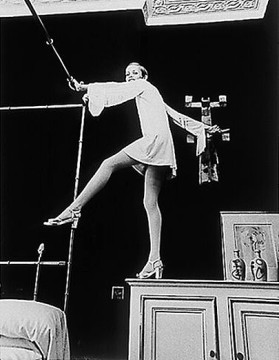
Twiggy by Ronald Traeger for Vogue
To accompany the display, the National Portrait Gallery will publish a hard-back book Twiggy: A Life in Photographs in September. A range of portraits from the Gallery’s Collection will be included in the book along with insights by Twiggy and an introduction by Terence Pepper, Curator of Photographs. An illustrated chronology – including Twiggy’s private collection of photographs, snapshots, cuttings and memorabilia – will explore her extraordinary life in front of the camera. The book (RRP £20) will contain over 100 illustrations, and a current retrospective of the portraits in Twiggy’s own words.
Recent: Solve Sundsbo’s shot last year (left) and Bryan Adams‘s in 2000
TWIGGY: A LIFE IN PHOTOGRAPHS
From 19 September 2009 – 24 March 2010
Room 33A
Admission Free
For further press information and image requests please contact:
Eleanor Macnair , Press Office, National Portrait Gallery
White Tail Resort, just 30 miles from Norfolk, VA, near Zuni, is participating in the Guinness World Records™ Largest Skinny-Dip Across North America. The record attempt takes place at 3:00 p.m. this Saturday, July 11, 2009. In conformance with stated rules, all participants to be counted must be completely nude during the skinny-dip. First-time skinny-dippers are welcome and to be included in the Guinness World Record, all participants must bring a photo ID.
White Tail Resort, established in 1984, is the only landed clothes free recreation facility in Virginia. Through the years White Tail has become a favorite vacation spot for over 600 members and numerous visitors. A family atmosphere, planned activities, great facilities and beautiful grounds keep people coming back time after time, visit our website to see rates and pictures of the grounds.
White Tail Resort is an active member of the Virginia Campground Association, the Franklin-Southampton Chamber of Commerce, the National Association of RV Resorts and Campgrounds, and the Trade Association for Nude Recreation. The resort maintains affiliations with the American Association for Nude Recreation, the Federation of Canadian Naturists, the Naturist Society, and the American Association for Nude Recreation Eastern Region.
The White Tail Resort is a year round resort, offering snow skiing, mountain biking, fly fishing, and other out door activities. Overnight accommodations are located within 6 miles
In the Nordic countries, with their sauna culture, nude swimming in rivers or lakes was a very popular tradition. In the summer, there would be wooden bathhouses, often of considerable size accommodating numerous swimmers, built partly over the water; hoardings prevented the bathers from being seen from outside. Originally the bathhouses were for men only; today there are usually separate sections for men and women.
It is not uncommon for private clubs with male-only or female-only facilities to allow (for example) nude swimming.Some argue that in more private environments (whether at home or in, say a single-gender bathhouse), the less clothing one has on when exercising or doing any activity the better.
Nudist clubs traditionally offer members and guests of both sexes the opportunity to swim nude. Many own or lease facilities that allow other sports to be played, including volleyball, tennis, badminton, bowling and the like. Typically these sports are played at a recreational level of intensity, and need not be particularly competitive.
*Some naked bodies can be very inspiring for a portrait or shoot.The great masters of paint used to make wonders with the human shapes. How do you see naked bodies ? Leave a comment about skinny dip. I like to know from an artistic perspective all others will be ignored( go to a porn site ).
Michael Joseph Jackson (August 29, 1958 – June 25, 2009) was an American recording artist, entertainer and businessman. The seventh child of the Jackson family, he made his debut as an entertainer in 1964 as a member of The Jackson Brothers (later renamed The Jackson 5). He then began a solo career in 1971 while still a member of the group, and that successful career led to him being dubbed the “King of Pop” in subsequent years. Jackson’s 1982 album Thriller remains the world’s best-selling album of all time, and four of his other solo studio albums are among the world’s best-selling records: Off the Wall (1979), Bad (1987), Dangerous (1991) and HIStory (1995).
A LIFETIME TO REMEBER
History will remember Michael Jackson as a black man who managed to break through every racial and artistic barrier to become a global pop icon, a true musical genius.
A winner of 13 Grammy awards, he etched a place for himself in the hearts and minds of people as the King of Pop with his signature song and dance moves, unusual wardrobe, feminine voice – and also as Wacko Jacko for the weirdest controversies.
Capable of unleashing mass hysteria like the Beatles and Elvis, he introduced mega-stardom through his massive live concert tours. He made a mark on the music scene by selling a total of 750 million records, a record for a solo artist.
SUPPORT AND CHARITY
Jackson donated and raised millions of dollars for beneficial causes through his Heal the World Foundation, charity singles, and support of 39 charities. Other aspects of his personal life, including his changing appearances and behavior, generated significant controversy that damaged his public image. The singer had experienced health concerns since the early 1990s along with conflicting reports regarding the state of his finances since the late 1990s. Jackson married twice and fathered three children, actions which caused further controversy. The singer died suddenly on June 25, 2009 at aged 50.
THE OTHER SIDE OF FAME
“Celebrity [is] the reward of those who project a vivid or pleasing exterior or have otherwise attracted attention to themselves,” Christopher Lasch wrote in The Culture of Narcissism. “It is evanescent… In our time, when success is so largely a function of youth, glamour, and novelty, glory is more fleeting than ever, and those who win the attention of the public worry incessantly about losing it.”
“To be a celebrity means to have more than the usual assaults on one’s ego,” says Charles Figley, Ph.D., director of the Psychosocial Stress Research Program at Florida State University. “You’re very vulnerable to the personal evaluations of other people. The public is ultimately in control of whether your career continues.”
The celebrities’ reactions to stress are: depression, loss of sleep, crying over nothing, bad moods, acting out and misbehavior on the part of their children, lack of concentration, stomach problems, paranoia, over-spending, lack of trust, and self-hatred.
Causes of stresses peculiar to celebrities, conducted a survey in which 200 questionnaires were mailed out to names randomly selected from a list of the public’s top-ranked celebrities. From 51 replies, he compiled a list of the primary sources of stress for celebrities and their families, as well as their reactions and solutions. Most of the questionnaires were completed by the celebrities, the rest by a spouse, friend, or adult child of the celebrity. The top 10 stressors, in order, were:
The Other side of FAME, sadness, loneliness, distress. The worse of all the accusations and lies. The pressure from the critics and the Media.
Hope is Better on the Other SIDE!
Peace to Michael and to all the people who chose this path in Life! You will be haunted by:
the celebrity press
critics
threatening letters/calls
the lack of privacy
the constant monitoring of their lives
worry about career plunges
stalkers
lack of security
curious fans
worries about their children’s lives being disrupted
FROM HIS OWN HEART
“I wanted to have a place that I could create everything that I never had as a child. So you see rides, you see animals, there’s a movie theatre. I was always on tour travelling, you know, and I never got a chance to do those things. So I compensated for the loss by – I have a good time – I mean, I can’t go into a park, I can’t go to Disneyland as myself. I can’t go out and walk down the street. There’s crowds and bumper-to-bumper cars. So I create my world behind my gates.” Michael Jackson
“Everything that I love is behind those gates.”.Michael Jackson
AS IT HAPPENS WITH MOST GENIUS
U.S. retailers sold 415,000 albums by Michael Jackson in the four days following his death last week. In addition, Michael Jackson sold more than 2.3 million digitally downloaded songs since his death.
* Thank you for your Music and for your Genius.Unforgetable that’s who you are!
This article is about the empress consort. For other uses of Sissi, see Sissi (disambiguation).
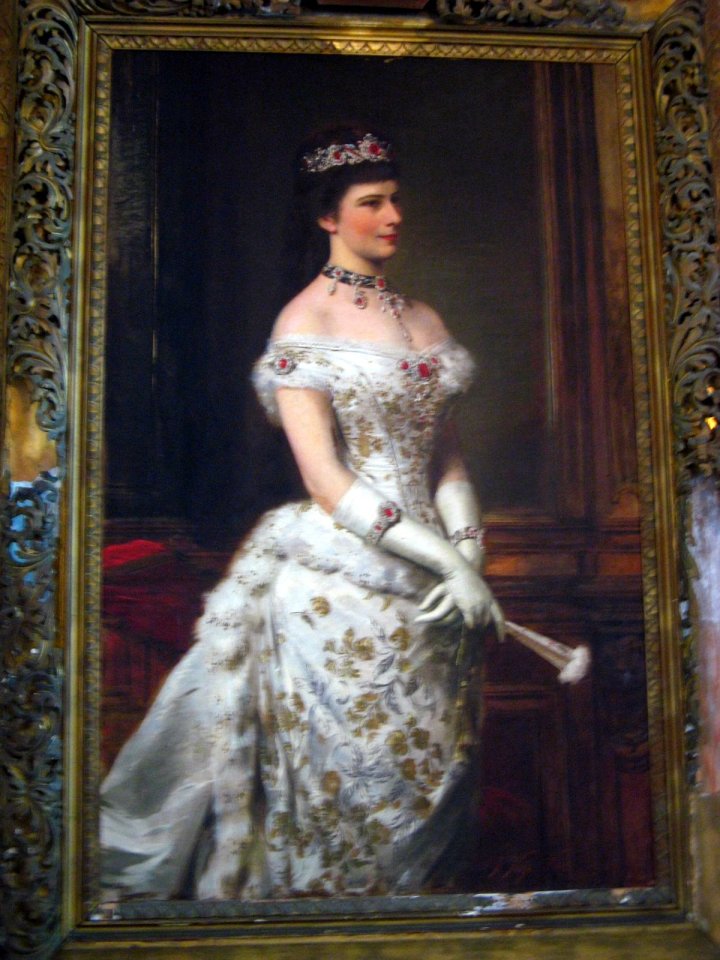
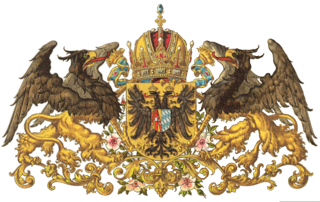
Elisabeth of Bavaria (24 December 1837 – 10 September 1898) was Empress of Austria and Queen of Hungary as spouse of Emperor Francis Joseph I. From an early age, she was called “Sisi” by family and friends.
While Elisabeth’s role and influence on Austro-Hungarian politics should not be overestimated (she is only marginally mentioned in scholarly books on Austrian history), she has undoubtedly become a 20th century icon. Elisabeth was considered to be a free spirit who abhorred conventional court protocol; she has inspired filmmakers and theatrical producers alike.
Elisabeth accompanied her mother and her 18-year-old sister, Duchess Helene, on an 1853 trip to the resort of Bad Ischl, Upper Austria , where they hoped Helene would attract the attention of their maternal first cousin, 23-year-old Francis Joseph, then Emperor of Austria. Instead, Francis Joseph chose the 16-year old Elisabeth, and the couple were married in Vienna at St. Augustine’s Church on 24 April1854.
QUEEN AND EMPRESS
Elisabeth had difficulty adapting to the strict etiquette practiced at the Habsburg court. Nevertheless, she bore the emperor three children in quick succession: Archduchess Sophie of Austria (1855–1857), Archduchess Gisela of Austria (1856–1932), and the hoped-for crown prince, Rudolf (1858–1889). In 1860, she left Vienna after contracting a lung-disease which was presumably psychosomatic. She spent the winter in Madeira and only returned to Vienna after having visited the Ionian Islands. Soon after that she fell ill again and returned to Corfu.
National unrest within the Habsburg monarchy caused by the rebellious Hungarians led, in 1867, to the foundation of the Austro–Hungarian double monarchy. Elisabeth had always sympathized with the Hungarian cause and, reconciled and reunited with her alienated husband, she joined Francis Joseph in Budapest, where their coronation took place. In due course, their fourth child, Archduchess Marie Valerie was born (1868–1924). Afterwards, however, she again took up her former life of restlessly travelling through Europe. Elisabeth was denied any major influence on her older children’s upbringing, however — they were raised by her mother-in-law Princess Sophie of Bavaria, who often referred to Elisabeth as their “silly young mother.”
Elisabeth embarked on a life of travel, seeing very little of her offspring, visiting places such as Madeira, Hungary, England and Corfu. At Corfu she commissioned the building of a palace which she called the Achilleion, after Homer‘s hero Achilles in The Iliad. After her death, the building was purchased by German Emperor Wilhelm II.
She became known not only for her beauty, but for her fashion sense, diet and exercise regimens, passion for riding sports, and a series of reputed lovers. She paid extreme attention to her appearance and would spend most of her time preserving her beauty. She often shopped at Antal Alter, now Alter és Kiss, which had become very popular with the fashion-crazed crowd, as described by the famous 19th-century writer Richard Rado:
“Everyone, from the most wealthy, to the upper middle class… almost every woman visited the shop. The shop’s name even extended beyond the country’s borders… Elizabeth of Bavaria (Sissi), wife of Francis Joseph I and Queen of the Austro-Hungarian monarchy, was also among its clients.
Her diet and exercise regimens were strictly enforced to maintain her 20-inch (50 cm) waistline and reduced her to near emaciation at times (symptoms of what is now recognised as anorexia).[citation needed] One of her alleged lovers was George “Bay” Middleton, a dashing Anglo–Scot who was probably the father of Clementine Ogilvy Hozier (the wife of Winston Churchill). She also tolerated, to a certain degree, Franz Joseph’s affair with actress Katharina Schratt.
The Empress also engaged in writing poetry (such as the “Nordseelieder” and “Winterlieder”, both inspirations from her favorite German poet, Heinrich Heine). Shaping her own fantasy world in poetry, she referred to herself as Titania, Shakespeare’s Fairy Queen. Most of her poetry refers to her journeys, classical Greek and romantic themes, as well as ironic mockery on the Habsburg dynasty. In these years, Elisabeth also took up with an intensive study of both ancient and modern Greek, drowning in Homer‘s Iliad and Odyssey. Numerous Greek lecturers (such as Marinaky, Christomanos, and Barker) had to accompany the Empress on her hour-long walks while reading Greek to her. According to contemporary scholars, Empress Elisabeth knew Greek better than any of the Bavarian Greek Queens in the 19th century.In 1889, Elisabeth’s life was shattered by the death of her only son: 30-year-old Crown Prince Rudolf and his young lover Baroness Mary Vetsera were found dead, apparently by suicide. The scandal is known by the name Mayerling, after the name of Rudolf’s hunting lodge in Lower Austria.
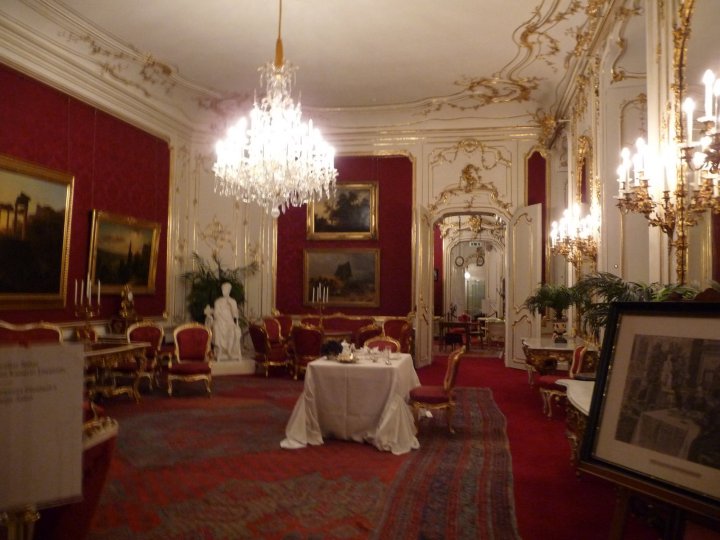
After Rudolf’s death, the Empress continued to be an icon, a sensation wherever she went: a long black gown that could be buttoned up at the bottom, a white parasol made of leather and a brown fan to hide her face from curious looks became the trademarks of the legendary Empress of Austria. Only a few snapshots of Elisabeth in her last years are left, taken by photographers who were lucky enough to catch her without her noticing. The moments Elisabeth would show up in Vienna and see her husband were rare. Interestingly, their correspondence increased during those last years and the relationship between the Empress and the Emperor of Austria had become platonic and warm. On her imperial steamer, Miramar, Empress Elisabeth travelled restlessly through the Mediterranean. Her favourite places were Cap Martin on the French Riviera, where tourism had only started in the second half of the 19th century, Lake Geneva in Switzerland, Bad Ischl in Austria, where she would spend her summers, and Corfu. More than that, the Empress had visited countries no other Northern royal went to at the time: Portugal, Spain, Morocco, Algeria, Malta, Greece, Turkey and Egypt. Travel had become the sense of her life but also an escape from herself.
LITERATURE AND DRAMA
In the German-speaking world, Elisabeth’s name is often associated with a trilogy of romantic films about her life directed by Ernst Marischka and starring a teenage Romy Schneider:
Sissi — die junge Kaiserin (1956) (Sissi — The Young Empress)
Sissi — Schicksalsjahre einer Kaiserin (1957) (Sissi — Fateful Years of an Empress)
The three films, now newly restored, are shown every Christmas on Austrian, German and French TV and have done much to create the myth surrounding Elisabeth. A condensed version dubbed in English was published in 1962 under the title Forever My Love, and in 2007 the three German films were released with English subtitles as The Sissi Collection.
Schneider loathed the role, claiming, “Sissi sticks to me like porridge (Griesbrei).” Later she was able to achieve a sort of satisfaction, appearing as a much more realistic and fascinating Elisabeth in Luchino Visconti‘sLudwig, a 1972 movie about Elisabeth’s cousin, Ludwig II of Bavaria. A portrait of herself in this film was the only one of her roles Schneider displayed in her home.
Ava Gardner also played the Empress in the 1968 film Mayerling. (Omar Sharif and Catherine Deneuve played the doomed lovers.) She, also, had one sole film portrait of herself on display in her home: it was from this film.
She was the subject of a 1991 German movie called Sissi/Last Minute (original Sisi und der Kaiserkuß “Sissi and the kiss of the Emperor”). The movie starred Vanessa Wagner as Sissi, Nils Tavernier as Emperor Franz Joseph and Sonja Kirchberger as Nene.
In 1974, Elisabeth was portrayed in the British television series Fall of Eagles by Diane Keen (as the young Elisabeth) and Rachel Gurney (as Elisabeth at the time of Prince Rudolf’s death).
Her story also became part of a children’s book series: The Royal Diaries: Elisabeth, The Princess Bride.
In one of the episodes of the Austrian TV show, Kommissar Rex (1994), about a police dog who always solves his police-inspector owner’s cases, the myth of Sissi is shown under the influence of her story on a young woman who often sneaks into a palace where Sissi lived and starts acting like her during the night, when the museum is closed. This includes riding in the park, using hair ornaments similar to the ones Elisabeth was known for using and even sleeping in the Empress’s bed, dressed in vintage nightwear, after having brushed her hair in Sissi’s way, separating it in two parts spread over the pillow so that the strands wouldn’t be mussed by morning: all this, of course, using Sissi’s old brush. This episode, the thirteenth of Season 5 of the show (and the last from that season), is called “Sissi” and originally aired on 22 April 1999. The empress-obsessed character’s name is Marion, and she is played by actress Marion Mitterhammer.
Her younger years are portrayed in a children’s series in 1997 called Princess Sissi.
In 2007, German comedian and director Michael Herbig released a computer-animated parody film of Sissi’s character under the title Lissi und der wilde Kaiser (lit.: “Lissi and the Wild Emperor”). It is based on his Sissi parody sketches featured in his TV show Bullyparade.
DANCE AND MUSIC
Fritz Kreisler composed a comic opera ‘Sissi’, which premiered in Vienna in 1932. The libretto was written by Ernst and Hubert Marischka, with orchestrations by Robert Russell Bennett.
In 1992, the musical Elisabeth premièred at the Theater an der Wien in Vienna, Austria. Written by Michael Kunze (libretto, lyrics) and Sylvester Levay (music), with the leading role of the Empress played by Pia Douwes of the Netherlands. It has also been produced successfully in Hungary, Germany, Switzerland, the Netherlands, Sweden, Finland and in Japan, with Douwes also again performing the role of Sissi in the Netherlands, Berlin, Essen and Stuttgart.
In the film version of Andrew Lloyd Webber‘s The Phantom of the Opera, the character Christine is wearing a gown inspired by a portrait of Elisabeth of Austria-Hungary by Franz Xavier Winterhalter during her opera debut when she performs the song “Think of Me”.
French ballet dancer Sylvie Guillem appeared to great acclaim at the Paris Opera Ballet in a piece titled Sissi Imperatice , choreographed by Maurice Bejart.
Elisabeth has a featured role in Kenneth MacMillan‘s ballet, Mayerling including a pas de deux with her son Prince Rudolf, the central character in the ballet; and a notable pas de six with five male partners, Bay Middleton and four Hungarian officers, friends of her son.
Dutch singer Petra Berger’s album Eternal Woman includes “If I Had a Wish”, a song about Elisabeth.
*I have to confess one thing. In 1998, I went to Vienna; I wanted to attend to the debut of Elizabeth at the Opera House. However, my husband did not know who Sissi or Elizabeth of Bavaria was. Therefore, he did not take me to see the Elizabeth, at the Vienna Opera house. Instead, he took me to see one play of his choice witch was about a butcher’s I dress myself in a beautiful evening gown to go to the Vienna Opera House. When I arrived I found out I was about to see the butchers. I left Vienna, thinking that I would be back there to see the show that I wanted so much to see! Now you can see why I was distressed! How could I have missed such an opportunity?
Mikhail Prokhorov (born May 3, 1965) is a Russian self-made billionaire and oligarch. He made his name in the financial sector and went on to become one of Russia’s leading industrialists in the precious metals sector. He is the former chairman of Norilsk Nickel, the world’s largest producer of nickel and palladium, and the current chairman of Polyus Gold, Russia’s largest gold producer.
In May 2007, Prokohorov launched a $17 billion private investment fund, Onexim Group, focused on the development of nanotechnology, including hydrogen fuel cells, as well as other high-technology projects and non-ferrous and precious metals mining. One of the key areas of development is the production of materials with ultra–tiny structures used in energy generation and medicine.
In June 2007, Russian Prime Minister Mikhail Fradkov announced the formation of the Government Council for Nanotechnology, to oversee the development of nanotechnology in the country. Prokhorov was one of 15 individuals appointed to the council, which will be chaired by Russian First Deputy Prime Minister Sergei Ivanov.
Mikhail Prokhorov’s net worth is currently estimated at $19.5 billion, making him the 24th richest man in the world according to Forbes magazine’s list of the World’s Richest People in 2008. Since then it has been estimated that the majority of his fortune was lost to the recent economic downturn. However, Prokhorov is currently the richest man in Russia and the 40th richest man in the world according to the 2009 Forbes list with an estimated fortune of $9.5 billion . If he lost 51% of his wealth within a year, he is the Russian oligarch who resisted the best to the financial crisis thanks to his sell of his Norilsk stake right before the meltdown. Most spectacularly, he had reportedly agreed to buy a villa in French Riviera from BrazilianphilantropistLily Safra for €400m but is in danger of losing a €39m deposit as he’s unable to afford to complete of the deal.
Early Life and Education
Mikhail Prokhorov was born on May 3, 1965, one of two children in the family. His father was a member of the Soviet sports committee and his mother was a scientist. His parents sent him to a language medium school in Moscow and then to the Moscow Financial Institute. In 1989, he graduated with a first class degree from the International Economic Relations Department of Moscow State Financial Institute. He also has an older sister named Irina.
In March 2004 he founded the Cultural Initiatives Foundation (The Mikhail Prokhorov Foundation), a charitable foundation; it is headed by Prokhorov’s elder sister Irina Prokhorova, prominent Russian publisher. He gives financial support to CSKA Moscow‘s basketball, hockey and football clubs, and is a member of the Supreme Council of the Sport Russia organisation.
With global populations growing at a rapid rate, energy security is one of the greatest issues facing the world today. The future will rely on traditional forms of energy as well as “new” sources, such as wind, solar and hydrogen power.
In Russia today there is an understanding that our resources are not infinite. There is also a growing realization we need to redouble our focus and investment in new technology in order to address current environmental challenges.
On Charity
Pure charity – helping those who are in a difficult situation, who seek care and protectorship – is a natural human need to do good. A successful businessman can prove himself in this activity as someone who has more power to help people.
The Mikhail Prokhorov Foundation is a Russian private charity established in 2004. It carries out nationwide and international activities, as well as local projects in the Krasnoyarsk region, the Urals, Siberia, the Russian Far East, and in the industrial area of Norilsk.
The long-term goal is to promote Russian culture and further its integration into global context. The Foundation’s concept is based on a broader notion of culture, its borders, and its social functions. This modern idea of culture determines the key activities of the Foundation, which include: initiatives in arts;science and education; development of mass media; urban environment; sports and public health.
The Foundation’s activities are based on the belief that a better life of the society is conditional upon its cultural level. Geographically, the Foundation tries to localise its activities to reflect the uniqueness and specific needs of communities concerned. This approach is especially valuable in today’s globalised world.
Brief History of the Foundation
From 2004 till 2006, the Foundation operated exclusively in Norilsk and thus became the first charity in Russia to work systematically with one specific region.
Later it expanded it scope to include the whole of Krasnoyarsk Krai, the biggest Siberian region.
Since 2008, several competition projects have embraced the Urals, Siberia, and the Russian Far East.
Simultaneously, the Foundation supports unique nationwide and international projects aiming to incorporate Russian culture into the global context.
Its 2007 Annual Report was named the best report in the private foundations category of the 2nd Point of Reference competition sponsored by the Russian Public Chamber’s Commission for Development of Charity and NGO Legislation.
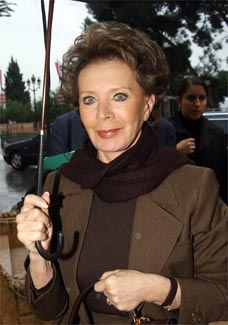
Lily Safra was born in 1938 in Porto Alegre, Brazil to a Czech father.Lily Safra is a Brazilian philanthropist and social figure. Born to an affluent family, she attained considerable wealth.
In 1999, Edmond Safra, a sufferer of Parkinson’s disease, perished from a criminal fire at their apartment in Monaco. Lily Safra survived, as she was saved from the fire by the police. An American nurse, Ted Maher, was arrested under suspicion of starting the fire, and was convicted of the crime in 2002. He claimed that he had started the fire to carry out a daring rescue, in order to increase his standing in the Safra family’s eyes, but that he lost control of the fire. The details of Mr Safra’s passing were discussed by media outlets including 60 Minutes and by Dominick Dunne in Vanity Fair; the incident also served as a basis for an episode of Law & Order.
PHILANTHROPHY
Edmond & Lily Safra Children’s Hospital
Mrs Safra is the Chairwoman of the Edmond J. Safra Philanthropic Foundation, which supports projects related to education, science and medicine, religion, culture, and humanitarian relief. Mrs. Safra shared her commitment to caring for the less fortunate with her husband, Mr. Edmond J. Safra, one of the twentieth century’s most accomplished bankers and founder of the Edmond J. Safra Philanthropic Foundation. Since 1999 she has chaired this Foundation, which supports hundreds of projects over 50 countries. She has initiated many educational projects in memory of her husband, including endowing the Edmond J. Safra Center for Ethics at Harvard University. A long and distinguished relationship with the Hebrew University of Jerusalem led to the naming of the Edmond J. Safra Campus.
Mrs. Safra is Honorary Chairman of the International Sephardic Education Foundation (ISEF), which she established with her husband in 1977. ISEF is the largest non-profit organization promoting higher education for gifted Israelis from disadvantaged backgrounds. Since its founding, over 16,000 scholarships have been granted, including support for more than 1,000 MA and PhD students. She also supports the Lily Safra Internship Program at the Hadassah-Brandeis Institute at Brandeis University in Waltham, Massachusetts. The internship program takes place during the summer and allows six undergraduate and two graduate students to carry out research at the HBI.
Both personally and through the Foundation, she supports research into cancer, AIDS, multiple sclerosis, and neurodegenerative diseases,particularly Alzheimer’s and Parkinson’s, at hospitals and universities worldwide. Her awareness of the distress experienced by the families of those battling illnesses led her to construct the Family Lodge for patients and their families at the National Institutes of Health in Bethesda, Maryland. She and her husband built a cutting-edge children’s hospital in Tel Hashomer, outside of Tel Aviv, which treats thousands of Israeli and Palestinian children. She is a member of the Board of the Michael J. Fox Foundation for Parkinson’s Research and of the Foundation for the National Institutes of Health.
In addition to being a Trustee of New York’s Museum of Jewish Heritage and the Somerset House Arts Fund in London, Mrs. Safra is a member of the Chairman’s Council of the Museum of Modern Art and the Kennedy Center’s International Committee on the Arts. She supported the joint acquisition of Bill Viola’s “Five Angels of the Millennium” by the Centre Pompidou in Paris, the Tate Gallery in London, and the Whitney Museum in New York, and established the Edmond J. Safra Visiting Professorship at the National Gallery of Art in Washington. She is also significantly involved with the activities of London’s Courtauld Institute of Art, supporting curators and providing scholarships to outstanding art history students, in addition to having underwritten acclaimed exhibitions in the Institute’s Hermitage Rooms.
In the aftermath of Hurricane Katrina, Mrs. Safra was a lead supporter of the American Red Cross’s relief effort, and she was instrumental in helping Dillard University of New Orleans continue to offer classes in temporary locations and to rebuild for the Fall 2006 semester. For many years she has assisted numerous New York City community organizations,chiefly Henry Street Settlement, the New York Center for Children, the Children’s Health Fund, and God’s Love We Deliver.
HONORS
Lily Safra holds honorary doctorates from The Hebrew University of Jerusalem, Brandeis University, Tel Aviv University, and Imperial College London, and she is an Honorary Fellow of King’s College London and the Courtauld Institute of Art. The French Government accorded her the rank of Commandeur in the Ordre des Arts et des Lettres in 2004, and she was named Chevalier de la Légion d’honneur by President Jacques Chirac in 2005.
Possibilities emerge when we earnestly search for what is hindering our destiny to flow naturally.
There are times when it seems that we are going round and round in circles about the same situation and our horizon shows no perspective whatsoever.
Many times, we fail to perceive that we have become wearied of some situations and it is time for us to open up to new things.
We have a habit of creating standards and routines hindering new possibilities to appear… because standards and routines imprison us in an endless repetition of the same things.
There are countless things chaining us to the past, never allowing the present to happen, things that manifest themselves as soon as we open the door.
We are imprisoned by pain and fear… when they prevent us from even getting close to setting them free and achieve what is beyond.
We tie ourselves to what was good… but now it is in the past… this also keeps us from allowing new things to enter our lives…
Actually, if we would remember that we are only present when we are whole at those moments, then we would allow life to flow without tying ourselves to the concepts of “good” and “bad”…
Many times we are imprisoned even in the Light… to some special experience, from this or other lives that gratified, and that we keep trying to repeat now, without remembering that the Light is available when we are in the present time accessing all the possibilities as we sink into creative emptiness.
Trying to live the situations you had in the past, for the best that they may have been… only keeps us from other possibilities that can reveal even more precious experiences than those we have in our memory.
Haven’t you noticed how we repeat our daily routines and almost never remember that the day can be filled with different things… different experiences… different ways to practice things…
So many people say they want new things in their lives…but only accept what comes in old colors… because it gives an illusion of safety.
To really access what the Universe has for us… we must be willing to give up many things… and that may happen in a much gentler way than we think it could, when our choices are made in the present.
Be the Light… Be the shadow… let go … if this is holding you in some way, and open yourself to the countless possibilities that are present in the moments in which when we are whole… here and now
Then… a magic field opens up with ever more… and more… to be explored, leading us to discover that the Universe is unlimited in possibilities…
“Meu principal objetivo é ser reconhecido no mundo do automobilismo como um bom profissional, ser visto como alguém que conquistou algo. Também quero que valorizem o esforço que aplico no meu trabalho” (1983)
“Eu quero ser um piloto de Fórmula 1 vencedor. Não quero competir por competir, vencer vai ser parte da minha filosofia” (1983)
“A Fórmula 1 é um salto muito grande para quem vem da F3 e preciso de tempo para me adaptar. Devo ter uma base sólida antes de uma possível mudança de categoria. Até agora tenho apenas três anos de experiência (na F3), porém conto com grande experiência nos karts. Tudo bem que tenho 23 anos, mas tenho tanta experiência como alguns pilotos de 30” (1983)
“Quando eu me tornar campeão não vou deixar de ser eu mesmo” (1984)
“Eu vi Deus, foi ele quem me guiou. Tive sinais que indicaram seus desejos e poder. Acima de tudo, seu poder de controlar o que está a sua volta, tudo. Algumas pessoas nunca têm a experiência que eu vivi, e não acreditam no que eu digo. Eu rezava, agradecendo a Deus que eu seria campeão mundial. Quando, concentrado ao máximo, eu fazia uma curva a 180 graus, eu vi uma foto dele, grande, ali, suspensa, subindo para o céu. Tudo isso ao mesmo tempo em que me concentrava, conduzindo o carro. Este contato com Deus foi uma experiência maravilhosa” (1988)
“A Xuxa gostava muito de sua profissão e não tínhamos tempo para estarmos juntos, por isso tivemos que nos separar” (1989)
“Antes de me aposentar, eu vou pilotar para a Ferrari” (1989)
“Tem provas que terminam faltando seis voltas e outras na primeira curva…” (sobre o acidente com Alain Prost no GP do Japão de 1990)
“Meu maior erro? acho que ainda não o cometi…” (1991)
“Deixar de correr porque é perigoso? Também posso ser atropelado” (1991)
“Nós corremos mais riscos que as pessoas de outras profissões e, por isso, sabemos lidar melhor com o medo” (1991)
“O sentimento de chegar quase ao seu limite é fascinante” (1991)
“Quando Deus quer algo, nada pode-se contra” (a alguns jornalistas depois da vitória em Interlagos, em 1991)
“Eu corro para disputar, não para ganhar dinheiro…” (diante da oferta da Ferrari para ter o piloto brasileiro, em 1992)
“Para a Williams, eu até correria de graça” (1992)
“Superstições? Não acredito nelas, só creio no trabalho” (1993)
“O que eu quero, acima de tudo, é voltar a pilotar um carro competitivo, que tenha possibilidade de ganhar e lutar pelo título. Não quero uma temporada como a de 1992. Quero ser competitivo” (1993)
“Ele não é um piloto, é um idiota” (em referência a Eddie Irvine por um incidente em Suzuka, em 1993)
“É o sonho da minha vida. Frank (Williams) foi o primeiro a me dar uma oportunidade na F1, em 1983, e agora, finalmente, estaremos juntos” (1993)
“Quero sair deste buraco em que me encontro. Creio que posso correr até o ano de 2000. Posso chegar, inclusive, ao pentacampeonato mundial, como Fangio” (1994)
“Ganhar uma corrida é um desafio muito maior do que ganhar US$ 1 milhão” (1994)
“Ceccoto, De Angelis, Dumfries, Nakajima, Berger, Andretti, Hakkinen: nunca tive nenhum problema com eles. Só tive problemas com um piloto (Prost)” (1994)
“Campeão mundial antecipado? É fácil dizer, mas esse ano está muito difícil” (1994)
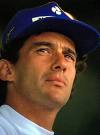
Senna began his motorsport career in karting and moved up the ranks to win the British Formula 3 championship in 1983. Making his Formula One debut with Toleman in 1984, he moved to Lotus-Renault the following year, and won six Grands Prix over the next three seasons. In 1988 he joined Frenchman Alain Prost at McLaren–Honda. Between them, Senna and Prost won fifteen out of the sixteen Grands Prix which took place that season, with Senna winning his first World Championship, a title he would go on to win again in 1990 and 1991. McLaren’s performance declined in 1992, as the Williams–Renault combination began to dominate the sport, although Senna finished runner-up in 1993. He moved to Williams in 1994, but suffered a fatal accident at the third race of the season at the Autodromo Enzo e Dino Ferrari in Italy.
Senna is regarded as one of the greatest drivers in the history of Formula One. He was recognised for his qualifying speed over one lap and held the record for most pole positions from 1989 to 2006. He was among the most talented drivers in extremely rain-affected conditions, as show by his performances in the 1984 Monaco Grand Prix, the 1985 Portuguese Grand Prix, and the 1993 European Grand Prix. He also holds the record for most victories at the prestigious Monaco Grand Prix (6) and is the third most successful driver of all time in terms of race wins.
Senna courted controversy throughout his career, particularly during his turbulent rivalry with Alain Prost, which was marked by two championship-deciding collisions at the 1989 and 1990 Japanese Grands Prix. Being competitive and unwilling to settle for second, Senna’s style consisted of pushing the car to its limits and going flat out, a stark contrast to the relaxed intellectual style of his nemesis Prost. Senna’s aggression had inspired Michael Schumacher, another F1 great who idolized Senna and had who also courted similar controversy through his career.
Born and raised in Finland, Nissinen started his training at age ten with the Finnish National Ballet School, continuing his studies at the Kirov Ballet School. His primary teachers were Jacobson, Damianov, Sokolov, and Terasveori. In 1978, he won First Prize at The National Ballet Competition in Kuopio, Finland. Launching his professional dance career at the age of fifteen, Nissinen went on to perform with the Dutch National Ballet, Basel Ballet and San Francisco Ballet, where he was Principal Dancer for nine years. After retiring from his performing career, he was Artistic Director for Marin Ballet and Alberta Ballet before coming to Boston.






























 ADRIANA SASSOON
