VIDAL SASSOON PROFESSIONAL BEAUTY EDUCATION SCHOLARSHIP PROGRAM
The Vidal Sassoon Professional Beauty Education Scholarship Program is a 5-year program where 100 Basic and 100 Advanced scholarships will be awarded over the next five years. Each year, the Basic and Advanced competitions will open twice, with 10 people winning each competition (20 a year for five years). If you are not eligible for a competition NOW, you might be in the future, so sign up for our email list so that we can update you with the latest competition dates and other future scholarship opportunities.
*Join us as we shape the inner & outer beauty in people’s lives.
An organization dedicated to raising awareness of how careers in the hair and beauty industry transform lives, personally and professionally.
European topiary dates from Roman times.
Pliny’s Natural History and the epigram writer Martial both credit Cnaeus Matius Calvinus, in the circle of Julius Caesar, with introducing the first topiary to Roman gardens, and P…liny the Younger describes in a letter the elaborate figures of animals, inscriptions, cyphers and obelisks in clipped greens at his Tuscan villa (Epistle vi, to Apollinaris).
Within the atrium of a Roman house or villa, a place that had formerly been quite plain, the art of the topiarius produced a miniature landscape (topos) which might employ the art of stunting trees, also mentioned, disapprovingly, by Pliny (Historia Naturalis xii.6).
Topiary is the horticultural practice of training live perennial plants by clipping the foliage and twigs of trees, shrubs and subshrubs to develop and maintain clearly defined shapes, perhaps geometric or fanciful; the term also refers to plants which have been shaped in this way.
As an art form it is a type of living sculpture.
The word derives from the Latin word for an ornamental landscape gardener, topiarius, a creator of topia or “places”, a Greek word that Romans also applied to fictive indoor landscapes executed in fresco.
No doubt the use of a Greek word betokens the art’s origins in the Hellenistic world that was influenced by Persia, for neither Classical Greece nor Republican Rome developed any sophisticated tradition of artful pleasure grounds.[citation needed]
The plants used in topiary are evergreen, mostly woody, have small leaves or needles, produce dense foliage, and have compact and/or columnar (e.g., fastigiate) growth habits.
Common species chosen for topiary include cultivars of European box (Buxus sempervirens), arborvitae (Thuja species), bay laurel (Laurus nobilis), holly (Ilex species), myrtle (Eugenia or Myrtus species), yew (Taxus species), and privet (Ligustrum species).
Shaped wire cages are sometimes employed in modern topiary to guide untutored shears, but traditional topiary depends on patience and a steady hand; small-leaved ivy can be used to cover a cage and give the look of topiary in a few months.
The hedge is a simple form of topiary used to create boundaries, walls or screens.
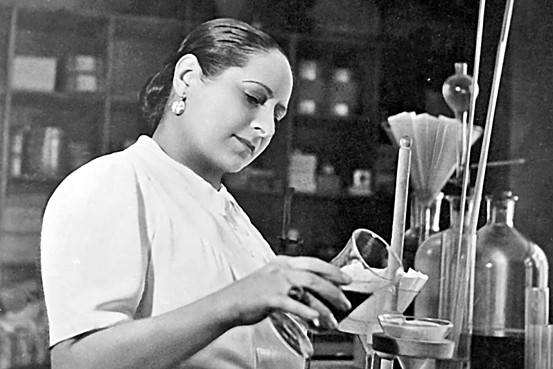
Helena Rubinstein (born Chaya Rubinstein, December 25, 1870 April 1, 1965), a Polish-born Americanbusiness magnate. She was the founder and eponym of Helena Rubinstein, Incorporated, which made her one of the world’s richest women.
At the outbreak of World War I, she and Titus moved to New York City, where she opened a cosmetics salon in 1915, the forerunner of a chain throughout the country. This was the beginning of her vicious rivalry with the other great lady of the cosmetics industry, Elizabeth Arden. Both Rubinstein and Arden, who died within 18 months of each other, were social climbers. And they were both keenly aware of effective marketing and luxurious packaging, the attraction of beauticians in neat uniforms, the value of celebrity endorsements, the perceived value of overpricing and the promotion of the pseudo-science of skincare.
From 1917, Rubinstein took on the manufacturing and wholesale distribution of her products. The “Day of Beauty” in the various salons became a great success. The purported portrait of Rubinstein in her advertising was of a middle-age mannequin with a Gentile appearance.
In 1928, she sold the American business to Lehman Brothers for $7.3 million, ($88 million in 2007). After the arrival of the Great Depression, she bought back the nearly worthless stock for less than $1 million and eventually turned the shares into values of multimillion dollars, establishing salons and outlets in almost a dozen U.S. cities. Her subsequent spa at 715 Fifth Avenue included a restaurant, a gymnasium and rugs by painter Joan Miró. She commissioned Salvador Dalí to design a powder compact as well a portrait of herself.
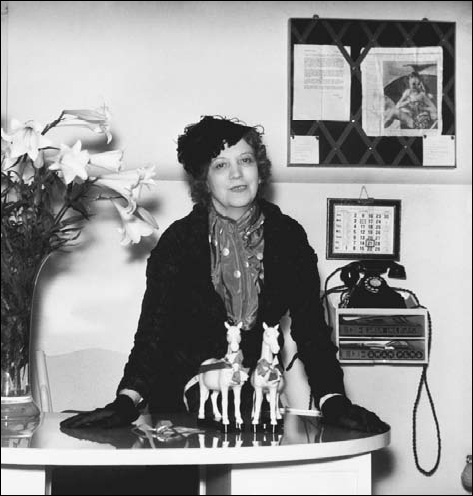
Florence Nightingale Graham (December 31, 1884 – October 18, 1966), who went by the business name Elizabeth Arden, was a Canadian-American businesswoman who founded what is now Elizabeth Arden, Inc., and built a cosmetics empire in the United States. At the peak of her career, she was one of the wealthiest women in the world.
Arden was born in 1884 in Woodbridge, Ontario, Canada. Her parents had emigrated to Canada from Cornwall, United Kingdom in the 1870s. Her father, William Graham, was Scottish and her mother, Susan, was Cornish and had arranged for a wealthy aunt in Cornwall to pay for her children’s education. Arden dropped out of nursing school in Toronto.
She then joined her elder brother in Manhattan, working briefly as a bookkeeper for the E.R. Squibb Pharmaceuticals Company. While there, Arden spent hours in their lab, learning about skincare. She then worked—again briefly—for Eleanor Adair, an early beauty culturist, as a “treatment girl”.
In 1909 Arden formed a partnership with Elizabeth Hubbard, another culturist. When the partnership dissolved, she coined the business name “Elizabeth Arden” from her former partner and from Tennyson‘s poem “Enoch Arden.” With a $6,000 loan from her brother, she then used the shop space to open her first salon on 5th Avenue.
In 1912 Arden travelled to France to learn beauty and facial massage techniques used in the Paris beauty salons. She returned with a collection of rouges and tinted powders she had created. She began expanding her international operations in 1915, and started opening salons across the world.In recognition of her contribution to the cosmetics industry, she was awarded the Légion d’Honneur by the French government in 1962.
Arden died at Lenox Hill Hospital in Manhattan in 1966; she was interred in the Sleepy Hollow Cemetery in Sleepy Hollow, New York, under the name Elizabeth N. Graham.
Staatliches Bauhaus (help·info), commonly known simply as Bauhaus, was a school in Germany that combined crafts and the fine arts, and was famous for the approach to design that it publicized and taught. It operated from 1919 to 1933, literally “house of construction”, stood for “School of Building”.
The Bauhaus school was founded by Walter Gropius in Weimar. In spite of its name, and the fact that its founder was an architect, the Bauhaus did not have an architecture department during the first years of its existence. Nonetheless it was founded with the idea of creating a “total” work of art in which all arts, including architecture, would eventually be brought together. The Bauhaus style became one of the most influential currents in Modernist architecture and modern design.[1] The Bauhaus had a profound influence upon subsequent developments in art, architecture, graphic design, interior design, industrial design, and typography.
The school existed in three German cities (Weimar from 1919 to 1925, Dessau from 1925 to 1932 and Berlin from 1932 to 1933), under three different architect-directors: Walter Gropius from 1919 to 1928, Hannes Meyer from 1928 to 1930 and Ludwig Mies van der Rohe from 1930 until 1933, when the school was closed by its own leadership under pressure from the Nazi regime.
The changes of venue and leadership resulted in a constant shifting of focus, technique, instructors, and politics. For instance: the pottery shop was discontinued when the school moved from Weimar to Dessau, even though it had been an important revenue source; when Mies van der Rohe took over the school in 1930, he transformed it into a private school, and would not allow any supporters of Hannes Meyer to attend it.
The Black-and-white Revival was an architectural movement from the middle of the 19th century which revived the vernacular elements of the past, using timber framing. The wooden framing is painted black and the panels between the frames are painted white. The style was part of a wider Tudor Revival in 19th-century architecture.
Nikolaus Pevsner describes the movement as a “Cheshire speciality”,but states that it was not created in Cheshire and is not confined to the county. The earliest example noted by Pevsner is the Henry VII Lodge in Woburn Sands, Bedfordshire, built in 1811. The other example he gives is the Court House in Worsley, which was built in 1849.The first Cheshire architect to be involved in the movement was T. M. Penson who restored the house at No. 22 Eastgate Street, Chester in 1852 in the black-and-white style. This was followed by his further restorations in Eastgate Street, at Nos. 34–36 in 1856and No. 26 in 1858.However Pevsner considers that Penson’s works were “moderate in size and not very knowledgeable in detail”.
The movement was improved when John Douglas and T. M. Lockwood “discovered the medium”. They were the principal architects of the movement and they “transformed the street frontages of the city with their black and white buildings”. Major examples of their work are Lockwood’s building opposite Chester Cross at No. 1 Bridge Street of 1888and the terrace of buildings on the east side of St Werburgh Street of 1895–99 by Douglas.The black-and-white tradition in Chester continued into the 20th century.
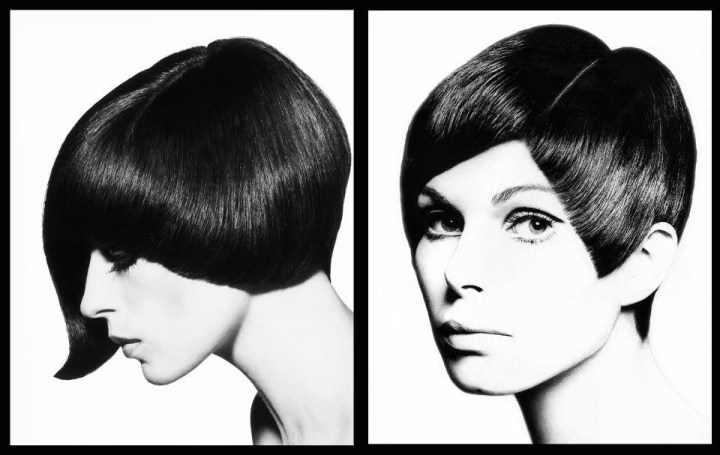
The colour palette is neutral dusk brown, cool caramel, sepia and sparkling sable, which creates low-key modernity.
SASSOON Professional Video:
The Black-and-white Revival was an architectural movement from the middle of the 19th century which revived the vernacular elements of the past, using timber framing. The wooden framing is painted black and the panels between the frames are painted white. The style was part of a wider Tudor Revival in 19th-century architecture.
Our aim is to share the knowledge that we gain in the development of our craft.
From the heart of our creative system in London, the Sassoon courses are developed, honed and delivered around the globe through our schools, academies and education centres, ensuring that not only will you gain real commercial skills from our courses, you will also take away with you a piece of the culture that created Sassoon.
Our courses are developed and designed to be contemporary, relevant and forward thinking and are delivered with passion, commitment and technical excellence. You will leave inspired, with real commercial skills and receive an insight into the unique culture that is Sassoon.
We look forward to welcoming you at one of our International Academies.
Sojourn Beauty products are a Hollywood Fashionista favorite!
When we learned that Sojourn Beauty products are not only used by celebrities at home, but also used on set for films and shows such as Pan Am, Happy Ending, Whitney, Vampire Diaries and One Tree Hill, we knew we had to try the collection.
We decided to test out the “Smooth” hair care collection by Sojourn since here in the Bay Area we can easily fall victim to foggy weather which makes our hair frizzy and fluff in the wrong places. After using the shampoo and conditioner for four days straight, our hair was manageable and frizzy-free; love it!
Since the shampoo and conditioner alone were able to smooth our hair, we dedicated to try out the “Serum Smooth” while blow drying our hair.
Once again, smooth and shiny results! The leave-in detangler also worked like a charm when we tried it. We tested the detangler on fine, blond hair that tangles and frizzes one minute after being combed. Again, we were impressed! Her hair was tangle free and it did not frizzy back up; as it normally does on a daily basis.
The verdict is in! Five out of five stars for Sojourn Beauty’s Smooth collection. The hair care line is pH balanced with a range of 4.5-5.5 which is based on positive hair chemistry.
Sojourn Beauty is also eco-conscious since the packaging is 100% biodegradable, there are no artificial colors and it is sulfate-free, gluten-free, formaldehyde-free, paraben-free and contains Keratin Cashmere protein. Fabulous!




























 ADRIANA SASSOON