
Posts

BLUE CHIP FEED
BLUE CHIP FEED
ADRIANA SASSOON FOR BLUE CHIP
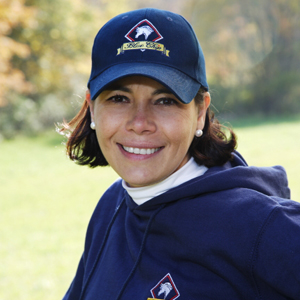
Adriana Sassoon for Blue Chip Feed.
CLARE BLASKEY
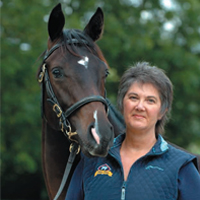
Hello – 2009 is proving to be another amazing year for Blue Chip. We have launched a fantastic liquid joint supplement, the first to use Rosa canina in a formulation for horses. Rosa canina has gained much respect from researchers in the human field of joint comfort, health and mobility.
This truly incredible product we have called joint RLF. It has already won an award for innovation at the British Equestrian Trade Association International Trade Fair. The judges’ comments were ‘its great to see a new product that is backed by such extensive scientific trials’.

http://www.bluechipfeed.com/2009/12/14/merchandise/
* As a horse rider and as Clare’s friend I truly recommend Blue Chip Feed above any other horse supplement.I am very proud to be sponsored by Blue Chip Feed.For further details or information contact Blue Chip directly.
Advice line: +44 (0)114 263 1200
Office: +44 (0)114 266 6200
Email: info@bluechipfeed.com
Address: 504 Ecclesall Road, Sheffield, S11 8PY.
LOUIS SULLIVAN
LOUIS SULLIVAN
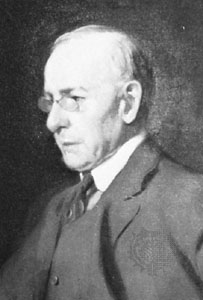
The original wording was “form ever follows function.” It is also routinely misattributed, mostly to 20th-century modernist grandees, like Le Corbusier and Mies van der Rohe, but was actually coined by the less famous American architect, Louis Sullivan. Misused though Sullivan’s quote has been, his point, that the style of architecture should reflect its purpose, made sense at the time, and continued to do so for much of the last century, not just for buildings, but objects too.
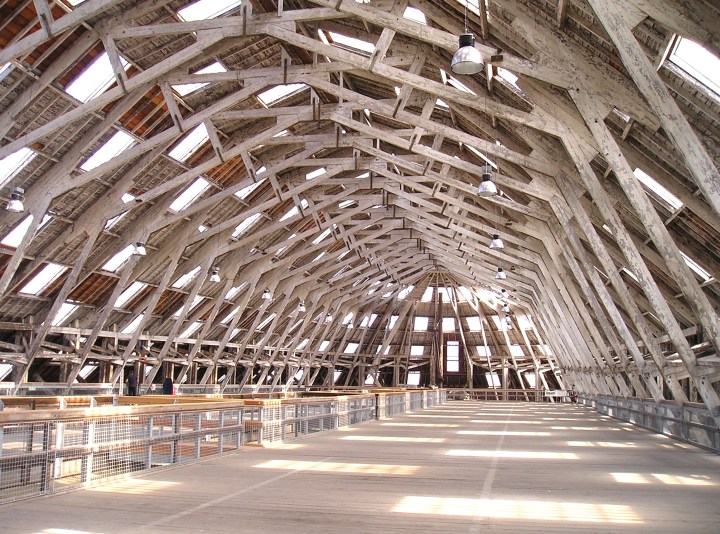
“form ever follows function.”
Louis Sullivan was born in 1856 in Boston and studied architecture for a year at MIT before leaving for the Ecole des Beaux-Arts. Like H.H. Richardson, Sullivan is regarded today as one of the most individual and innovative architects of the developing modern period. He replaced the standard classical ornamentation of the day with highly original, organic architectural details inspired by nature. One of Sullivan’s most notable contributions was the creation of a form appropriate to the tall commercial office building. Rather than stressing the horizontal layers of each story, he emphasized the vertical rise of these buildings. Verticality was made possible by steel frame construction and the use of light materials such as terra cotta, which had a malleability appropriate for carrying out his ornament.
Adler and Sullivan designed the Transportation Building for the 1893 World’s Columbian Exposition in Chicago. It was a long structure, extending 960 feet, with walls punctuated by arcade windows. The focal point of the building was the Golden Door, an awesome portal formed by layers of receding arches that featured gold leaf ornament, adding to a sense of the building’s movement. The Transportation Building, while not included with the buildings surrounding the central basin, nonetheless occupied a large, important site and was widely admired, despite a lack of overt classical references.
It was the assemblage of noble, classical edifices, laid out according to the plans of D.H. Burnham in the Great Basin of the Exposition, that particularly angered Sullivan but captivated hundreds of visitors. These buildings–the Agricultural Building (McKim, Mead & White), Machinery Hall (Peabody & Stearns), the Administration Building (Richard Morris Hunt), the Electricity Building (Van Brunt and Howe), and Manufacturers Hall (George B. Post)–formed the heart of the Exposition and represented important interests. The presence of drawings in the MIT architecture studio by Adler and Sullivan and by William LeBaron Jenney extended the memory of the Exposition, reinforcing the exceptional qualities of the two buildings.
MAKE THE WORLD A BETTER PLACE
MAKE THE WORLD A BETTER PLACE
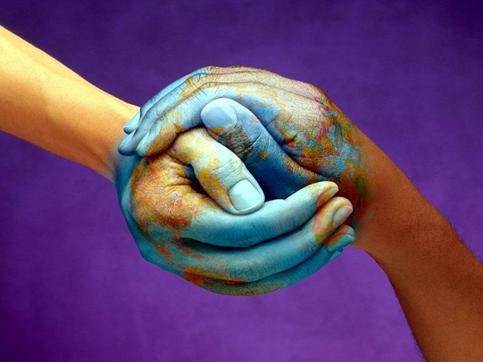
Siedah Garrett:Man in the Mirror for Michael Jackson

The Seven Foundations of a Better World
This knowledge section summarizes the main challenges that we as a global community face in the 21st century, provides viable alternative solutions that can be implemented, and shares examples of what thousands of people around the world are already doing.
- Economic Fairness
- Comprehensive Peace
- Ecological Sustainability
- Deep Democracy
- Social Justice
- Culture of Simplicity
- Revitalized Community
Eco Audit: The Better World Handbook is printed on acid-free paper that is 100% old growth forest free (using either post-consumer recycled content or alternative fibers), processed chlorine free, and printed with vegetable-based, low VOC inks.
http://www.betterworldhandbook.com/2nd/eco.html
*Let’s MAKE A CHANGE………..It’s ALL ABOUT CHANGE.
Be Pro active!
LUCIO FONTANA
LUCIO FONTANA
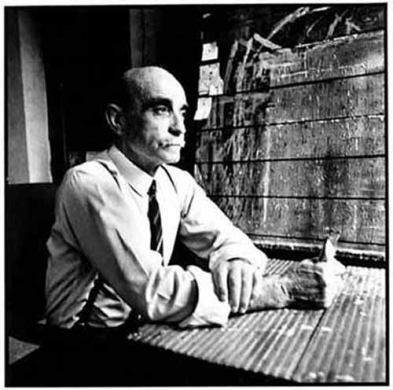
ZERO-Art:
The ZERO group was initiated in April 1957 with a series of exhibitions around the studios of Heinz Mack and Otto Piene in Düsseldorf. It went on to become one of the most significant collaborative movements of Post War art and eventually incorporated the work of Yves Klein, Lucio Fontana, Piero Manzoni, Daniel Spoerri, Jean Tinguely, and Günther Uecker among others. In addition to inexpensive studio space and the renowned Academy, artists were drawn to Düsseldorf by the gallery of Albert Schmela, which opened in May 1957 with an exhibition of Klein’s Monochromes and played a pivotal role in the development of ZERO art. While Klein was included in the seventh ZERO exhibition in April 1958, Fontana and Manzoni contributed to the eighth show the following month. Indeed, ZERO brought together protagonists of pioneering contemporary artistic movements from across Europe, including Nouveau réalisme and Arte Povera. The ideology of the ZERO group was voiced through its own eponymous magazine, which was published between 1958 and 1961 and included influential texts by Piene, Mack and Klein.
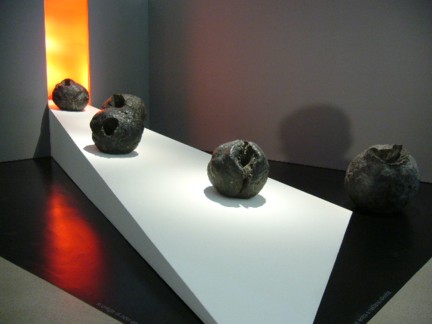
Lucio Fontana (19 February 1899 – 7 September 1968) was an Argentine painter and sculptor. He was mostly known as the founder of Spatialism and his ties to Arte Povera.
Born in Rosario, province of Santa Fe, Argentina of Italian parents,Fontana spent the first years of his life in Italy and came back to Argentina in 1905, where he stayed until 1922, working as a sculptor along with his father, and then on his own.
In 1927 he returned to Italy and studied under the sculptor Adolfo Wildt, and there he presented his first exhibition in 1930, organized by the Milano art gallery Il Milione. During the following decade he journeyed Italy and France, working with abstract and expressionist painters. In 1935 he joined the association Abstraction-Création in Paris and from 1936 to 1949 made expressionnist sculptures in ceramic and bronze.
In 1940 he returned to Argentina. In Buenos Aires (1946) he founded the Altamira academy together with some of his students, and made public the White Manifesto, where he states that “Matter, colour and sound in motion are the phenomena whose simultaneous development makes up the new art”. Back in Milano in 1947, he supported, along with writers and philosophers, the first manifesto of spatialism (Spazialismo)**. He also resumed his ceramics works in Albisola.
From 1949 on he started the so-called Spatial Concept or slash series, consisting in holes or slashes on the surface of monochrome paintings, drawing a sign of what he named “an art for the Space Age”. In 1948 Fontana experimented the use of neon with “Ambiente spaziale a luce nera” (Galleria del Naviglio, Milan). He then created an elaborate neon ceiling called “Luce spaziale” in 1951 for the Triennale in Milan. In 1959 he exhibited cut-off paintings with multiple combinable elements (he named the sets quanta). He participated in the Bienal de São Paulo and in numerous exhibitions in Europe (including London and Paris) and Asia, as well as New York.
Shortly before his death he was present at the “Destruction Art, Destroy to Create” demonstration at the Finch College Museum of New York. Then he left his home in Milano and went to Comabbio (in the province of Varese, Italy), his family’s mother town, where he died in 1968.
Fontana’s works can be found in the permanent collections of more than one hundred museums around the world. He was the sculptor of the bust of Ovidio Lagos, founder of the La Capital newspaper, in Carrara marble.
LEBANON
LEBANON
Lebanon (pronounced /ˈlɛbənɒn/ or /ˈlɛbənən/; Arabic: لُبْنَان Lubnān; (Armenian), Liban French: Liban), officially the Republic of Lebanon (Arabic: اَلْجُمْهُورِيَّة اَللُّبْنَانِيَّة; French: République libanaise), is a country in Western Asia, on the eastern shore of the Mediterranean Sea. It is bordered by Syria to the north and east and Israel to the south. Lebanon’s location at the crossroads of the Mediterranean Basin and the Arabian hinterland has dictated its rich history, and shaped its cultural identity.

The earliest evidence of civilization in Lebanon dates back more than 7,000 years—predating recorded history. Lebanon was the home of the Phoenicians, a maritime culture that flourished for nearly 2,500 years (3000–539 BC).
Before the Lebanese Civil War (1975–1990), the country experienced a period of relative calm and prosperity, driven by tourism, agriculture, and banking. Because of its financial power and diversity, Lebanon was known in its heyday as the “Switzerland of the East”. It attracted large numbers of tourists, such that the capital Beirut was referred to as “Paris of the Middle East.” At the end of the war, there were extensive efforts to revive the economy and rebuild national infrastructure.

Until July 2006, Lebanon enjoyed considerable stability, Beirut’s reconstruction was almost complete, and increasing numbers of tourists poured into the nation’s resorts. In 2009, despite a global recession, Lebanon enjoyed nine percent economic growth and hosted the largest number of tourists in its history.

The caves of Jeita, Lebanon
Considered one of the natural wonders and a miracle of nature, Jeita caves are located about 20 kilometers from Beirut, capital of Lebanon, in the valley of Nahr el Kalb, is a complex of caves formed by two stone caves limestone.
With a length of 6 200 meters long, through which a river runs underground, these caverns were decubiertas the year 1836 and made available to the public in 1958, made up of two levels, the upper level can be visited on foot and the bottom in small boats.
The stunning stalactites and stalagmites, we offer spectacular views, which in the crystallization process have been forming silhouettes of huge mushrooms, giant limestone orchids rosacea, animals and left the rest to your imagination.
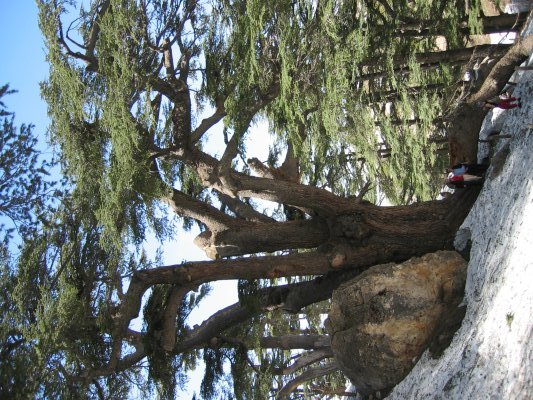
ALEXIS WINGATE
ALEXIS WINGATE
Success DIVA
What choice will you make?

Although this may sound like a simple argument to set forth, life really is about choices. Almost everything you do each day is a choice— even those things that you think you must do or that someone else is expecting you to do. Sometimes I think that our society conditions us to believe that we have to live a certain way and make certain decisions because the world, at large, thrives upon control. To hold on to individuality in a universe of conformists requires strength and courage. Even those who seem to rebel against the confines of society are often in prison cells of their own making. They do not realize that they aren’t free because the bars of their prison obscure their view, thereby preventing them from seeing their lives and the circumstances of their lives clearly.
For a long time, my favorite quotation has been one that the poet E. E. Cummings once said: “To be nobody but yourself in a world which is doing its best, night and day, to make you everybody else means to fight the hardest battle which any human being can fight; and never stop fighting.” When I first read this quotation, I found myself asking, why should being ourselves be our hardest battle? Why is it so important to everyone that we all conform to the preconceived image of what they think we ought to be?
It’s ironic, really, that rebels and those who step away from the crowd are ever admired or held up as role models, considering how strongly we are all urged to be like everyone else. Of course, many who have been courageous enough to embrace their individuality and live authentically have been vilified and maligned by the world, at large. Throughout history, this has been the case, and from Jesus to Martin Luther, King, Jr., we have seen the revolutionary leaders cut down, oftentimes in their prime. It is easy for people to criticize, mock, and demean that which they do not understand. And we can all point fingers at those who choose to forge a new and unchartered path for themselves, particularly if we are one of those unfortunate souls who remains entrenched in a life of mediocrity.
Oddly enough, I have encountered so much criticism and mockery at this point, that none of it touches me anymore. I am like the bird who will not be deterred in its migratory flight. But a friend of mine has recently been attacked for some of the choices she has made. When I read the negative comments others made about her, I realized how true it is that those who try to tear others down only end up tearing down themselves. Those who create beautiful castles do not build their masterpieces by destroying the castles that other people have built.
When we were children, sometimes we may have done things that hurt others without meaning to. Perhaps, we wanted to be liked by our peers. Or maybe we just had not yet learned that there can be lasting consequences to our actions. However, when we grew up, we learned that even those things that are seemingly insignificant can have lasting affects on not only our lives but also the lives of others. And unless we derive satisfaction from cruelty, most of us do our best not to injure other people. At the same time, there are exceptions. If we knew why this was the case, we would be able to solve a question that has been puzzling cognitive scientists, psychiatrists, and philosophers for centuries. As it is, we can only speculate and try to content ourselves with the very plain yet frustrating truth that there are many mysteries in life that will never be understood.
From now on, I am making no more efforts to turn enemies into friends or detractors into fans and admirers of my work. If someone doesn’t like the articles I write, I would suggest that he/she stop reading them. A person’s life is too short to spend time on things that he/she will never make a choice to appreciate or understand. We each have our own journey to take. Therefore, I encourage everyone to go his/her own way, with both my blessing and my request that he/she gives me the freedom they are giving themselves. When we let others walk their own path, we should be secure enough in our own choices that we feel no need to criticize them.
I tend to think that those who feel the need to tear down others do so because they have so little power in their own lives that they feel they must try to take the power away from others. This is why you will oftentimes notice that those who are at the top of their chosen professions are more caring, generous, and gracious than those who are living what Henry David Thoreau would call “quiet lives of desperation”. When we feel content in our lives and we are truly aligned with our own purpose, we want those around us to be engaged with life the same way that we are.
But when we are not happy or fulfilled and we see others who seem to be leading lives that are successful and joyful, some of us start subscribing to the idea that we have been shortchanged in some way. Why? Because it’s easier to turn ourselves into victims than to take responsibility for our lives and the choices we have made. If we can blame someone else for our mistakes and our missed opportunities, even if it doesn’t do any good, it can leave us with a temporary feeling of satisfaction. But can it satisfy us on a long-term basis?
Some people speculate about what the driving force throughout the world is. They debate whether it’s love or money or both. Well, although I am still examining this issue, I am relatively certain that it’s neither love nor money. Rather, I believe that it’s desire. If you will look around, you will notice that most of the choices we make have begun with a desire. The problem with this, of course, is that in allowing desire to control our choices we are being moved by passion rather than by critical thinking. Yes, there is something to be said for intuition and “gut feelings”. But by its very nature, desire is a force that should be used with care and caution.
Yet, since desire is what I believe rules this world we live in, it is being misused and abused in ways that most of us would never even be able to imagine. And, it is what brings about most of the pain in the world, too. For it is a desire for power and control that prevents people from giving other people the freedom to lead their own lives and make their own choices. Even crimes like murder and rape are rooted in desire . . . the desire to take the life of another person or the desire to have sexual and physical power over another person. Neither love nor money is involved in either rape or murder, but both of these vile acts are more prevalent in the world we now live in than ever before.
Do not misunderstand what I’m saying and subscribe to the erroneous idea that I’m saying desire is a completely negative force. Desire can be very positive as well. I think the question we all need to examine is this: are we controlling our desires or are our desires controlling us? When we tear down other people, it isn’t because we are powerful but because we are weak. When we criticize, complain, and demean, we are relegating ourselves to the role of victims, rather than victors. We are saying, “My sense of self-worth is so low that I have to try to make others feel less valuable in order to feel good enough about myself.” Once we realize that this is the message we are sending out, it forces us to rethink our behavior—or, at least, it should.
Like everyone else, I have had moments in which I have offered criticism when support and encouragement was what was called for. But this is because I am human as opposed to being a divine being. Thankfully, I’ve learned that I will never have freedom in my own life if I do not let others have their freedom, too. We cannot expect to have something that we try to take away from other people. And we can expect that we will be criticized if all that we offer others is criticism, just as a spirit of hate provokes strife and malevolence breeds disdain. Life seems to have a way of giving us back what we have given to others, which brings us once again back to the issue of choice.
In the past, I have shared certain aspects of my personal story in my SuccessDiva articles. But since everybody has a story, I feel that more can be accomplished if I do not share all of mine. I would rather focus on you and the changes I can inspire you to make if you choose to let my words enter into your soul and bring your deepest and most exquisite dreams to the surface of your consciousness.
What do you want to accomplish in your life? If you must end your life with regrets, which regrets do you want them to be? Would you rather regret not reaching a goal in spite of all your efforts or would you prefer to regret not ever having tried to reach the goal in the first place? Do you want to regret having stayed in a relationship that never made you happy because you were unwilling to give up your security? Or would you rather take a chance at finding the man or woman of your dreams, even if you never find him or her?
Yes, life really is about choices. And the choices you make today truly will influence not just tomorrow but also the rest of your life. Choosing wisely isn’t enough—you also have to choose courageously. Taking risks is part of what will bring you the life you want to live. None of us have a user’s manual to help guide us through our lives. To imagine that we will never have self-doubt or fear or moments of panic and anxiety isn’t realistic. What the determining factor in each of our lives is is whether we overcome all of these things. Do we let society dictate our needs and desires? Do we let other people make our decisions for us? Do we waver in our choices, even when we know we are making the choices that are right for us?
A life of purpose is a life that is lived with a sense of conviction. A person who wants to live freely and authentically must be brave enough to break free from the boxes that others try to keep him/her trapped in. He or she must understand that it is better to be rejected for his/her authentic self than to be accepted for a role that he/she is playing. The approval of the multitudes matters not when we have lost all genuine respect for ourselves. And how can we respect ourselves unless we are being authentic?
One reason I have ceased to care what others say about me is because I have tuned in to who I really am. When you reach this point, you become aware of the fact that it doesn’t really matter who says what about you, if the things they say don’t match up with reality. We may all see the world through our own pair of glasses. But if we take the time to examine ourselves, we can get to the truth of who we are. If we don’t like that person, no matter who else may like us, we will be unhappy. But if we do like that person, then no matter how many people don’t like us, we should be content.
I only like the authentic me . . . the me who does not want to be identified with a specific persona or “image”. And because of this, I have chosen to let go of the image of me to embrace the authentic me. This is a choice I will never regret—not now nor at the end of my life.
What choice are you not making right now that you know is right for you? What’s holding you back?
Live today as if there will be no tomorrow . . .
Until soon,
Alexis, your SuccessDiva
http://successdiva.wordpress.com/
This page and all written material at the SuccessDiva Pages is written by Alexis Wingate (C) Copyright 2010 by
DUBAI
DUBAI
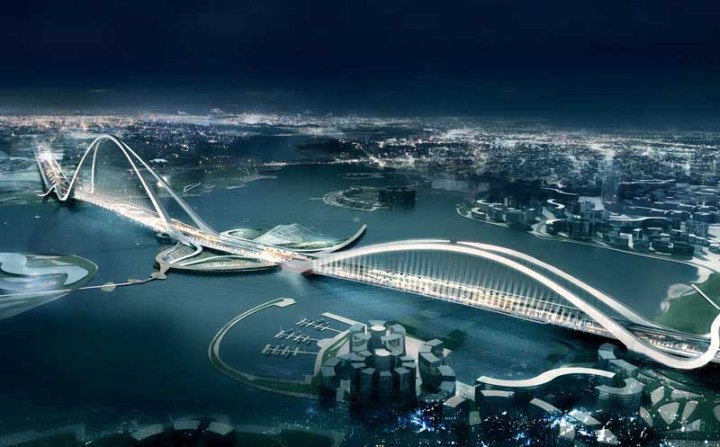
Dubai (Arabic: دبيّ; pronounced /duˈbaɪ/ doo-BEYE) is one of the seven emirates of the United Arab Emirates (UAE). It is located south of the Persian Gulf on the Arabian Peninsula. The Dubai Municipality is sometimes called Dubai state to distinguish it from the emirate. Written accounts document the existence of the city for at least 150 years prior to the formation of the UAE.

Dubai shares legal, political, military, and economic functions with the other emirates within a federal framework, although each emirate has jurisdiction over some functions such as civic law enforcement and provision and upkeep of local facilities. Dubai has the largest population and is the second-largest emirate by area, after Abu Dhabi. Dubai and Abu Dhabi are the only two emirates to possess veto power over critical matters of national importance in the country’s legislature. Dubai has been ruled by the Al Maktoum dynasty since 1833. Its current ruler, Mohammed bin Rashid Al Maktoum, is also the Prime Minister and Vice-President of the UAE.
The emirate’s main revenues are from tourism, property, and financial services.Although Dubai’s economy was originally built on the oil industry, revenues from petroleum and natural gas currently contribute less than 6% (2006) of the emirate’s US$ 80 billion economy (2009). Property and construction contributed 22.6% to the economy in 2005, before the current large-scale construction boom.

Dubai has attracted world attention through many innovative large construction projects and sports events. This increased attention, coinciding with its emergence as a global city and business hub, has highlighted labour and human rights issues concerning its largely South Asian workforce.
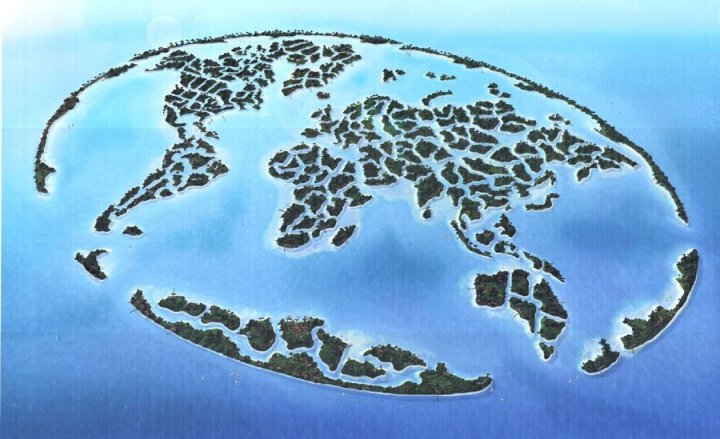
Climate
Dubai has a hot arid climate. Summers in Dubai are extremely hot, windy and dry, with an average high around 40 °C (104 °F) and overnight lows around 30 °C (86 °F). Sunny days can be expected throughout the year. Winters are warm and short with an average high of 23 °C (73 °F) and overnight lows of 14 °C (57 °F). Precipitation, however, has been increasing in the last few decades with accumulated rain reaching 150 mm (5.91 in) per year. This does not affect the aridity of the area, though it has increased the abundance of desert shrubs inland.
AMAZING GRACE
AMAZING GRACE
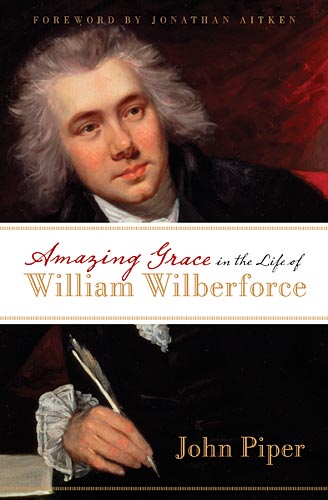
William Wilberforce (24 August 1759 – 29 July 1833) was a British politician, a philanthropist and a leader of the movement to abolish the slave trade. A native of Kingston upon Hull, Yorkshire, he began his political career in 1780 and became the independent Member of Parliament for Yorkshire (1784–1812). In 1785, he underwent a conversion experience and became an evangelical Christian, resulting in major changes to his lifestyle and a lifelong concern for reform. In 1787, he came into contact with Thomas Clarkson and a group of anti-slave-trade activists, including Granville Sharp, Hannah More and Charles Middleton. They persuaded Wilberforce to take on the cause of abolition, and he soon became one of the leading English abolitionists. He headed the parliamentary campaign against the British slave trade for twenty-six years until the passage of the Slave Trade Act 1807.
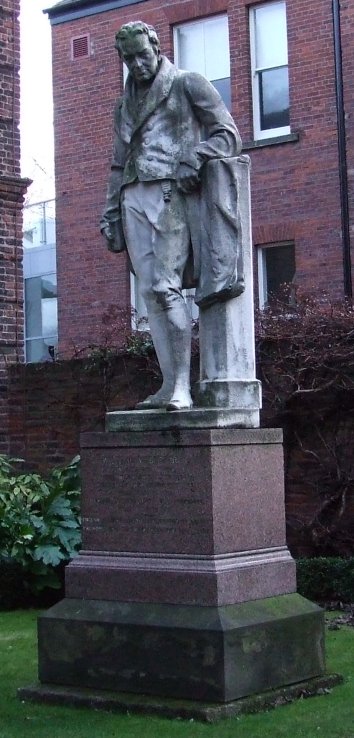
William Wilberforce Statue
Wilberforce was convinced of the importance of religion, morality, and education. He championed causes and campaigns such as the Society for Suppression of Vice, British missionary work in India, the creation of a free colony in Sierra Leone, the foundation of the Church Mission Society and the Society for the Prevention of Cruelty to Animals. His underlying conservatism led him to support politically and socially repressive legislation, and resulted in criticism that he was ignoring injustices at home while campaigning for the enslaved abroad.
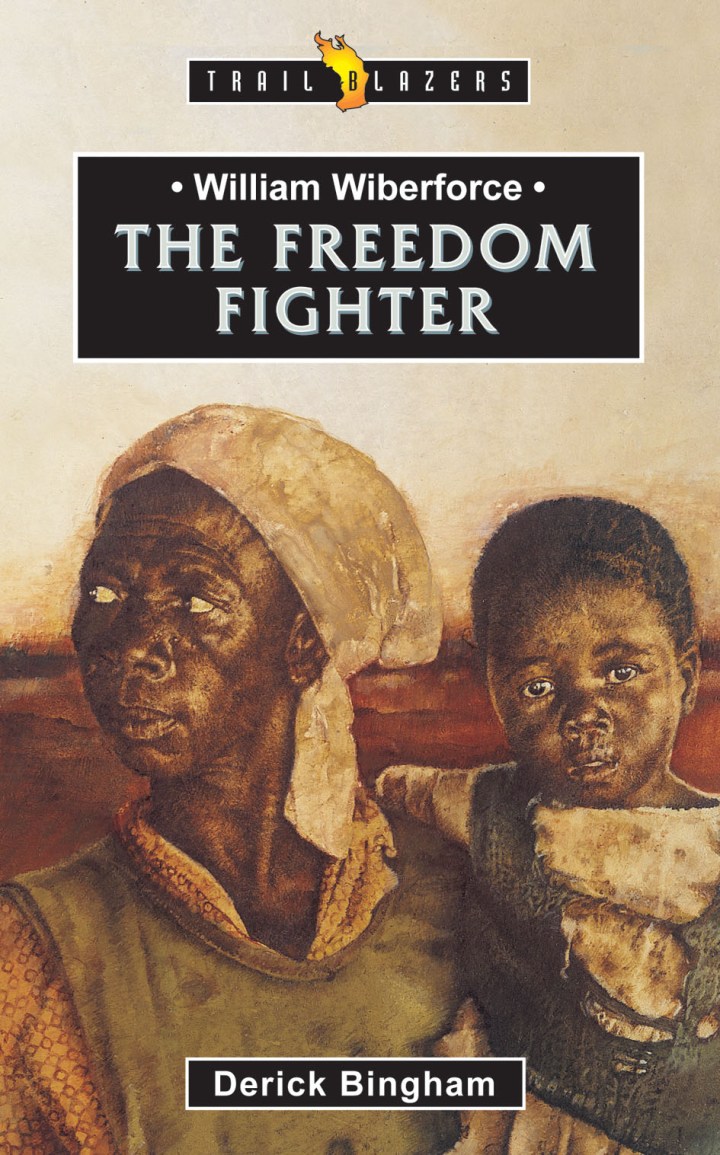
In later years, Wilberforce supported the campaign for the complete abolition of slavery, and continued his involvement after 1826, when he resigned from Parliament because of his failing health. That campaign led to the Slavery Abolition Act 1833, which abolished slavery in most of the British Empire; Wilberforce died just three days after hearing that the passage of the Act through Parliament was assured. He was buried in Westminster Abbey, close to his friend William Pitt.
Wilberforce still plodded on with only a handful of supporters.
“A change of tactics, which involved introducing a bill to ban British subjects from aiding or participating in the slave trade to the French colonies, was advised by maritime lawyer James Stephen in early 1806. It was a smart move, as the majority of the ships were, in fact, now flying under American flags and were manned by British crews, sailing out of Liverpool. The new Foreign Slave Trade Act was quickly passed and the tactic proved successful. The new legislation effectively prohibited two-thirds of the British slave trade. This was in part enabled by Lord Nelson’s victory at the Trafalgar which had given Britain the sea power to ensure that any ban could be enforced.”
The tactic should proceed as follows:
1. The public will be made aware that actual infanticide is going on in these killing places. Abortionists will be prosecuted.
2. A variety of other health and medical code violations in these killing chains will be publicized. Abortionists will be prosecuted.
3. Public sentiment against abortions of viable unborn children will rise as stories of premature birth success stories are published.
4. State by state, second and third trimester abortions will be outlawed as infanticide.
5. State by state, abortion can be pushed back to the original intent of Roe v. Wade, which is to limit abortion to the less than three percent of all abortions currently procured for the so-called “exceptions.”
6. A Constitutional Amendment banning all abortion will be enacted.
http://www.spartacus.schoolnet.co.uk/REwilberforce.htm
http://www.brycchancarey.com/abolition/wilberforce.htm
* Thank you Mr. Wilberforce for a life of dedication and for others around the world who fought against injustice.Humans are created equal.We are all Divine creation. Love , Peace and Harmony.People like Wilberforce make a difference in the world.
This movie is educational,the photography is very sharp.A big 5 star rating for all who helped produce such an amazing Masterpiece.
BRUNO MASCOLO
BRUNO MASCOLO
“My Intangible Truth”
Up Close and Personal with Bruno Mascolo
Walking along Davis street in London’s Mayfair. One of the smartest streets in central London in the mid 1970s, I saw a new beauty salon that had been featured in the trade magazine Hairdressers journal: “Toni&Guy”Four brothers Toni, Bruno, Guy and Anthony had been achieving some editorial coverage for their hair photographs. Their original salon was in a south London suburb Balham. Now they were aiming there sights high and the focus was on making a name and reputation for themselves bang in the heart of London’s Davis street, a stones throw from Bond street. You have to dedicate heart and soul mind and body on being a success, you have to give up so much at an early age.

Bruno Mascolo,Shane-,Harold Leighton and Guy Mascolo
I had already joined Glemby International (now part of the Regis group) whose office was just around the corner in Grosvenor street. My walks through Mayfair were a daily ritual to see the beautiful women coming out of the top hairdressing salons, Martin Douglas, Rene, Raymond, Steiner, Dumas and Vidal Sassoon to name a few.
My next free time I walked into their salon and introduced myself to the brothers and from that time on we have been friends. I have watch them grow in the world of fashion and become world statesmen photographer and product magnates into multi millionaires. Their name is around the globe in hair, their products are advertised in Vogue, Womens Wear Daily Harpers Bazaar internationally. If they sneeze they are written up in the media!
The names of there products range from Toni&Guy BedHead, Catwalk,TIGi, S Factor and makeup are sold around the world. In 2009 tragic news that Guy a talent in hair music writing, brother mentor and friend died suddenly some six weeks after they had sold part of the company to Unilever. Like their father Guy had a huge passion with hair and music, the brothers all mixed with artist musicians editors and grew so close developing their outside talents in the arts’ Guy’s talent and passion about his music art football and still playing in his sixties. His art captured the very essence of subjects and often sold his paintings to raise money for charities. As a talented guitarist he and all the brothers had such artistic talent, maybe one day there works will be in a museum! Elder brother Tony went his own way with his family still in the hair salon business in Europe.
Today Bruno is CEO, Anthony the youngest and Image producer trend setter with hair and photography lives out of Battersea London and part on an air plane traveling the globe. Open almost any fashion magazine and you will always see there advertising on there product lines that stands out alongside L’Oreal, Paul Mitchell, Redken.
To mention the talent of the brothers in one feature is impossible and hope that I can show you the art side of the image maker Anthony Hairdresser and photographer. With offices and homes in London Dallas and LA they travel the world teaching training at hair shows almost weekly, an amazing task even at a young age.
In 2008 I was privilege to be asked to visit Bruno and Guy in Dallas to see the structure, workings of this vast organization and was astounded to see how they had grown since the mid 1970’s. On visiting Bruno’s home I saw his other side – an artist that has given me the insight of this talented man and given me the opportunity to show and tell and to share with readers of The Epoch Times in this EXCLUSIVE interview. Not normally seen in this light. I felt the story had to be told and in Bruno’s words below with his own words “Intangible Truth”.
Colaboration of Harold Leighton,Paintings by Bruno Mascolo,Photographs Harold Leighton for Adriana Sassoon.
 ADRIANA SASSOON
