NOTÍCIAS Entrevista: Flávio Gikovate Amor ou individualidade? Para psicanalista, o ideal de amor romântico está fadado ao fracasso
Foto: Divulgação
Eu sem você não tenho porquê, porque sem você não sei nem chorar. Sou chama sem luz, jardim sem luar (…) Tristeza que vai, tristeza que vem. Sem você, meu amor, eu não sou ninguém Os versos da canção Samba em Prelúdio, de Baden Powell e Vinícius de Moraes retratam o amor dos sonhos de todos que buscam por um final feliz, certo?
Errado! Para o Psicanalista Flávio Gikovate, em seu 26º livro Uma História de Amor… Com Final Feliz, o ideal de amor romântico que predomina no imaginário coletivo está com os dias contados. Baseado nas experiências de seus 40 anos de atuação na psicoterapia e em suas vivências pessoais, Gikovate apresenta uma proposta inusitada acerca da questão do amor: formar laços que respeitem a individualidade; ou viver só, estabelecendo vínculos afetivos e eróticos mais superficiais.
Médico psiquiatra formado pela USP, apresentador do programa No Divã do Gikovate, da Rádio CBN, e autor de diversos livros sobre a sexualidade humana e o tema do amor, Flávio Gikovate conversou com o Guia da Semana e aconselha que o famoso ficar pode ser um interessante método para atingir a maturidade nos relacionamentos.
Guia da Semana: No livro Uma História de Amor… Com Final Feliz, você diz que o amor como vivenciamos hoje é imaturo e regressivo e propõe que os relacionamentos sejam mantidos pelo +amor . Como você define este sentimento?
Flávio Gikovate: O +amor traz uma relação compatível com os tempos modernos, que respeita a individualidade. Existe respeito, alegria e prazer de estar junto, e não mais uma relação de dependência, em que um responsabiliza o outro pelo seu bem-estar. É parecido com a amizade porque aproxima duas unidades e não duas metades . Basicamente, é uma forma adulta e sólida de relacionamento, na qual a palavra concessão é substituída por respeito.
GDS: Muitos relacionamentos acabam porque o parceiro estava se sentindo sufocado pelo outro. Como você explica este comportamento?
FG: Esse comportamento nada mais é do que medo de se relacionar. Parte desse medo é o de perder a individualidade. Então, o indivíduo foge. Se não foge, chega uma hora em que começa a se sufocar pela falta da individualidade de novo. Mas com o tempo o medo vai diminuindo junto com a vontade de ficar grudado e vai aumentando a individualidade. É como se o amor bem resolvido curasse o indivíduo do mal de amar.
GDS: Neste contexto, como fica o ideal de fusão de um relacionamento?
FG: Primeiro, é importante lembrar que o sonho de fusão continua presente. Mas duas coisas modificaram esse ideal do amor: a independência da mulher, desequilibrando a idéia de fusão com uma liderança masculina, e o avanço tecnológico, que criou condições extraordinárias para o entretenimento individual. Hoje, há uma briga muito mais ostensiva entre amor e individualidade. Nesse sentido, acho que o +amor tem grande chance de prevalecer.
GDS: E o ficar , onde se enquadra?
FG: As relações amorosas sempre vão existir. O que eu defendo, e acredito, é que elas vão mudar. Porque o mundo mudou e está impondo a necessidade de levar em conta a individualidade. As relações casuais também vão continuar acontecendo. E, nessa nova ordem, ela nem sempre será considerada ruim. Se houver maturidade de ambas as partes, restará sempre uma boa relação afetiva, ainda que superficial. O status do ficar , criado pelos jovens, é uma condição de relacionamento simplesmente perfeita. É um bom ensaio para atingir a maturidade.
GDS: As mulheres sentem mais dificuldade em lidar com a solidão?
FG: Depende. A mulher que consegue trabalhar a sua individualidade consegue viver bem sozinha. Elas são as que mais caminham no processo de individuação, pois são vítimas dos relacionamentos de fusão romântica . As maiores renúncias são exigidas das mulheres. Hoje, as relações são mais cooperativas e ambos, por meio de negociações, decidem o que será feito em conjunto.
GDS: O que é preciso para viver uma relação amorosa mais individualizada?
FG: Temos que ser observadores imparciais e tirarmos vantagens das coisas em vez de ficar lamentando. A vantagem é: avanço moral, avanço da capacidade dos seres humanos de ficarem sozinhos e aprendizado para resolver essa situação de incompletude. Essa é uma novidade que mata a idéia do amor no seu sentido tradicional, como remédio para a incompletude. O amor como remédio tem que desaparecer porque é um mau remédio.
Foto: Divulgação
GDS: Como a mulher deve lidar com a pressão que a sociedade impõe a favor do casamento?
FG: Atualmente, há muitos solteiros felizes. E a pressão em relação ao casamento reduziu muito nos últimos anos. A maioria das pessoas leva uma vida serena e sem conflitos. Quando sentem uma sensação de desamparo, aquele vazio no estômago por estarem sozinhas, resolvem a questão sem ajuda. Mantêm-se ocupadas, cultivam bons amigos, lêem um bom livro, vão ao cinema. Com um pouco de paciência e treino, driblam a solidão e se dedicam às tarefas que mais gostam. Os solteiros que não estão bem são, geralmente, os que ainda sonham com um amor romântico. Ainda possuem a idéia de que uma pessoa precisa de outra para se completar. Pensam, como Vinícius de Moraes, que é impossível ser feliz sozinho . Mas isso já caducou! Então, acabam vivendo tristes e deprimidos.
GDS: E quanto ao sexo, para um casal se dar bem na cama é preciso separar sexo e amor?
FG: O sexo é uma área em que ainda precisamos avançar. Em nossa cultura, o sexo vai melhor quando há briga. As pessoas gostam mais de transar com inimigos do que com amigos. Isso mostra como precisamos avançar no entendimento da questão sexual. Ainda é preciso inventar um erotismo que não seja comprometido com vulgaridade e violência. Para superar isso, é preciso ser criativo e entender que as leis da atração sexual não são as mesmas das relações afetivas de boa qualidade. Na hora do sexo, talvez seja necessário mudar o canal, no qual o outro tem de deixar de ser o parceiro sentimental para ser um outro parceiro. É assim que os casais que se amam de verdade descobrem estratégias para que o sexo flua.
GDS: A mulher moderna concilia diversas tarefas: ser mãe, profissional, dona de casa e amante. Essa multiplicidade feminina pode prejudicar o relacionamento?
FG: As mulheres ainda pensam como suas mães. Embora elas sejam maioria nas universidades, elas ainda imaginam o casamento como estabilidade sentimental e material. Isso mostra que, apesar da multiplicidade de papéis, a mulher ainda relaciona amor e casamento. Amor é um assunto e casamento é outro. Nos relacionamentos baseados no que chamo de +amor , os maridos não serão mais protetores ou provedores. Eles terão de ser encarados como companheiros, parceiros de viagem. Mas isso só é possível para aqueles que conseguem trabalhar a sua individualidade.
A Ponte Estaiada é o novo cartão postal de São Paulo. Nada como um dia depois de outro. A ponte da Marta era “um absurdo”, “desnecessaria”. Serra-Kassab chegaram a suspender a obra durante um ano tendo que pagar multa depois. As infâmias e ataques, também rejeitados pela justiça e, neste caso, até pela própria administração municipal, eram moeda corrente. Hoje o Jornal da Tarde a erige no novo cartão postal da cidade.
Ela destrona outra obra de Marta, a fonte de Ibirapuera. Outrora acusada de poder infectar o público e de atrapalhar o trânsito, a fonte já foi utilizada como fundo para os programas da rede Globo.
Como será a sua casa em 2013? Em uma época em que a tecnologia evolui mais rápido que a vida útil de um iPod, responder a esta pergunta pode ser um tanto complicado. Mas algumas pistas do que está por vir estão espalhadas nas tendas brancas sob a recém-construída – e moderníssima – ponte estaiada da marginal do rio Pinheiros, em São Paulo. Na mostra The Simplicity Event, evento da Philips que já passou pela Holanda, Inglaterra, Estados Unidos e China, cinco ambientes exibem os protótipos e produtos-conceito que a fabricante de eletroeletrônicos holandesa espera que você use daqui a cinco anos de uma forma tão natural quanto é usar hoje um rádio de pilhas. Em comum, todos tentam aliar tecnologia a um belo design para atender de forma simples os desejos de consumidores de todo o mundo.
Cada espaço da mostra é dedicado a um tema. No Ouça o seu corpo, a idéia é prevenir o que será mais difícil e caro de remediar depois com aparelhos que promovem uma vida mais saudável. Luz e sons também ajudam nesta tarefa, como ajudam a entender as estações Cuide do seu corpo e Relaxe a Mente. Nelas, aparelhos usam freqüências de luz para despertar, relaxar e energizar seus usuários, enquanto outros tornam os ambientes da casa mais confortáveis e divertidos.
“Nada de inércia” é o lema do espaço Mexa o seu corpo, em que pisos interativos e paredes luminosas entretêm as crianças enquanto seus pais se exercitam com um personal-trainer virtual. E, na era da hiperconectividade, não poderiam faltar os aparelhos mostrados na estação Compartilhe Experiências, como o porta-retrato digital que envia e recebe fotos e uma tela sensível ao toque criada para enviar e receber mensagens de texto e vídeo. “Nem todos estes produtos irão para o mercado”, diz Stefano Marzano, diretor mundial de design. “Nossos testes mostram que alguns atendem a um público mais amplo, e são estes que levaremos à frente”.
Aparelhos com funcionamentos e formas tão diferentes têm todos um mesmo conceito por trás: usar a tecnologia para criar um estilo de vida mais harmonioso. Desde 2004, este tem sido o lema – e a estratégia de negócios – da Philips. Isso significa inverter o paradigma da tecnologia pela tecnologia em nome de uma abordagem mais humanizada com tecnologias sintonizadas com as necessidades de pessoas comuns. “Não somos mais uma empresa orientada para tecnologia, mas para o consumidor”, diz Geert van Kuyck, diretor mundial de marketing da companhia.
Esse foco diferenciado está dando certo para a empresa. Avaliada em US$ 7 bilhões, a Royal Philips Electronics já ocupa a 42ª posição no ranking internacional de marcas mais valiosas do mundo elaborado pela consultoria Interbrands. A empresa foi eleita a 38ª mais inovadora pela revista Business Week em 2007. “Nos últimos cem anos, as empresas se esforçaram para criar a próxima grande onda e todos seguiam atrás”, diz van Kuyck. “Nos próximos cem, será muito mais importante entender primeiro os problemas dos consumidores para só então trazer soluções na forma de produtos”.
Confira abaixo uma galeria com os principais destaques de cada estação da mostra:
PINTANDO O SETE: com Drag & Draw, pintar a parede é permitido. As crianças escolhem as cores no balde eletrônico, que projeta na parede os traços feitos com uma caneta especial. Depois, elas podem adicionar som e movimento aos desenhos
CONFORTO: Na sala de estar do futuro, o conforto não vem só do sofá. Luzes coloridas e sombras são projetadas para gerar sensações e complementar o clima criado com o sistema de som moderno (sobre a prateleira) que mais parece uma obra de arte
ESPELHO, ESPELHO MEU: o InForm avalia o peso, gordura e hidratação do corpo do usuário e mostra os resultados e até dá informações sobre o período fértil feminino por meio de uma tela que parece um espelho quando desligada
RELAXE: o Soft Therapy reduz a tensão muscular com uma combinação de calor, massagem vibratória e raios infravermelhos. Como o colete não tem fios, pode ser usado enquanto se anda dentro de casa. E é tão fino que dá para colocá-lo embaixo da roupa
VOCÊ TEM UMA MENSAGEM: o InTouch é a versão moderna do quadro de recados. Com a sua tela sensível ao toque, dá para escrever nele com uma caneta especial e enviar recados via internet para os amigos. Também permite gravar mensagens de vídeo
One woman is working on painting parts of the Boston skyline’s canvas with light.
Lana Nathe of Light Boston, and 30 other lighting experts, want to add modern lighting designs to structures around the city. They hope to thrust Boston further into the international spotlight.
Nathe has already made her impact felt – she re-lighted the Old North Church for former president Bill Clinton’s visit last fall.
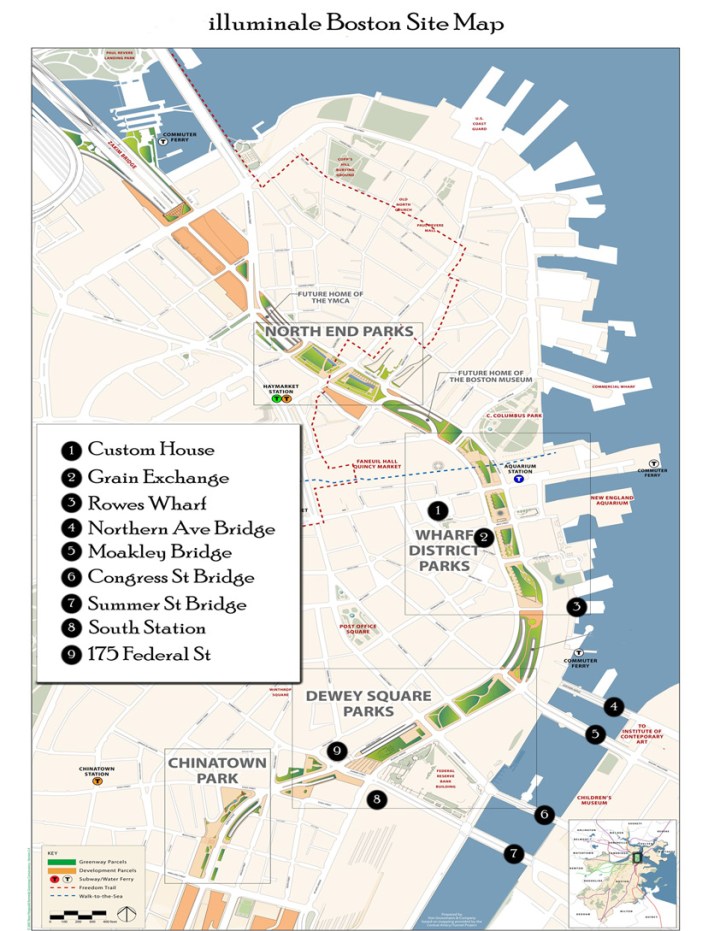
Light Boston’s long-term goal is to light nine buildings known as the “Diamond Necklace.” Short term, they are focusing on the Convention Center.
While Phillips will donate some of the supplies, including energy-efficient lightbulbs, Nathe hopes the rest of the bill will be paid for with private donations and grants.
Light Boston, Inc.’s mission since 1996 ,is to illuminate 25 Historic Boston bldgs “permanently” – one of these buildings is included in the illuminate Boston’s First Festival of Light, which will temporarily illuminate 10+ bldgs & bridges along the Seaport & Fort Point Channel in Boston in mid October founded by Lana Nathe in 2007.
Rapid advancements in LEDs and the global need for energy efficient lighting alternatives are creating opportunities to replace conventional light sources with LED lighting for general illumination. LED lighting is gaining momentum for many reasons, and chief among them is energy efficiency.
With the landmark signing of the Energy Policy Act of 2005, and other nations similarly devoting resources to energy conservation, the potential impact of LED lighting is increasingly gaining national and global attention. A 2001 Department of Energy study estimated cumulative savings of $98 billion by 2020 once LED lighting reaches the performance crossover with conventional sources. Philips Solid-State Lighting Solutions believes this day is approaching faster than ever anticipated.
Today Philips’ energy efficient lighting systems deliver big visual impact without the big energy drains. Yet LED lighting can achieve energy savings on a much larger scale as it becomes more applicable to general illumination. With the introduction of EssentialWhite™ and IntelliWhite™, Philips now addresses specialty white light applications while developing systems that will meet the growing opportunity to cost-effectively apply LEDs for general illumination.
Energy Costs Energy consumption reduced from 8,000 watts to 600 watts total
The Ponca City Memorial Fountain has long been a community focal point, engaging residents and visitors since its construction in 1925. When the fountain was last renovated in 1980, the lighting scheme called for 250-watt incandescent fixtures with red, green and blue lenses to create colored effects. This resulted in a maintenance challenge and little ability to actually control the illumination.
Cost of Light
The opportunities to replace conventional lighting with LED lighting for general illumination are growing, fueled in part by the continual advancements in LEDs and the global need for energy-efficient lighting alternatives. Performance is an important metric for assessing the viability of replacement by LED sources. These devices that once merely lit calculators and cell phone displays can now illuminate an airport terminal or a 100 foot building façade. They increasingly match or exceed the efficacy of conventional lighting sources, particularly with the advent of today’s power LEDs. In fact, the efficacy of LED sources, measured in lumens per watt, is eclipsing that of incandescent and halogen sources.As a result, Philips Solid-State Lighting Solutions’ systems are displacing conventional lighting methods in a number of applications where LEDs were previously thought impractical. And this exciting trend continues. Performance is improving rapidly in the intensely competitive LED supplier field where current data from these manufacturers shows LED performance ahead of forecasted levels, and the cross over point
for matching the efficacy of fluorescent sources outpacing the predictions made just a few years ago. Yet performance is only one metric.Matching the cost of conventional lighting is another critical element for replacement to occur. The true measure of cost goes beyond just the initial cost of the lighting system and incorporates lifetime and operational costs as well. For example, an incandescent source may only have an initial cost of fifty cents, yet its energy consumption will cost more than ten times that over its relatively short life, when a new source must be purchased and the cycle starts again. The metric that accounts for all of these factors is called the Cost of Light. This is the measure that sophisticated customers, such as those managing large buildings, use to compare the true cost of illumination. Intelligent LED lighting systems are intersecting the Cost of Light of incandescent and halogen sources and are rapidly approaching the economic cross over point for fluorescent sources. A white paper is available for more detailed information.
These are Philips estimates, and are not indicative of future performance. Decreasing operational and lifetime costs, together with improved LED performance, enable a wide spectrum of new applications.
With a population of graduate students and intellectuals, Boston supports the screening of many thought-provoking art films throughout the city.
One of the best movie houses in town that regularly screens independent and international film is the Remis Auditorium at the Museum of Fine Arts. for those watching their entertainment budge note that tickets are a relative bargain too- general admission for all screenings is just $10.
This fall, several international film festivals are scheduled. The Boston Palestine Film Festival is scheduled for October 4-October 12. This year’s highlights include the screening of 10 films, many of which address the issues of the Palestinian diaspora. There will be a visit by filmmaker Michel Khleifi on October 11 and a concert by acclaimed international musician Simon Shaheen on October 10th.
Although the exact film and event schedules have not been finalized, the Boston Jewish Film Festival runs from November 5-Novenmber 16 and will screen recent film festival features and documentaries with Jewish themes. And finally, the Boston Festival of Films from Iran is planned for November 7-28 and always has an impressive line-up of internationally awarded art films made in Iran which offer an interesting perspective of modern-day Iranian society.
CUSTOM BUILT ANDALUSIAN STYLE VILLA, BUILT IN 2004, SPECIAL VENETIAN PAINT, FANTASTIC 2 STORY ON A CONCRETE STEEL FRAME CONSTRUCTION, BALCONIES IN EVERY ONE OF THE 5 BEDROOMS, HURRICANE FILM by 3M,PRICED TO SELL $10K BELOW BANK APPRAISAL,POOL WITH SAFETY FENCE , VERY PRIVATE,THE MOST EXPENSIVE LG APPLIANCES AND CUSTOM FINISHES, 18′- 21′ FOOT CEILINGS WITH EASY WALK TO THE COCONUT GROVE VILLAGE.
OFFERED AT $1,290.000.EASY TO SHOW.
WEEKLY RENTAL $4500 – $5000, MONTHLY $13000.
WALKING DISTANCE TO COCONUT GROVE VILLAS, HIGH END SHOPPS, RESTAURANTS, EASY DRIVE TO BEACHES, PERFECT FOR SOMEONE THAT HAS A YATCH, CLOSE TO COCONUT GROVE MARINA, EASY WALK ORDRIVE TO GOLF.
Being in Coconut Grove, the entire area is Edenesque with a profusion of palm, banyan and oak trees as well as huge flowering bushes. The garden has a tiled pool, and terraces for sunbathing, dining or relaxing in the shade and at night, the illuminated garden and pool is an enchanting area for dinner. The villa is built on two level with the bedrooms having direct access to the garden. The cool, contemporary interior has four large bedrooms upstairs and one bedroom downstairs with an attractive lounge, with marble floors.
Automatic entrance gate, Swimming pool: 26 ft (8 m)
John Michael “Ozzy” Osbourne (born December 3, 1948) is a British singer. Osbourne’s career has now spanned four decades. He rose to prominence as lead vocalist of pioneering English heavy metal band Black Sabbath, and eventually achieved a multi-platinum, award-winning solo career. In the early 2000s, his career as a celebrity revived when he became a star in his own reality show, The Osbournes (alongside wife/manager Sharon and children Kelly and Jack). In August 2008, Osbourne stated in USA Today that he intends to retire from his music career after two more albums.
Early life
Osbourne was born in Aston, Birmingham, UK and spent most of his early life there. His father Jack worked shifts as a toolmaker at GEC and his mother Lillian for the car components firm Lucas, to support him and his five siblings. Osbourne reportedly suffered from learning difficulties (claiming to be dyslexic ), making life at Prince Albert Road Junior School and Birchfield Road Secondary Modern School in Perry Barr difficult for him. However he did like music and took part in school plays. He also became a great fan of The Beatles from the age of 14 when he heard their first hit single. He left school at 15 and was then employed as a construction site labourer, trainee plumber, apprentice toolmaker, car factory worker and slaughterhouse worker. He also spent a few weeks in Winson Green Prison, when he was unable to pay a fine after being found guilty of burglary of a clothes shop .
Osbourne would later form a band with former Birchfield Road School classmate Tony Iommiafter he auditioned for a lead singer. During this time psychedelic rock was enormously popular. To distinguish themselves from the norm, Iommi and his partners decided to play a heavy blues-inspired style of music laced with gloomy lyrics.[8] Names for the band included Polka Tulk and Earth. One day during rehearsals, the band noticed people queuing up outside a cinema where a horror film was being shown, and bassist Geezer Butler observed how curious it is that people like to be frightened. The film these fellows were waiting to see was the Mario Bava-directed Black Sabbath. After reading an occult book that Osbourne had let Butler borrow, Butler had a dream of a dark figure at the end of his bed. Afterwards, Butler wrote the lyrics to “Black Sabbath“, one of their first songs, in a darker vein. It was the prototype of the songs that became their main style later in their career.
Black Sabbath: Ozzy (right) with Tony Iommi in 1973
Despite only a modest investment from US record label Warner Bros. Records, Black Sabbath met with swift and enduring success. Built around Tony Iommi’s guitar riffs, Geezer Butler’s lyrics, and topped by Osbourne’s eerie vocals, early records such as their eponymous debut album and Paranoid sold huge numbers, as well as getting airplay.
Early solo career
In 1979, Osbourne was fired from Black Sabbath largely for unreliability due to drug abuse. All the members in the band did drugs; but Osbourne did them to a much greater extent than other members of the band. He was replaced by former Rainbow singer Ronnie James Dio.
In the late 1970s, the band Necromandus rehearsed with Ozzy Osbourne and briefly became the first incarnation of his Blizzard of Ozz solo project. The Ozzy Osbourne Band began as The Blizzard of Ozz, formed by Osbourne’s new manager and future wife, Sharon Osbourne. The first line-up of the band featured drummer Lee Kerslake (of Uriah Heep), bassist/lyricist Bob Daisley (of Rainbow), and guitarist Randy Rhoads (of Quiet Riot). The record company would eventually title the record Blizzard of Ozz credited simply under Osbourne’s name. Largely written by Daisley and Rhoads, Ozzy met with considerable success on his first solo effort, the debut collection selling well with heavy metal fans.A second album, Diary of a Madman featured more of Bob Daisley’s song writing and guitar work by Randy Rhoads,[8] who was ranked the 85th greatest guitarist of all time by Rolling Stone magazine in 2003.[10]
In March 1982, while in Florida for the follow-up album Diary of a Madman tour, and a week away from playing Madison Square Garden in New York City, a light aircraft taken without its owner’s consent carrying guitarist Randy Rhoads crashed while performing low passes over the band’s tour bus. In a prank turned deadly, the right wing of the aircraft clipped the bus, causing the plane to crash into a tree and finally a nearby house, killing Rhoads as well as the pilot, Andrew Aycock, and the band’s hairdresser, Rachel Youngblood. On autopsy, cocaine was found to be present in Aycock’s urine. Learning of the death of his close friend and band mate, Osbourne once again fell into deep depression. The record company gave Osbourne a break from performing to mourn for his late band member, but Ozzy stopped work for only one week.
Ex-Gillan guitarist Bernie Torme was the first guitarist to replace Randy once the tour resumed. Torme however, found the pressure of learning the band’s songs so quickly and the idea of appearing before fans still mourning the loss of Rhoads unsettling. His tenure with the band would last less than one month.
During an audition for guitarists in a hotel room, Ozzy discovered Brad Gillis, who became his next guitarist. The tour continued, culminating in the release of the 1982 live album, Speak of the Devil recorded at the Ritz in New York City. A live tribute album was later released. This album would also feature a studio song by Randy, taken from studio outtakes, called “Dee” in honour of his mother.
Also, in a recent interview with Total Guitar Magazine Ozzy was asked if he wanted to say something about Randy Rhoads, the rock star said: “I have no regrets except I wasn’t able to keep Randy from getting onto that plane.”[citation needed]
Mid period
In the 1980s and 1990s, Osbourne’s career was an effort on two fronts: continuing to make music without Rhoads, and becoming sober. The 1981 concerts were recorded with a live album in mind. Entitled Speak of the Devil, known in the United Kingdom as Talk of the Devil, was originally planned to consist of live recordings from 1981, primarily from Osbourne’s solo work. With news of Black Sabbath also about to release a live album titled “Live Evil” however, Osbourne and Sharon decided to pre-empt his former band’s efforts, and the album ended up consisting entirely of Black Sabbath cover material, recorded with Gillis, bassist Rudy Sarzo, and drummer Tommy Aldridge. In the same Guitar Player interview where Brad Gillis discussed how he came to play for Ozzy, he discussed the live album, and admitted that everyone in the band wanted to rework some parts, but were not given the opportunity. Speak of the Devil was musically left alone. Ozzy later commented (inside the cover of “Tribute”) “I don’t give a fuck about that album. It was just a bunch of bullshit Sabbath covers.” He also stated that it was the recording company that wanted a new album, and that he was unwilling to release the tapes of performances live with Rhoads, believing this would dishonour his memory.
In 1982, Osbourne was the guest vocalist on the Was (Not Was) pop dance track “Shake Your Head (Let’s Go to Bed)” with Madonna performing backing vocals. Osbourne’s cut was remixed and re-released in the early 1990s for a Was (Not Was) greatest hits album in Europe, and it cracked the UK pop chart. Madonna asked that her vocal not be restored for the hits package, so new vocals by Kim Basinger were added to complement Osbourne’s lead.
Jake E. Lee, formerly of Ratt and Rough Cutt, was a more successful recruit than Torme or Gillis, recording 1983’s Bark at the Moon (co-writing the album with Bob Daisley, and also featuring Tommy Aldridge, and former Rainbow keyboard player Don Airey). 1986’s The Ultimate Sin followed (with bassist Phil Soussan and drummer Randy Castillo), and touring behind both albums.
In late 1986, he was the target in the first of a series of US lawsuits brought against him, alleging that one of his songs, “Suicide Solution”, drove two more American teenagers to commit suicide because of its “subliminal lyrics“. The cases were decided in Osbourne’s favour, essentially on the premise that Osbourne cannot be held accountable for a listener’s actions. Also helping was the fact the song was clearly about alcohol abuse and suicide solution was a play on words. Soon after, Osbourne publicly acknowledged that he wrote “Suicide Solution” about his friend, AC/DC lead singer Bon Scott, who died from alcohol abuse, and that solution referred to both alcohol as a solution to problems and as a chemical solution. Bob Daisley, however, asserts that he wrote this song and that it was about his concerns over Osbourne’s own ongoing battle with substance abuse.
Lee and Osbourne parted ways in 1987, however, reportedly due to musical differences. Osbourne continued to struggle with his chemical dependencies, and commemorated the fifth anniversary of Rhoads’ death with Tribute, the live recordings from 1981 that had gone unreleased for years. In 1988, Ozzy appeared in The Decline of Western Civilization II: The Metal Years and told the director, Penelope Spheeris, that “sobriety fucking sucks.” Meanwhile, Osbourne found his most enduring replacement for Rhoads to date — a guitarist named Zakk Wylde, plucked from a New Jersey gas station. Wylde joined Osbourne for his 1988 effort, No Rest for the Wicked, in which Castillo remained on drums and Daisley once more returned to co-writing/bass duties. The subsequent tour saw Osbourne reunited with erstwhile Black Sabbath bandmate Geezer Butler on bass, and a live EP (entitled Just Say Ozzy) featuring this lineup was released two years later. Geezer continued to tour with Ozzy for the subsequent four tours, and was a major stage presence throughout. In 1989, Ozzy Osbourne performed as part of the Moscow Music Peace Festival.
Later solo career and Black Sabbath reunion
While very successful as a heavy metal act through the 1980s, Osbourne sustained commercial success into the 1990s, starting with 1991’s No More Tears, which enjoyed much radio and MTV exposure. It also initiated a practice of bringing in outside composers to help pen Osbourne’s solo material, instead of relying solely upon his recording ensemble to write and arrange the music. The album was mixed by veteran rock producer Michael Wagener, who also mixed the Live and Loud album which followed in 1993. It went platinum several times over, and ranked at number 10 on that year’s Billboard rock charts. At this point Osbourne expressed his fatigue with the process of touring, and proclaimed his “retirement tour”, Comically called “No More Tours”, A pun on his No More Tears album. Which was to be short-lived. Osbourne’s entire CD catalogue was remastered and reissued in 1995. Also that year, he released Ozzmosis and went on stage again, dubbing his concert performances “The Retirement Sucks Tour”. A greatest hits package, The Ozzman Cometh was issued in 1997.
Osbourne’s biggest financial success of the 1990s was a venture named Ozzfest, created and managed by his wife/manager Sharon and assisted loosely by his son Jack. Ozzfest was a quick hit with metal fans, spurring up-and-coming groups like Incubus and Slipknot to broad exposure and commercial success. Some acts even had the pleasure to share the bill with a reformed Black Sabbath during the 1997 Ozzfest tour beginning in West Palm Beach, Florida. Osbourne reunited with the original members of Sabbath in 1997 and has performed periodically with the band ever since.
Osbourne’s first album of new studio material in seven years, 2001’s Down to Earth, met with only moderate success, as did its live follow up, Live at Budokan.
In 2003, Osbourne recruited former Metallica bassist Jason Newsted after he left the band in 2000. Both Newsted and Osbourne were enthusiastic about recording an album together, despite the fact that Newsted left shortly after touring with Osbourne towards the end of 2003.
On December 8, 2003, Osbourne was rushed into emergency surgery at Wexham Park Hospital in Slough, England when he was involved in an accident involving the use of his all-terrain vehicle on his estate in Chalfont St Peter in Buckinghamshire. Osbourne broke his collar bone, eight ribs, and a neck vertebra. An operation was performed to lift the collarbone, which was believed to be resting on a major artery and interrupting blood flow to the arm. Sharon later revealed that Osbourne had stopped breathing following the crash and was resuscitated by Osbourne’s then personal bodyguard, Sam Ruston.
While in the hospital, Osbourne achieved his first ever UK number one single, a duet of the Black Sabbath ballad, “Changes” with daughter Kelly. In doing so, he broke the record of the longest period between an artist’s first UK chart appearance (with Black Sabbath’s “Paranoid“, number four in August 1970) and their first number one hit; a gap of 33 years.
Since the accident, he has fully recovered and headlined the 2004 Ozzfest, where he again reunited with Black Sabbath. He has also turned his hand to writing a Broadway musical. The reputed topic is that of the Russian monk Grigory Rasputin, who held sway with Russia’s last royal Romanov family. In 2005, he released a box set called Prince of Darkness. The first and second discs are collections of live performances, B-sides, demos and singles. The third disc contained duets and other odd tracks with other artists, including “Born to Be Wild” with Miss Piggy. The fourth disc is entirely new material where Ozzy covers his favourite songs by his biggest influences and favourite bands, including The Beatles, John Lennon, David Bowie and others.
He and wife Sharon starred in yet another MTV show, this time a competition reality show entitled “Battle for Ozzfest“. A number of yet unsigned bands send one member to compete in a challenge to win a spot on the 2005 Ozzfest and a possible recording contract.
In 2004, Osbourne received an NME award for “godlike genius”.
Shortly after Ozzfest 2005, Osbourne announced that he will no longer headline Ozzfest. Although he announced his retirement from Ozzfest, Ozzy came back for one more year, 2006, albeit only closing for just over half the concerts, leaving the others to be closed by System of a Down (he also played the closing act for the second stage at the Shoreline in Mountain View, CA on July 1st as well as Randall’s Island, NY on July 29). After the concert in Bristow, Virginia, Ozzy announced he would return for another year of Ozzfest in 2007. Tickets for the 2007 tour were offered to fans free of charge, which led to some controversy (see Ozzfest article). In 2008, Ozzfest was reduced to a one-day event in Dallas, Texas, where Ozzy played along with Metallica.
In 2005, he was inducted into the UK Music Hall of Fame along with Black Sabbath where he decided to moon the crowd because of their poor reception while they were playing.
In March 2006, he said that he hopes to release a new studio album soon with long time on-off guitarist, Zakk Wylde of Black Label Society. In October 2006, it was announced that Tony Iommi, Ronnie James Dio, Vinny Appice, and Geezer Butler would be touring together again though not as Black Sabbath but rather under the moniker ‘Heaven and Hell (the title of Dio’s first Black Sabbath album). The response to the news on Ozzy’s website was that Ozzy wished Tony and Ronnie well and that there was only one Sabbath.
The new Ozzy album, titled Black Rain, was released on May 22, 2007. Osbourne’s first new studio album in almost six years, it featured a more serious tone than previous albums. “I thought I’d never write again without any stimulation…But you know what? Instead of picking up the bottle I just got honest and said, ‘I don’t want life to go (to pieces)'”, Osbourne stated in a Billboard interview.
On May 24, 2007, Osbourne was honoured at the second annual VH1 Rock Honors, along with Genesis, Heart, and ZZ Top. It was announced on May 18, 2007 that Ozzy would be the first inductee into The Birmingham Walk of Stars. In a ceremony conducted on July 6, 2007, a bronze star honouring Ozzy was placed on Broad Street in his home city of Birmingham in England, in his presence. Rock star Ozzy Osbourne has become the first artist to be honoured on Birmingham’s own Hollywood-style Walk of Fame. He was presented with the honour by the Lord Mayor of Birmingham. “I am really honoured,” he said, “All my family is here and I thank everyone for this reception – I’m absolutely knocked out”.
The singer, from Aston, told more than 1,000 fans on Broad Street that the brass paving star meant more to him than any Hollywood accolade.
In July 2008, it was announced that Ozzy Osbourne would be the recipient of the prestigious ‘Living Legend’ award in the Classic Rock Roll of Honour this year. Ozzy follows the likes of Jimmy Page and Alice Cooper. The induction ceremony is to take place at a gala ceremony on 3 November at London’s Park Lane Hotel.
On August 20th 2008, Affliction Clothing announced that Ozzy would be the musical guest at their October 11th Affliction: Day of Reckoning mixed martial arts event to be held at the Thomas and Mack Center in Las Vegas.
Personal life
Osbourne has been married twice and is the father of seven children (five biologically, and two adopted). He was first married to Thelma Riley (now a teacher in Leicestershire) and adopted her son Elliot Kingsley (1966); together they had Jessica Starshine Osbourne Hobbs (20 January1972) and Louis John Osbourne (1975).
Ozzy and Sharon Osbourne
He later married Sharon Arden and had three children with her. They are Aimee Osbourne (2 September1983), Kelly Osbourne (27 October1984) and Jack Osbourne (8 November1985). They also took in family friend Robert Marcato after his mother died, but never legally adopted him. Osbourne also has three grandchildren, Isabelle and Harry from his daughter Jessica and granddaughter Maia from son Louis. He wrote a song for his daughter, Aimee, which appeared as a b-side on the album Ozzmosis.He divides his time between Los Angeles and Buckinghamshire,England.
Osbourne achieved greater celebrity status by the unlikely success of his own brand of reality television. The Osbournes, a series featuring the domestic life of Osbourne and his family (wife Sharon, children Jack and Kelly, but not their eldest daughter Aimee, who declined to participate). The program became one of MTV’s greatest hits. It premiered on March 5, 2002, and the final episode aired March 21, 2005.
Ozzy Osbourne, Frank Bruno and Billy Connolly provided lead vocals on The War Song of the Urpneys single and album track, although the version heard in the series was largely sung by composer Mike Batt.
In 2002, Osbourne and wife Sharon were invited to the White House Correspondents’ Association dinner by Fox News Channel correspondent Greta Van Susteren for that year’s event. President Bush noted Ozzy’s presence by joking: “The thing about Ozzy is he’s made a lot of big hit recordings: Party With the Animals; Sabbath, Bloody Sabbath; Facing Hell; Black Skies and Bloodbath in Paradise. Ozzy, Mom loves your stuff.”
He has over 15 tattoos, the letters OZZY across the knuckles of his left hand was the first he had done as a teenager by means of a sewing needle and pencil lead .
Osbourne experienced tremors for some years and linked them to his continuous drug abuse. In May 2005 he found out it was actually Parkin Syndrome, a genetic condition, the symptoms of which are very similar to Parkinson’s disease. Osbourne will have to take daily medication for the rest of his life to combat the involuntary shudders associated with the condition. Osbourne has shown symptoms of a mild hearing loss, as evidenced in the television show, The Osbournes, as he often asks his family members to repeat what they say.
Controversy
Ozzy Osbourne found himself under fire in his controversial concert and stage acts that some parent-teacher associations, media content watchdog activist groups, including many Christian groups accused Osbourne of being a negative influence for teenagers. They claimed messages on his songs, actions (the infamous “horned hand“) and stage decorations are portrayals of devil worship and glorified Satanism, but Osbourne denies these accusations and he claims it was done in good fun, symbolised teenage rebellion and for shock value. Ozzy actually flashed a peace sign with each hand; Ronnie James Dio was better known for flashing the “horns”, which is actually an Italian tradition. At least one scholar has compared the controversy surrounding Ozzy and accusations of Satanism to those leveled against the renowned occultist, Aleister Crowley, and how both were demonized by the media and the Christian Right for their antics. Ozzy tempts the comparison with his song “Mr. Crowley“. Both Ozzy and Crowley enjoyed the infamy of being labeled Satanists, though both denied the charge. Still, that they accepted labels such as Prince of Darkness (Ozzy) and The Great Beast (Crowley), terms cited by critics to condemn both men as anti-Christian.
Ozzy was thought to have made songs that are held to promote or condone suicide. In 1985, California teenager John McCollum committed suicide while listening to Ozzy Osbourne’s “Suicide Solution“, a song about the dangers of alcohol abuse. Although McCollum suffered clinical depression, his parents sued Ozzy Osbourne (McCollum v. CBS) for their son’s death, claiming the lyrics in the song, “Where to hide, suicide is the only way out. Don’t you know what it’s really about?”, convinced McCollum to commit suicide. Although the family lawyer suggested that Osbourne should be criminally charged for encouraging a young person to commit suicide, the courts overturned the case because there was no connection between the song and McCollum’s suicide. Osbourne was sued yet again for the same reason in 1991 (Waller v. Osbourne) by the parents of Michael Waller for $9 million, but the courts overturned that case as well.
He has also come under fire from former musicians such as Bob Daisley, Lee Kerslake, and Phil Soussan for not paying them royalties and giving them credit on the albums they played on. Bob Daisley and Lee Kerslake sued the Osbournes in 1986 for outstanding royalties from songs written for the Blizzard of Ozz releases, and for reinstatement of performance credits. Litigation continued in 2002 when Daisley and Kerslake (and bassist Phil Soussan) once again sued for unpaid royalties. The Osbournes responded by erasing their contributions on the original masters and re-issuing new versions with the bass and drum tracks re-recorded by Robert Trujillo and Mike Bordin. Phil Soussan also brought a lawsuit against Ozzy and even got into a physical confrontation with Sharon at Randy Castillo‘s funeral.
Drugs, alcohol, and animal abuse
According to the press, Osbourne’s antics progressively reached a more dangerous point during the 1980s; his alcoholism and drug abuse continued. He later underwent a number of treatments for alcoholism and drug abuse.
After signing his first solo career record deal he came in to meet some of the people who worked at the record company. His plan was to release doves into the air to get people to notice him, but when no one noticed, he changed his plans. He grabbed a dove, bit its head off, then spat the head out. Then, with blood still dripping from his lips, a security guard came to remove him. Despite its controversy, this act has been parodied and alluded to several times throughout his career and is part of what made Ozzy Osbourne famous.
He gained further notoriety on Jan. 20, 1982, when he bit the head off a bat he thought was rubber while performing at the Veterans Memorial Auditorium (Des Moines) in Des Moines, Iowa. Rolling Stone magazine in 2004 ranked this incident number two on its list of “Rock’s Wildest Myths.” While the Rolling Stone article stated the bat was alive, the person who threw it onto the stage said it was brought to the show dead.
Osbourne admitted that, at the height of his drug addiction, he shot his family’s pets: “I was taking drugs so much I was a wreck. The final straw came when I shot all our cats. We had about 17, and I went crazy and shot them all. My wife found me under the piano in a white suit, a shotgun in one hand and a knife in the other”
While on tour in Texas in 1982, drunk already at 11am, he urinated on a portion of the Alamo, while wearing future wife Sharon’s dress, while there for a photo shoot. A police officer arrested him, and Osbourne was subsequently banned from the city of San Antonio, Texas for a decade. (This citation only refers to his peeing on the Alamo, but doesn’t contain any information on his banishment)
Osbourne’s alcohol problem also came to a very serious peak in 1989 after he became violently drunk and attempted to strangle his wife/manager Sharon.
Osbourne’s solo material (up to 1993) was remastered for CD release in August 1995.
In the wake of a lawsuit by former band members Daisley and Kerslake over unpaid royalties for songwriting credit, Osbourne’s catalogue was remastered and reissued again in spring 2002. This time, the original bass guitar and drum tracks on Osbourne’s Blizzard of Ozz and Diary of a Madman were removed and re-recorded entirely by bassist Robert Trujillo (Suicidal Tendencies, Infectious Grooves, currently of Metallica) and drummer Mike Bordin (Faith No More).[30] The pair also played on Osbourne’s studio album, Down to Earth from 2001. Other releases, such as Speak of the Devil, The Ultimate Sin, Just Say Ozzy and Live and Loud were deleted from Osbourne’s catalogue entirely, though they are still on iTunes.
Guitarists
Ozzy is known for close collaboration with the guitarists of his band, and often they are/become well known musicians. Note Iommi and Osbourne both appeared at one of Black Sabbath’s reunions in 1985 (Live Aid) and 1992 (Ozzy’s first retirement concert). Technically Osbourne was in Black Sabbath with Iommi from 1999-2001, but the band were temporarily on hiatus at the time as part of a proposed breakup.
With Black Sabbath
Tony Iommi In Sabbath with Ozzy (1968-1978, 1996-1999, 2001-present)
One of the heavier bands to come out of the early-’80s L.A. metal scene, W.A.S.P. quickly rose to national infamy thanks to their shock rock image, lyrics, and live concerts.
Unfortunately, once the novelty and scandal began to wear off, the band found it difficult to expand, or even maintain, their audience by relying only on their music.
Leader Blackie Lawless (bass/vocals) was already a rock & roll veteran when he relocated to the West Coast and founded W.A.S.P. with guitarists Chris Holmes and Randy Piper and drummer Tony Richards. The band soon established a reputation as a ferocious live act, thanks in large part to Lawless‘ habits of tying a semi-naked model to a torture rack and throwing raw meat into the audience. And with the release of their self-explanatory independent EP, Animal (F**k Like a Beast), W.A.S.P. became impossible to ignore.
They signed to Capitol Records, and with songs like “I Wanna Be Somebody” (an absolute anthem to blind ambition) and “L.O.V.E. Machine” leading the way, their self-titled 1984 debut was an instant success. W.A.S.P. took their horror show on the road, and their momentum continued to build with the following year’s The Last Command, which featured new drummer Steven Riley and the band’s biggest hit, “Blind in Texas.” Later that year, the band gained even more prominence as one of the biggest targets of Tipper Gore and the P.M.R.C. (Parents’ Music Resource Center), a group of Washington housewives leading a crusade against violent, sexist song lyrics. Though the incident (which included Senate hearings on the issue with guest speakers as disparate as Frank Zappa, John Denver, and Dee Snider from Twisted Sister) would cause more publicity than actual results, it served to make W.A.S.P. a household name — for good and for worse.
Ironically, the band toned down their act for 1986’s Inside the Electric Circus, a lackluster, repetitive album which saw Lawless switch to guitar (replacing the departed Piper) and the hiring of bassist Johnny Rod. The blood and guts were largely gone (as were the good songs), and despite releasing a strong live album entitled Live…In the Raw the following year, the band’s popularity began to plummet. The all-time low arrived with the release of Penelope Spheeris’ heavy metal “rockumentary” The Decline of Western Civilization 2: The Metal Years. An expose about the L.A. metal scene, the film’s most dramatic and depressing sequence showed an inebriated Chris Holmes drinking himself into a stupor in full stage gear while lying on a float in his mom’s swimming pool. In a movie filled with debauchery and decadence, this scene was by far the scariest.
1989’s Headless Children (featuring ex-Quiet Riot sticksman Frankie Banali) was a return to form, but it couldn’t revert the band’s slump and W.A.S.P. disbanded soon after. Lawless eventually returned as a one-man show for 1993’s The Crimson Idol, an ambitious rock opera/concept album billed as Blackie Lawless & W.A.S.P. Resurrecting the band’s old shock rock antics, but alas, not fame and fortune, the album flopped, and the following year’s greatest-hits set, First Blood…Last Cuts, seemed like their last chapter.
But the resilient Lawless returned once again, luring guitarist Chris Holmes back into the fold and recruiting bassist Mike Duda and drummer Stet Howland for 1996’s Still Not Black Enough. This lineup has continued to tour and record for a number of independent labels, with their albums including 1997’s K.F.D., 1999’s Helldorado, and 2001’s Unholy Terror. The band released Dying for the World in 2002, an exceptional collection of unusually serious material inspired by the terrorist attacks of September 11, 2001. It was followed in 2004 by the conceptual Neon God, Pt. 1 and Pt. 2, with Dominator arriving in 2006. ~ Ed Rivadavia, All Music Guide
Elan Sassoon, owner of Mizu Salon
The son of legendary hairstylist Vidal, Elan Sassoon this month unveils Mizu, a 3,300-square-foot salon on the Mandarin’s second floor. The Asian-inspired hotel, he says, allowed him to eschew typical salon amenities in favor of a “high-tech Zen” vibe with white Italian furniture, gold folding screens, and iPods on which clients can watch movies. Sassoon applies the same level of perfectionism in selecting his staff: All 30 Mizu stylists, who offer cuts starting at $125 and single-process color beginning at $70, have been handpicked from the city’s top salons. 617-585-6408 ,













 ADRIANA SASSOON