Cancer as a fungus

The opinion of an MD and oncologist

“Treating” cancer is one of the most lucrative business on earth.

For years, cancer has been called a “mystery.”

After spending billions of dollars over many decades, the medical establishment claims not to know the cause of cancer, not to understand its nature, and can only offer expensive and invasive treatments like radiation and highly toxic drugs to treat it.

The strikes me as willful stupidity that conveniently happens to generate many billions of dollars each year that is spread out annually among many tens of thousands of employees of the cancer industry.

  • Free guide explains a promising alternative treatment.
  • Advanced Treatments for Cancer Call for more info (800)923-7878
  • Noninvasive Alternative to Surgery & Radiation. Patient Info Here.
    HIFU.ca/Prostate-Cancer-Treatment
  • Learn about leading-edge treatments for fighting Prostate Cancer.
  • http://www.brasschecktv.com/page/398.html


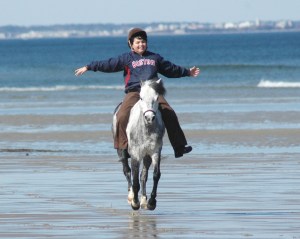
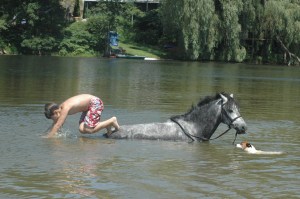
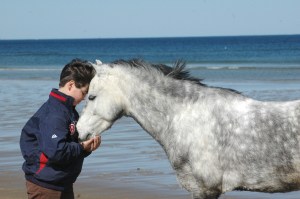
    Farewell “Chico Day”…This is our beloved welsh pony Chico, who we have had since he was a s a baby. Scotty and Chico have grown up together building a bond that will never be forgotten.

    Scotty requested a day to do whatever he wanted before Chico left for his new home. His first request was to have lunch on him bareback…I couldn’t watch as I was busy in the house charging the video camera battery, but apparently Chico wasn’t crazy about the crinkling lunch bag when Scotty climbed aboard. By the looks of Scotty’s purple and peanut mustache, the lunch had been eaten.

    Next, we moved into the ring where Scotty was fooling around without tack. He rode him all over the farm without a saddle or bridle. As each minute passed, he seemed to become braver and more daring. WITHOUT permission, he approached the oxer (3 foot spread) from a trot…It’s hard to see exactly where he’s going when you’re taping. Looking back, I suppose his fetal posture should have indicated that he was up to something. I thought of removing it from the video, because it seemed to interrupt the flow…(somewhat of a hiccup to the beauty of the duo) But taking chances together is precisely what Chico and Scotty were all about. Sometimes things didn’t go exactly to plan. (life can be that way)

    But most of the time, the team took my breath away and warmed my heart. Scotty and Chico’s beach gallop, March 3, 2007, was Scotty’s final request.

    He swears “no hands” was Chico’s idea.

    Regardless, the pair had yet another day together they’ll never forget. Scotty and Chico shared such a special life together, constantly learning about themselves and each other. (nothing short of every mother’s dream)

    “Everything I ever needed to know, I learned from my pony (Chico)”

    Fox Hunting
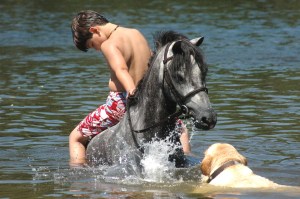
     

    http://images.google.com.br/imgres?imgurl=http://www.hunthorse.com/jenny.jpg&imgrefurl=http://www.hunthorse.com/horsesforsale.htm&h=960&w=1280&sz=197&hl=en&start=9&usg=__qH7FGcQ5v5th8WkkHvRr10k39AA=&tbnid=8onrG9FasGJ5qM:&tbnh=113&tbnw=150&prev=/images%3Fq%3Dwenham%2Bma%2Bfor%2Bsale%26gbv%3D2%26hl%3Den%26sa%3DG

    Baroque Breed Showcase

    Written by Amy Rafferty   

    A look at how these fairy-tale breeds can be within reach of the everyday horse owner

    For many people, owning a member of the Baroque family of horses is a far away dream. Known for their athletic ability, flowing manes and jaw-dropping beauty, they are often referred to as a “fairy-tale” breed. Despite Baroque breeds often being small in number and sometimes difficult to locate, we talked to some lucky owners and discovered that finding one of these beautiful horses to buy is a dream that could come true.

    ImageAndalusians, Lusitanos, Lipizzans, and Friesians all fall under the banner of “Baroque” breeds because they share the same ancient heritage, dating back to the Iberian Peninsula and 25,000 B.C. “Spanish” horses, as they were known, were used by the Ancient Greeks and Romans as cavalry mounts. As history progressed, the breed’s strength, agility and bravery made them favorites in warfare. Only in the last 100 years have these breeds started to reach America and now that they have, their versatility and temperaments are making them hugely popular. Despite this, breeding regulations are strict and if you are serious about owning a piece of history you have to have patience and the time to search.
    Andalusians and Lusitanos

    The breeds of horses known in the United States as the Andalusian and Lusitano are cousins, who trace their genetic roots back to two studbooks: one in Portugal, the other in Spain. For years, the studbooks in those two mother countries allowed cross-registry, and the horses were recognized as the same breed. When political maneuverings closed the studbooks of Spain and Portugal to each other in the late 1960s, people outside North America began to treat the two bloodlines as different breeds.

    In 1967 Lusitanos were given their own studbook, and since then the number of purebred foals registered with the studbook has peaked at 1,800 in 2000.

    The International Andalusian and Lusitano Horse Association believes that all purebred horses, whether of Portugese or Spanish descent, should be referred to as Andalusians and the association maintains the Purebred Andalusian Studbook, in which horses of both bloodlines continue to be eligible for registration. For the purpose of this article, the two breeds will be referred to separately.

    Referred to by some as “the most versatile riding horse in the world,” Andalusians and Lusitanos made a name for themselves on the battlefield, where they were the favored mounts of war leaders and the nobility. Many paintings from the Renaissance feature generals and royalty astride their favored Andalusian and Lusitano warhorse.

    As warhorses became obsolete, the breed progressed to schools of classical dressage and to the bullfighting arena, where once again their agility, intelligence, and bravery made them ideal participants.

    Like Arabians and Thoroughbreds, Lusitanos are hot blooded, and according to the Lusitano Breed Society of Great Britain, were consistently used on the battlefield due to their compact body (which lent itself to being highly maneuverable). The Lusitano is a native of Portugal, and when warfare became less about precision the Lusitano progressed to the bullfighting arena, where once again their suppleness and nerve made them ideally suited. Today, the breed’s genetic disposition of maneuverability, according to one owner, means they can be “fantastic barrel racers and cowboy mounted shooting horses.” The breed is also known for its success in dressage, driving and show jumping, as highlighted by show jumping legend John Whitaker’s Lusitano stallion, Novilheiro.

    Despite their steadily rising popularity and increasing numbers, Lusitanos remain quite expensive. According to Dr. Louise Turkula, owner of Lusitano breeding facility Casa Do Cavalo Real, a Lusitano may set you back between $10,000 and $25,000. However, don’t let this put you off if your heart is set on owning one of these versatile horses. They are known for their generous temperament and love for their owners; they are hardy and can weather the harshest climates and conditions. The breed is also known for their ability to remain calm and focused in stressful situations such as shows.

    For Dr. Turkula, Lusitanos are well worth the money. “They are beautiful to look at, and the most comfortable horse to ride,” she says. Linda Denniston of the Eastern Region Andalusian Club says, “They are so sensitive to personal contact and they really enjoy being worked with. They are very much a rideable horse.”

    Lusitanos average between 15.1 and 15.3 hands; however, they excel in high performance levels of training and have become champions in various disciplines. According to Linda, the breed is easy to train because of their intelligence. “They are easy as youngsters, and they will always remember you,” Linda adds.

    Andalusians were imported from Spain, where their ancestry dates back to the 8th century Moors. Like their Lusitano cousins, Andalusians were used in wars because of their speed and agility. Due to the breed’s rarity and the Spanish wish to maintain Andalusian purity, there was an export ban until the 1960s and it wasn’t until 1965 that the first Spanish import was registered in America. Today, there are only around 2,500 Andalusians in the United States and the International Andalusian Horse Association registers around 220 new foals in America every year.

    Interest in Andalusians, which range in height from 15.2 to 16.2 hands, is growing rapidly and while California and Texas own over half of the Lusitano and Andalusian population, the breeds are becoming more common in the east. Like the Lusitano, Andalusians are versatile and can be ridden English or western and have excelled in dressage, show jumping, cutting and driving. They are also known for their calm demeanor and family-friendly temperaments.

    The International Andalusian and Lusitano Horse Association has recently begun an education program which aims to preserve the historical conformation and temperament of the Andalusian horse.

    The IALHA is a great place to start your education on Andalusians and Lusitanos. Of course it is ideal to talk to someone locally who already owns one of the breeds, so that you can go and see them firsthand. Links to members and breeders across the country are provided on the IALHA website (www.ialha.org) to help you locate owners and breeders in your area.

    Prices for Andalusians can vary greatly, from $7,000 for a purebred youngster to $55,000 depending on age, level of training and accomplishments. Unlike many common breeds, with an Andalusian you pay for their rarity.

    The best advice for finding your first Lusitano or Andalusian is to buy one young and to do your research before you start making calls to set up appointments. Linda suggests you talk with your trainer and perhaps have them go with you to look at prospective youngsters. Dr. Turkula says, “Don’t just look for a color or long hair. Look at the gaits, listen to what the trainer has to say.”
    Lipizzans

    Lipizzans are one of Europe’s oldest domesticated horses. This breed is best known for its high-stepping gait and its ballet performances, in which specially trained horses perform classic equestrian skills known as haute êcole. The 430-year-old Spanish Riding School in Vienna is, “the only riding academy in the world where the Renaissance tradition of classical horsemanship is preserved.” The school and its classic techniques are responsible for increasing awareness of this incredibly athletic, graceful breed.

    The Lipizzan Association of North America estimates that there are only around 1,500 Lipizzans in North America and a mere 2,000 throughout the rest of the world. If you look into breeding programs for Lipizzans, however, you will see that their small numbers are by design: breeders go to extreme lengths to maintain the purity of the breed, and their rarity is what attracts many prospective owners. The United States Lipizzan Registry says that “much effort has been expended to develop educational programs to foster voluntary adherence to traditional breed goals and objectives.”

    Described by the United States Lipizzan Registry (USLR) as having “a rare combination of courage, strength, ability, temperament and intelligence,” it is understandable why people continue to strive to own a Lipizzan. Sandy Heaberlin, director of the Lipizzan Association of North America says, “Lipizzans possess intelligence, coupled with classic beauty and an athletic, harmonious way of moving. Lipizzans excel at several different disciplines, and possess beauty, strength and a willingness to work. Additionally, they are a long-lived breed and can still be under saddle and working into their mid-20s.”

    While Lipizzans do not grow higher than 16 hands, Sandy believes that the breed’s round physique enables a taller rider to be comfortable in the saddle. Sandy also credits the breed’s ease to keep with their “sparkling personality, sensitive nature and good temperament.” The breed excels at all levels of dressage and driving. They are also ideal for pleasure riding.

    As is true with Lusitanos and Andalusians, Sandy’s advice for anyone who is daunted by the thought of the cost of owning a Lipizzan is to purchase one young. “The price for weanlings and youngsters average $7,000 depending on where you look geographically,” she says. “The advantage of purchasing one young is that you get to bond with them; Lipizzans enjoy a relationship with their owners. A horse ready to go under saddle will begin at around $12,000, which compared to most Warmbloods and other European imports is a bargain.”

    You can start your search by talking to other Lipizzan owners or by checking print ads and browsing the Internet. The Lipizzan Association of North America (www.lipizzan.org) gives advice on buying a Lipizzan and lists breeders. It also gives up-to-date news on events and clinics. You can also go to local shows and watch for Lipizzans in open or dressage classes. Most owners will be more than happy to talk about their horses and offer their knowledge and experience.

    Lipizzans are the definitive horse people’s horse, and if you have your heart set on owning a piece of history, with enough searching it is possible to find one without breaking the bank.
    Friesians

    What most people notice about Friesians is their characteristic shiny black coats and their long manes. Today, the only white allowed for a Friesian to be considered pure bred is a small white star.

    Friesians, originally bred as utility horses, are the only horse native to Holland and are easily recognizable by their beautiful black coats and their high step. Believed to be one of the oldest domesticated horses in the world, it is thought that Arabian and Andalusian bloodlines were introduced to Friesians to lighten the breed, giving them their characteristic gait and arching neck. This breed typically stands between 15 and 17 hands.

    Andrea Harris of Pine Feather Farm in Acton, Mass., describes Friesians as “versatile, giving, forgiving and very light in their movements.” According to Andrea, no matter what discipline you enjoy most, your Friesian will be eager to please.

    Friesians are known to be intelligent and very capable and the disciplines they excel in are dressage and driving, although they also compete successfully in saddle and hunt seat classes, western and dressage. While they are not widely known for it, Andrea says that some Friesians, particularly the modern ones, enjoy jumping.

    “Friesians have become increasingly popular,” says Andrea. “They have been finding more support in local clubs and can be found competing in local open shows.”

    As with the other Baroque breeds, costs associated with buying a Friesian vary widely. Andrea advises prospective buyers to purchase a youngster. “They’re quite easy to train,” she says, and for a Friesian with Ster status you will be looking at tens of thousands of dollars. A youngster can cost anywhere from $5,000 to $10,000 and for Andrea, a new owner has to determine what their goals are before they begin looking for their horse. “Look for something that could be the best at that discipline; your gut instinct with these horses is usually right. Once you’re a Friesian owner, you’ll understand,” she says.

    A good place to start looking for your Friesian is with the Friesian Horse Association of North America, who can refer you to local clubs and associations. If you visit http://www.fhana.com you can look at the history of the horse and see how the rating system works. You will also find horses for sale and contact information for people who already own a Friesian who may be more than happy to share their knowledge and experiences with you.

    Just like finding a pedigree breeder for the family dog, owning a Baroque breed takes time, dedication and research. A prospective owner must decide what they want to use their horse for and whether the breed is for them. None of the Baroque breeds are prohibitively expensive if you are willing to start with a youngster, and there are always local owners eager to share their knowledge and experience. If owning a horse is still a far-away dream, why not try to find someone who wants to lease out their Baroque horse? You could offer to help out at a breeder’s barn in exchange for riding privileges while you learn about the breed. Don’t let the small numbers put you off: Baroques are horse people’s horses, and once you own one, you won’t go back.
    Thank you to the following people for helping with this article: Sandy Heaberlin, Director of the Lipizzan Association of North America; Dr. Louise Turkula, Casa Do Cavalo Real; Linda Denniston of the Eastern Region Andalusian Club; Andrea Harris of Pine Feather Farm; Courtney Tripp of Tempel Lipizzans; and members of the IALHA.


    May today there be peace within.
    May you trust God that you are exactly where you are meant to be.
    May you not forget the infinite possibilities that are born of faith.
    May you use those gifts that you have received and pass on the love that has been given to you.
    May you be confident knowing you are a child of God. Let this presence settle into your bones and allow your soul the freedom to sing, dance, praise and love. It is there for each and every one of us.

    CUSTOM BUILT ANDALUSIAN STYLE VILLA, BUILT IN 2004, SPECIAL VENETIAN PAINT, FANTASTIC 2 STORY ON A CONCRETE  STEEL FRAME CONSTRUCTION, BALCONIES IN EVERY ONE OF THE 5 BEDROOMS, HURRICANE FILM by 3M,PRICED TO SELL $10K BELOW BANK APPRAISAL,POOL WITH SAFETY FENCE , VERY PRIVATE,THE MOST EXPENSIVE LG APPLIANCES AND CUSTOM  FINISHES, 18′- 21′ FOOT CEILINGS WITH EASY WALK TO THE COCONUT GROVE VILLAGE.

    OFFERED AT $1,290.000.EASY TO SHOW.

    WEEKLY RENTAL $4500 – $5000, MONTHLY $13000.

    WALKING DISTANCE TO COCONUT GROVE VILLAS, HIGH END SHOPPS, RESTAURANTS, EASY DRIVE TO BEACHES, PERFECT FOR SOMEONE THAT HAS A YATCH, CLOSE TO COCONUT GROVE MARINA, EASY WALK OR DRIVE TO GOLF.

     

    Being in Coconut Grove, the entire area is Edenesque with a profusion of palm, banyan and oak trees as well as huge flowering bushes. The garden has a tiled pool, and terraces for sunbathing, dining or relaxing in the shade and at night, the illuminated garden and pool is an enchanting area for dinner. The villa is built on two level with the bedrooms having direct access to the garden. The cool, contemporary interior has four large bedrooms upstairs and one bedroom downstairs with an attractive lounge, with marble floors.

    Automatic entrance gate, Swimming pool: 26 ft (8 m)

    South Beach: 15 minutes, airport: 20 minutes, beaches: 15 minutes, golf: 25 minutes, tennis: 10 minutes.


    outside-play-area

    One of the heavier bands to come out of the early-’80s L.A. metal scene, W.A.S.P. quickly rose to national infamy thanks to their shock rock image, lyrics, and live concerts.

    Unfortunately, once the novelty and scandal began to wear off, the band found it difficult to expand, or even maintain, their audience by relying only on their music.


    Leader Blackie Lawless (bass/vocals) was already a rock & roll veteran when he relocated to the West Coast and founded W.A.S.P. with guitarists Chris Holmes and Randy Piper and drummer Tony Richards. The band soon established a reputation as a ferocious live act, thanks in large part to Lawless‘ habits of tying a semi-naked model to a torture rack and throwing raw meat into the audience. And with the release of their self-explanatory independent EP, Animal (F**k Like a Beast), W.A.S.P. became impossible to ignore.


    They signed to Capitol Records, and with songs like “I Wanna Be Somebody” (an absolute anthem to blind ambition) and “L.O.V.E. Machine” leading the way, their self-titled 1984 debut was an instant success. W.A.S.P. took their horror show on the road, and their momentum continued to build with the following year’s The Last Command, which featured new drummer Steven Riley and the band’s biggest hit, “Blind in Texas.” Later that year, the band gained even more prominence as one of the biggest targets of Tipper Gore and the P.M.R.C. (Parents’ Music Resource Center), a group of Washington housewives leading a crusade against violent, sexist song lyrics. Though the incident (which included Senate hearings on the issue with guest speakers as disparate as Frank Zappa, John Denver, and Dee Snider from Twisted Sister) would cause more publicity than actual results, it served to make W.A.S.P. a household name — for good and for worse.


    Ironically, the band toned down their act for 1986’s Inside the Electric Circus, a lackluster, repetitive album which saw Lawless switch to guitar (replacing the departed Piper) and the hiring of bassist Johnny Rod. The blood and guts were largely gone (as were the good songs), and despite releasing a strong live album entitled Live…In the Raw the following year, the band’s popularity began to plummet. The all-time low arrived with the release of Penelope Spheeris’ heavy metal “rockumentary” The Decline of Western Civilization 2: The Metal Years. An expose about the L.A. metal scene, the film’s most dramatic and depressing sequence showed an inebriated Chris Holmes drinking himself into a stupor in full stage gear while lying on a float in his mom’s swimming pool. In a movie filled with debauchery and decadence, this scene was by far the scariest.


    1989’s Headless Children (featuring ex-Quiet Riot sticksman Frankie Banali) was a return to form, but it couldn’t revert the band’s slump and W.A.S.P. disbanded soon after. Lawless eventually returned as a one-man show for 1993’s The Crimson Idol, an ambitious rock opera/concept album billed as Blackie Lawless & W.A.S.P. Resurrecting the band’s old shock rock antics, but alas, not fame and fortune, the album flopped, and the following year’s greatest-hits set, First Blood…Last Cuts, seemed like their last chapter.


    But the resilient Lawless returned once again, luring guitarist Chris Holmes back into the fold and recruiting bassist Mike Duda and drummer Stet Howland for 1996’s Still Not Black Enough. This lineup has continued to tour and record for a number of independent labels, with their albums including 1997’s K.F.D., 1999’s Helldorado, and 2001’s Unholy Terror. The band released Dying for the World in 2002, an exceptional collection of unusually serious material inspired by the terrorist attacks of September 11, 2001. It was followed in 2004 by the conceptual Neon God, Pt. 1 and Pt. 2, with Dominator arriving in 2006. ~ Ed Rivadavia, All Music Guide

    Sassoon’s Hair Apparent

    His dad is possibly the world’s most famous hairstylist. Now Elan Sassoon, 38, says he’s building what will be “The Harvard of hair schools.”

    October 2008


    His father is possibly the world’s most famous hairstylist, and he’s already run a chain of high-end medi-spas, so it was only a matter of time before Elan Sassoon—son of Vidal—started building his own beauty empire. Sassoon, 38, will open the Mizu Boston salon at the new Mandarin Oriental hotel in September, followed by Mizu New York on Park Avenue in October.

    The salons, which have all-white interiors set off by gold Asian-style screens, aim to entertain as well as beautify customers by providing them with iPods (to tune out the blow-dryers) and high-tech goggles that screen movies.

    Sassoon also has another major Beantown project in the works. Though he’s not a stylist—preferring to concentrate on the business end of operations—he’ll open what he describes as “the Harvard of hair schools” next year. The $22 million academy will be the first in the U.S. to offer dormitories and will also boast a 200-seat auditorium. “Most hair schools use textbooks that talk about tools that the cavemen and the ancient Egyptians used to barber,” he said. “There’s nothing in them about the last 150 years, about Michael Gordon, Trevor Sorbie or my father.”

    And what advice does the legendary coiffeur give his son? “Technically he’s not allowed to,” Sassoon said with a laugh, referring to the noncompete agreement that the elder Sassoon has with Procter & Gamble, which owns the rights to his name. He does, however, offer “good one-liners from Winston Churchill,” said Elan, citing “Success consists of going from failure to failure with no loss of enthusiasm” as one of them.