HAIR HEALTH FROM INSIDE OUT
Hair Structure

Hair is mostly made of a protein called keratin. Fingernails an the top layer of skin is also made of keratin protein. Each strand of hair consists of three layers.
1.An innermost layer or medulla.
2.The middle layer is the cortex.
3.The cortex provides strength , color, and the texture of hair.
The outermost layer is the cuticle. The cuticle is thin and colorless which protects the cortex.
The center of the hair is called the cortex. It makes up 80 percent of hair. It’s made of small fibrils that twist together to make the longer fibers stronger . The cuticle is made of of dead cells that overlap each other in several layers. The condition of the cuticle plays a part in the appearance of the hair. If the dead cells lay closely together (closed cuticles) then the hair looks shiny and healthy, however, if they lift up (open cuticles) the hair appears dull, dry, and tangles easily.

(Cells that lay closely together or healthy hair)
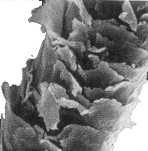
(Lifted Hair Cells or damaged hair)
Medulla cells contain air pockets that are found inside the hair shaft which form the medullary canal. Lipids, a fat substance, is passed through to the cortex or cuticle from the medulla cells. Layers of lipids are formed to bind moisture and protein to the hair shaft. African American hair consists of 88% protein, 10-15% water, 5-10% pigments, minerals and lipids. The cortex and cuticle are formed from solid keratin fiber and the binding material is formed from amorphous keratin, which fills in the spaces inside the cortex and cuticle. The amorphous keratin holds the fibrous structure together.
Structure of the hair root
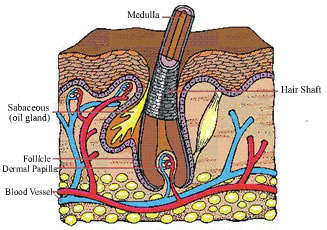
Benath the surface of the skin is the root of the hair , which is enclosed within a hair follicle. At the base of the hair follicle is the dermal papilla. The dermal papilla is fed by the bloodstream which nourishment the new hair produces. The dermal papilla is essential to hair growth because it contains receptors for androgen and male hormones . Androgens regulates hair growth.
The Hair Growth Cycle

Hair follicles grow in repeated cycles. A cycle can be broken down into three phases:
Anagen – Growth Phase
Catagen – Transitional phase
Telogen – Resting Phase Each hair goes through the phases independent of the neighboring hairs.
The regeneration of hair is influenced by many factors:
- health
- hereditary factors
- diet
- hormone balance
- age
- physical condition
- climate
- chemical effects
- sex
- effects of disease
YOUR HAIR IS HUNGRY!
Your Hair is Hungry! Feed It! We all know that eating certain food is good for your body. But what about what’s good for your hair? Do you think washing and conditioning is enough? Think again. Your hair is hungry, and here’s information on how to feed it from the inside out. A healthy diet equals healthy cells, and your scalp is full of cells. It makes sense that when we eat healthy foods that help to regenerate cells, our hair will benefit. With hair growing at the rate of about ¼ to ½ inch per month, it needs plenty of iron, protein and all kinds of good nutrients to keep it healthy. Forget the supplements – you don’t need them if you eat right; let’s talk about getting what your hair needs from foods that you love. We’ll start with dark green vegetables, like spinach, green beans and broccoli. Chocked full of vitamins A and C, they help your body make sebum, that natural oil that’s found on your scalp that your hair thrives on. Dark green veggies can be eaten alone or in many recipes. (By the way, when you feel that natural oil on your scalp, massage it through to the ends of your hair before washing it out – it’s like a natural conditioner.) Let’s focus now on omega-3 fatty acids, a very good protein source. Fish oil contains plenty of omega-3, which promotes good circulation. Good circulation means more blood flow to your scalp, helping your hair stay shiny and hydrated. You can enjoy salmon and other fish, nuts, and ground flaxseed used in recipes, knowing that you’ll not only enjoy fabulous tasting foods but that you’re feeding your hair as well. Speaking of nuts, did you know they contain zinc as well? Not getting enough zinc in your diet can lead to your hair shedding, and since many of us experience thinning hair as we get older (that includes we women), we want to make sure we’re getting enough zinc in our diets.

 ADRIANA SASSOON