http://www.ronniejamesdio.com/

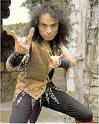
Dio is an American heavy metal band led by vocalist Ronnie James Dio, who formed it in 1982 after leaving Black Sabbath. In an interview, available on the special edition re-release of Holy Diver, Dio states that he never intended to begin a solo career. His intention was to form a new band with fellow former Black Sabbath member drummer Vinny Appice. Naming the band Dio made sense from a commercial standpoint, as the name was already well-known at that time. Dio in Italian and Latin means “God.

Dio was formed in October 1982 in the United States.

Reportedly, guitarist Jake E. Lee very briefly played with the band Dio, but was replaced by guitarist Vivian Campbell before the recording of Holy Diver.

The band released their debut album, Holy Diver, in May 1983. It featured two hit singles, “Rainbow in the Dark” and “Holy Diver”, which gained popularity from MTV. Ronnie James Dio and Jimmy Bain played keyboards in the studio, but recruited keyboardist Claude Schnell for live shows in 1984.

Now a quintet, the band released their second studio album, The Last in Line, on July 2, 1984. It was followed by their third album, Sacred Heart, which was released on August 15, 1985. Several songs were recorded during the tour for that album.

The band released along with the studio-recorded “Time To Burn” on the Intermission mini LP. In 1985 Ronnie also wrote the song “Stars” for the Hear ‘n Aid project, with Campbell contributing on guitar.

imagesaimages

In 1986, Campbell, citing creative differences, left the band to join Whitesnake and was replaced by Craig Goldy. On July 21, 1987 their fourth album Dream Evil was released. Goldy left in 1988, also because of musical differences. In June 1989 18 year-old Rowan Robertson was announced as Goldy’s successor but further changes were to follow, with Schnell, Bain, and Appice leaving the band.

They were replaced, respectively, with Teddy Cook, Jens Johansson, and former AC/DC drummer Simon Wright. The new band released the album Lock up the Wolves in the spring of 1990. During the tour, Ronnie had a chance meeting with former Black Sabbath bandmate Geezer Butler which led to that band’s short-lived reunion, producing one album, Dehumanizer. After this Ronnie James Dio reassembled Dio once again, retaining only Appice on the drums. By late 1994 guitarist Tracy G, keyboardist Scott Warren of Warrant and bassist Jeff Pilson had all joined. During this era, the band adopted a more modern sound, leaving many fans disappointed. As a result some fans regard the albums made during this period–1994’s Strange Highways, 1996’s Angry Machines and the live album Inferno – Last in Live–as the worst in Dio’s catalogue, while others view them positively as a step away from the outdated sound of the 1980s. Dio himself has made it clear in interviews that he intensely dislikes this point in his career (particularly the Angry Machines album) and asked Craig Goldy to return in June 1999. Reportedly, Tracy G was asked to stay as a rhythm guitarist, but declined.

Craig Goldy’s return facilitated the release of Dio’s eighth studio album in 2000, Magica, which was regarded by many as the band’s “comeback album” and reached #13 on the Billboard independent charts. It featured the return not only of Goldy but of Simon Wright and Jimmy Bain, although on the European tour Chuck Garric played bass. A concept album, Magica features a return to the band’s older, more successful sound, while increased use of keyboards gives it a modern feel. During the following tour, however, tensions rose between Goldy on the one hand and Bain and Dio on the other, as Goldy was dealing with the obligations of a family. Goldy left the band in January 2002 and was replaced with Doug Aldrich, whom Bain had met while recording a tribute album for Metallica. Because of his late arrival, Aldrich did not contribute much to Dio’s ninth work, Killing the Dragon, which was written primarily by Dio and Bain. Killing The Dragon was released in 2002 through Spitfire Records and was well received in the metal community, even reaching the overall charts in the UK. Aldrich would stay in the band until April of the following year, when he, like Campbell before him, joined Whitesnake, prompting Goldy’s return. Soon afterwards, Bain left the band.

In 2004 Dio released their tenth studio album, Master of the Moon on August 30, 2004 in Europe through SPV Records and on September 7, 2004 in the United States through Sanctuary Records, The album features multi-instrumentalist Jeff Pilson (formerly of Dokken) on bass duties; however, because of prior obligations with Foreigner, he was only available for the recording sessions, and so was replaced by Rudy Sarzo.

2005 saw the release of the Dio live album Evil or Divine – Live In New York City, which featured the same show that was released on DVD in 2003. Dio has claimed he did not have much input on this release, as he had already left the label that released it. Dio toured South America, Japan, Europe, and Russia in 2005. Their fall tour was titled “An Evening With Dio” and featured a regular set, and then a second set of the band playing his 1983 album Holy Diver in its entirety. The band was purportedly going to film a date from this show in Russia for future DVD release; however, the show on the DVD was actually filmed in London, England. The audio of this performance, a double CD named “Holy Diver Live” was released in April 2006.

In 1999, an animated spoof of Dio appeared in an episode of South Park titled “Hooked on Monkey Phonics“. The band appears performing “Holy Diver” at an elementary school dance. Although Ronnie James Dio’s appearance is somewhat like himself in reality, the rest of the band just appears as a “stereotypical” heavy metal band with no reference to the real band members.

In 2006, Dio made a brief appearance in the Tenacious D film, The Pick of Destiny. In a scene where a young Jack Black appeals to a poster of Dio for advice, Dio’s image comes to life and offers instruction. The appearance is also available on the soundtrack for the movie, in the song titled “Kickapoo”. There is also a song about Dio on Tenacious D‘s first album. The song is called Dio.

In 2007 it was announced that Black Sabbath would reunite with Dio and go under the name Heaven and Hell. This has some people debating if the band Dio will release a new album during 2008, though Dio states that his time with Heaven and Hell will end before 2008 to give him time to make another Dio album before he has anything to do with Black Sabbath again. However, Recent Press releases which cite Black Sabbath/Heaven & Hell Bassist Geezer Butler as a source, suggest that Heaven And Hell are in talks with various record labels regarding a new full Studio Album for 2008, but the official Dio website have yet to comment on this.

Dio’s official website had the following to say: “If you’ve been wondering what Ronnie is up to, wonder, no longer: After taking some well-deserved time off after last year’s monster Heaven and Hell world tour, Ronnie will be heading off to the UK in March to begin writing the new Heaven and Hell record with the guys. Tony Iommi will then travel to LA to reunite with Ronnie, Geezer and Vinny to continue working on the record during April and May.

Then, Ronnie will take a break during the summer to play a few special up close and personal dates for the Dio fans. The dates are now coming together, so check the tour section for the latest info on concerts.”

LIFE WITH CANCER AND AFTER

In January 2007, Adriana Sassoon, was diagnosed with Hodgkin’s lymphoma. A former Elite model in her native Brazil, Adriana endured a frustrating series of biopsies in Miami, where the family was living. In search of the best care, Adriana quickly moved to Boston for treatment. Adriana recently celebrated her first cancer-free year.

SPECIAL THANKS FOR:

MY FATHER CLAUDIO & MARIA HELENA, DINDINHA & DINDINHO, ELAN, MY TWO BEAUTIFUL CHILDREN, MARY JOE, MARA & COU, ALL MY COUSINS, ALL MY UNCLES, AUNTS, ALL MY FRIENDS, MERCEDES, SONDRA, SOLEIL, MEENO, BENO, MIKE, KAY, ELISABETH, ESTHER,SIMON,VIDAL, RONNIE, BEVERLY, DR. SPIGELMAN, DR.DAVID C. FISHER, MICHELLE WALSH, SUSAN, DR.PETER MAUCH, DR. RAFAEL BUENO,THE CHILDREN AND THE VOLUNTEERS AT AMEAMOROSO, FOR ALL WHO STOOD BY MY SIDE.

DANA-FARBER EMPLOYEES: FOR ALL THE PEOPLE AROUND THE WORLD. ALL THE CARE GIVERS. NURSES, DOCTORS, VOLUNTEERS. WE NEED YOU!  IN ORDER TO MAKE A DIFFERENCE IN THE WORLD OUT THERE! IF THERE ARE ANGELS …… I GUESS I HAVE MET THEM HERE ON EARTH.

MY YOUNG YEARS

03_20_0

Copyright © 2008 ADRIANA SASSOON .All Rights Reserved.

LIFE IN BRAZIL

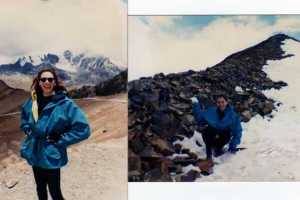
adriana-miami-2000086adriana-la-paz-bolivia-0851sitio-itapecerica116adriana-maria-jose-claudia089eu-knee-lake-idaho-1997114guaeca-2004

Copyright © 2008  ADRIANA SASSOON .All Rights Reserved.

EVERY YEAR, I WAS RACING FOR THE CURE! HELPING A GOOD CAUSE. WAS A GOOD WAY TO KEEP MY BODY IN GOOD SHAPE AND HELP TO SUPPORT THE RESEARCH FOR CANCER. GOD, IF I KNEW I WOULD BE NEXT…… WE NEVER KNOW. LIFE IS TO SHORT! TOO PRECIOUS.

LIVING LIFE, LOVING LIFE, LIFE PRECIOUS MOMENTS!

TIME ONLY MOVES FORWARD, DOESN’T COME BACK.

THAT’S WHY MEMORIES ARE  PRECIOUS. MEMORIES LAST FOREVER!

FRIENDS AND FAMILY, MAKES WHO WE ARE!

DISEASE , NEAR DEATH EXPERIENCES MAKE US REALIZE NOTHING ELSE MATTERS. LIVE DAY BY DAY. CARPEDIEM! AKS

Cancer as a fungus

The opinion of an MD and oncologist

“Treating” cancer is one of the most lucrative business on earth.

For years, cancer has been called a “mystery.”

After spending billions of dollars over many decades, the medical establishment claims not to know the cause of cancer, not to understand its nature, and can only offer expensive and invasive treatments like radiation and highly toxic drugs to treat it.

The strikes me as willful stupidity that conveniently happens to generate many billions of dollars each year that is spread out annually among many tens of thousands of employees of the cancer industry.

  • Free guide explains a promising alternative treatment.
  • Advanced Treatments for Cancer Call for more info (800)923-7878
  • Noninvasive Alternative to Surgery & Radiation. Patient Info Here.
    HIFU.ca/Prostate-Cancer-Treatment
  • Learn about leading-edge treatments for fighting Prostate Cancer.
  • http://www.brasschecktv.com/page/398.html


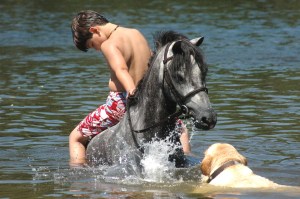
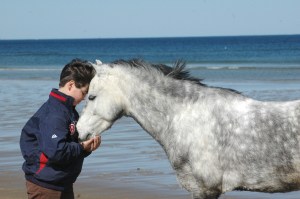
    Farewell “Chico Day”…This is our beloved welsh pony Chico, who we have had since he was a s a baby. Scotty and Chico have grown up together building a bond that will never be forgotten.

    Scotty requested a day to do whatever he wanted before Chico left for his new home. His first request was to have lunch on him bareback…I couldn’t watch as I was busy in the house charging the video camera battery, but apparently Chico wasn’t crazy about the crinkling lunch bag when Scotty climbed aboard. By the looks of Scotty’s purple and peanut mustache, the lunch had been eaten.

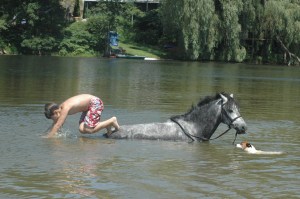
    Next, we moved into the ring where Scotty was fooling around without tack. He rode him all over the farm without a saddle or bridle. As each minute passed, he seemed to become braver and more daring. WITHOUT permission, he approached the oxer (3 foot spread) from a trot…It’s hard to see exactly where he’s going when you’re taping. Looking back, I suppose his fetal posture should have indicated that he was up to something. I thought of removing it from the video, because it seemed to interrupt the flow…(somewhat of a hiccup to the beauty of the duo) But taking chances together is precisely what Chico and Scotty were all about. Sometimes things didn’t go exactly to plan. (life can be that way)

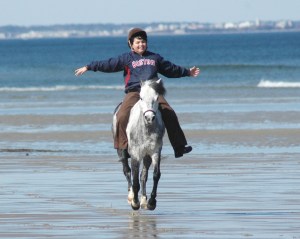
    But most of the time, the team took my breath away and warmed my heart. Scotty and Chico’s beach gallop, March 3, 2007, was Scotty’s final request.

    He swears “no hands” was Chico’s idea.

    Regardless, the pair had yet another day together they’ll never forget. Scotty and Chico shared such a special life together, constantly learning about themselves and each other. (nothing short of every mother’s dream)

    “Everything I ever needed to know, I learned from my pony (Chico)”

    Fox Hunting


    http://images.google.com.br/imgres?imgurl=http://www.hunthorse.com/jenny.jpg&imgrefurl=http://www.hunthorse.com/horsesforsale.htm&h=960&w=1280&sz=197&hl=en&start=9&usg=__qH7FGcQ5v5th8WkkHvRr10k39AA=&tbnid=8onrG9FasGJ5qM:&tbnh=113&tbnw=150&prev=/images%3Fq%3Dwenham%2Bma%2Bfor%2Bsale%26gbv%3D2%26hl%3Den%26sa%3DG

    Baroque Breed Showcase

    Written by Amy Rafferty   

    A look at how these fairy-tale breeds can be within reach of the everyday horse owner

    For many people, owning a member of the Baroque family of horses is a far away dream. Known for their athletic ability, flowing manes and jaw-dropping beauty, they are often referred to as a “fairy-tale” breed. Despite Baroque breeds often being small in number and sometimes difficult to locate, we talked to some lucky owners and discovered that finding one of these beautiful horses to buy is a dream that could come true.

    ImageAndalusians, Lusitanos, Lipizzans, and Friesians all fall under the banner of “Baroque” breeds because they share the same ancient heritage, dating back to the Iberian Peninsula and 25,000 B.C. “Spanish” horses, as they were known, were used by the Ancient Greeks and Romans as cavalry mounts. As history progressed, the breed’s strength, agility and bravery made them favorites in warfare. Only in the last 100 years have these breeds started to reach America and now that they have, their versatility and temperaments are making them hugely popular. Despite this, breeding regulations are strict and if you are serious about owning a piece of history you have to have patience and the time to search.
    Andalusians and Lusitanos

    The breeds of horses known in the United States as the Andalusian and Lusitano are cousins, who trace their genetic roots back to two studbooks: one in Portugal, the other in Spain. For years, the studbooks in those two mother countries allowed cross-registry, and the horses were recognized as the same breed. When political maneuverings closed the studbooks of Spain and Portugal to each other in the late 1960s, people outside North America began to treat the two bloodlines as different breeds.

    In 1967 Lusitanos were given their own studbook, and since then the number of purebred foals registered with the studbook has peaked at 1,800 in 2000.

    The International Andalusian and Lusitano Horse Association believes that all purebred horses, whether of Portugese or Spanish descent, should be referred to as Andalusians and the association maintains the Purebred Andalusian Studbook, in which horses of both bloodlines continue to be eligible for registration. For the purpose of this article, the two breeds will be referred to separately.

    Referred to by some as “the most versatile riding horse in the world,” Andalusians and Lusitanos made a name for themselves on the battlefield, where they were the favored mounts of war leaders and the nobility. Many paintings from the Renaissance feature generals and royalty astride their favored Andalusian and Lusitano warhorse.

    As warhorses became obsolete, the breed progressed to schools of classical dressage and to the bullfighting arena, where once again their agility, intelligence, and bravery made them ideal participants.

    Like Arabians and Thoroughbreds, Lusitanos are hot blooded, and according to the Lusitano Breed Society of Great Britain, were consistently used on the battlefield due to their compact body (which lent itself to being highly maneuverable). The Lusitano is a native of Portugal, and when warfare became less about precision the Lusitano progressed to the bullfighting arena, where once again their suppleness and nerve made them ideally suited. Today, the breed’s genetic disposition of maneuverability, according to one owner, means they can be “fantastic barrel racers and cowboy mounted shooting horses.” The breed is also known for its success in dressage, driving and show jumping, as highlighted by show jumping legend John Whitaker’s Lusitano stallion, Novilheiro.

    Despite their steadily rising popularity and increasing numbers, Lusitanos remain quite expensive. According to Dr. Louise Turkula, owner of Lusitano breeding facility Casa Do Cavalo Real, a Lusitano may set you back between $10,000 and $25,000. However, don’t let this put you off if your heart is set on owning one of these versatile horses. They are known for their generous temperament and love for their owners; they are hardy and can weather the harshest climates and conditions. The breed is also known for their ability to remain calm and focused in stressful situations such as shows.

    For Dr. Turkula, Lusitanos are well worth the money. “They are beautiful to look at, and the most comfortable horse to ride,” she says. Linda Denniston of the Eastern Region Andalusian Club says, “They are so sensitive to personal contact and they really enjoy being worked with. They are very much a rideable horse.”

    Lusitanos average between 15.1 and 15.3 hands; however, they excel in high performance levels of training and have become champions in various disciplines. According to Linda, the breed is easy to train because of their intelligence. “They are easy as youngsters, and they will always remember you,” Linda adds.

    Andalusians were imported from Spain, where their ancestry dates back to the 8th century Moors. Like their Lusitano cousins, Andalusians were used in wars because of their speed and agility. Due to the breed’s rarity and the Spanish wish to maintain Andalusian purity, there was an export ban until the 1960s and it wasn’t until 1965 that the first Spanish import was registered in America. Today, there are only around 2,500 Andalusians in the United States and the International Andalusian Horse Association registers around 220 new foals in America every year.

    Interest in Andalusians, which range in height from 15.2 to 16.2 hands, is growing rapidly and while California and Texas own over half of the Lusitano and Andalusian population, the breeds are becoming more common in the east. Like the Lusitano, Andalusians are versatile and can be ridden English or western and have excelled in dressage, show jumping, cutting and driving. They are also known for their calm demeanor and family-friendly temperaments.

    The International Andalusian and Lusitano Horse Association has recently begun an education program which aims to preserve the historical conformation and temperament of the Andalusian horse.

    The IALHA is a great place to start your education on Andalusians and Lusitanos. Of course it is ideal to talk to someone locally who already owns one of the breeds, so that you can go and see them firsthand. Links to members and breeders across the country are provided on the IALHA website (www.ialha.org) to help you locate owners and breeders in your area.

    Prices for Andalusians can vary greatly, from $7,000 for a purebred youngster to $55,000 depending on age, level of training and accomplishments. Unlike many common breeds, with an Andalusian you pay for their rarity.

    The best advice for finding your first Lusitano or Andalusian is to buy one young and to do your research before you start making calls to set up appointments. Linda suggests you talk with your trainer and perhaps have them go with you to look at prospective youngsters. Dr. Turkula says, “Don’t just look for a color or long hair. Look at the gaits, listen to what the trainer has to say.”
    Lipizzans

    Lipizzans are one of Europe’s oldest domesticated horses. This breed is best known for its high-stepping gait and its ballet performances, in which specially trained horses perform classic equestrian skills known as haute êcole. The 430-year-old Spanish Riding School in Vienna is, “the only riding academy in the world where the Renaissance tradition of classical horsemanship is preserved.” The school and its classic techniques are responsible for increasing awareness of this incredibly athletic, graceful breed.

    The Lipizzan Association of North America estimates that there are only around 1,500 Lipizzans in North America and a mere 2,000 throughout the rest of the world. If you look into breeding programs for Lipizzans, however, you will see that their small numbers are by design: breeders go to extreme lengths to maintain the purity of the breed, and their rarity is what attracts many prospective owners. The United States Lipizzan Registry says that “much effort has been expended to develop educational programs to foster voluntary adherence to traditional breed goals and objectives.”

    Described by the United States Lipizzan Registry (USLR) as having “a rare combination of courage, strength, ability, temperament and intelligence,” it is understandable why people continue to strive to own a Lipizzan. Sandy Heaberlin, director of the Lipizzan Association of North America says, “Lipizzans possess intelligence, coupled with classic beauty and an athletic, harmonious way of moving. Lipizzans excel at several different disciplines, and possess beauty, strength and a willingness to work. Additionally, they are a long-lived breed and can still be under saddle and working into their mid-20s.”

    While Lipizzans do not grow higher than 16 hands, Sandy believes that the breed’s round physique enables a taller rider to be comfortable in the saddle. Sandy also credits the breed’s ease to keep with their “sparkling personality, sensitive nature and good temperament.” The breed excels at all levels of dressage and driving. They are also ideal for pleasure riding.

    As is true with Lusitanos and Andalusians, Sandy’s advice for anyone who is daunted by the thought of the cost of owning a Lipizzan is to purchase one young. “The price for weanlings and youngsters average $7,000 depending on where you look geographically,” she says. “The advantage of purchasing one young is that you get to bond with them; Lipizzans enjoy a relationship with their owners. A horse ready to go under saddle will begin at around $12,000, which compared to most Warmbloods and other European imports is a bargain.”

    You can start your search by talking to other Lipizzan owners or by checking print ads and browsing the Internet. The Lipizzan Association of North America (www.lipizzan.org) gives advice on buying a Lipizzan and lists breeders. It also gives up-to-date news on events and clinics. You can also go to local shows and watch for Lipizzans in open or dressage classes. Most owners will be more than happy to talk about their horses and offer their knowledge and experience.

    Lipizzans are the definitive horse people’s horse, and if you have your heart set on owning a piece of history, with enough searching it is possible to find one without breaking the bank.
    Friesians

    What most people notice about Friesians is their characteristic shiny black coats and their long manes. Today, the only white allowed for a Friesian to be considered pure bred is a small white star.

    Friesians, originally bred as utility horses, are the only horse native to Holland and are easily recognizable by their beautiful black coats and their high step. Believed to be one of the oldest domesticated horses in the world, it is thought that Arabian and Andalusian bloodlines were introduced to Friesians to lighten the breed, giving them their characteristic gait and arching neck. This breed typically stands between 15 and 17 hands.

    Andrea Harris of Pine Feather Farm in Acton, Mass., describes Friesians as “versatile, giving, forgiving and very light in their movements.” According to Andrea, no matter what discipline you enjoy most, your Friesian will be eager to please.

    Friesians are known to be intelligent and very capable and the disciplines they excel in are dressage and driving, although they also compete successfully in saddle and hunt seat classes, western and dressage. While they are not widely known for it, Andrea says that some Friesians, particularly the modern ones, enjoy jumping.

    “Friesians have become increasingly popular,” says Andrea. “They have been finding more support in local clubs and can be found competing in local open shows.”

    As with the other Baroque breeds, costs associated with buying a Friesian vary widely. Andrea advises prospective buyers to purchase a youngster. “They’re quite easy to train,” she says, and for a Friesian with Ster status you will be looking at tens of thousands of dollars. A youngster can cost anywhere from $5,000 to $10,000 and for Andrea, a new owner has to determine what their goals are before they begin looking for their horse. “Look for something that could be the best at that discipline; your gut instinct with these horses is usually right. Once you’re a Friesian owner, you’ll understand,” she says.

    A good place to start looking for your Friesian is with the Friesian Horse Association of North America, who can refer you to local clubs and associations. If you visit http://www.fhana.com you can look at the history of the horse and see how the rating system works. You will also find horses for sale and contact information for people who already own a Friesian who may be more than happy to share their knowledge and experiences with you.

    Just like finding a pedigree breeder for the family dog, owning a Baroque breed takes time, dedication and research. A prospective owner must decide what they want to use their horse for and whether the breed is for them. None of the Baroque breeds are prohibitively expensive if you are willing to start with a youngster, and there are always local owners eager to share their knowledge and experience. If owning a horse is still a far-away dream, why not try to find someone who wants to lease out their Baroque horse? You could offer to help out at a breeder’s barn in exchange for riding privileges while you learn about the breed. Don’t let the small numbers put you off: Baroques are horse people’s horses, and once you own one, you won’t go back.
    Thank you to the following people for helping with this article: Sandy Heaberlin, Director of the Lipizzan Association of North America; Dr. Louise Turkula, Casa Do Cavalo Real; Linda Denniston of the Eastern Region Andalusian Club; Andrea Harris of Pine Feather Farm; Courtney Tripp of Tempel Lipizzans; and members of the IALHA.