
My River a poem by Emily Dickinson
My river runs to thee.
Blue sea, wilt thou welcome me?
My river awaits reply.
Oh! sea, look graciously.
I’ll fetch thee brooks
from spotted nooks.
Say, sea, Take me!
My River a poem by Emily Dickinson
My river runs to thee.
Blue sea, wilt thou welcome me?
My river awaits reply.
Oh! sea, look graciously.
I’ll fetch thee brooks
from spotted nooks.
Say, sea, Take me!




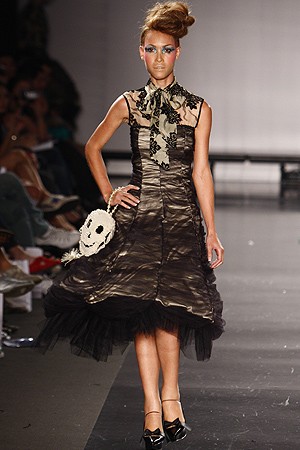
Skull symbolism is the attachment of symbolic meaning to the human skull. The most common symbolic use of the skull is as a representation of death and mortality, but such a reading varies with changing cultural contexts.
Humans can often recognize the buried fragments of an only partially revealed cranium even when other bones may look like shards of stone. The human brain has a specific region for recognizing faces [1], and is so attuned to finding them that it can see faces in a few dots and lines or punctuation marks; the human brain cannot separate the image of the human skull from the familiar human face. Because of this, both the death of, and the now past life of the skull are symbolized.
Moreover, a human skull with its large eye sockets displays a degree of neoteny, which humans often find visually appealing—yet a skull is also obviously dead. As such, human skulls often have a greater visual appeal than the other bones of the human skeleton, and can fascinate even as they repel. Our present society predominantly associates skulls with death and evil. However, to some ancient societies it is believed to have had the opposite association, where objects like crystal skulls represent “life”: the honoring of humanity in the flesh and the embodiment of consciousness.
The skull is a bony structure found in the head of many animals. The skull supports the structures of the face and protects the head against injury.
The skull can be divided into two parts: the cranium and the mandible. A skull that is missing a mandible is only a cranium; this is the source of a very commonly made error in terminology. Those animals having skulls are called craniates.
Functions of the skull include protection of the brain, fixing the distance between the eyes to allow stereoscopic vision, and fixing the position of the ears to help the brain use auditory cues to judge direction and distance of sounds. In some animals, the skull also has a defensive function (e.g. horned ungulates); the frontal bone is where horns are mounted.


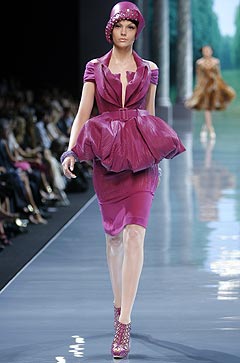
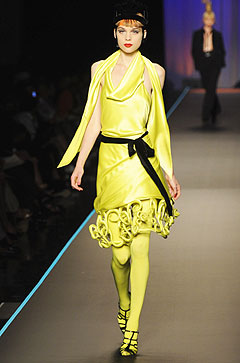
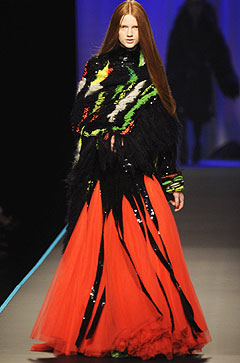
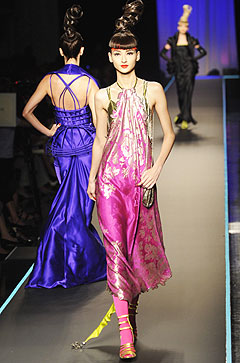

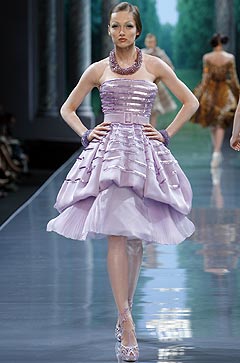


Elie Saab (Arabic: إيلي صعب) (born July 4, 1964), sometimes known simply as ‘ES’, is a Lebanese fashion designer.
In 1982, Saab launched his own Beirut-based fashion label when he was 18 years old. His main workshop is in Lebanon, a country to which he remains deeply attached. He also has workshops in Milan and Paris.
Saab is self-trained. He started sewing as a child and knew that one day he would make a living out of it. In 1981 he moved to Paris to study fashion, but ended up returning and opening his workshop in 1982. In 1997 Saab was the first non-Italian designer to become a member of the Italian Camera Nazionale della Moda, and in 1997, showed his first collection outside Lebanon in Rome. In 1998, he started ready-to-wear in Milan, and in the same year, he held a fashion show in Monaco which was attended by Princess Stéphanie of Monaco. He became an overnight success after he became the first Lebanese designer to dress an Oscar winner, Halle Berry, in 2002. Berry wore a burgundy gown by Saab to the 2002 Academy Awards when she won for Best Actress. Berry later wore another dress by Saab, this time a gold dress, to the 2003 Oscars.
In May 2003, the Chambre Syndicale de la Haute Couture invited him to become a member, and he showed his first haute couture collection in Paris in July 2003. His first ready-to-wear collection in Paris was the Spring-Summer 2006 collection, and Paris is now his permanent ready-to-wear runway.
His creations can be found all over the world, with boutiques located in Beirut and Paris.
Elie Saab
De origem árabe, Elie Saab faz sucesso com seus vestidos de noite vendidos para as mais variadas festas em ambientes formais ou a rigor; de coquetéis a recepções, bailes e casamentos. Com um estilo que faz sucesso tanto entre as mulheres ricas da sociedade quanto no tapete vermelho do Oscar (Halle Berry é uma das estrelas que prestigiam Saab na cerimônia), o estilista mostrou sua coleção para o Inverno 2008-09 com sala cheia para cerca de mil pessoas, incluindo o escritor Paulo Coelho.
Rosas enfeitavam a cintura alta no mesmo tecido dos vestidos, que eram também ganhavam babados, drapeados e outros trabalhos de modelagem em musselines, tafetás amassados, organzas e crepes . Os bordados com brilhos, tão apreciados pelas conterrâneas de Saab (sentadas na primeira fila) ficaram em segundo plano aparecendo em dois ou três vestidos tas inteiros cobertos por pequenos cristais.
O modelo hit da passarela era o clássico tomara-que-caia. Mas Elie Saab também se saiu bem em outros momentos, principalmente da metade do desfile para frente, quando os longos de festa começaram a aparecer (o início, com looks mais formais, em preto, foram menos feliz). Na cartela de cores, os azuis e os verdes mais vibrantes perderam em refinamento para o bonito azul clarinho, com toque de cinza e o rosa quase fúcsia. Na única estampa da coleção a citação ao tema de Elie Saab, numa versão livre da geometria de Mondrian.
Criador de moda para um público feminino que tem dinheiro e gosta de se vestir à maneira dos ricos “de antigamente”, Saab é sucesso de vendas neste setor, com bom corte e caimento de seus vestidos. Os negócios vão tão bem que, recentemente, ele abriu uma loja na Champs-Elysées, em Paris.


By Christopher Muther, Globe Staff
Elan Sassoon was, for years, quite certain he had no interest in the family business. The hair salons, sleek beauty schools, and product lines that made his father, Vidal Sassoon, the best-known hairstylist in the world held little allure. Instead, the younger Sassoon graduated from college in 1993, raised $10 million, and started producing films.

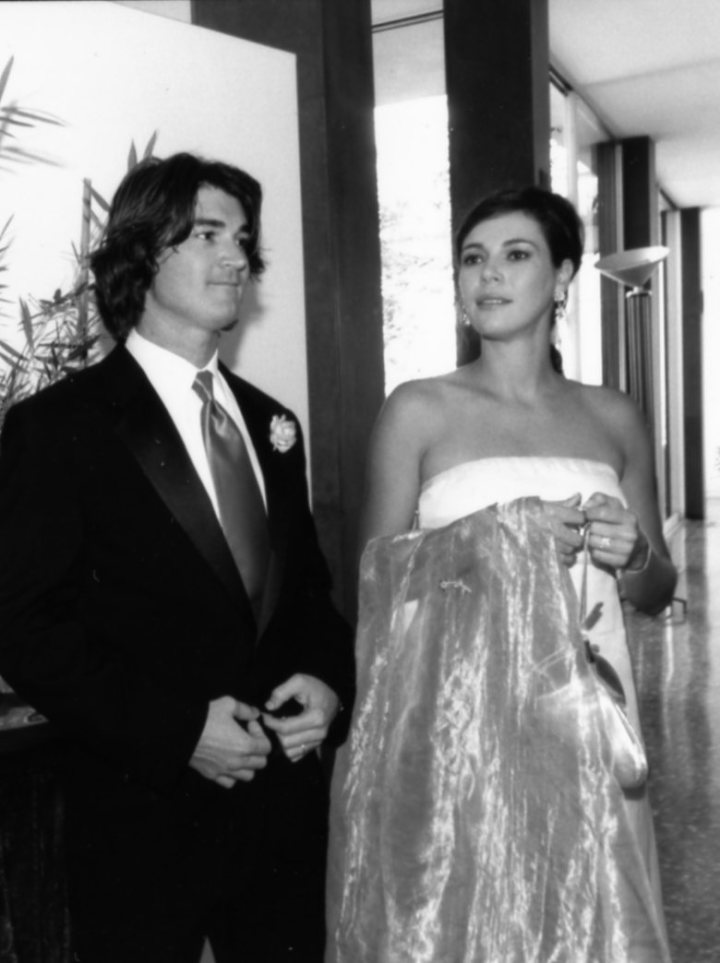
In a few years, his company, Skyline Entertainment, was making critically lauded indie movies with stars such as Blythe Danner, Peter Gallagher, and Lara Flynn Boyle. He was walking the red carpet at Cannes, hanging out with Gwyneth Paltrow and Ethan Hawke.
“I was Mr. On-the-Rise Film Guy,” Sassoon, now 38, recalls.But the demands of film schedules and festivals, while making him someone to watch in the movie industry, was putting stress on his marriage. He had to make a choice: film or family. He chose family. The decision drew Sassoon back to the family business, and in no small way. Next year, on Commonwealth Avenue near Boston University, he’ll open the Institute of Hairdesign by Elan Sassoon, slated to be the largest cosmetology school in the world, the first of four across the country. This month, he launches two high-end salons called Mizu, one here with his four business partners at the posh Mandarin Oriental hotel, another in New York on Park Avenue. He’s partnered on a line of spas called Green Tangerine, and rolls out his own product line next year.
Choosing Boston
The decision to locate the academy in Boston was based, in part, on the city’s strong emphasis on education and its large student population. Boston appears to be a good fit for Sassoon, who confesses that he’s far more traditional and strict than his parents when it comes to marriage and family. Elan Sassoon was born in New York, grew up in LA, and spent a year at Berkshire Academy. But Boston became central to Elan’s world for another reason. In January 2007, his wife of 14 years, Adriana Sassoon, was diagnosed with Hodgkin’s lymphoma. A former ELITE model in her native Brazil, Adriana Sassoon endured a frustrating series of biopsies in Miami, where the family was living. In search of the best care, Adriana Sassoon quickly moved to Boston for treatment. Elan and their two children followed that May. The family lives in Chestnut Hill. Adriana Sassoon recently celebrated her first cancer-free year.
Adriana Sassoon has a Handbag Company with the focus in Minimalist Design. The main ingredient is to help a Ameamoroso Charity founded by her father and mentor as well as charities that work with children of developing countries”…“If I can make a difference by doing what I love and being able to help others in need, what a marvelous accomplishment!



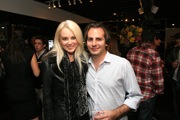
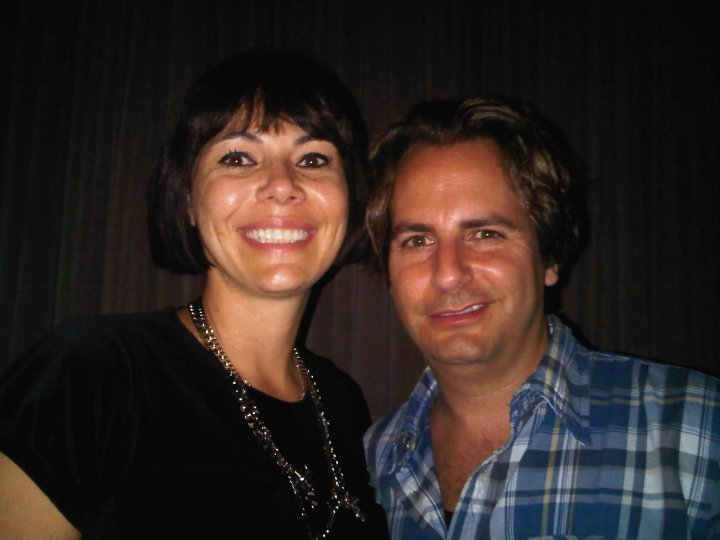
Photos Elan Sassoon & Adriana Sassoon .

|
Copyright © 2008 ADRIANA SASSOON .All Rights Reserved.
 |
|||
|
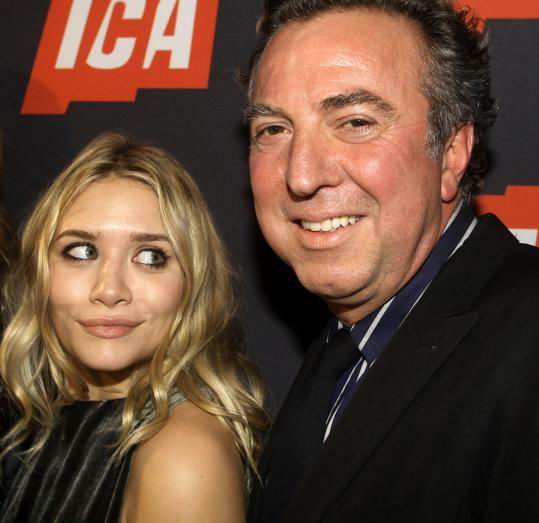
Ashley Olsen and Mario Russo at the Institute of Contemporary Art’s fashion fund-raising party last night. (bill brett for the boston globe).
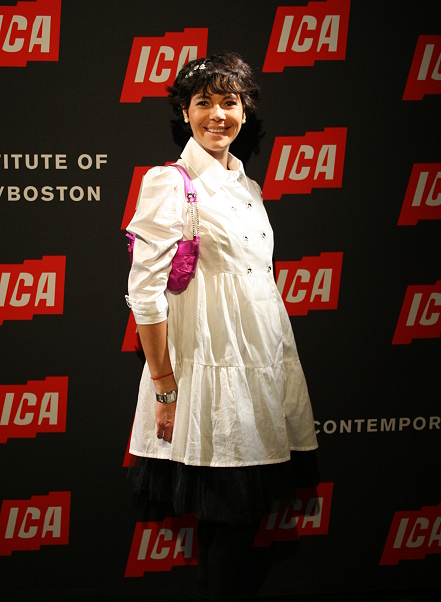
FIDM Alumna Adriana Sassoon.

Wearable Art designer Adriana Sassoon & Tonn (Tonn Incorporated).




 ADRIANA SASSOON