VERSAILLES

THE ESPLENDOR OF VERSAILLES

When the château was built, Versailles was a country village; today, however, it is a suburb of Paris, some 20 kilometres southwest of the French capital. The court of Versailles was the centre of political power in France from 1682, when Louis XIV moved from Paris, until the royal family was forced to return to the capital in October 1789 after the beginning of the French Revolution. Versailles is therefore famous not only as a building, but as a symbol of the system of absolute monarchy of the Ancien Régime.

From the seat of power to the Museum of the History of France

The Château de Versailles, which has been on UNESCO’s World Heritage List for 30 years, is one of the most beautiful achievements of 18th-century French art. The site began as Louis XIII’s hunting lodge before his son Louis XIV transformed and expanded it, moving the court and government of France to Versailles in 1682. Each of the three French kings who lived there until the French Revolution added improvements to make it more beautiful.

The Hall of Mirrors, the King’s Grand Apartments, the Museum of the History of France. The Château de Versailles, the seat of power until 1789, has continued to unfurl its splendour over the course of centuries. At first it was just a humble hunting lodge built by Louis XIII. But Louis XIV chose the site to build the palace we know today, the symbol of royal absolutism and embodiment of classical French art.

In the 1670s Louis XIV built the Grand Apartments of the King and Queen, whose most emblematic achievement is the Hall of Mirrors designed by Mansart, where the king put on his most ostentatious display of royal power in order to impress visitors. The Chapel and Opera were built in the next century under Louis XV.

The château lost its standing as the official seat of power in 1789 but acquired a new role in the 19th century as the Museum of the History of France, which was founded at the behest of Louis-Philippe, who ascended to the throne in 1830. That is when many of the château’s rooms were taken over to house the new collections, which were added to until the early 20th century, tracing milestones in French history.

King Louis XIV Beloved Versailles
VERSAILLES

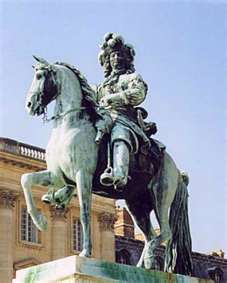
Louis XIV of France ranks as one of the most remarkable  monarchs in history. He reigned for 72 years, 54 of them he personally  controlled French government. The 17th century is labeled as the age of Louis  XIV. Since then his rule has been hailed as the supreme example of a type of  government – absolutism. He epitomized the ideal of kingship. During his reign  France stabilized and became one of the strongest powers in Europe.

During his reign France became the ideal culture since he put  great care into its enhancement so he could boast it to the world. The country  changed drastically from savage mediaeval ways to a more refined, exquisite  living – evident from his palace in Versailles. Within 54 years he did what  several kings worked on for centuries. French culture became one of the most  appealing in the world, and the name Louis XIV has been associated with  greatness and glory.

Louis XIV was a great monarch, and he was capable of  maintaining strong kingdom because he never, in his entire life, doubted his  right to be king.

His autocracy was indeed amazing, and truly an example of the  kind. He lived and ruled as a king should have. Louis XIV became the ideal king,  and many have tried unsuccessfully to live up to his glory.

About that site

versailles

versailles

THE HALL OF MIRRORS

The Grande Galerie (La Grande Galerie in French), as it was called in the 17th century, served daily as a passageway and a waiting and meeting place, frequented by courtiers and the visiting public.

The Economic prosperity is demonstrated by the dimensions and quantity of the three hundred and fifty-seven mirrors that decorate the seventeen arches opposite the windows, attesting that the new French production of mirrors, which at the time were luxury objects, is capable of stealing the monopoly away from Venice.

The Hall of Mirrors was restored in 2007 thanks to the sponsorship of skills of the company Vinci, great sponsor of the Ministry of Culture and Communication.

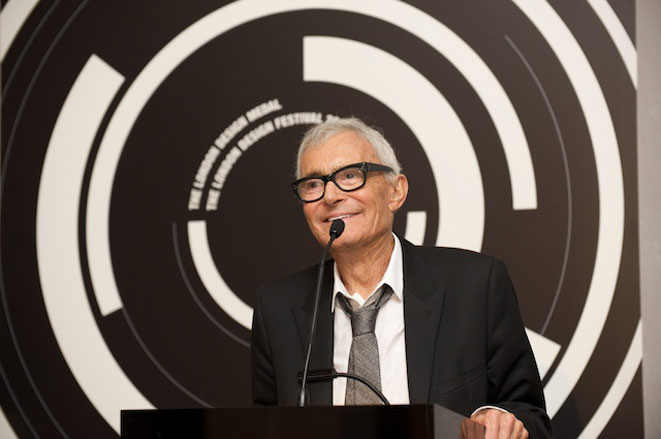
VIDAL SASSOON AWARDED AT ST PAUL CATHEDRAL

It’s not every day you’re asked to visit an off-limits historical landmark to
fete not one but two of your heroes. But last night we did just that at the 2011
London Design Medal ceremony, held at the Crypt of St Paul’s Cathedral.

adriana sassoonLegendary ‘hair designer’ Vidal Sassoon receives the London Design
Festival’s first-ever lifetime achievement award from Thomas Heatherwick

Architect Thomas Heatherwick (right), a former medal recipient and one of this
year’s judging panel, nominated the hairstylist (and architecture enthusiast)
for what he called Sassoon’s contribution to design and great affect on the
wider culture

adriana sassoonadriana sassoon

Sassoon speaks of his start in ‘hair design’, as a shampoo boy in the years
after the Second World War

adriana sassoon

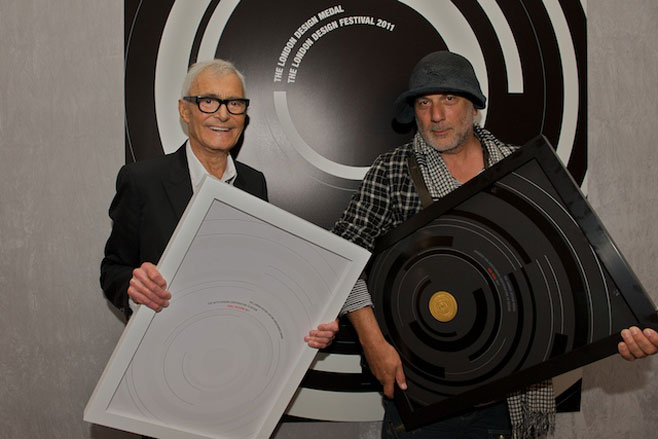
Vidal Sassoon and Ron Arad with their respective awards

Nearly 150 guests – esteemed architects, designers and industry titans –
sipped Veuve Clicquot by Nelson’s Tomb as Ben Evans, director of the London Design
Festival
, introduced this year’s honouree, the incomparable architect and
designer Ron Arad, who spoke wearing his trademark hat. But perhaps the most unexpected
thrill was the appearance of London-bred ‘hair designer’ Vidal Sassoon,
recipient of the festival’s first-ever lifetime achievement award.

Architect Thomas Heatherwick, a former medal recipient and one of this year’s judging panel,
nominated the hairstylist (and architecture enthusiast) for what he called
Sassoon’s contribution to design and great affect on the wider culture. In turn
Sassoon, in from LA with his wife Ronnie, reflected movingly on his early career
and unexpected trajectory to hair revolutionary.

Nadja Swarovski sponsored the evening, in part to showcase John Pawson’s new
Perspectives
installation
, a giant crystal lens mounted at the base of Christopher Wren’s
18th-century spiral staircase, and reflected by a convex mirror suspended high
in the tower’s cupola. Coupled with this impressive spectacle, the evening was
an apt way to kick off a festival that’s got bigger and more ambitious with each
of its nine years.

By Ellen Himelfarb

http://uk.reuters.com/video/2011/09/20/vidal-sassoon-honoured-with-design-award?videoId=221694290

AMSTERDAM

DIVINE DESIGN

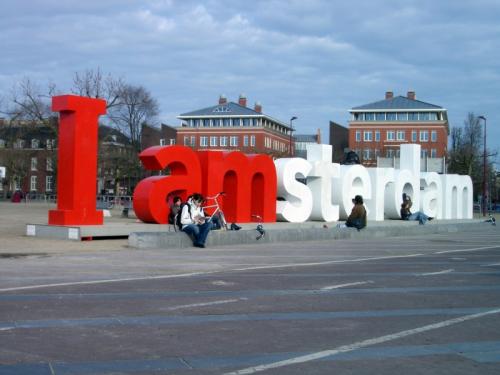
Amsterdam is the capital and largest city of the Netherlands.The city is the financial and cultural capital of the Netherlands. Many large Dutch institutions have their headquarters there, and 7 of the world’s top 500 companies, including Philips and ING, are based in the city.

Amsterdam has over 50 museums, which draw crowds of tourists each year.There are numerous art galleries displaying wonderful collections of art.


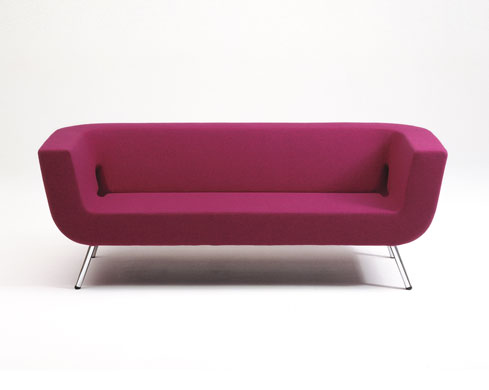
Gispen design 1950.

Industrial Designer, Willem Hendrik Gispen (1890-1981), specialized in wrought iron and ornamental metalwork. His vision was to carry his designs to the Office Furniture world and so began the inception of Gispen in 1916.

www.amsterdam.info/galleries/

The central area of the Eastern Docklands, has some of the most striking new apartment buildings and also most of the historical buildings in the area.Several of these historical maritime buildings have been renovated; others are still being restored. Brazilie is the shopping center is situated in an old warehouse. In the earlier part of the twentieth century this warehouse was used for cocoa storage  from Central or South America. www.easterndocklands.com

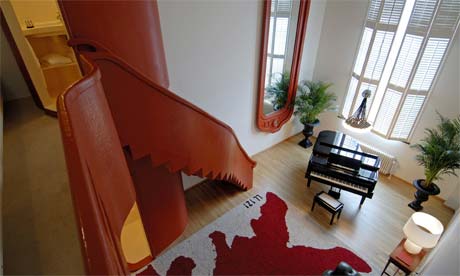
The first ‘one to five star’ hotel of the world is situated in a revamped 1920s building and is a showcase of Dutch design.

www.lloydhotel.com

STANDARD HOTEL


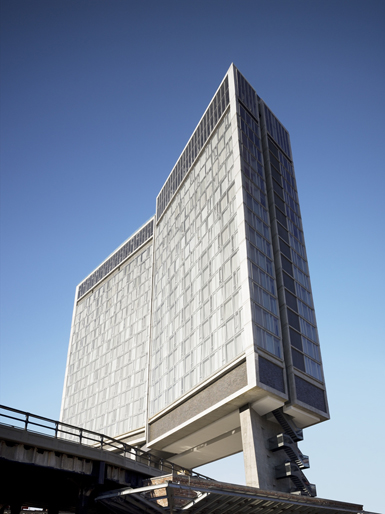
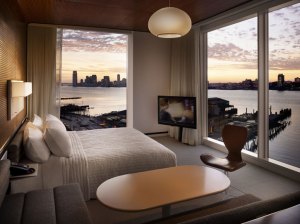
Designed by Todd Schliemann of the New York-based Polshek Partnership,located at Meatpacking District. It houses 317 guest rooms, several restaurants and bars, and a gym.

The building is decidedly modern, if not instantly iconic, with a mix of styles peppering its interior. Its slab on stilts design recalls the pioneering works of le Corbusier and other notable international style buildings, like the locally based Lever House and United Nations. The interiors,designed by Hollywood set designer Shawn Hausmann and New York based Roman and Williams, “get more modern the higher you go up”, said Balazs in an interview with Vanity Fair magazine.The guest rooms in the tower above are designed with mid-century works in mind.


On the top floor is a double height glass enclosed space that houses a supper club and lounge. Its design pays homage to Warren Platner, a protégé of Saarinen’s, who designed the Windows of the World restaurant in the World Trade Center.


 Adriana Sassoon


http://standardhotels.com/new-york-city/culture/

*Great design, a lot of bauhaus elements.A 5 star location.I had a great time.

PLASTIKI VOYAGE

David de Rothschild’s Plastiki

The Plastiki, a 60-foot sailing catamaran built by British adventurer David de Rothschild, goes on a test sail in San Francisco Bay on Feb. 11. The vessel, built from more than 11,000 reclaimed bottles and other recycled plastic and waste products, is sailing from San Francisco to Sydney through the Pacific garbage patch.

Here, de Rothschild and members of the crew talk about the building of the boat, at Pier 31 in San Francisco, California. This video was filmed in January 2009; since then, Mike Rose, the boats chief builder, has left the project.

http://www.theplastiki.com/exploreplastiki/

THE VENUS PROJECT

Jacque Fresco (born March 13, 1916) is an activist, industrial designer, author, lecturer, futurist, inventor, and the creator of The Venus Project.Fresco has worked as both designer and inventor in a wide range of fields spanning biomedical innovations and integrated social systems. He believes his ideas would maximally benefit the greatest number of people and he states some of his influence stems from his formative years during the Great Depression.

The Venus Project was started in the mid-1970s by Fresco and his partner, Roxanne Meadows. The film Future by Design was produced in 2006 describing his life and work. Fresco writes and lectures extensively on subjects ranging from the holistic design of sustainable cities, energy efficiency, natural resource management and advanced automation, focusing on the benefits it will bring to society.

The Venus Project

The Venus Project part 2

The Venus Project part 2

The Venus Project On Fox News 7

The Venus Project

Main article: The Venus Project

The Venus Project was started around 1975 by Fresco and by former portrait artist, Roxanne Meadows in Venus, Florida, USA. Its research center is a 21-acre (85,000 m2) property with various domed buildings of his design, where they work on books and films to demonstrate their concepts and ideas. The research center is now for sale at a price of $650,000.00. Fresco has produced an extensive range of scale models based on his designs.  The Venus Project was incorporated in 1995.

Venus project was founded on the idea that poverty is caused by the stifling of progress in technology, which itself is caused by the present world’s profit-driven economic system.The progression of technology, if it were carried on independent of its profitability, Fresco theorizes, would make more resources available to more people thereby reducing corruption and greed, and instead make people more likely to help each other. Fresco advocates against a money-based economy in favor of what he refers to as a resource-based economy.

In a 2008 interview with Fresco and Meadows, Fresco stated that a ‘lack of credentials’ has made it difficult for him to gain influence in academic circles.He adds that when universities do invite him to speak, they often don’t give him enough time to explain his views.

The Zeitgeist Movement

The Venus Project is featured prominently in the 2008 documentary film Zeitgeist: Addendum, as a possible solution to the global problems explained in the first film and first half of the second film.The film premiered at the 5th Annual Artivist Film Festival in Los Angeles, California on October 2, 2008, winning their highest award, and it was released online for free on Google video on October 4, 2008.. Following the movie The Zeitgeist Movement was established to aid the transition from a monetary based economy to a resource-based economy.

* I get it. Jacque Fresco , I see your vision.

Shed light,help keep perspective,inspire,energize,or just help me change the world.Don’t ever under estimate the power of ONE SINGLE SOUL.


ipad

Divine Design.

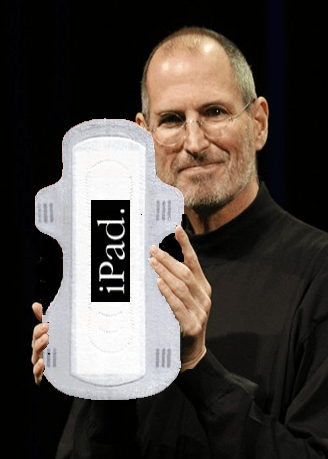
There have been tablets before the iPad. They weren’t as beautiful or well crafted.Things that I love about the New ipad.

The iPad allows you to navigate pages as fluidly as on a full-size computer.The  drawing  function is fun on the ipad.Slick design without compromising function. Good example of  ” Form ever follows function”.Minimalistic, stylistic, dynamic.Great for a mid size handbag.

Typing

Yes, it’s pretty much a jumbo iPhone keyboard.Larger keyboard. Easy to see the letters and numbers.

LED-Backlit IPS Display

The high-resolution, 9.7-inch LED-back lit IPS display on iPad is remarkably crisp and vivid. Which makes it perfect for web browsing, watching movies, or viewing photos. With iPad, there is no up or down. It’s designed to show off your content in portrait or landscape orientation with every turn. And because it uses a display technology called IPS (in-plane switching), it has a wide, 178° viewing angle. So you can hold it almost any way you want and still get a brilliant picture, with excellent color and contrast.

Connectivity

The dock connector port on the bottom of iPad allows you to dock and charge it. It also lets you connect to accessories like the iPad Camera Connection Kit and the iPad Keyboard Dock. You’ll find many accessories designed to be compatible with the dock connector port.

Audio

The powerful built-in speaker produces rich, full sound perfect for watching a movie or listening to music. iPad also comes with a headphone jack and a built-in microphone.

Multi-Touch

The Multi-Touch screen on iPad is based on the same revolutionary technology on iPhone. But the technology has been completely re engineered for the larger iPad surface, making it extremely precise and responsive. So whether you’re zooming in on a map, flicking through your photos, or deleting an email, iPad responds with incredible accuracy. And it does just what you want it to.

Pricing

16GB 32GB 64GB

Wi-Fi Available April 3.

$499

$599

$699

Wi-Fi + 3G Available late April.

$629

$729

$829

  • Prices in U.S. dollars. International pricing will be announced at a later date.
  • 3G data plan sold separately.

LOUIS SULLIVAN

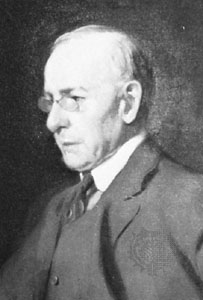
The original wording was “form ever follows function.” It is also routinely misattributed, mostly to 20th-century modernist grandees, like Le Corbusier and Mies van der Rohe, but was actually coined by the less famous American architect, Louis Sullivan. Misused though Sullivan’s quote has been, his point, that the style of architecture should reflect its purpose, made sense at the time, and continued to do so for much of the last century, not just for buildings, but objects too.

“form ever follows function.”

Louis Sullivan was born in 1856 in Boston and studied architecture for a year at MIT before leaving for the Ecole des Beaux-Arts. Like H.H. Richardson, Sullivan is regarded today as one of the most individual and innovative architects of the developing modern period. He replaced the standard classical ornamentation of the day with highly original, organic architectural details inspired by nature. One of Sullivan’s most notable contributions was the creation of a form appropriate to the tall commercial office building. Rather than stressing the horizontal layers of each story, he emphasized the vertical rise of these buildings. Verticality was made possible by steel frame construction and the use of light materials such as terra cotta, which had a malleability appropriate for carrying out his ornament.

Adler and Sullivan designed the Transportation Building for the 1893 World’s Columbian Exposition in Chicago. It was a long structure, extending 960 feet, with walls punctuated by arcade windows. The focal point of the building was the Golden Door, an awesome portal formed by layers of receding arches that featured gold leaf ornament, adding to a sense of the building’s movement. The Transportation Building, while not included with the buildings surrounding the central basin, nonetheless occupied a large, important site and was widely admired, despite a lack of overt classical references.

It was the assemblage of noble, classical edifices, laid out according to the plans of D.H. Burnham in the Great Basin of the Exposition, that particularly angered Sullivan but captivated hundreds of visitors. These buildings–the Agricultural Building (McKim, Mead & White), Machinery Hall (Peabody & Stearns), the Administration Building (Richard Morris Hunt), the Electricity Building (Van Brunt and Howe), and Manufacturers Hall (George B. Post)–formed the heart of the Exposition and represented important interests. The presence of drawings in the MIT architecture studio by Adler and Sullivan and by William LeBaron Jenney extended the memory of the Exposition, reinforcing the exceptional qualities of the two buildings.

LEBANON

Lebanon (pronounced /ˈlɛbənɒn/ or /ˈlɛbənən/; Arabic: لُبْنَان‎ Lubnān;  (Armenian), Liban French: Liban), officially the Republic of Lebanon (Arabic: اَلْجُمْهُورِيَّة اَللُّبْنَانِيَّة; French: République libanaise), is a country in Western Asia, on the eastern shore of the Mediterranean Sea. It is bordered by Syria to the north and east and Israel to the south. Lebanon’s location at the crossroads of the Mediterranean Basin and the Arabian hinterland has dictated its rich history, and shaped its cultural identity.

The earliest evidence of civilization in Lebanon dates back more than 7,000 years—predating recorded history. Lebanon was the home of the Phoenicians, a maritime culture that flourished for nearly 2,500 years (3000–539 BC).

Before the Lebanese Civil War (1975–1990), the country experienced a period of relative calm and prosperity, driven by tourism, agriculture, and banking. Because of its financial power and diversity, Lebanon was known in its heyday as the “Switzerland of the East”. It attracted large numbers of tourists, such that the capital Beirut was referred to as “Paris of the Middle East.” At the end of the war, there were extensive efforts to revive the economy and rebuild national infrastructure.

Until July 2006, Lebanon enjoyed considerable stability, Beirut’s reconstruction was almost complete, and increasing numbers of tourists poured into the nation’s resorts. In 2009, despite a global recession, Lebanon enjoyed nine percent economic growth and hosted the largest number of tourists in its history.

The caves of Jeita, Lebanon

Considered one of the natural wonders and a miracle of nature, Jeita caves are located about 20 kilometers from Beirut, capital of Lebanon, in the valley of Nahr el Kalb, is a complex of caves formed by two stone caves limestone.

With a length of 6 200 meters long, through which a river runs underground, these caverns were decubiertas the year 1836 and made available to the public in 1958, made up of two levels, the upper level can be visited on foot and the bottom in small boats.

The stunning stalactites and stalagmites, we offer spectacular views, which in the crystallization process have been forming silhouettes of huge mushrooms, giant limestone orchids rosacea, animals and left the rest to your imagination.


DUBAI


Dubai (Arabic: دبيّ‎; pronounced /duˈbaɪ/ doo-BEYE) is one of the seven emirates of the United Arab Emirates (UAE). It is located south of the Persian Gulf on the Arabian Peninsula. The Dubai Municipality is sometimes called Dubai state to distinguish it from the emirate. Written accounts document the existence of the city for at least 150 years prior to the formation of the UAE.

Dubai shares legal, political, military, and economic functions with the other emirates within a federal framework, although each emirate has jurisdiction over some functions such as civic law enforcement and provision and upkeep of local facilities. Dubai has the largest population and is the second-largest emirate by area, after Abu Dhabi. Dubai and Abu Dhabi are the only two emirates to possess veto power over critical matters of national importance in the country’s legislature. Dubai has been ruled by the Al Maktoum dynasty since 1833. Its current ruler, Mohammed bin Rashid Al Maktoum, is also the Prime Minister and Vice-President of the UAE.

The emirate’s main revenues are from tourism, property, and financial services.Although Dubai’s economy was originally built on the oil industry, revenues from petroleum and natural gas currently contribute less than 6% (2006) of the emirate’s US$ 80 billion economy (2009). Property and construction contributed 22.6% to the economy in 2005, before the current large-scale construction boom.

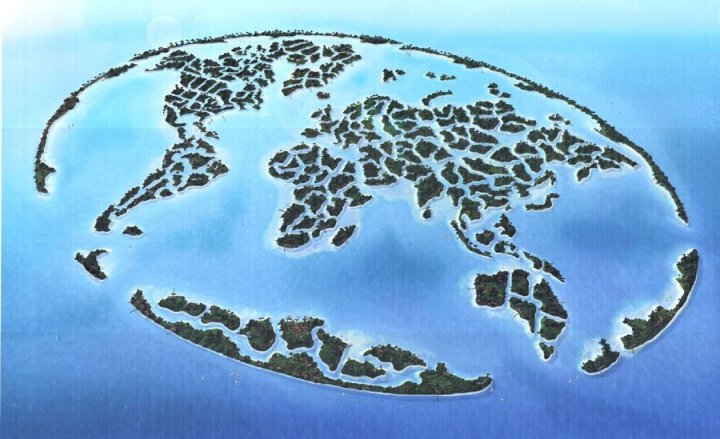
Dubai has attracted world attention through many innovative large construction projects and sports events. This increased attention, coinciding with its emergence as a global city and business hub, has highlighted labour and human rights issues concerning its largely South Asian workforce.

Climate

Dubai has a hot arid climate. Summers in Dubai are extremely hot, windy and dry, with an average high around 40 °C (104 °F) and overnight lows around 30 °C (86 °F). Sunny days can be expected throughout the year. Winters are warm and short with an average high of 23 °C (73 °F) and overnight lows of 14 °C (57 °F). Precipitation, however, has been increasing in the last few decades with accumulated rain reaching 150 mm (5.91 in) per year. This does not affect the aridity of the area, though it has increased the abundance of desert shrubs inland.

http://www.dubai.ae/en.portal