
SOJOURN Miami Shoot Magazine

Click the link below to read the full article:
Click the link below to read the full article:

“No. 5, now priced at about $260 an ounce.”
Each 30-milliliter bottle of Chanel No. 5 is packed with the essence of a thousand jasmine flowers, the fragrance of a dozen May roses from Grasse and a heaping dose of aldehydes, the molecules that early on gave the scent its modern edge.
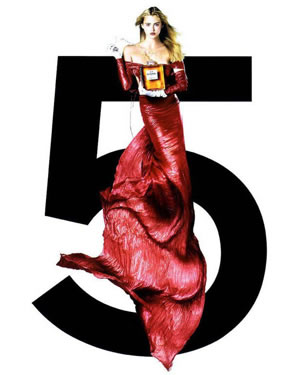
With its rich golden hue, art deco–inspired bottle, and timeless, musky scent, Chanel No. 5 is the world’s bestselling perfume. Reverently known among industry insiders as le monstre—the monster—it is arguably the most coveted consumer luxury product of the twentieth and twenty-first centuries. Yet how did this pioneering celebrity fragrance, introduced in the early 1920s, eventually take on a life of its own, becoming a cultural monument celebrated by millions of devoted consumers?
The Secret of Chanel No. 5 is Tilar J. Mazzeo’s far-ranging and fascinating search beyond the stuff of legend to uncover the full story of No. 5’s creation, iconic status, and extraordinary success. Mazzeo goes back through time and deep into the life of Coco Chanel, the brilliant, controversial, and steel-willed businesswoman at the heart of the fragrance. She takes readers to the rose plantations and celebrated jasmine fields where the perfume begins and then to the laboratories and boardrooms where scent and sex are forever intertwined. And she travels to the heart of the Chanel empire: 31 Rue Cambon, Coco Chanel’s flagship boutique, where six decades ago American GIs stormed the counters to possess the magical elixir that captured the luxury and romance of Paris for their girls back home.
A blend of evocative history and thoughtful research, here is a glittering account of where art and sensuality mingle with dazzling entrepreneurship and desire: Chanel No. 5.

THE SECRET OF CHANEL NO. 5
The Intimate History of the World’s Most Famous Perfume
By Tilar J. Mazzeo
Illustrated. 281 pp. Harper/HarperCollins Publishers. $25.99.

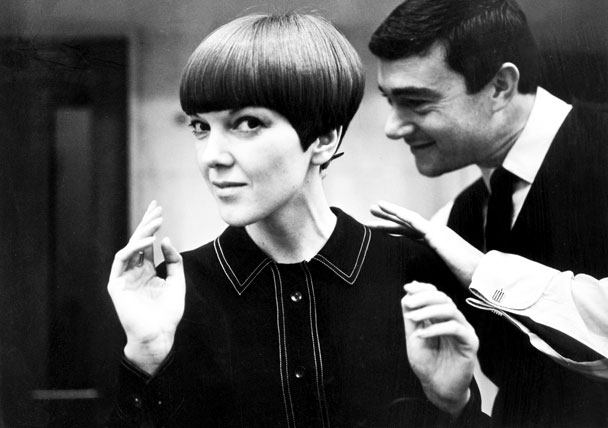
AboveFor Coddington, Vidal Sassoon created his five-point cut—a geometrically rigorous style that defined the 60s. By Eric Swayne.
Below Mary Quant: Vidal Sassoon created the angular bob for mod British designer Quant, and the hairstyle became her signature look for more than 40 years. By Ronald Dumont/Getty Images.
Known for his sleek, mod cuts that spawned a hair revolution in the 1960s, scissor wizard Vidal Sassoon helped women bid adieu to sleeping on curlers, wasting time under hood dryers, and running through can after can of Aquanet. Sassoon modernized the locks of the chicest and most beautiful women in the fashion and Hollywood realms; from creating Mia Farrow’s avant-garde pixie cut to bringing modern coiffure to the likes of Grace Coddington, Mary Quant, and Carol Channing, the “Messiah of Hair” popularized low-maintenance and cutting-edge styles. Vidal Sassoon: The Movie, out February 10 in limited release, tells the story of Sassoon’s life, beginning with the career-launching apprenticeship he first landed at 14. We look back at the architectural shapes that Sassoon created—and the women who inspired them. By Dana Mathews February 11, 2011
 The quiff bob embodied the quintessential qualities of a Sassoon cut: low maintenance and, with styling, product-free. Photograph by Karl Stoecker. Hair by Christopher Brooker.

Vidal Sassoon’s reinvigorate an iconic Richard Neutra house.
Text by James Reginato/Photographed and Produced by Todd Eberle

The relationship between hair and architecture has perhaps not been properly appreciated. But a visit with legendary stylist Vidal Sassoon and his wife, Ronnie, rectifies that.
“My whole work, beginning in the late 1950s, came from the Bauhaus,” explains Vidal, whose geometric, easy-maintenance cuts sparked a revolution in hair. “It was all about studying the bone structure of the face, to bring out the character. I hated the prettiness that was in fashion at that time.
My whole work, beginning in the late 1950s, came from the Bauhaus, says Sassoon.

“Architects have always been my heroes,” he adds. “I could not have been more honored than when I met Marcel Breuer and he told me he knew my work. And Rem Koolhaas said he had one of my original cutting books in his library.”
Fittingly, this conversation is taking place inside the couple’s Los Angeles home, a seminal work by modernist master Richard Neutra, which they recently restored. Known as the Singleton House, it was commissioned in the mid-’50s by industrialist Henry Singleton for a site on a spectacular peak atop Mulholland Drive. Views from the property take in the Pacific and the shiny skyscrapers of downtown, as well as the desert and San Gabriel Mountains.
When Ronnie, like her husband a passionate architecture buff, first saw the house it was in dire shape, though the Singleton family had done their best to maintain it. After relocating in 1969, they had rented it to a series of tenants, then put it on the market in 2002, three years after Henry’s death. The 4,700-square-foot house languished unoccupied—its systems too rudimentary (there was no air-conditioning, just Neutra’s ingeniously designed cross-ventilating windows) and its bedrooms too small and dark for contemporary families—until the Sassoons purchased the sleeping beauty. They were living between London and Beverly Hills at the time and bought the home as an adventure, one they weren’t completely sure would be positive. Indeed, just two weeks after the closing, in 2004, part of the roof collapsed, and a few months later a huge chunk of the property slid into a neighbor’s yard. But Cincinnati-born Ronnie, who had worked as a fashion designer and an advertising executive before she married Vidal almost 20 years ago, was committed to the project and immersed herself in a study of Neutra’s work. She pored over images of the Singleton House taken by Julius Shulman (1910–2009), the preeminent architectural photographer of Los Angeles. “They were my bible,” she says.

Little did she know how much she’d need the visual documentation. The Sassoons discovered that, due to dry rot and modern code requirements, they would have to do extensive rebuilding. Working with contractor Scott Werker of GW Associates of L.A., they replaced damaged ceilings and poured new terrazzo floors, and they removed a number of walls in order to create larger, brighter interior spaces.
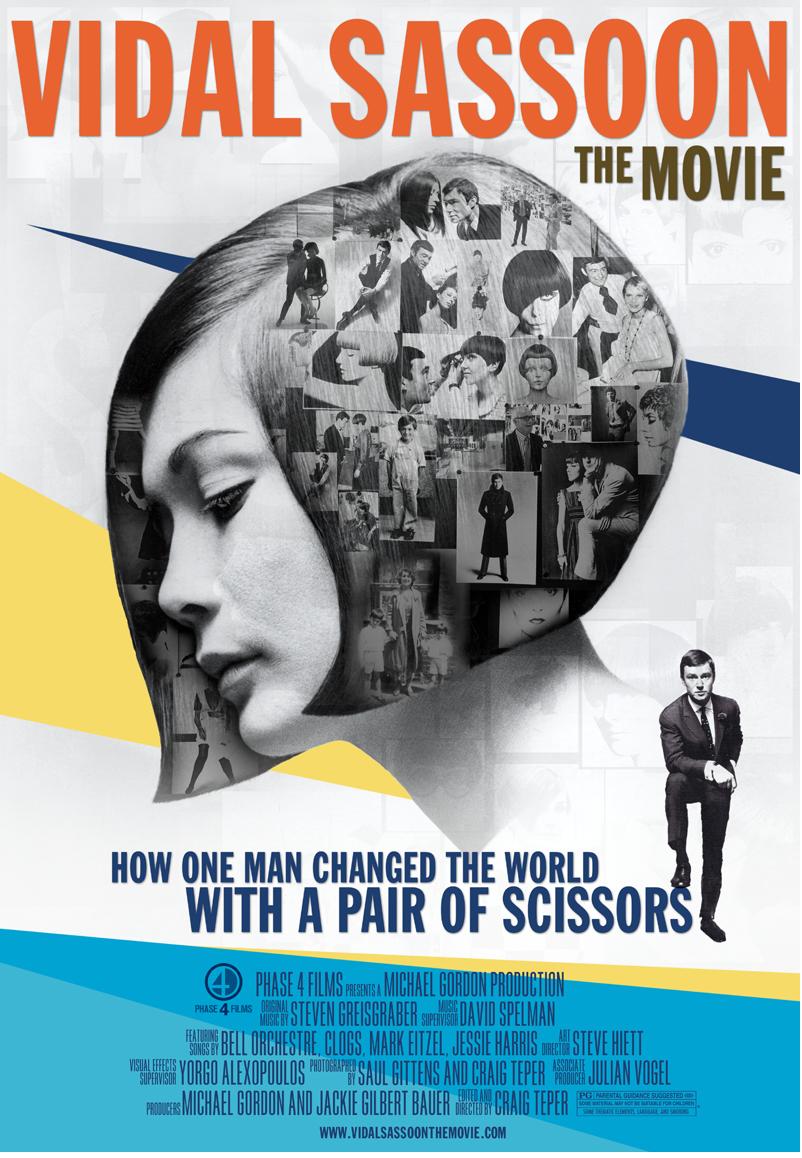
Mr. Sassoon of course changed the world with a pair of scissors.

Vidal Sassoon is more than just a hairdresser-he’s a rock star, an artist, a craftsman who “changed the world with a pair of scissors.” With the geometric, Bauhaus-inspired hairdos he pioneered in the 1960s and his “wash and wear” philosophy that liberated generations of women from the tyranny of the salon, Sassoon revolutionized the art of hairstyling and left an indelible mark on popular culture. This documentary traces with visual gusto the life of a self-made man whose passion and perseverance took him from a Jewish orphanage in London to the absolute pinnacle of his craft.
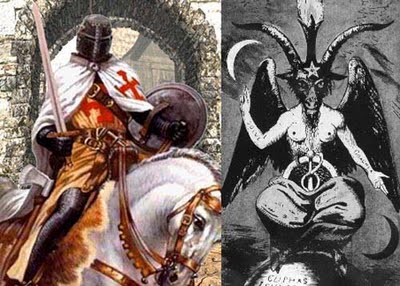
The order of the Knights Templar is synonymous with the crusades of the Middle Ages. This section of the Middle Ages details the emergence of the Religious knights, their achievements, accomplishments and their decline on Friday the 13th, in October 1307 when Jacques de Molay, the Grand Master of the Knights Templar, and 60 of his senior knights were arrested in Paris. This day is remembered in history – it is the reason Friday 13th is deemed to be unlucky.
The crusades saw the emergence of religious knights including the Knights Templar, the Teutonic knights and the Hospitallers. The members of the orders of Religious knights were both monks and knights; that is, to the monastic vows of chastity, poverty, and obedience they added a fourth vow, which bound them to protect pilgrims and fight the infidels.
The Middle Ages saw the emergence of a military order called the Poor Fellow-Soldiers of Christ and of the Temple of Solomon. Their name was to become the Templar Knights, or the Knights Templar.
The Knights Templar History started with the crusades of the Middle Ages, a war between Christians and Moslems centered around the city of Jerusalem. The Medieval order of the Knights Templar was dissolved in 1312 by the Council of Vienne.
When a man joined the Knights Templar he took an oath of poverty and his wealth and lands were donated to the Knights Templar order. Donations of money and land were also given to the Knights Templar order by nobles and Kings. The Knights Templar order therefore became extremely wealthy and became involved in Knights Templar Banking activities.
The Knights Templar timeline charts the key dates of the people and events surrounding the Knights Templar order.
The names of all of the Medieval leaders are detailed on this section together with the dates of their leadership as the Masters of the order.
The Teutonic Knights were a military-religious order of knights that restricted membership to Germans. Teutonic Knights were members of the order of the Teutonic Knights of the Hospital of the Blessed Virgin.
The Knights Hospitaller were Knights of the Order of Saint John the Hospitaller who were also known by such names as Knights of Rhodes, Knights of Malta. The Hospitallers grew out of a brotherhood for the care of sick pilgrims in a hospital at Jerusalem following the First Crusade in 1100 AD.

The first law of thermodynamics is the application of the conservation of energy principle to heat and thermodynamic processes:
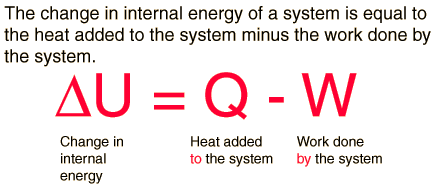
The first law makes use of the key concepts of internal energy, heat, and system work. It is used extensively in the discussion of heat engines. The standard unit for all these quantities would be the joule, although they are sometimes expressed in calories or BTU.
It is typical for chemistry texts to write the first law as ΔU=Q+W. It is the same law, of course – the thermodynamic expression of the conservation of energy principle. It is just that W is defined as the work done on the system instead of work done by the system. In the context of physics, the common scenario is one of adding heat to a volume of gas and using the expansion of that gas to do work, as in the pushing down of a piston in an internal combustion engine. In the context of chemical reactions and process, it may be more common to deal with situations where work is done on the system rather than by it.
Second Law
The First Law of Thermodynamics, commonly known as the Law of Conservation of Matter, states that matter/energy cannot be created nor can it be destroyed. The quantity of matter/energy remains the same. It can change from solid to liquid to gas to plasma and back again, but the total amount of matter/energy in the universe remains constant.
The Second Law of Thermodynamics is commonly known as the Law of Increased Entropy. While quantity remains the same (First Law), the quality of matter/energy deteriorates gradually over time. How so? Usable energy is inevitably used for productivity, growth and repair. In the process, usable energy is converted into unusable energy. Thus, usable energy is irretrievably lost in the form of unusable energy.
“Entropy” is defined as a measure of unusable energy within a closed or isolated system (the universe for example). As usable energy decreases and unusable energy increases, “entropy” increases. Entropy is also a gauge of randomness or chaos within a closed system. As usable energy is irretrievably lost, disorganization, randomness and chaos increase.
DIVINE DESIGN
Amsterdam is the capital and largest city of the Netherlands.The city is the financial and cultural capital of the Netherlands. Many large Dutch institutions have their headquarters there, and 7 of the world’s top 500 companies, including Philips and ING, are based in the city.
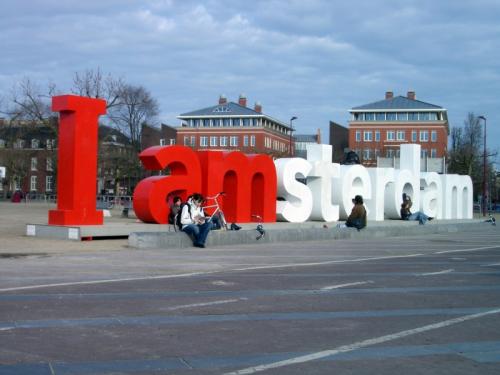
Amsterdam has over 50 museums, which draw crowds of tourists each year.There are numerous art galleries displaying wonderful collections of art.
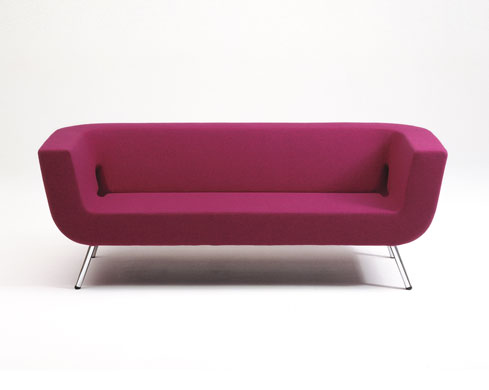
Gispen design 1950.
Industrial Designer, Willem Hendrik Gispen (1890-1981), specialized in wrought iron and ornamental metalwork. His vision was to carry his designs to the Office Furniture world and so began the inception of Gispen in 1916.
The central area of the Eastern Docklands, has some of the most striking new apartment buildings and also most of the historical buildings in the area.Several of these historical maritime buildings have been renovated; others are still being restored. Brazilie is the shopping center is situated in an old warehouse. In the earlier part of the twentieth century this warehouse was used for cocoa storage from Central or South America. www.easterndocklands.com
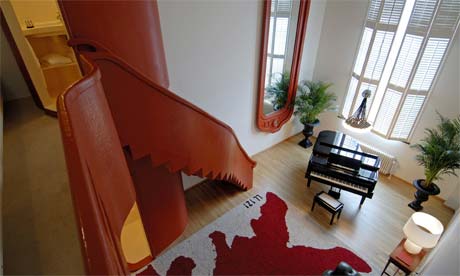
The first ‘one to five star’ hotel of the world is situated in a revamped 1920s building and is a showcase of Dutch design.
www.lloydhotel.com
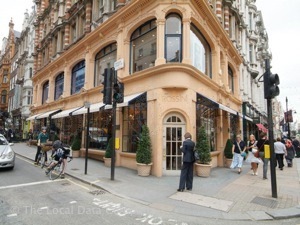
A list shopping for man´s clothing .If you´re looking for great service exclusivity this is the place to go.Avi Rossini, specialise in a range of menswear including waistcoats and one of a kind suits.
46 New Bond Street, London
 ADRIANA SASSOON