
SOJOURN Vanity Fair Magazine
SOJOURN by Elan S.
REVIEWS
Finding the Correct pH Balance with Elan Sassoon



Not only is it unlikely that your shampoo and conditioner will fall into that pH range—“I don’t care what product you test on the marketplace, they all start at 6.7 and up,” Elan says—but it would also be surprising if you could find the P.H. level listed at all. But it didn’t always used to be that way.
“Back in the 80s, every single shampoo was in the range of 4.5 to 5.5—every single one,” Elan says. He’s sitting at the glamorous Peninsula Hotel, in Midtown Manhattan, sipping a soy latte, exuding an understated, quiet cool. “And then someone said, you know, it’s too expensive to keep it in that range; you have to do double the time in the tank, add citric acid, all this stuff. So someone came up with a marketing segue: ‘pH balanced.’ Which means nothing. They started taking the pH off the bottle, saying the product is ‘pH balanced,’ but it could be balanced at a 9, a 10, whatever.”
So why should you care?

Furthermore, Sojourn contains cystine amino acid, which is one of the main building blocks of the Keratin complex. The combination of Keratin cashmere and cystine amino acid prevents hair breakage and split ends.And that’s not all. The products are also 100 percent biodegradable with a net-zero environmental impact, and contain no sulfates, formaldehyde, denatured alcohol, parabens, salt, or artificial colors or dyes—things Elan coins “junk artificial stuff.”“I think there is a lot of unfinished business in the hair industry,” he says. “There are still a lot of things going on that can be improved upon, including products and education.”Given all of the genuine transparency in his business practices, it might come as a surprise that the only thing about the product line that seems to be not out in the open is Elan’s connection to the Sassoon fame: the bottles simply say “Elan S.” on the top of the lids. (He calls his line Sojourn because it means a “journey” in French. “It is about taking responsibility for your sojourn in life,” Elan says. “Taking responsibility for the products you use.”) He’s also a partner in about six salons, including Mizu in Boston and New York. None of them bare his father’s name. He likes it like that. He’s on his own journey.“There’s this picture—I was like 10 and my dad dragging was me to shows in Poland,” Elan continues. “He would take me around quite a bit. I’ve always been in and around [the hair industry]. I dabbled in a few things after college, but I was like, Oh, forget it, and I went back in. I love it. I just love the energy of being in the salon.”
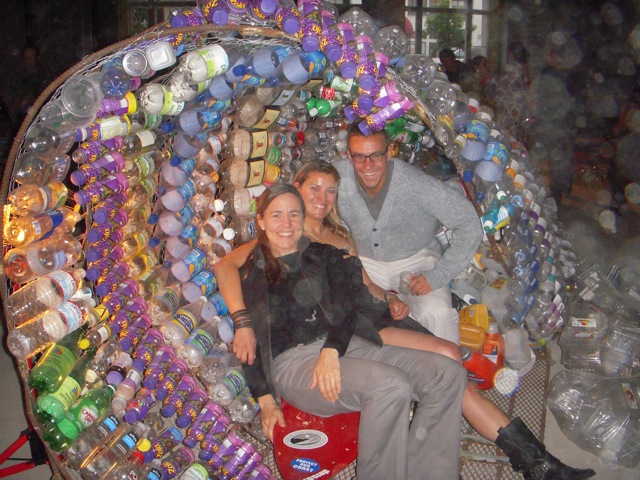
Annie Leonard was born 1964 in Seattle, Washington, where she also grew up. She graduated from the Lakeside School, and has an undergraduate degree from Barnard College and a graduate degree from Cornell University in city and regional planning.
Leonard is best known as the creator and narrator of the animated documentary about the life-cycle of material goods, The Story of Stuff. The documentary began as an hour-long talk, and was made into a condensed film version based on popular demand. She also published a book version of the film, released on March 9, 2010 by Free Press of Simon & Schuster.

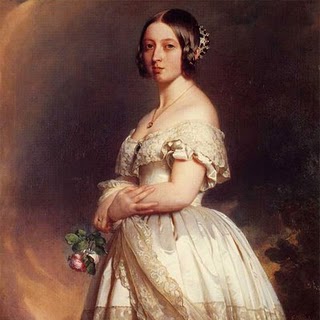
Victoria was the daughter of Edward, the Duke of Kent and Princess Victoria of Saxe-Coburg.
She was born in Kensington Palace in London on May 24th, 1819.
In 1837 Queen Victoria took the throne after the death of her uncle William IV. Due to her secluded childhood, she displayed a personality marked by strong prejudices and a willful stubbornness.She’d met her cousin, Prince Albert of Saxe-Coburg and Gotha, when they were both seventeen. When they were twenty, he returned to England, and Victoria, in love with him, proposed marriage. They were married on February 10, 1840.
Victoria had traditional views on the role of the wife and mother, and though she was Queen and Albert was Prince Consort, he shared government responsibilities at least equally. His death in 1861 devastated her; her prolonged mourning lost her much popularity.After Albert’s death in 1861 a desolate Victoria remained in self-imposed seclusion for ten years. Her genuine but obsessive mourning, which would occupy her for the rest of her life, played an important role in the evolution of what would become the Victorian mentality.
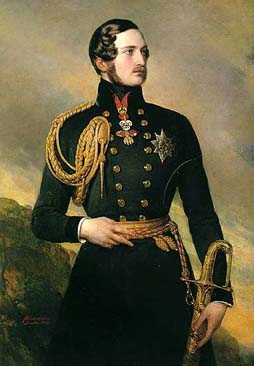
Prince Albert was the son of Ernest, Duke of Saxe-Coburg and Gotha in Germany… Victoria and Albert had nine children.
Albert was the beloved husband and trusted advisor of Britain’s Queen Victoria.A man of progressive and relatively liberal ideas, Albert not only led reforms in university education, welfare, the royal finances and slavery, he had a special interest in applying science and art to the manufacturing industry.The Prince joined the Society of Arts and became its President in 1843; in this capacity he encouraged the application of science and art to industrial purposes. Around this time two important figures, (Sir) Henry Cole and Professor Ludwig Grüner (1801–82), became closely involved with the Prince.
Albert himself was involved in a number of design projects, including the Italianate Osborne House, (with the London builder Thomas Cubitt from 1845), the Royal Dairy at the Model Farms at , alterations at , and (an essay in the Scottish Baronial style executed by William Smith (1817–91) of ). However, Prince Albert’s importance in the history of design lies in the immense improvements that became apparent from the time of the 1862 London Exhibition, which he encouraged, but did not live to see realized.
The former became Chairman of the Society of Arts, and promoted model designs commissioned from artists which coined the term ‘art manufactures’: he was an energetic organizer, becoming Prince Albert’s chief lieutenant for the remarkable Great Exhibition of 1851 in Paxton’s Crystal Palace, Royal Albert Hall, Victoria and Albert Museum, Albertopolis of which the Prince was an enthusiastic promoter.

Albert was also President of the Society for Improving the Condition of the Labouring Classes, and helped to encourage the building of exemplary dwellings: the Society erected four ‘Model Houses for Families’ as part of the 1851 Exhibition, designed by Henry Roberts and paid for by the Prince.
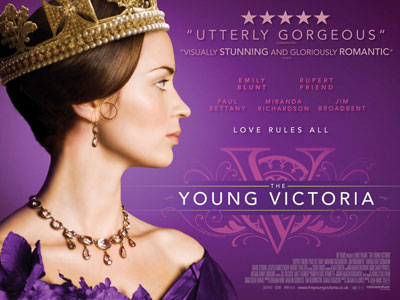
Victoria & Albert Movie 2001.BBC older version, is more detailed.
http://www.freemoviestheatre.com/free_movie/7669-Victoria_And_Albert_2001.html
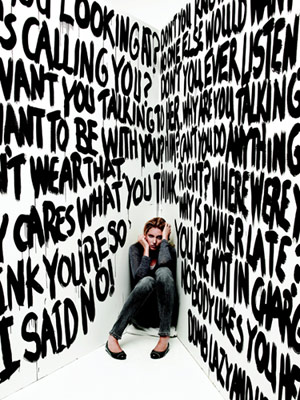
“I have never been aware before how many faces there are.There are quantities of human beings, but there are many more faces, for each person has several.”
Domestic violence and abuse can happen to anyone, yet the problem is often overlooked, excused, or denied. This is especially true when the abuse is psychological, rather than physical. Emotional abuse is often minimized, yet it can leave deep and lasting scars.

“Verbal abuse includes withholding, bullying, defaming, defining, trivializing, harassing, interrogating, accusing, blaming, blocking, insulting, countering, diverting, lying, berating, taunting, putting down, discounting, threatening, name-calling, yelling and raging.”
Consider the things people value in relationships and the things they want in a healthy and strong relationship. These could be respect, understanding, forgiveness, acceptance, love, affection, responsibility, hope, faith, trustworthiness with the ability to connect deeply with someone, and the freedom to be oneself within healthy boundaries. When we think about what constitutes a healthy relationship, it becomes easier to identify when we are in an unhealthy relationship.
Domestic abuse often escalates from threats and verbal abuse to violence. And while physical injury may be the most obvious danger, the emotional and psychological consequences of domestic abuse are also severe. Emotionally abusive relationships can destroy your self-worth, lead to anxiety and depression, and make you feel helpless and alone. No one should have to endure this kind of pain—and your first step to breaking free is recognizing that your situation is abusive. Once you acknowledge the reality of the abusive situation, then you can get the help you need.
The ultimate goal of string theory is not only to unify quantum mechanics with general relativity. The ultimate goal is to explain the spectrum of particles and forces observed in nature.

Anos Dourados, para a maioria das pessoas que viveram naquela epoca, signinifica “Anos encantados.”Nos anos dourados acontecia à literatura de Kerouac, o rock de garagem, os movimentos feministas.


Os movimentos civis em favor dos negros. Surgiram os Baianos e o Tropicalismo, a alegria, a vanguarda, a Pop Rock e o Brasil inteiro se deliciava com a batida ligth e o canto nasal da Bossa Nova.

Era moda demonstrar sinais de liberdade e Mary Quant incentivava a mini saia nas garotas de corpinho esbelto e de pernas bem torneadas.Veio a magreza de Twiggy, os batons claros em bocas tropicais, o cabelo Franjão e a velocidade do avião Concorde.De celebridades como Marilyn Monroe,Presidente JK, Marlon Brando, Dean Martin,Martin Luther King entre tantos outros.

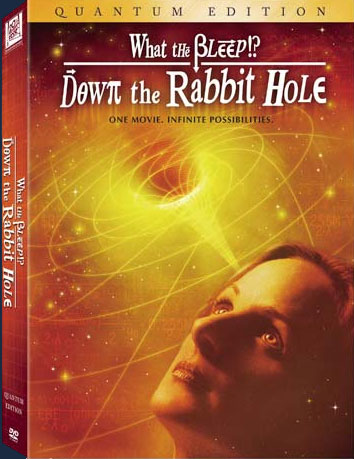
What the Bleep Do We Know!? (also written What tнe #$*! Dө ωΣ (k)πow!? and What the #$*! Do We Know!?) is a 2004 film that combines documentary-style interviews, computer-animated graphics, and a narrative that posits a spiritual connection between quantum physics and consciousness. The plot follows the story of a deaf photographer; as she encounters emotional and existential obstacles in her life, she comes to consider the idea that individual and group consciousness can influence the material world. Her experiences are offered by the filmmakers as an illustration of the movie’s thesis about quantum physics and consciousness. The 2004 cinematic release of the film was followed by a substantially changed, extended DVD version in 2006.
http://www.whatthebleep.com/rabbithole/
* I bought the video series and the book in 2006.I did not finish studing.I should get back to it………

English Romantic poet John Keats was born on October 31, 1795, in London. The oldest of four children, he lost both his parents at a young age. His father, a livery-stable keeper, died when Keats was eight; his mother died of tuberculosis six years later. After his mother’s death, Keats’s maternal grandmother appointed two London merchants, John Rowland Sandell and Richard Abbey, as guardians. Abbey, a prosperous tea broker, assumed the bulk of this responsibility, while Sandell played only a minor role. When Keats was fifteen, Abbey withdrew him from the Clarke School, Enfield, to apprentice with an apothecary-surgeon and study medicine in a London hospital. In 1816 Keats became a licensed apothecary, but he never practiced his profession, deciding instead to write poetry.
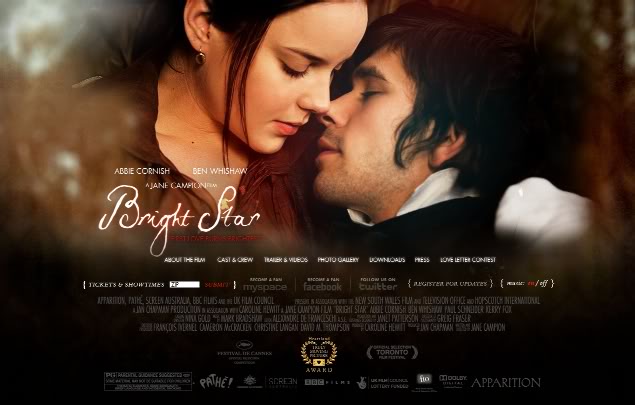
Keats met and fell in love with a woman named Fanny Brawne.Keats contracted tuberculosis, and by the following February he felt that death was already upon him, referring to the present as his “posthumous existence.”He went to Rome and died there.Brawne was forever in love with him.

Bright star, would I were steadfast as thou art –
Not in lone splendour hung aloft the night
And watching, with eternal lids apart,
Like Nature’s patient, sleepless Eremite,
The moving waters at their priestlike task
Of pure ablution round earth’s human shores,
Or gazing on the new soft-fallen mask
Of snow upon the mountains and the moors –
No – yet still stedfast, still unchangeable,
Pillow’d upon my fair love’s ripening breast,
To feel for ever its soft fall and swell,
Awake for ever in a sweet unrest,
Still, still to hear her tender-taken breath,
And so live ever – or else swoon to death.
JOHN KEATS – 1819
Poetry
Collections: The Poetical Works of Coleridge, Shelley, and Keats (1831)
Endymion: A Poetic Romance (1818)
Lamia, Isabella, The Eve of St. Agnes, and Other Poems (1820)
Poems (1817)
The Poems of John Keats (1970)
The Poems of John Keats (1978)
Many people believe abortion is a moral issue, but it is also a constitutional issue. It is a woman’s right to choose what she does with her body, and it should not be altered or influenced by anyone else.
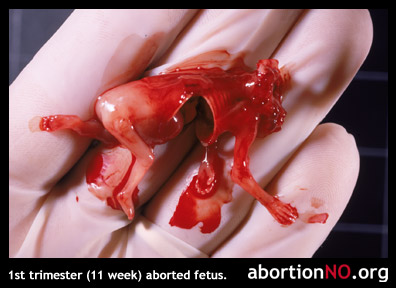
I believe that in several hundred years, if civilization survives, it will look at the barbaric treatment of children in the wombs of their parents as one of the most inhumane acts in the history of civilization, perhaps even more so than the Inquisition. Living babies with heartbeats, such as this one above, are broken into pieces by a “Doctor” with a pair of four snips and the dismembered body parts of the dead baby are sucked out of the mother’s womb with a vacuum hose. Advocates of abortion say the baby is simply a part of the mother’s body, but if that is so, I can’t understand why the doctor has to count all of the little broken off arms and legs of the baby that are sucked out of the mother to make sure none are left inside.

First, a physician determines the location and size of the uterus by performing a pelvic exam. A speculum is then inserted into the vagina to visualize the cervix, then the area is cleansed. This is done to allow for the insertion of a hollow tube- called a vacurette-up through the hole in the cervix. The vacurette, which is attached to a flexible tube leading to the vacuum aspiration machine, is inserted into the uterus. The physician moves the vacurette back and forth gently in the uterus as the uterine contents are emptied. The physician will then carefully check the walls of the uterus with a spoon-shaped instrument called a curette. The entire procedure takes about 5 to 10 minutes. It may cause some cramping and vaginal bleeding, which is normal and varies with each woman.
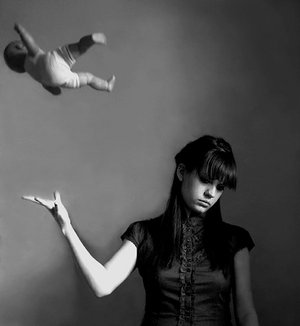

 ADRIANA SASSOON