TAKASHI FUKUSHIMA

 takashifukushima

TAKASHI FUKUSHIMA

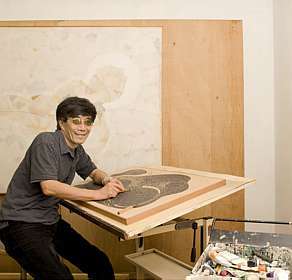
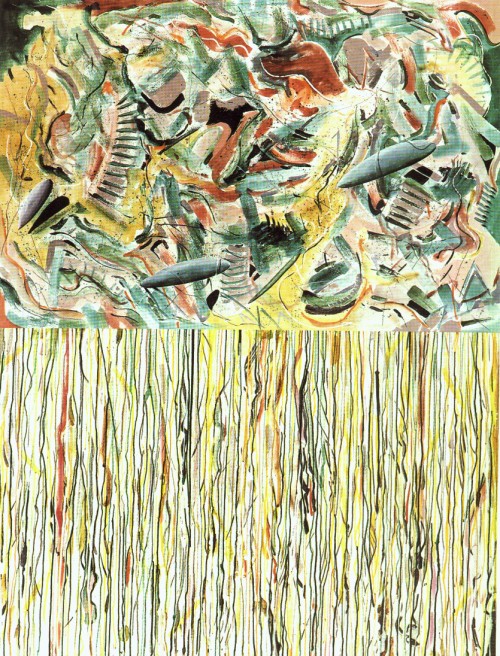
Formado em arquitetura pela FAU/USP, também freqüentou a Universidade Nacional de Arte e Música de Tóquio, com bolsa concedida pela Fundação Japão. Nas artes plásticas, iniciou-se com o pai – Tikashi Fukushima – e estudou com Luiz Paulo Baravelli. Expõe individualmente desde 1971, quando apresentou seus trabalhos na Opus Galeria de Arte (São Paulo). Das diversas exposições coletivas das quais fez parte, destacam-se as Bienais Internacionais de São Paulo (1973 e 1975 [Prêmio Aquisição]), as várias edições do Salão Paulista de Artes Plásticas (premiado em 1976 e 1987), a I Bienal do Design (Curitiba, 1990, Prêmio de Excelência) e VI Prêmio Museu da Casa Brasileira (São Paulo, 1991, Menção honrosa). Além das artes plás-ticas, concebeu cenários para peças teatrais com os quais ganhou diversos prêmios (Mambembe, Molière e Revelação do Ano [1987], concedido pela APCAO

[Takashi+Fukushima+I.jpg] 

tffoto14

CLAUDIO TOZZI

foto13

Claudio  Tozzi

Claudio José Tozzi (São Paulo SP 1944). Pintor. É mestre em arquitetura pela Faculdade de Arquitetura e Urbanismo da Universidade de São Paulo – FAU-USP. Em suas primeiras obras, o artista revela a influência da arte pop, pelo uso de imagens retiradas dos meios de comunicação de massa, como na série de pinturas Bandido da Luz Vermelha (1967), na qual remete à linguagem das histórias em quadrinhos. O artista trabalha com temáticas políticas e urbanas, utilizando com freqüência novas técnicas em seus trabalhos, como a serigrafia. Em 1967, seu painel Guevara Vivo ou Morto, exposto no Salão Nacional de Arte Contemporânea, é destruído a machadadas por um grupo radical de extrema direita, sendo posteriormente restaurado pelo artista. Tozzi viaja a estudos para a Europa em 1969. A partir dessa data, seus trabalhos revelam uma maior preocupação com a elaboração formal e perdem o caráter panfletário que os caracterizava. Começa a desenvolver pesquisas cromáticas na década de 1970. Nos anos 80, sua produção abre-se a novas temáticas figurativas, como é possível observar nas séries dos papagaios e dos coqueirais. Apresenta também a tendência à geometrização das formas. Na realização dos quadros utiliza um rolo de borracha de superfície reticulada, o que agrega novos aspectos às suas obras, como textura e volumetria. Passa a realizar trabalhos abstratos, nos quais explora efeitos luminosos e cromáticos. Cria painéis para espaços públicos de São Paulo, como Zebra, colocado na lateral de um prédio da Praça da República e outros ainda na Estação Sé do Metrô, em 1979, na Estação Barra Funda do Metrô, em 1989, no edifício da Cultura Inglesa, em 1995; e no Rio de Janeiro, na Estação Maracanã do Metrô Rio, em 1998.


tozzi_conversa

Claudio José Tozzi (São Paulo, 1944- ). Painter. Holder of a Masters’ Degree in Architecture from the Faculty of Architecture and Urban Planning of the University of São Paulo (FAU-USP). In his first works, the artist revealed the influence of Pop Art, through the use of images taken from the mass media, as in the series of paintings Bandido da Luz Vermelha [The Red Light Bandit] (1967), which referred to the language of comic strips. The artist worked with political and urban themes, often using new techniques in his works, such as serigraphy In 1967, his panel Guevara Vivo ou Morto [Guevara Alive or Dead], exhibited at the National Salon of Contemporary Art, was destroyed with blows from an axe by a radical far right group, being subsequently restored by the artist. In 1969, Tozzi went to study in Europe. From this date onwards, his works revealed a greater concern with formal elaboration, losing the pamphlet character which characterised them. During the 1970s, he began to develop chromatic researches. During the 1980s, his output opened to new figurative themes, as may be observed in the series of parrots and coconut groves. He also showed a tendency towards the geometrisation of his forms. In executing his canvases, he used a rubber roller with a netlike surface, which added new aspects to his works, such as texture and volume. He began to realise abstract works, in which he explored luminous and chromatic works. He created panels for public spaces of São Paulo, such as Zebra, placed on the side of a building of Praça da República, as well as others at the Sé metro station, in 1979, the Barra Funda metro station in 1989, the   Cultura Inglesa [British Council] building in 1995; and the Maracanã metro station in Rio de Janeiro, in 1998.


 foto-492007-152319

http://www.art-bonobo.com/claudiotozzi/tozzi.html

Uma nova paisagem para São Paulo

Lei possibilita um novo olhar à cidade, agora com bem menos interferência publicitária. Isso é bom ou ruim?


Lei Cidade Limpa, em vigor na capital paulista desde janeiro deste ano, tem contribuído não só para a regularização da propaganda exterior mas, principalmente, para uma questão que há anos não se via na cidade de São Paulo: a sua paisagem natural e os elementos que compõem o cenário urbano.

O prazo para adequação dos anúncios indicativos das fachadas (aqueles que têm a função de identificar os estabelecimentos comerciais) terminou em 31 de março e hoje já é possível notar a diferença.

Livre de painéis, faixas e cartazes, agora quem passa pela cidade pode contemplar prédios históricos, praças e monumentos tais como foram concebidos e, com isso, renasce uma nova relação com a cidade, bem mais pessoal e afetiva, já que a propaganda em excesso escondia as peculiaridades de cada bairro. Além disso, a retirada das faixas e placas revelou muros e fachadas carentes de manutenção e pintura, que já passam por transformações.

De acordo com o professor da Faculdade de Arquitetura e Urbanismo (FAU/USP) e coordenador do núcleo de pesquisas do Laboratório da Imagem e Comunicação Visual (Labim) da USP, Issao Minami, essa lei veio para instaurar uma ordem onde já não havia mais regras. “Em São Paulo havia cerca de um milhão de anúncios publicitários e, desse total, apenas cerca de 60 mil constavam no Cadastro de Anúncios (Cadan).

O certo seria cada anúncio ter seu número de registro, o que acabava não ocorrendo na prática” explica o professor.

Ainda de acordo com Minami, a medida radical – de proibir
todos os anúncios das fachadas dos comércios e outdoors – foi tomada para que a organização comece a partir da estaca zero. “Como é que você vai legislar sobre algo que está completamente ilegal. Por isso é que foi decidida a proibição de propaganda no espaço aéreo da cidade”, completa Minami.

Já para o consultor de Imagem de Marca da BBN Brasil e da Rede BBN Mundial, Augusto Nascimento, a medida vem causando um grande prejuízo à cidade. “O prejuízo financeiro é gigantesco para o comércio, para aqueles que estão tendo que tirar as placas e que não sei se terão dinheiro
para colocar outras placas menores nesse momento. Estou vendo milhares de buracos nas paredes, de onde foram tiradas as placas. A cidade ficou muito feia, perdeu vida”.

Polêmica

A lei tem causado muita polêmica, principalmente entre os profissionais da área de comunicação, que não vêem a determinação com bons olhos. Nascimento defende que a comunicação visual não é só propaganda, mas também informação e prestação de serviço e, sem as placas, será mais difícil as pessoas se localizarem e encontrarem os seus destinos. “A prefeitura está prestando um desserviço.

Agora, o cidadão deve estar tentando achar a loja que sabia onde ficava e já não sabe mais porque o prefeito fez sumir as placas. Esse vai botar o carro na rua e, não vendo a placa, vai errar o caminho.

Vai gastar mais combustível e vai causar mais congestionamento nas ruas. Quem vai pagar pela perda de tempo das pessoas e pelos seus custos de gasolina?”, defende.

Males à saúde

Por outro lado, o excesso de placas, painéis, cartazes, cavaletes, faixas, banners, totens, outdoors, back-lights, front-lights, painéis eletrônicos e painéis televisivos pode afetar diretamente o psicológico das pessoas, sem que elas percebam. Assim como os demais tipos de poluição, a poluição visual também causa males à saúde, tais como stress, fadiga, ansiedade, podendo até
mesmo propiciar o início de um processo de depressão.

Isso ocorre porque a superexposição de imagens, dispostas tanto no espaço terreno como no aéreo, exige um esforço muito maior na decodificação das mensagens. “Existe um efeito psicossomático chamado estresse visual que, sem dúvida afeta os sentidos, o bem estar e o equilíbrio emocional de maneira quase que direta” explica Minami. Augusto Nascimento defende o contrário. Segundo ele, São Paulo é uma cidade que necessita de um alto nível de redundância em comunicação visual, para a própria funcionalidade e redução do stress de sua população.

“O urbanismo do século XXI exige mais intensidade de comunicação e não menos, como quer o prefeito”.

Contribuição

A participação da sociedade, organizada em grupos, pode ser decisiva na mudança do cenário urbano.

A Associação dos Moradores e Amigos do Pacaembu mostrou que uma ação bem organizada pode surtir em resultados satisfatórios. A convite da própria associação, professores da FAU (Faculdade de Arquitetura e Urbanismo da USP) analisaram o caso da publicidade na avenida Angélica e constataram que havia um exagero nas propagandas, que atrapalhavam a visão não só de quem
passava pela avenida, mas também dos moradores dos prédios. Sendo assim, as empresas que tinham anúncios exagerados na avenida concordaram em adaptar seus luminosos e totens para
modelos mais adequados.

Ainda assim, na opinião de Minami, para que a cidade fique realmente livre dos exageros, não basta estabelecer novos critérios de fachada. Os próprios comerciantes e publicitários devem ter consciência do que é realmente adequado à divulgação do estabelecimento, respeitando as características da região e, principalmente, as pessoas que vivem no entorno. “A lei estabelece um limite máximo para as placas, no entanto, os comerciantes e publicitários sempre optam pelo máximo.

É necessário que a escolha parta de uma questão ética, para que tanto a paisagem como as pessoas não sejam prejudicadas”, afirma Minami.

Extensão

Em Santo André, existe um projeto de lei semelhante ao adotado em São Paulo, que visa estabelecer critérios com a preocupação de melhorar o visual da cidade. Apresentado pelo executivo, o projeto ainda está na câmara dos vereadores, aguardando a análise das comissões. Caso haja aprovação, a lei limitará o tamanho das inserções publicitárias nas fachadas de lojas e empresas, delimitará locais para instalação de outdoors e proibirá cavaletes nas calçadas, propagandas em viadutos, monumentos e bens tombados, além de panfletagem nas ruas.

fucsia-0424

FUCSIA

fucsia-0364

Copyright © 2009 ADRIANA SASSOON .All Rights Reserved.

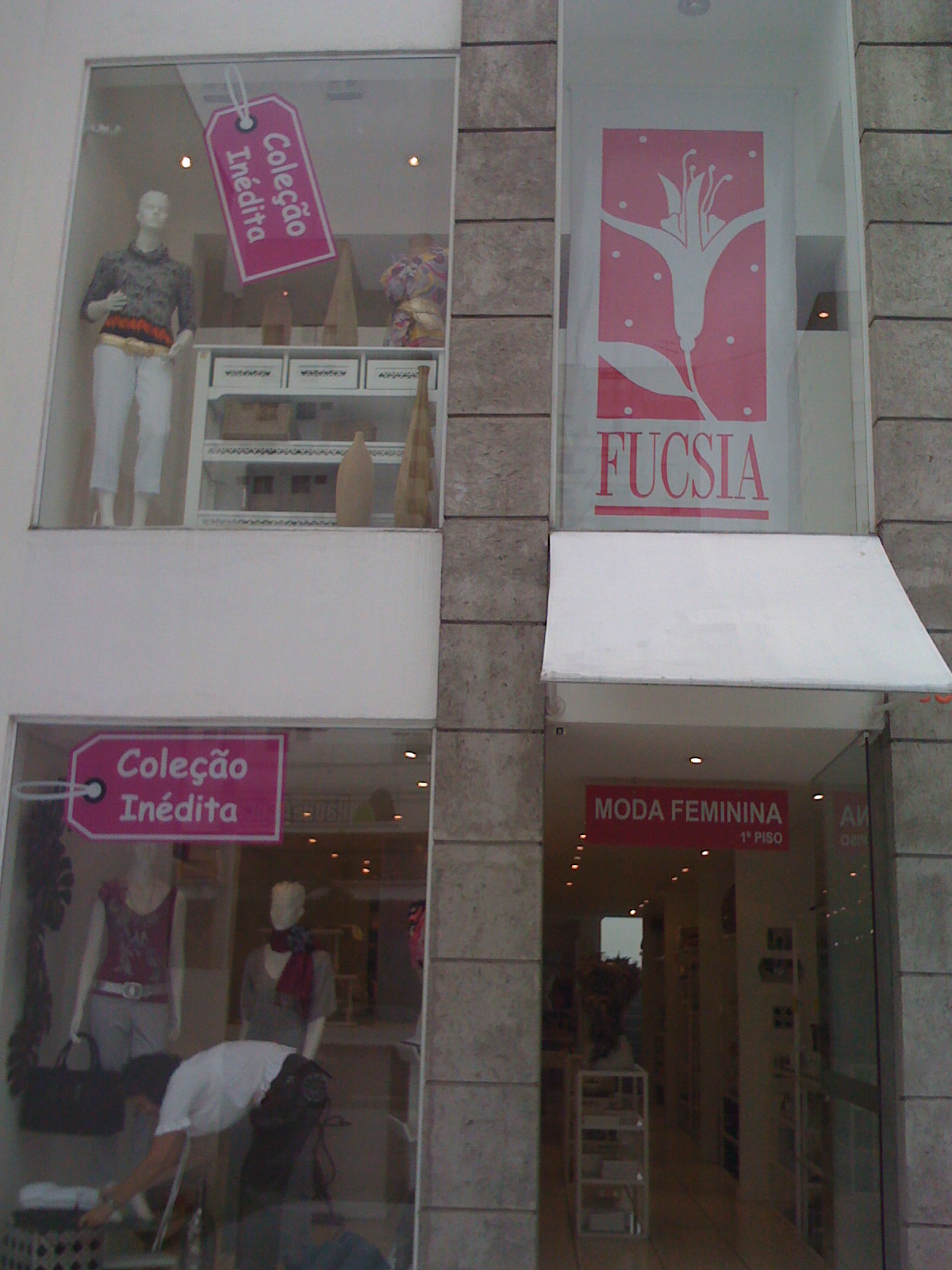
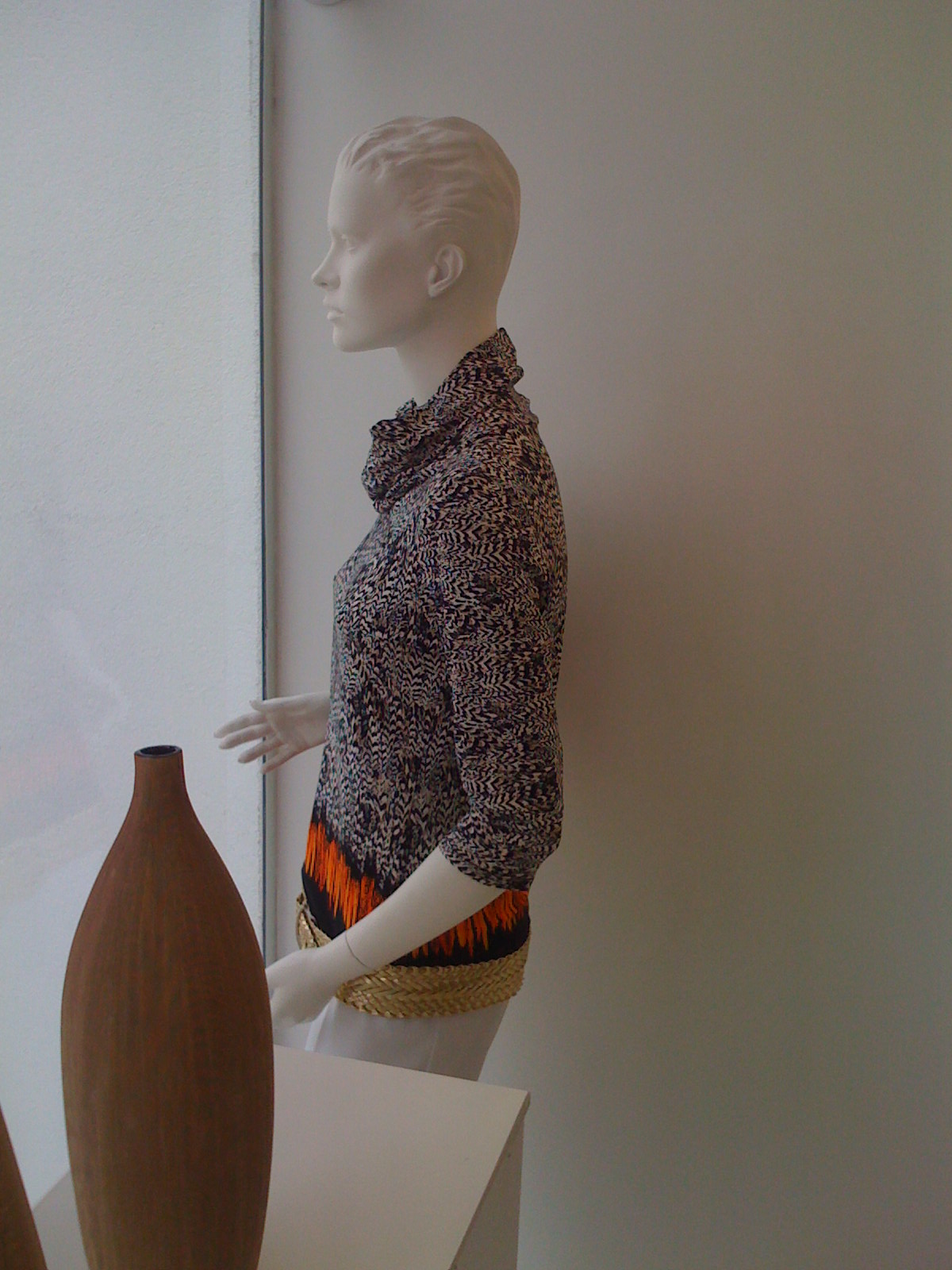
O nome fucsia deriva do apelido do cientista Leonhart Fuchs que descobriu fucsia-0241flores que apresentam essa tonalidade. No mundo da moda a primeira criadora a utilizar este tom foi Elsa Schiaparelli, uma reconhecida estilista italiana que durante as duas guerras mundiais dominou, juntamente com Coco Chanel, a indústria da moda, tornando-as eternas rivais. A colaboração da italiana com artistas surrealistas como Salvador Dalí marcou a sua carreira, deixando para a posteridade pérolas como um vestido gigante com uma lagosta impressa ou ainda um chapéu gigante em forma de sapato. Chanel dirigia-se a Schiaparelli como “a artista italiana que faz umas roupas”. Yves Saint Laurent considerava-a e ao seu rosa-choque “uma provocação”. Actualmente, em termos cromáticos, a grande herdeira da irreverência de Schiaparelli é a espanhola Agatha Ruiz de la Prada. A criadora, conhecida como a fada fucsia, adora a tonalidade “porque é a cor das meias dos toureiros, ainda que seja anti-touradas”, confessou.Porque o fucsia não é um mero rosa, nem é um lilás, porque foi preciso um pouco de arte e de ciência para que esta cor existisse, aqui estou.

fucsia-0073


fucsia-0414

Copyright © 2009 ADRIANA SASSOON .All Rights Reserved.

Karla Montenegro de Meneses & Adriana Sassoon


http://www.fucsia.com.br/

* PROJETO DE DECORACAO DE VITRINE, ARRANJOS E FOTOS.By ADRIANA SASSOON


Lançamento do programa Viva Mundo

O lançamento do programa associativo não governamental Viva Mundo do Instituto Triangulo que ocorreu no buffet Parmênion  movimentou Santo André.

O objetivo do Vivamundo é o desenvilvimento sustentável através da mobilização no ambiente urbano com campanhas de mobilização incorporando atitudes sutentaveis em casa, na escola e no trabalho.

A coordenação do Intituto Triangulo tem a liderança de Eduardo Shiguemi Maki que é filho de Hanji Maki e sobrinho dos irmãos Hiroyuki e Issao Minami.
 
Eduardo é pioneiro no programa de reciclagem de óleo vegetal usado desde 2003, contribuindo para que toneladas deste residuo não seja jogado na rede de esgotos das cidades.
 
O lançamento do projeto foi prestigiado por ínumeras lideranças ambientalistas dentre os que se destacam pelo seu trabalho em prol da qualidade de vida da região do ABC e de São Paulo. 


          O FAZER DE UM ARTISTA-ARQUITETO

O atual processo de produzir e consumir a cidade modifica-se com o crescente e diversificado processo cultural. Substitui-se o conceito tradicional de pensar e olhar a cidade, de propor-lhe sobre o existente, conferindo-lhe imagens que a apontam como o lugar onde novos protagonistas trabalham de maneira singular, estimulando novas relações espaciais. Anseios, valores, ritos, enfim, suas emoções urbanas mesclam-se de imagens públicas e privadas onde as artes plásticas integram-se nesta nova metodologia de ver e pensar a cidade. A arte é estimulada a se projetar fora de seu tradicional meio – galerias de arte e museus, espaços herméticos e fechados – invadindo ruas, praças, espaços comunitários e coletivos, lugares públicos. A imagem da cultura urbana, da sociabilidade, tomando o seu espaço na paisagem, no ambiente urbano, na vida das pessoas.

Assim, permite-se verificar que, na arte contemporânea pós-vanguardista cabe ao artista o desafio da atitude criadora de fazer aquilo que julgar interessante.

Claudio Tozzi é um desses protagonistas que traz indagações com uma expressão singular de imagens comuns de fatos e objetos públicos e do cotidiano, que trabalha além da mera transposição formal. Obras que se tornam referências, pois foram pensadas naquele espaço total incorporado dentro desta visão poética.

Conheço o trabalho do artista Claudio Tozzi desde os idos do início de setenta e, desde meados da mesma década, tenho compartilhado de aulas com o também arquiteto e professor Cláudio Tozzi, onde falamos sobre estrutura da linguagem visual e as questões imagéticas urbanas que envolvem percepção visual na FAU-USP, Faculdade de Arquitetura e Urbanismo da Universidade de São Paulo. Com o passar dos anos e das oportunidades, continuei sempre desfrutando de sua amizade e pude confirmar a retidão de seu caráter. Tanto é verdade que, na virada do século, aceitei ser seu orientador na sua carreira acadêmica de doutorando.

Claudio Tozzi traça uma leitura sistemática de sua trajetória artística mostrando suas imagens incorporadas no espaço da arquitetura e da cidade. Destaca-se a nítida parceria do artista com o arquiteto num singular processo multidisciplinar. Enfim, uma arte única. Afirma que o seu processo da construção da imagem e sua aplicação são sempre relacionados com o espaço urbano.

Mui didaticamente o professor Tozzi atravessa nosso olhar perante a realidade visível: Guevara, astronautas, bandido da luz vermelha, parafusos, papagálias, colcha de retalhos, trama urbana, passagens… Depois, revisitação mágica e alegórica no tempo e no espaço, geometrias no tempo, rememorações, arquitetura, ambiente e artes plásticas, unidades de ação e pensamento. Massas de cor, pinturas objetos, land art, intervenções, performances, instalações tornam-se linguagens que se integram e se fundem com a arquitetura, com a cidade, com a paisagem urbana e com a natureza.

A sua trajetória no panorama das artes no Brasil está contextualizada na sua produção artística e profissional. Daí a questão do processo de construção de suas imagens aplicada e relacionada com o espaço da cidade. Configura-se, finalmente que é arte no lugar da arquitetura no fazer de um artista plástico e arquiteto.


                                 By Issao Minami


60’S FASHION ICONS

The Mods and Rockers were two conflicting British youth subcultures of the early-mid 1960s.

Gangs of mods and rockers fighting in 1964 sparked a moral panic about British youths, and the two groups were seen as folk devils. The rockers adopted a macho biker gang image, wearing clothes such as black leather jackets. The mods adopted a pose of scooter-driving sophistication, wearing suits and other cleancut outfits. By late 1966, the two subcultures had faded from public view and media attention turned to two new emerging youth subcultures – the hippies and the skinheads

Rockers, who wore leather jackets and rode heavy motorcycles, poured scorn on the mods, who often wore suits and rode scooters. The rockers considered mods to be weedy, effeminate snobs, and mods saw rockers as out of touch, oafish and grubby.[citation needed] Musically, there was not much common ground. Rockers listened to 1950s rock and roll, mostly by white American artists such as Elvis Presley, Gene Vincent and Eddie Cochran. Mods generally favoured 1960s rhythm and blues, soul and ska by black American and Jamaican musicians, although many of them also liked British R&B/beat groups such as The Who, The Small Faces and The Yardbirds.

John Covach’s Introduction to Rock and its History claims that in the UK, rockers were often engaged in brawls with mods.BBC News stories from May 1964 stated that mods and rockers were jailed after riots in seaside resort towns on the south coast of England, such as Margate, Brighton, Bournemouth and Clacton.The mods and rockers conflict led sociologist Stanley Cohen to coin the term moral panic in his study Folk Devils and Moral Panics, which examined media coverage of the mod and rocker riots in the 1960s. Although Cohen admits that mods and rockers had some fights in the mid-1960s, he argues that they were no different than the evening brawls that occurred between youths throughout the 1950s and early 1960s, both at seaside resorts and after football games. He claims that the UK media turned the mod subculture into a negative symbol of delinquent and deviant status.

Fights occurred where territories overlapped or rival factions happened upon each other. As noted above, there was an urban/rural split, meaning that the groups could only fight if brought together for some reason – most often the seaside during summer. The film Quadrophenia, on the other hand, depicts some violence within London. Mods sometimes sewed fish hooks into the backs of their lapels to shred the fingers of assailants. Weapons were often in evidence; coshes and flick knives being favoured. The conflict came to a head at Clacton during the Easter weekend of 1964.

Round two took place on the south coast of England, where Londoners head for seaside resorts on Bank Holidays. Over the Whitsun weekend (May 18 and 19, 1964), thousands of mods descended upon Margate, Broadstairs and Brighton to find that an inordinately large number of rockers had made the same holiday plans. Within a short time, marauding gangs of mods and rockers were openly fighting, often using pieces of deckchairs. The worst violence was at Brighton, where fights lasted two days and moved along the coast to Hastings and back; hence the Second Battle of Hastings tag. A small number of rockers were isolated on Brighton beach where they – despite being protected by police – were overwhelmed and assaulted by mods. Eventually calm was restored and a judge levied heavy fines, describing those arrested as Sawdust Caesars.

Newspapers described the mod and rocker clashes as being of “disastrous proportions”, and labelled mods and rockers as “sawdust Caesars”, “vermin” and “louts”. Newspaper editorials fanned the flames of hysteria, such as a Birmingham Post editorial in May 1964, which warned that mods and rockers were “internal enemies” in the UK who would “bring about disintegration of a nation’s character”. The magazine Police Review argued that the mods and rockers’ purported lack of respect for law and order could cause violence to “surge and flame like a forest fire”.

Cohen argues that as media hysteria about knife-wielding, violent mods increased, the image of a fur-collared anorak and scooter would “stimulate hostile and punitive reactions” amongst readers.As a result of this media coverage, two British Members of Parliament travelled to the seaside areas to survey the damage, and MP Harold Gurden called for a resolution for intensified measures to control hooliganism. One of the prosecutors in the trial of some of the Clacton brawlers argued that mods and rockers were youths with no serious views, who lacked respect for law and order. Cohen says the media used possibly faked interviews with supposed rockers such as “Mick the Wild One”.As well, the media would try to get mileage from accidents that were unrelated to mod-rocker violence, such as an accidental drowning of a youth, which got the headline “Mod Dead in SeA”

Eventually, when the media ran out of real fights to report, they would publish deceptive headlines, such as using a subheading “Violence”, even when the article reported that there was no violence at all.  Newspaper writers also began to use “free association” to link mods and rockers with various social issues, such as teen pregnancy, contraceptives, amphetamines, and violence


More Than Just a Pretty Swingin’ Sixties Face

Hers is the face that launched a thousand ripples through the fashion world when she wore the world’s first topless bathing suit. “Designer of the future” Rudi Gernreich considered Peggy Moffitt to be his muse and model of choice for his controversial designs. With her Kabuki-inspired face painting, Peggy created her own unique look in the Sixties. Gernreich collaborated with super hair stylist Vidal Sassoon to create Peggy’s trademark hairstyle. He gave her a short helmet haircut, with precise geometric bangs cut right to her eyebrows. She also created her own makeup style with heavy black and white eyeliner and long false eyelashes to exaggerate her huge dark eyes. She took the term “strike a pose” very seriously in front of the camera. She made Gernreich’s clothes all the more extreme with her striking presence.

FIDM was recently treated to a visit from Peggy when she came to sign copies of The Rudi Gernreich Book, a chronicle of the fashion designer’s life and work. Peggy and her photographer husband, William Claxton, produced and wrote the colorful homage to Gernreich. Both Peggy and her husband discussed the book and their experiences with sixties swingin’ fashion. She has not abandoned her famous look to time!

Peggy Moffitt is an icon and innovator of fashion who didn’t just wear designs, she inspired them. Even super sixties model Twiggy said, “She taught me how much more a model puts in her work than just a pretty face.”


OUR OCEANS ARE DYING

Because we are killing it!How does it make you feel?

Please post your comments……………

RE:flection

” IF OUR OCEANS DIE WE WILL BE NEXT ! ” AKS.

California Coastal Commission in San Francisco

Chris Parry with the California Coastal Commission in San Francisco said the so-called Great Pacific Garbage Patch, has been growing a brisk rate since the 1950s, The San Francisco Chronicle reported Friday. The trash stew is 80 percent plastic and weighs more than 3.5 million tons. “At this point, cleaning it up isn’t an option,” Parry said. “It’s just going to get bigger as our reliance on plastics continues.” Parry said using canvas bags to cart groceries instead of using plastic bags is a good first step to reducing reliance on plastics, the newspaper said.

What is the state of the ocean today?

It’s actually very bad. It’s probably worse in many ways than the state of conservation on land, but we don’t think about it because we don’t live in it.

Basically it comes down to what we put into the atmosphere and ocean and what we take out of the ocean. What we put into the atmosphere is carbon dioxide, which makes the ocean hotter. And when it dissolves in the oceans themselves, it makes them more acidic. From the land, you’re getting all this runoff into the oceans—vast amounts of nutrients associated with excess fertilizer, pesticides, industrial waste, waste from cars and city streets. There’s a lot of stuff that fertilizes the ocean and causes bacteria and other slimy stuff to proliferate, plus things that actually poison the ocean.

We also have the massive scale of fisheries. We’re pulling out the tops of the food chain. Most of the big fish in the ocean are already gone. We’ve also strip-mined the bottom of the sea floor with trawls.

We’ve basically created a massive disturbance to the ocean, which is resulting in collapsing ecosystems, failing fisheries, toxic blooms.

When did scientists realize the damage we’re causing the ocean?

In the last 50 years, things have really deteriorated. People have had some impact for a long time, but the ocean can suffer a certain amount of assault from human activity and not have a major problem with it. Now everything is increasing. Carbon dioxide is increasing dramatically. Industrial fisheries, since about the 1950s, have increased dramatically.

We’re starting to really reach what people sometimes call a “tipping point,” where whole ecosystems slip into much, much less desirable states. For example, many coral reefs around the world have gone from coral reefs to a rubble bottom covered with seaweed, with very little living coral. That’s happened place after place after place.

The ocean is so big that most of the ocean bottom has never even been examined, and we’re destroying it. Even presumably well-known marine creatures are not nearly as well-known as we think they are. For example, it’s only in the last 20 years that we found out that common mussels that we used to think were one species are actually three species. Turns out there are multiple species of killer whales, not one. And there are vast numbers of species that have never been catalogued or described.

How will these changes affect the planet?

The oceans provide a lot of important things to people. In many places, seafood is the most important high-quality protein. A lot of countries, the United States included, depend on coastal activities for tourism. A big chunk of the world’s population—somewhere close to 50 percent—lives close to the oceans. So when the oceans don’t work the way they should, there are all sorts of impacts economically and also aesthetically. When beaches are closed due to toxic blooms, it has an economic impact, and it diminishes people’s quality of life.

And the idea that people could have such a devastating impact that they rival the effects of an asteroid hitting the planet, in terms of extinction and ecosystem collapse, is upsetting, even apart from the strictly dollars and cents issue.

What can people do to save the ocean?

You can reduce your ecological footprint. If everyone individually were to really take serious steps in terms of energy conservation, we wouldn’t solve the CO2 problem, but we’d make an important contribution.

It’s not just what we can do ourselves. If the United States takes CO2 seriously, we’ll pave the way for other countries to do it.

You can also support industries that are environmentally progressive.

What will happen if changes aren’t made?

A lot of the damage has already been done. Every year in the Gulf of Mexico, there’s a giant dead zone that forms. The North Atlantic cod collapse cost a fortune in lost jobs in northern New England and Canada, and it’s never really recovered. Without action, it’s all going to keep getting worse. More fisheries are going to collapse. The beaches will be unusable. It’s pretty bad. We have to do something.

What species are in the most trouble?

There’s real concern the white abalone could go extinct. The same goes for some shark species, some species of marine mammals and some corals. Once things get really rare, males and females can’t find each other to mate. So even though there a few individuals left, they don’t reproduce and eventually the population dwindles to extinction. Or, if things really get rare, other things take their place, so it’s harder for them to build back up in the ecosystem.

Are there any ocean conservation success stories?

There are lots of waterways that are being cleaned up. Also, there are more marine protected areas, which are a big tool we have to manage things effectively. One-third of the Great Barrier Reef is now a no-take marine reserve. Similarly, the Northwest Hawaiian Islands have been brought into a major reserve system. And California now has a new reserve system. So people are really starting to effectively protect marine areas, which I think is probably one of the most important things we can do for the short term.

There’s a lot to be done still. Some fisheries have started to come back, and some fisheries are much better managed than they used to be. It’s slow getting people to do things, so the first step is for people to realize the problem. The public awareness of issues associated with climate change has increased enormously in the last five years. But that’s the first step. Just being aware of the problem isn’t going to solve it.By Cate Lineberry


60’S MUSIC ICONS

42

                                      Jimi Hendrix

The rock revolution of the 1960’s seen through the life and music of Jimi Hendrix.

The first doomed icon of rock, Hendrix was the synthesis of everything that had gone before him and all that was to come. Hendrix was the influence of rhythm & blues on a generation of British musicians such as The Rolling Stones, Cream and The Who, and how the song-writing of Bob Dylan and studio developments of The Beatles transformed the possibilities and ambitions of rock.

It’s essential to remember that his career in the spotlight lasted only four years and three studio albums; dead at 27, an artist whose potential was so massive, it’s hard not to reflect on his unrealised projects without a profound sense of loss.


                                   Elvis Presley

Elvis Aaron Presley, in the humblest of circumstances, was born to Vernon and Gladys Presley in a two-room house in Tupelo, Mississippi on January 8, 1935. His twin brother, Jessie Garon, was stillborn, leaving Elvis to grow up as an only child. He and his parents moved to Memphis, Tennessee in 1948, and Elvis graduated from Humes High School there in 1953.

  Elvis’ musical influences were the pop and country music of the time, the gospel music he heard in church and at the all-night gospel sings he frequently attended, and the black R&B he absorbed on historic Beale Street as a Memphis teenager. In 1954, he began his singing career with the legendary Sun Records label in Memphis. In late 1955, his recording contract was sold to RCA Victor. By 1956, he was an international sensation. With a sound and style that uniquely combined his diverse musical influences and blurred and challenged the social and racial barriers of the time, he ushered in a whole new era of American music and popular culture.

He starred in 33 successful films, made history with his television appearances and specials, and knew great acclaim through his many, often record-breaking, live concert performances on tour and in Las Vegas. Globally, he has sold over one billion records, more than any other artist. His American sales have earned him gold, platinum or multi-platinum awards for 150 different albums and singles, far more than any other artist. Among his many awards and accolades were 14 Grammy nominations (3 wins) from the National Academy of Recording Arts & Sciences, the Grammy Lifetime Achievement Award, which he received at age 36, and his being named One of the Ten Outstanding Young Men of the Nation for 1970 by the United States Jaycees. Without any of the special privileges his celebrity status might have afforded him, he honorably served his country in the U.S. Army.

His talent, good looks, sensuality, charisma, and good humor endeared him to millions, as did the humility and human kindness he demonstrated throughout his life. Known the world over by his first name, he is regarded as one of the most important figures of twentieth century popular culture. Elvis died at his Memphis home, Graceland, on August 16, 1977.


                           The Rolling Stones

The Rolling Stones are a globally popular English musical group that was part of the ‘British Invasion’ popularization of British pop & rock music in the early 1960s. The band was formed in London in 1962 by Brian Jones, and eventually was led by the songwriting partnership of singer Mick Jagger and guitarist Keith Richards. The group began playing American Blues, R&B and Rock n’ Roll, and later ventured into other genres including country, psychedelia, Reggae, and disco.

The Stones’ image of unkempt and surly youth is one many musicians still emulate…


                                             Lennon & McCarthney

The Beatles were an English rock band from Liverpool whose members were John Lennon, Paul McCartney, George Harrison and Ringo Starr. They are among the most commercially successful and critically acclaimed bands in the history of popular music. Their innovative music and cultural impact helped define the 1960s.

The Beatles are the best-selling musical act of all time in the United States, according to the Recording Industry Association of America, which certified them as the highest selling band of all time based on American sales of singles and albums…


  The Who in Hollywood - 22nd February 1968

                                             The Who

The Who is an English rock band who first emerged in 1964. The primary lineup consisted of songwriter/guitarist Pete Townshend, singer Roger Daltrey, bassist/songwriter John Entwistle, and drummer Keith Moon. The Who came to prominence in the 1960s and grew to be considered one of the greatest and most influential rock bands of all time, in addition to being ‘possibly the greatest live band ever.’

Keith Moon died in 1978, after which the band released two more studio albums, Face Dances and It’s Hard, with drummer Kenney Jones, before officially disbanding in 1983.

Cream

Cream was a 1960s British rock band, which consisted of guitarist Eric Clapton, bassist Jack Bruce and drummer Ginger Baker. Celebrated as one of the first great power trios and supergroups of rock, their sound was characterised by a melange of blues and psychedelia. Cream combined Clapton’s blues guitar playing with the airy voice and intense basslines of Jack Bruce and the jazz-influenced drumming of Ginger Baker.

Cream’s music included songs based on traditional blues such as ‘Crossroads’ and ‘Spoonful’, and modern blues such as ‘Born Under a Bad Sign’, as well as more eccentric songs such as ‘Strange Brew’, ‘Tales of Brave Ulysses’ and ‘Toad’. Cream’s biggest hits were ‘I Feel Free’, ‘Sunshine of Your Love’, ‘White Room’, ‘Crossroads’ and ‘Badge’.

MARY QUANT

100090015

Mary Quant was born on 11 February 1934 in London.

She was educated at Goldsmiths’ College of Art. In 1957 she married Alexander Plunket Greene, whom she had met at art school. Together, the two of them with another friend started a shop in the King’s Road, Chelsea, called “Bazaar”. Underneath, they had a restaurant called “Alexander’s”.

In the 1960s she won a number of design awards and in 1966 Mary Quant was awarded the OBE. Her designs proved particularly popular in the sixties, most notably Mary Quant designed the mini-skirt which became emblematic of the decade. In 1966 she branched out by founding Mary Quant Cosmetics.

Mary Quant won the Hall of Fame Award, British Fashion Council in 1990.

In 1999 Mary Quant told the BBC World Service:

“I grew up wanting to design clothes. The whole thing hit me at a very early age. In fact, I’m still in disgrace for cutting up a bedspread when I was ill with measles, aged something like six or seven. I think it started for me in that I inherited my clothes, as a child, from a cousin. And I must have been a very self-conscious child. Because I thought they weren’t me.”

Mary Quant, estilista inglesa, começou sua carreira abrindo uma pequena boutique em Londres no ano de 1955, chamada Bazaar. Como não encontrava o tipo de vestuário que pretendia vender, ela começou a criar as suas próprias peças.

Nos anos 60 a loja converteu-se num império internacional para o qual Mary Quant criou roupas, acessórios e produtos de cosméticos, tudo jovem e pouco complicado.

A mini-saia que Mary Quant apresentara em meados dos anos 60, teve um êxito estrondoso. Ela compartilhava com André Courrèges a invenção da mini-saia, muito embora ela própria atribuía sua origem as ruas.

As primeiras bolsas desenvolvidas por Mary Quant, foram feitas nas cores preto e branco em PVC, decoradas com grandes manchas ou com seus famosos motivos em margaridas.

A flor de plástico com a qual Mary Quant enfeitou a sua moda Lolita, tornou-se no final da década, uma verdadeiro símbolo do direito à paz. Muitos jovens e adultos se sentiam atraídos pelo movimento Flower Power promovido pelos hippies.

“ Eu quero criar novas maneiras de fazer roupas com novos materiais juntamente com acessórios modernos que mudam conforme o estilo de vida das pessoas”.

Pernas, pernas e pernas. Foram elas o símbolo da revolução feminina nos anos 60 seja na minissaia, lançada pela inglesa Mary Quant e por Courrèges, ou na calça comprida do terninho criado em 1968 por Yves Saint Laurent.

obrinvs072p1


Galeria de fotos: saiba como usar os looks de 68 nos dias de hoje

 chanel2007.jpg

De pernas de fora ou cobertas pela pantalona, as moças ganharam o mundo e começaram a acreditar que poderiam um dia ser livres, transar sem engravidar graças à pílula anticoncepcional, trabalhar sem depender do marido e viver felizes para sempre fora das grades do lar.


Entenda a importância dos acontecimentos de maio de 1968

Não foi por acaso que as revistas da época fotografavam as modelos pulando sem parar. Com as pernas da manequim Verushka, os olhos atentos da inglesa Twiggy e o espírito livre de Leila Diniz, a mulher de 68 foi guerrilheira, intelectual e ultra sofisticada.

O espírito inglês dos Swingin London dominava a cena internacional e quem amava os Beatles vestia terninho no estilo mod, usado pelos dândis da classe média londrina. Em Paris, revolucionada pelas manifestações, os mestres da moda Courrèges, Pierre Cardin e Paco Rabanne davam sua própria virada, restrita aos ateliês de alta costura, já articulando outra revolução, a do prêt-à-porter.

Mauricinhos Rive Droite contra revolucionários Rive Gauche

A jornalista Christiane Fleury, filha do correspondente do grupo France Soir, Jean-Gérard Fleury, no Brasil, acompanhou os acontecimentos de maio de 1968. Em Paris, além dos confrontos estudantis e operários, havia, segundo ela, a oposição entre a juventude Rive Droite (o lado chique e rico da cidade) em relação a da Rive Gauche (a universidade da Sorbonne e arredores, coração das manifestações).

“Na época eu estudava no Liceu Francês no Rio e costumava passar três meses na cidade. Quando os conflitos aconteceram eu era Rive Droite e andava com os rapazes bonitinhos, que usavam pulôveres e coletes de Shetland (fina lã extraída de ovelhas criadas nas ilhas Shetland, na Escócia), um estilo college de fazer inveja a Ralph Lauren”, diz.

Mais tarde, quando foi estudar na Sorbonne virou Rive Gauche. Na Rive Droite nasceu o Bon Chic Bon Genre (BCBG), elegância mais tradicional, influenciada pela alfaiataria inglesa. Dos líderes de maio de 1968, Christiane gostava de Jacques Sauvageot, de paletó de veludo cotelê e camisa social, “o mais bonitão e charmoso”, lembra Christiane.

Nas ruas, segundo a jornalista, a Rive Gauche não usava nem Courrèges nem Cardin mas já aderia ao estilo hippie. “Quando fui enviada para cobrir uma exposição no Grand Palais pela revista Manchete, descobri que além dos ingleses, os franceses também estavam criando coisas interessantes com Courrèges, Cardin e Paco Rabanne, este último mostrando suas criações no Grand Palais e já fazendo seu merchandising com as modelos se apresentando dentro de carros”, conta.

  Rhodia, tergal e Bibba no Brasil

No Brasil a moda dos anos 60 entrou na era industrial com as fibras sintéticas (náilon, banlon e tergal) fazendo com que os revolucionários não perdessem o vinco. A produção em larga escala exigiu um marketing à altura, bancado pela Rhodia e idealizado pelo publicitário Livio Rangan, que promoveu os primeiros desfiles-espetáculo na Fenit (Feira Nacional da Indústria Têxtil) envolvendo artistas como Volpi e Aldemir Martins na criação das estampas, em verdadeiros shows com roteiro de Carlos Drummond de Andrade, Millor Fernandes e Torquato Neto.

Muito antes da loja Bibba de Barbara Hulanick em Londres, já tínhamos a nossa, inaugurada no dia 15 de novembro de 1960, em Ipanema, por José Luiz Itajahy. “Voltei da Inglaterra e passei a comprar modelagens nas principais lojas de lá adaptando-as para o Brasil”, conta José Luiz, hoje dono do restaurante Sushi Jardin, em Búzios.

Inimigo ferrenho do sutiã, José Luiz se orgulha de ter colaborado para liberar várias mulheres: “Eu vivia com uma tesoura no bolso de trás da calça. Quando via que podia cortar o sutiã da cliente, eu cortava”. Itajahy vestiu a atriz Dina Sfat (outra musa da época) para o prêmio Molière. “Ela estava esperando bebê, com um barrigão e preocupada com o sapato pois o pé inchara. Vesti a Dina num tecido de gase pintado e a convenci a ir descalça”.

Para entrar no clima sixty 68

Em ritmo de “vale a pena usar de novo”, as meninas voltaram a garimpar nos brechós clássicos como a boina para dar um ar francês. Se você usa óculos o look fica perfeito e intelectual mesmo que não tenha lido uma linha do “Segundo sexo”, de Simone de Beauvoir. A seguir um roteiro de estilo:

retrato20beatles


Terninho: a estilista Nica Kessler apostou no look mas recomenda: “quebrar o combinadinho com sapatos e acessórios coloridos.

Minissaia: Quando a estilista Mary Quant criou a peça fez também meias coloridas para que não chocassem demais. As minis de hoje fazem boa parceria com meias coloridas sem esquecer que as brancas dão o ar futurista lançado por Courrèges e Cardin na época.

Gola Rulê: Um clássico dos anos 60 tanto para homens como para as mulheres. Fica super revolucionário retrô sob vestes e vestidos, completados por botas baixas e mais largas.

Acessórios: Lenços, óculos enormes, anéis e brincões no gênero Verushka farão você botar um pé nos 70, quando no Brasil os sonhos revolucionários foram destruídos pela ditadura e a moda, hippie, colorida e desbundada, virou uma válvula de escape.

http://www.maryquant.co.uk/home.htm