HAIR HEALTH FROM INSIDE  OUT

Hair Structure

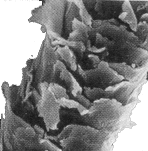
CUTICLE HAIR

Hair is mostly made of a protein called keratin. Fingernails an the top layer of skin is also made of keratin protein. Each strand of hair consists of three layers.


1.An innermost layer or medulla.

2.The middle layer is the cortex.

3.The cortex provides strength , color, and the texture of hair.

The outermost layer is the cuticle. The cuticle is thin and colorless which protects the cortex.

The center of the hair is called the cortex. It makes up 80 percent of hair. It’s made of small fibrils that twist together to make the longer fibers stronger . The cuticle is made of of dead cells that overlap each other in several layers. The condition of the cuticle plays a part in the appearance of the hair. If the dead cells lay closely together (closed cuticles) then the hair looks shiny and healthy, however, if they lift up (open cuticles) the hair appears dull, dry, and tangles easily.

HEALTHY HAIR                                           
(Cells that lay closely together or healthy hair) 

DAMAGE HAIR        

(Lifted Hair Cells or damaged hair)

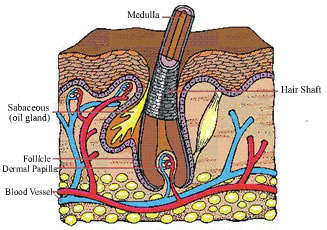
Medulla cells contain air pockets that are found inside the hair shaft which form the medullary canal. Lipids, a fat substance, is passed through to the cortex or cuticle from the medulla cells. Layers of lipids are formed to bind moisture and protein to the hair shaft. African American hair consists of 88% protein, 10-15% water, 5-10% pigments, minerals and lipids. The cortex and cuticle are formed from solid keratin fiber and the binding material is formed from amorphous keratin, which fills in the spaces inside the cortex and cuticle. The amorphous keratin holds the fibrous structure together.

Structure of the hair root

STRUCTURE OF HAIR

Benath the surface of the skin is the root of the hair , which is enclosed within a hair follicle. At the base of the hair follicle is the dermal papilla. The dermal papilla is fed by the bloodstream which nourishment the new hair produces. The dermal papilla is essential to hair growth because it contains receptors for androgen and male hormones . Androgens regulates hair growth.

 The Hair Growth Cycle

HAIR GROWTH CYCLE 

 Hair follicles grow in repeated cycles. A cycle can be broken down into three phases:

 Anagen – Growth Phase

Catagen – Transitional phase

Telogen – Resting Phase Each hair goes through the phases independent of the neighboring hairs.

The regeneration of hair is influenced by many factors:

  • health
  • hereditary factors
  • diet
  • hormone balance
  • age
  • physical condition
  • climate
  • chemical effects
  • sex
  • effects of disease

YOUR HAIR IS HUNGRY!

Your Hair is Hungry! Feed It! We all know that eating certain food is good for your body. But what about what’s good for your hair? Do you think washing and conditioning is enough? Think again. Your hair is hungry, and here’s information on how to feed it from the inside out. A healthy diet equals healthy cells, and your scalp is full of cells. It makes sense that when we eat healthy foods that help to regenerate cells, our hair will benefit. With hair growing at the rate of about ¼ to ½ inch per month, it needs plenty of iron, protein and all kinds of good nutrients to keep it healthy. Forget the supplements – you don’t need them if you eat right; let’s talk about getting what your hair needs from foods that you love. We’ll start with dark green vegetables, like spinach, green beans and broccoli. Chocked full of vitamins A and C, they help your body make sebum, that natural oil that’s found on your scalp that your hair thrives on. Dark green veggies can be eaten alone or in many recipes. (By the way, when you feel that natural oil on your scalp, massage it through to the ends of your hair before washing it out – it’s like a natural conditioner.) Let’s focus now on omega-3 fatty acids, a very good protein source. Fish oil contains plenty of omega-3, which promotes good circulation. Good circulation means more blood flow to your scalp, helping your hair stay shiny and hydrated. You can enjoy salmon and other fish, nuts, and ground flaxseed used in recipes, knowing that you’ll not only enjoy fabulous tasting foods but that you’re feeding your hair as well. Speaking of nuts, did you know they contain zinc as well? Not getting enough zinc in your diet can lead to your hair shedding, and since many of us experience thinning hair as we get older (that includes we women), we want to make sure we’re getting enough zinc in our diets.


HISTORY OF SHAMPOO

Shampoo is a hair care product used for the removal of oils, dirt, skin particles, dandruff, environmental pollutants and other contaminant particles that gradually build up in hair. The goal is to remove the unwanted build-up without stripping out so much as to make hair unmanageable.

Shampoo, when lathered with water, is a surfactant, which, while cleaning the hair and scalp, can remove the natural oils (sebum) which lubricate the hair shaft.


Shampooing is frequently followed by conditioners which increase the ease of combing and styling.

History

Shampoo originally meant head massage in several North Indian languages. Both the word and the concept were introduced to Britain from colonial India. The word shampoo in English is derived from Hindi chāmpo (चाँपो /tʃãːpoː/. Its English usage in Anglo-Indian dates to 1762. In India the term chAmpo was used for head massage, usually with some form of hair oil.

The term and service was introduced in Britain by a Bengali entrepreneur Sake Dean Mahomed in 1814, when Dean, together with his Irish wife, opened a shampooing bath known as ‘Mahomed’s Indian Vapour Baths’ in Brighton, England. His baths were like Turkish baths where clients received an Indian treatment of champi (shampooing) or therapeutic massage. His service was appreciated; he received the high accolade of being appointed ‘Shampooing Surgeon’ to both George IV and William IV.

In the 1900s, the meaning of the word shifted from the sense of massage to the that of applying soap to the hair. Earlier, regular soap had been used for washing hair. However, the dull film soap left on the hair made it uncomfortable, irritating, and unhealthy looking.

During the early stages of shampoo, English hair stylists boiled shaved soap in water and added herbs to give the hair shine and fragrance. Kasey Hebert was the first known maker of shampoo, and the origin is currently attributed to him.

Originally, soap and shampoo were very similar products; both containing surfactants, a type of detergent. Modern shampoo as it is known today was first introduced in the 1930s with Drene, the first synthetic (non-soap) shampoo.

In India, the traditional hair massage is still common. Different oils and formulations with herbs may be used; these include neem, shikakai or soapnut, henna, bael, brahmi, fenugreek, buttermilk, amla, aloe, and almond in combination with some aromatic components like sandalwood, jasmine, turmeric, rose, and musk.

 How shampoo works

Shampoo cleans by stripping sebum from the hair. Sebum is an oil secreted by hair follicles that is readily absorbed by the strands of hair, and forms a protective layer. Sebum protects the protein structure of hair from damage, but this protection comes at a cost. It tends to collect dirt, styling products and scalp flakes. Surfactants strip the sebum from the hair shafts and thereby remove the dirt attached to it.

While both soaps and shampoos contain surfactants, soap bonds to oils with such affinity that it removes too much if used on hair. Shampoo uses a different class of surfactants balanced to avoid removing too much oil from the hair.

The chemical mechanisms that underlie hair cleansing are similar to that of traditional soap. Undamaged hair has a hydrophobic surface to which skin lipids such as sebum stick, but water is initially repelled. The lipids do not come off easily when the hair is rinsed with plain water. The anionic surfactants substantially reduce the interfacial surface tension and allow for the removal of the sebum from the hair shaft. The non-polar oily materials on the hair shaft are solubilised into the surfactant micelle structures of the shampoo and are removed during rinsing. There is also considerable removal through a surfactant and oil “roll up” effect.

 Composition

Shampoo formulations seek to maximize the following qualities:

Many shampoos are pearlescent. This effect is achieved by addition of tiny flakes of suitable materials, eg. glycol distearate, chemically derived from stearic acid, which may have either animal or vegetable origins. Glycol distearate is a wax.

 Ingredient claims

In the USA, the Food and Drug Administration (FDA) mandates that shampoo containers accurately list ingredients. The government further regulates what shampoo manufacturers can and cannot claim as any associated benefit. Shampoo producers often use these regulations to challenge marketing claims made by competitors, helping to enforce these regulations. While the claims may be substantiated however, the testing methods and details of such claims are not as straightforward. For example, many products are purported to protect hair from damage due to ultraviolet radiation. While the ingredient responsible for this protection does block UV, it is not present in a high enough concentration to be effective. Shampoos made for treating medical conditions such as dandruff are regulated as OTC drugs  in the US marketplace. In other parts of the world such as the EU, there is a requirement for the anti-dandruff claim to be substantiated, but it is not considered to be a medical problem.

Vitamins and Amino Acids

The effectiveness of vitamins, amino acids and “pro-vitamins” to shampoo is also largely debatable. Vitamins and amino acids are the building blocks of proteins and enzymes within the body. While vitamins may be able to penetrate cells through the skin, amino acids and proteins are too large to enter a cell outside the bloodstream, and they can have no effect on dead tissue. Proteins are constructed from amino acids following an RNA blueprint inside the cell. A strand of hair is a long protein chain continually being added to at the root. The only way for an amino acid to be of any use is to be intentionally bound to other amino acids in a specific fashion by a living cell. Hair is not alive, and there is no possibility for an amino acid or protein to have any permanent effect on the health of the strand.[citation needed]

The case for vitamins is not as well understood. Some have demonstrated a moderate effectiveness in improving the health of skin,but most likely the benefit is derived from the effect of vitamins on living cells below the epidermis. Extending this benefit to hair, the vitamins and minerals could improve the health of new hair growth, but the benefit to existing hair is unsubstantiated. However, the physical properties of some vitamins (like vitamin E oil or panthenol) would have a temporary cosmetic effect on the hair shaft while not having any bioactivity.

 Specialized shampoos

 Dandruff

Cosmetic companies have developed shampoos specifically for those who have dandruff. These contain fungicides such as ketoconazole, zinc pyrithione and selenium sulfide which reduce loose dander by killing Malassezia furfur. Coal tar and salicylate derivatives are often used as well.

All-natural

Some companies use “all-natural,” “organic,” “botanical,” or “plant-derived” ingredients (such as plant extracts or oils), combining these additions with one or more typical surfactants. The effectiveness of these organic ingredients is disputed.

Alternative shampoos, sometimes marketed as SLS-free, claim to have fewer harsh chemicals – typically none from the sulfate family. They are sometimes claimed to be gentler on human hair.

 Baby

Shampoo for infants and young children is formulated so that it is less irritating and usually less prone to produce a stinging or burning sensation if it were to get into the eyes. This is accomplished by one or more of the following formulation strategies:

  1. dilution, in case product comes in contact with eyes after running off the top of the head with minimal further dilution;
  2. adjusting pH to that of non-stress tears, approximately 7, which may be a higher pH than that of shampoos which are pH adjusted for skin or hair effects, and lower than that of shampoo made of soap;
  3. use of surfactants which, alone or in combination, are less irritating than those used in other shampoos;
  4. use of nonionic surfactants of the form of polyethoxylated synthetic glycolipids and/or polyethoxylated synthetic monoglycerides, which surfactants counteract the eye sting of other surfactants without producing the anesthetizing effect of alkyl polyethoxylates or alkylphenol polyethoxylates.

The distinction in 4 above does not completely surmount controversy over the use of shampoo ingredients to mitigate eye sting produced by other ingredients, or of use of the products so formulated.

The considerations in 3 and 4 frequently result in a much greater multiplicity of surfactants being used in individual baby shampoos than in other shampoos, and the detergency and/or foaming of such products may be compromised thereby. The monoanionic sulfonated surfactants and viscosity-increasing or foam stabilizing alkanolamides seen so frequently in other shampoos are much less common in the better baby shampoos. [1]

 Animal

Shampoo for animals (such as for dogs or cats) should be formulated especially for them, as their skin has fewer cell layers than human skin. Cats’ skin is 2-3 cell layers thick, while dogs’ skin is 3-5 layers. Human skin, by contrast, is 10-15 cell layers thick. This is a clear example of why one should never use even something as mild as baby shampoo on a cat, dog, or other pet.

Shampoo intended for animals may contain insecticides or other medications for treatment of skin conditions or parasite infestations such as fleas or mange. These must never be used on humans. It is equally important to note that while some human shampoos may be harmful when used on animals, any haircare products that contain active ingredients/drugs (such as zinc in antidandruff shampoos) are potentially toxic when ingested by animals. Special care must be taken not to use those products on pets. Cats are at particular risk due to their instinctive method of grooming their fur with their tongues.

 Solid

Solid shampoos or shampoo bars use as their surfactants soaps and/or other surfactants conveniently formulated as solids. They have the advantage of being spill-proof, and the disadvantage of being slowly applied, needing to be dissolved in use.

Jelly/Gel

Stiff, non-pourable clear gels to be squeezed from a tube were once popular forms of shampoo, and can be produced by increasing a shampoo’s viscosity. This type of shampoo cannnot be spilled, but unlike a solid, it can still be lost down the drain by sliding off wet skin or hair. Soap jelly was formerly made at home by dissolving sodium soap in hot water before being used for shampooing or other purposes, to avoid the problem of slow application of solids noted above.

Paste/cream

Shampoos in the form of pastes or creams were formerly marketed in jars or tubes. The contents were wet but not completely dissolved. They would apply faster than solids and dissolve quickly. Jar contents were prone to contamination by users and hence had to be very well preserved.

Dry shampoo

Powdered shampoos are designed to work without water. They are typically based on powders such as starch or talc, and are intended to absorb excess sebum from the hair before being brushed ou Traditional Shampoos Indonesia.

Early shampoos used in Indonesia were made from the husk and straw (merang) of rice. The husks and straws were burned into ash, and the ashes (which have alkaline properties) are mixed with water to form lather. The ashes and lather were scrubbed into the hair and rinsed out, leaving the hair clean, but very dry. Afterwards, coconut oil was applied to the hair in order to moisturize it.

VIDAL SASSOON THE MOVIE

Scenes3

Scenes4

Scenes5

Scenes6

Early life

Sassoon was born to Jewish parents in London. His father was from Salonica (Thessaloniki in Greece), and his mother, whose family was originally from Kiev, was born in London. Although too young to serve in the Second World War, Sassoon became a member of the 43 Group, a Jewish veterans’ militia organisation that broke up Fascist meetings in East London after the end of the war. In 1948 he joined the Israeli Defence Forces to fight in the 1948 Arab-Israeli War.

http://wp.me/pb3nG-134

Influence in hairstyling

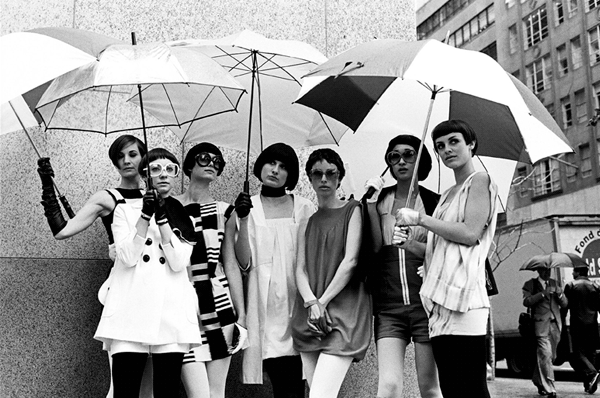
Sassoon’s works include the geometric, the wash-and-wear perm, and the “Nancy Kwan.” They were all modern and low-maintenance. The hairstyles created by Sassoon relied on dark, straight, and shiny hair cut into geometric yet organic shapes. In 1963, Sassoon created a short, angular hairstyle cut on a horizontal plane that was the recreation of the classic “bob cut.” His geometric haircuts seemed to be severely cut, but were entirely lacquerfree, relying on the natural shine of the hair for effect. Sassoon is a father of modernist style and has also been a key force in the commercial direction of hair styling, turning its craft in to a multi-million dollar industry.

WWW.VIDALSASSOONTHEMOVIE.COM

320519084_4652da6c331

VIDAL  SASSOON  STYLE  HAIR

Early life

Vidal Sassoon é um cabeleireiro inglês, nascido em Londres, em 1928. Nos Estados Unidos estudou na universidade de Nova Iorque. Como cabeleireiro, notablizou-se por ter criado uma forma de penteado baseada na Bauhaus e nas formas geométricas.Vencedor de vário prémios, foi presidente da Multinacional Vidal Sassoon, presidente da Fundação Vidal Sassoon .

sassoon_picbeauty_5172_0_sl

Influence in hairstyling

Sassoon’s works include the geometric, the wash-and-wear perm, and the “Nancy Kwan.” They were all modern and low-maintenance. The hairstyles created by Sassoon relied on dark, straight, and shiny hair cut into geometric yet organic shapes. In 1963, Sassoon created a short, angular hairstyle cut on a horizontal plane that was the recreation of the classic “bob cut.” His geometric haircuts seemed to be severely cut, but were entirely lacquer-free, relying on the natural shine of the hair for effect. Sassoon is a father of modernist style and has also been a key force in the commercial direction of hair styling, turning its craft in to a multi-million dollar industry.

He was a very influential person to people all over the world; especially those who have become cosmetologists. By the early 1980s, after moving to the United States, Sassoon had sold his name to manufacturers of haircare products and the multinational Procter & Gamble was applying his name to shampoos and conditioners sold worldwide. Former salon colleagues also bought Sassoon’s salons and acquired the right to use his name, extending the brand in salons into the United Kingdom and United States. However, in 2003, it was reported that Sassoon was suing Procter & Gamble for destroying his brand by skimping on marketing in favor of the company’s other hair product lines, notably Pantene. Also in 2002, the chain of Vidal Sassoon salons was sold to Regis Corporation. By 2004, it was reported that he was no longer associated with the brand that bears his name.[citation needed] Vidal Sassoon has authored several books, including A Year of Beauty and Health co-written with his former wife, Beverly Sassoon. He also had a short-lived TV series called Your New Day with Vidal Sassoon in the late 1970s.

Family

In 1967, Vidal Sassoon married Beverly Adams. They had four children,CATYA, ELAN, EDEN  including an adopted son DAVID. One daughter, actress Catya Sassoon, died of a drug overdose on January 1, 2002. The couple divorced in 1980.

 sassoon-trend-51172

 Quote

Hair is nature’s biggest compliment and the treatment of this compliment is in our hands. As in couture, the cut is the most important element … haircutting simply means design and this feeling for design must come from within. ”VS
The only place where success comes before work is in the dictionary. ”VSsassoon-trend-51202

SASSOON STYLING PRODUCTS

vs-logo-11

Vidal Sassoon stands for Very Simple and Very Stylish! Vidal Sassoon is the consumer brand that experts use when it comes to delivering fabulous haircare. The best of technology is used by Vidal Sassoon to deliver the ultimate in hair styling product expertise. Vidal Sassoon’s products are for the modern individual with the know-how and expectation of living in the 21st century.

Vidal Sassoon’s hair styling products are renowned in the world of fashion for bringing style and confidence to today’s image conscious consumer. Innovation, experience and value are all top of the agenda with Vidal Sassoon, the world leading authority on haircare.

Vidal Sassoon brings the vital hair styling tools for the modern sophisticate enabling you to create those elegant, silky and shiny looks.

sassoon_pichover_5747_0_sl

www.sassoon.com

ROGER VIVIER

vivier1

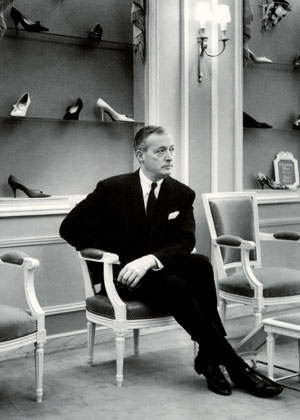
  • Born: Paris, 13 November 1913.
  • Education: Studied sculpture at l’École des Beaux Arts, Paris.
  • Family: Adopted son, Gérard Benoit-Vivier.
  • Military Service: Performed military service, 1938-39.
  • Career: Designed shoe collection for friend’s shoe factory; opened own , 1937, designing for Pinet and  in France, Miller and Delman in U.S., Rayne and Turner in UK; designed exclusively for Delman, New York, 1940-41 and 1945-47; studied millinery, 1942; opened New York store, Suzanne & Roger, with milliner Suzanne Remy, 1945; returned to Paris, 1947, designing freelance; designed for Dior’s new shoe department, 1953-63; showed signature collections, from 1963; reopened own business in Paris, 1963; designs collections for houses, including Grés, St. Laurent, Ungaro, and Balmain; resigned with Delman, 1992-94; new licensing  with Rautureau, 1994; opened new Paris boutique, 1995.
  • Exhibitions: Musée des Arts de la Mode, Paris, 1987 [retrospective]; Nina Footwear Showroom, New York, [retrospective], 1998; Folies de dentelles, Musée des Beaux-arts et de la dentelle, Alençon, France, 2000.
  • Awards: Neiman Marcus award, 1961; Daniel & Fischer award; Riberio d’; honored by Nina Footwear, 1998.
  • Died: 2 October 1998, in Toulouse, France.
  • rogervivier

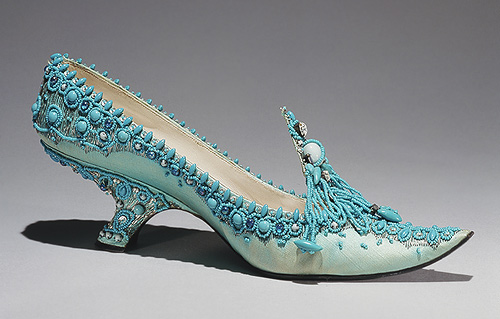
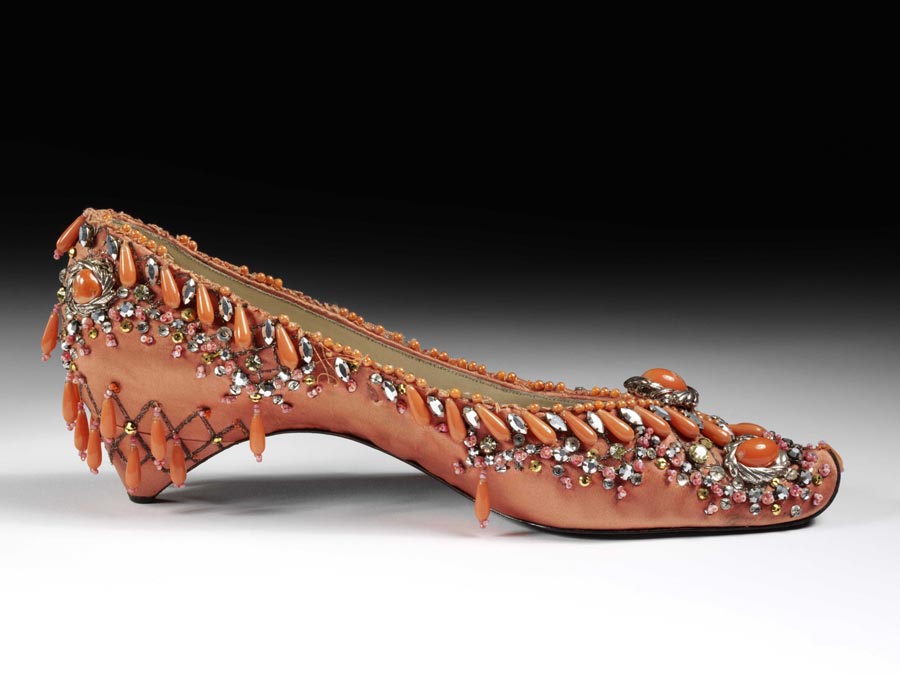
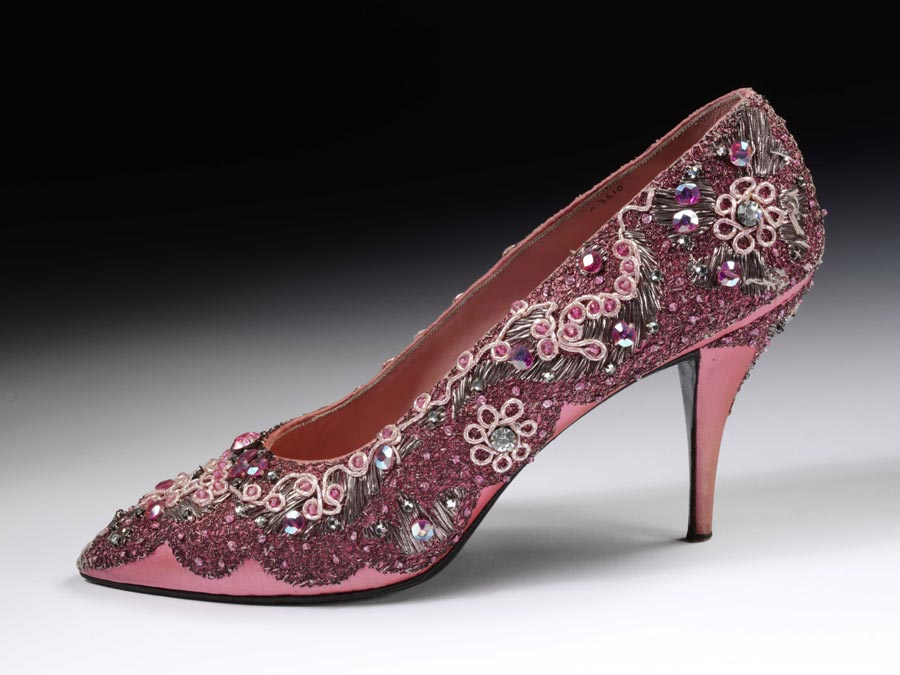
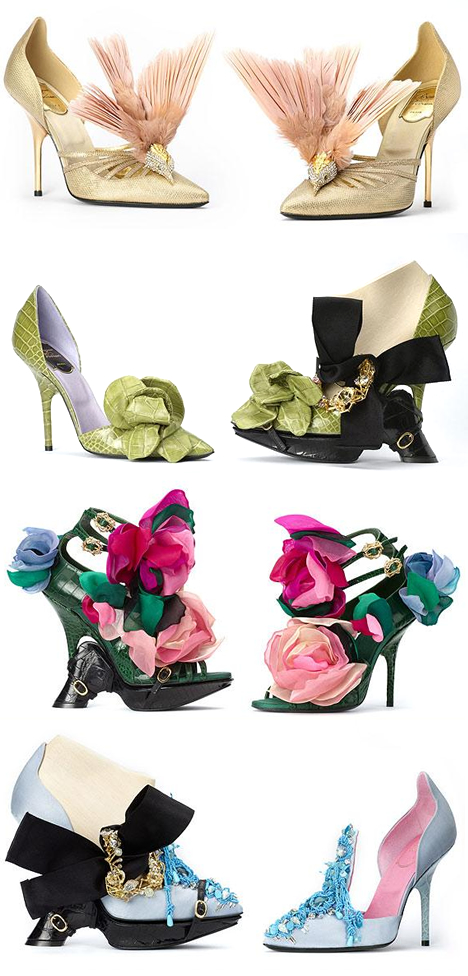
Roger Vivier was perhaps the most innovative shoe designer of the 20th century and beyond. Vivier’s shoes have had the remarkable ability to seem avant-garde yet destined at the same time to become classics. He maintained an eye for the cutting edge of fashion for six decades. Vivier looked back into the history of fashion and forward to the disciplines of engineering and science for inspiration. The shoes may seem shocking at first; however, it is the way they complete the  that has made Vivier so coveted by top fashion designers for decades. With a sophisticated eye for line, form, and the use of innovative materials, Vivier created  worn by some of the most and prestigious people of both the 20th and 21st centuries, among them Diana Vreeland, the Queen of England, and Marlene Dietrich.

roger vivier shoes, roger vivier paris

Vivier worked with some of the most innovative fashion designers, such as , Christian Dior, and Yves Saint Laurent, at the height of their careers. Schiaparelli was the first designer to include Vivier’s shoes in her collections. Vivier was working for the American firm Delman at the time; Delman rejected Vivier’s sketch of the shocking platform shoe which Schiaparelli included in her 1938 collection. In 1947 Vivier began to work for  and the New Look brought new emphasis to the  and foot. Vivier created a number of new  shapes for Dior, including the  and the  heel. During their ten-year association, Dior and Vivier created a golden era of design. In the 1960s Vivier created the low heeled “pilgrim pump” with a square silver , and this shoe is often cited as fashion’s most copied footwear.

roger vivier shoes

Vivier was one of the first designers to use clear plastic in the design of shoes. His first plastic designs were created in the late 1940s after World War II; however, in the early 1960s he created entire collections in plastic. Vivier popularized the acceptance of the thigh-high boot in the mid-1960s, a fashion considered  for women. Vivier teamed with Delman again in 1992, and the mood his later collections continued to be imaginative and forward thinking. Drawing his inspiration from nature, contemporary fashion, the history of fashion, painting, and literature, Vivier updated some of his earlier designs and was constantly creating new ones to challenge the ideas of footwear design.

roger-vivier- shoes

Vivier studied sculpture at the École des Beaux-Arts in Paris and later apprenticed at a shoe factory. It was this solid base of training in both aesthetics and technical skills that led him to become known for precision fit as well as innovative design. A Vogue ad for his shoes in 1953 educates the viewer to look beyond the design. Showing the shoes embraced in callipers and other precision tools the ad read, “Now study the heel. It announces an entirely new principle—the heel moved forward, where it carries the body’s weight better.” In another ad from Vogue (1954) the experience of owning a pair of Vivier shoes was likened to owning a  suit or dress, “a perfection of fit and .”

roger-vivier shoulder bag

Vivier’s shoes not only had the ability to complete a silhouette with an  that made a whole, but the beauty of their line, form, and  made them creations that stood alone as objects of art. Vivier’s strong combination of design and craftsmanship allowed his shoes to stand prominently in the permanent collections of some of the world’s most prestigious museums—the Costume Institute of the Metropolitan Museum of Art, New York; the Victoria & Albert Museum, London; and the Musée du Costume et de la Mode of the Louvre, Paris.

roger-vivier-paris

In 1994 the 86-year-old Vivier signed a new licensing agreement with Rautureau Apple Shoes, which in turn allowed him to open a  in Paris the following year. The Rautureau venture gave Vivier the backing to continue doing what he loved most—designing shoes. Yet three years later, in October 1998, Vivier died in Toulouse, France. He was remembered by many, including fellow shoe designer , who told People magazine, “People try to copy him, but it’s impossible to find that mix of technical skill and design.” Kenneth Jay Lane, who had worked with the master , declared, “He was the world’s greatest artist of shoe design.”

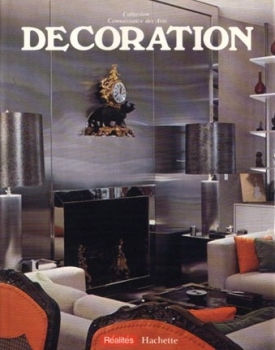
roger-vivier-apartment

An invaluable collection of great design! Offering a range of styles, the interiors represent the best from the late 1960s into the first years of the 70s. Included are Britwell Salome’s estate designed by David Hicks, Federico Forquet’s apartment in Rome, Roger Vivier’s apartment in Paris, Maurice Rheims’ apartment in Paris, Lagerfeld’s Paris apartment including the bathroom, Valentino’s apartment in Rome, Chateau Mouton-Rothschild, Count Panza’s apartment in Milan, the Paris home of Quasar and Emmanuelle Khanh, and the apartment of Gunther Sachs in the Palace Hotel in Saint-Moritz. This collection profiles the work of Serge Royaux, David Mlinaric, Jacques Thual, Aldo Jacober, David Hicks, Jean Dive, Piero Pinto, Michel Cruchot, Gerard Gallet, Alberto Pinto, Yves Vidal and Charles Sevigny, Anita Bachman, Michel Boix-Vives, Alain Demachy, Jacques Demachy, Jay Spectre, Marc du Plantier, Yves Houdin, Francois Catroux, John Stefanidis, Henri Samuel, Didier Aaron, Jean-Paul Faye, Gae Aulenti, Gerard Gallet, Jacques Simon, Pierre Sels, Paolo Tommasi, Michel Boyer,Maria Pergay, Isabelle Hebey, Martine Dufour, Andre Putman, Francois Arnal and Atelier A, Nanda Vigo, architect Claudio Dini, architect Michel Sadirac, architect Carla Venosta, architect Lawrence Michaels, architect Arthur Finn, and the Swiss house by Marcel Breuer.

roger vivier paris

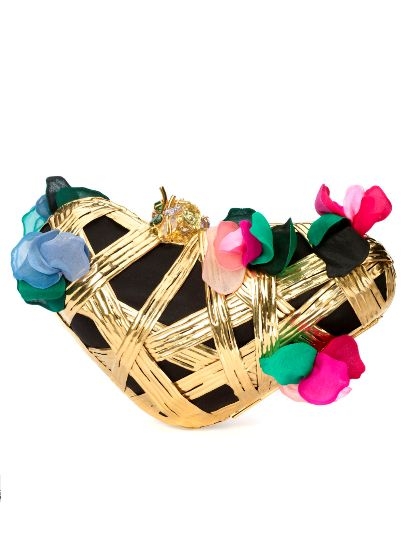
roger vivier-bag

roger vivier bag

roger-vivier

Bruno_ines_2 Vivier_display Ddvalle

Left to right: Creative Director Bruno Frison with Ines de la Fressange; A display of Roger Vivier shoes; Diego Della Valle, CEO of Tod’s Group.

INES DE LA FRESSANGE

ines-de-la-fressange

Inès Marie Lætitia Églantine Isabelle de Seignard de la Fressange (born 11 August 1957), is a French supermodel and designer of fashion and perfumes.

She was born in Gassin, Var, France. Her French father, André de Seignard de La Fressange (b. 1932) (a marquis), was a stockbroker, and her mother, Cecilia Sanchez-Cirez, was an Argentine model. She grew up in an 18th-century mill outside Paris with three brothers. Her grandmother was Madame Simone Jacquinot, heiress to the Lazard banking fortune.

ines de la fressange

In the 1980s, she became the first model to sign an exclusive modeling contract with an haute couture fashion house, Chanel, by fashion designer Karl Lagerfeld, whose muse she became. However, in 1989, Lagerfeld and De la Fressange had an argument and parted company. Likely this argument was, at least in part, regarding her decision to lend her likeness to a bust of Marianne, the ubiquitous symbol of the French republic. Lagerfeld reputedly condemned her decision, saying Marianne was the embodiment of “everything that is boring, bourgeois, and provincial” and that he would not dress up historic monuments.

In 1990, she married Luigi d’Urso (d. March 23, 2006), an Italian railroad executive, with whom she had two daughters.

ines-pour-chanel

Currently, De la Fressange does not model very often. Instead, she is a businesswoman with a chain of clothing boutiques, a designer, and a consultant for Jean-Paul Gaultier. She presented a creation by Gaultier for his Spring/Summer 2009 haute couture collection at the Paris Haute Couture Fashion Week and walked the runway for Gaultier during the event, at age 51.

PUBLICATIONS

By Vivier:

    Books

  • Vivier, Paris, 1979.
  • Vivier, Roger, and Cynthia Hampton, Les souliers de Roger Vivier [exhibition catalogue], Paris, 1987.

On Vivier:

    Books

  • Swann, June, Shoes, London, 1982.
  • McDowell, Colin, Shoes: Fashion and Fantasy, New York, 1989.
  • Trasko, Mary, Heavenly Soles: Extraordinary Twentieth-Century Shoes, New York, 1989.
  • Provoyer, Pierre, Vivier, Paris, 1991.
  • Pringle, Colombe, Roger Vivier, New York & London, 1999.
  • Musée des Beaux-arts et de la dentelle, Folies de dentelles, [exhibition catalogue], Alençon, France, 2000.
    Articles

  • Cassullo, Joanne L., “Four Hundred Shoes,” in Next, December 1984.
  • Bricker, Charles, “Fashion Afoot: Roger Vivier, the Supreme Shoemaker Comes to New York,” in Connoisseur (New York), December 1986.
  • Buck, Joan J., “A Maker of Magic,” in Vogue (New York), December 1987.
  • “Styles,” in the New York Times, 9 August 1992.
  • Weisman, Katherine, “Rautureaus Sell Stake; Ink Vivier Deal,” in Footwear News, 28 February 1994.
  • Menkes, Suzy, “Master Cobbler Sets Up Shop Again,” in the International Herald Tribune, 24 January 1995.
  • Baber, Bonnie, et al., “The Design Masters,” in Footwear News, 17 April 1995.
  • Weisman, Katherine, “Roger Vivier, 90, Mourned by Shoe World,” in Footwear News, 12 October 1998.
  • “Died, Roger Vivier,” in Time, 19 October 1998.
  • “Roger Vivier, France’s Footwear Extraordinaire,” [obituary] in People, 26 October 1998.
  • Carmichael, Celia, “Legendary Status: Nina Honors the Creative Genius of Roger Vivier,” in Footwear News, 21 December 1998.— Dennita Sewell; updated by Sydonie Benét

*I always loved Roger Vivier’s designs.Takes me back in time. Is romantic, aristocratic and timeless.Thirteen years ago, I did a project called Palais Royal and Roger and Chanel were my inspiration.

adriana sassoon

www.rogervivier.com

ADRIANA SASSOON HANDBAGS


DomMiguelPhotographyPeople015

 Copyright © 2009  ADRIANA SASSOON             .All Rights Reserved.


Adriana Sassoon has a unique background in fashion and beauty and is one of those rare people – whether behind the scenes or in front of the camera- that achieves what she sets out to accomplish. At age thirteen, an age at which a young person’s ideas are still fluid, she knew she had a particular fondness for the classical disciplines. She was already flirting with fashion working as a top model for Elite Model Management where her beauty appeared in countless magazine advertisements, fashion shows, and television commercials.

From her native Sao Paulo, Brazil, Adriana graduated “The Ecole des Beaux’s- Arts” with her first degree in Industrial Design before arriving in the United States where she received a second degree in Interior Design from the FIDM Los Angeles.
Adriana, who is fluent in Portuguese, Spanish, French and English, has an elite work history.
A Docent for the French Trade Commission Exhibition “Les Paris des Createurs”.
Adriana always kept a close eye on fashion. “I pick up on its vibrations”.  Adriana embarks into the realm of fashion accessories as she proudly introduces her latest project.
The creation of “Adriana Sassoon Handbags” is a supported idea by her family and friends.
Adriana Sassoon has a Handbag Company with the focus in Minimalist Design. The main ingredient is to help a Charity founded by her father and mentor as well as charities that work with children of developing countries”….  .
 
 
“If I can make a difference by doing what I love and being able to help others in need, what a marvelous accomplishment!
AKS.

A Celebration of the Vienna 1900 Painters.

DomMiguelPhotographyPeople014

   Copyright © 2009  ADRIANA SASSOON             .All Rights Reserved.  

 The collection created by Adriana Sassoon Scarf Handbags was inspired by one of the founders of the Vienna Secession association. Koloman Moser was born in Austria and became a famous architect, designer, and painter. He was a very important figure in the initiation process of the movement after joining Klimt, Schiele, and Kokoschka. The Adriana Sassoon Handbag debut Collection combines predominantly geometric features creating a rhythmical space of cubic forms in which the bags were designed. The strong contrasting colors of the flower and circular scarf patterns compliment the overall design. The ornamentation of the bags is finalized by a Swarovski broach, symbolizing the feminine figure. The Jugendstil style or Young Style (+/- 20 years) so called in Germany or otherwise known as Art nouveau in France, started at the end of the XIX century. I chose this particular style to begin my collection to celebrate the freedom we enjoy now. I am paying homage to the artists that had to fight in order to live their dreams in an age in which the Nazis closed the famous Bauhaus of Dessau. Many atrocities were done to the human race during that period and unfortunately still exist. The collection celebrates the new Parisian trend amongst boutiques, opened by architects and designers, who want more than just being able to create beautiful clothes or buildings. I would like the artistic community to be recognized by ones work and not just as a label or mere product. I think that one must protest against the so-called business individuals who purchase art and/or a craft business, and change the designs to appeal to a commercial mass market. This movement is killing branding images and any form of association with the original concept from the designer.  Through my work I would like to utilize an artistic vehicle to reiterate the rejection of the “plastic society”. The phrase “less is more” needs to truly take shape in the 21st century. The business world can work in tandem with the art world by joining forces and understanding each other’s strengths. The final creations will then take form and are better then the work we see today. The human community needs to pray for peace and protest war as the artistic movements have done in the past.

       I would like be able to communicate with my buyers and call their attention to what we all know matters in life after all. We are all human beings and must treat each other well. In starting this adventure I will be able to help other people and create a better world to live in. Every one of us has to try to make a difference. To find more information about The Vienna painters “Klimt, Schiele, Moser, & Kokoschka Vienna 1900” the “Galleries Nationales du Grand Palais” in Paris presented an exhibition. The exhibition was held October 2005 to January 2006 or can be studied online at http://www.paris.org. The main sponsor was LVMH.

  Hand Bags: Made with 100% genuine leather.

ScarvesMade with  100% Viscose fabric . *

Description of Products: Design- Attention to design and up to date pieces an ever-changing collection. It isn’t just a bag it is a product with a purpose!

Purpose- The collection celebrates the new Parisian trend amongst boutiques opened by architects and designers who want more than just being able to create beautiful clothes, or buildings. To be able to be recognized by ones work not just as a label or mere product. Sassoon goes beyond Salon. –A label with the sole focus on environmental awareness.


The collectible HandbagsPlease keep in mind this is not the type of product intended to mass-produce. The Designer chose to keep it very Artesanal. Therefore the products will have a particular feel and look. The Scarf Bag is not just a standard bag. Is a Bag that by itself dresses an individual. The Scarf bag an innovative way of utilizing a Bag. You can also dress your own Bag for any occasion by changing the scarves.


Charities

Adriana Sassoon” started as a company whose principles are founded in basic human need for charity. Adriana’s main purpose is to be able to help a charity founded by her father in Brazil. A charity that has helped many children discover education and learn to survive and thrive within their own communities. Ame Amoroso has over 280 children that need constant care. Adriana prides herself in being able to help those children find a future. Adriana will also help other charities that need help in the form of product donation. The product can then be sold and the proceeds used to help that charity in need.

* A percentage of  the profit goes for the AME AMOROSO charity for each handbag sold. Web Site: 

WWW.AMEAMOROSO.ORG.BR


 ARTISTIC FREEDOM

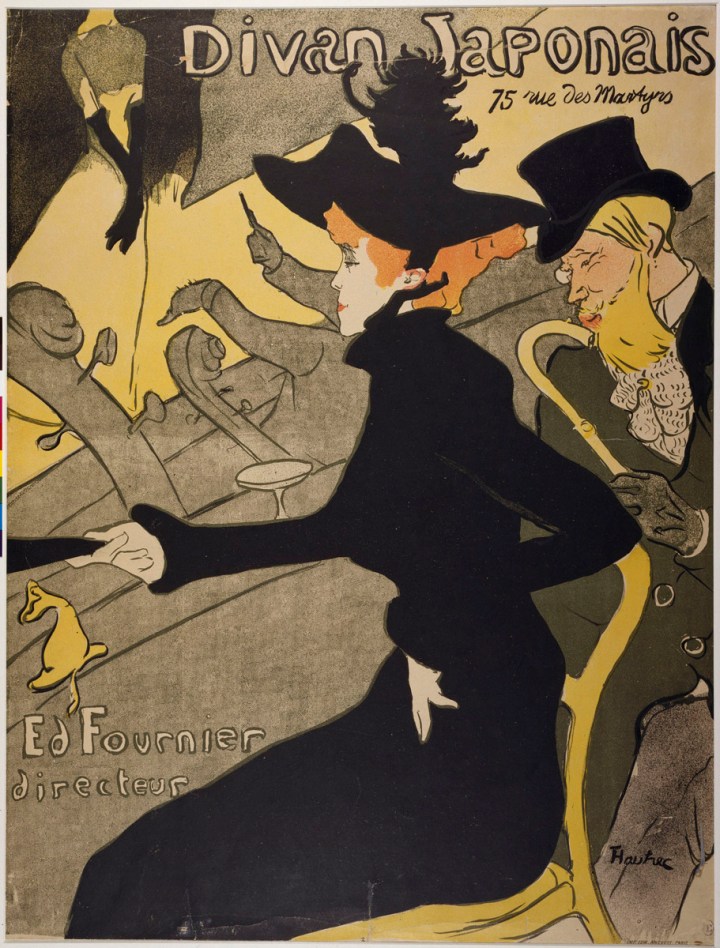
moulin rouge lautrec

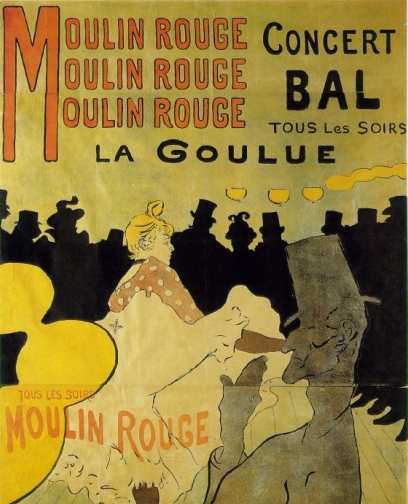
Henri Marie Raymond de Toulouse-Lautrec-Monfa or simply Henri de Toulouse-Lautrec (French pronunciation: [ɑ̃ʁi də tuluz loˈtʁɛk]) (24 November 1864 – 9 September 1901) was a French painter, printmaker, draftsman, and illustrator, whose immersion in the colourful and theatrical life of fin de siècle Paris yielded an œuvre of exciting, elegant and provocative images of the modern and sometimes decadent life of those times. Toulouse-Lautrec is known along with Cézanne, Van Gogh, and Gauguin as one of the greatest painters of the Post-Impressionist period.

toulouse

Physically unable to participate in most of the activities typically enjoyed by men of his age, Toulouse-Lautrec immersed himself in his art. He became an important Post-Impressionist painter, art nouveau illustrator, and lithographer; and recorded in his works many details of the late-19th-century bohemian lifestyle in Paris.When the nearby Moulin Rouge cabaret opened its doors, Toulouse-Lautrec was commissioned to produce a series of posters. Thereafter, the cabaret reserved a seat for him, and displayed his paintings.Among the well-known works that he painted for the Moulin Rouge and other Parisian nightclubs are depictions of the singer Yvette Guilbert; the dancer Louise Weber, known as the outrageous La Goulue (“The Glutton”), who created the “French Can-Can“; and the much more subtle dancer Jane Avril.

 Paris 1900 – Forever

“Truth, Beauty, Freedom & Love”…………..”Freedom of Expression with depth” Be Sassy about it! Design 360* it is about all Fine Arts & Applied Arts together! What we will do with all this knowledge? Forget about Fashion non-sence…etc. It is all about Design and functionality! The world is turning things are changing every second. Thank God! The creative energy is more powerful than ever.A New Artistic movement is being born. Be Bold. re:INVENT re:THINK re:CYCLE re:FLECT re:START re:NEW re:BORN Adriana Sassoon Design 360* looking to the horizon line with full 360* VIEW.MULTICULTURAL GLOBAL .THE DESIGN BASICS ARE THE COMMON LANGUAGE FOR ALL FORMS OF ART.THE MATERIALS DIVIDE & DEFINE US AS HAIR DESIGNERS, FASHION DESIGNERS, PHOTOGRAPHERS, ARCHITECTS, GRAPHIC DESIGNERS, PAINTERS, SCULPTORS,PATTERN DESIGNERS, VISUAL PRESENTATION,SO ON AND ON AND ON………….GET IT?


PHEROMONES AND SEXUAL ATTRACTION

pheromone (from Greek φέρω phero “to bear” + hormone from Greek ὁρμή – “impetus”) is a chemical signal that triggers a natural response in another member of the same species. There are alarm pheromones, food trail pheromones, sex pheromones, and many others that affect behavior or physiology. Their use among insects has been particularly well documented. In addition, some vertebrates and plants communicate by using pheromones.

Do Human Pheromones Really Exist?

PHEROMONES

What is it that attracts people to each other? Nice hair? Big muscles? Body scent? Recent studies have shown that the cause of such sexual attractions could be airborne chemicals called pheromones, airborne and odorless molecules “emitted by an individual and cause changes in physiology and or behavior of another individual”

Research strongly suggests the presence of chemicals that cause changes in non-conscious behavior. In my research, I mostly found information that discussed scents that females produce that attract males or offspring, such as copulins, or chemicals that affect the menstrual cycle. This is interesting because it supports the old stereotype that in nature males search out females as mates and not vice versa. The existence of the VNO in females might suggest otherwise, but it should be a topic for greater research. I was also a bit wary of the studies that involved the rating of physical attractiveness, simply because attractiveness is so relative. In any case, my research suggests that sexual receptivity is based on more than attractiveness of physical features.

SCENTS

SCENTS & PERFUMES

Pheromones are incredibly powerful things, and not many people know that there are human pheromones involved in sexual attraction. That is right there are actually human pheromones to attract the opposite sex, meaning that there are certain pheromones that are already in your body which are able to make the opposite sex attracted to you.

There are actually several different human pheromones involved in sexual attraction and one of these is simply a person’s body odor. This does not mean that it has to smell bad, but studies have been done where the participants wore clothes with no perfume, deodorant, or any other manufactured smell put on.

In the end of these studies, members of the opposite sex were told to smell the clothing that was worn by the opposite sex, and for the majority of the time, the comments were incredibly positive. Therefore, although we all tend to use some sort of perfume, cologne, body spray, and so on, it is actually our own personal pheromones that sexually attract people to us.

However, it is not all that often when others can actually smell our pheromones, because we are covering that smell up constantly with other materialized odors and sprays. However, there are exceptions to the rule. For instance, when women are menstruating, it is said that their body gives off stronger pheromones that attract men more than any other time of the month.

For men, the same type of rule applies, only it is considered that when they are sweating — such as after a long workout — when they have the most human pheromones that are coming off of them, and thus when women react the most attracted to them.

Human pheromones are truly fascinating because it is not so much an overly powerful or even noticeable smell, but rather pheromones are basically subconsciously taken in. Although we cannot necessarily smell them enough to realize what we are smelling, we are instantly attracted to members of the opposite smell when they are emitting their actual pheromones.

There have been attempts over the years to create perfumes and body sprays that actually smell like human pheromones, and the popularity of these items is increasing day by day.

grapes 

WHAT IS APHRODISIAC ?

Aphrodisiac comes from Aphrodite the Greek goddess of sensuality.
Aphrodisiac can be food, smell, drinks and everything which remind you for good past moments.

Now it’s modern for us to use perfumes with aphrodisiac – pheromones. These perfumes attract the people, so if you wear a perfume with aphrodisiacs you will have a lot of success in your sexual life.

Scents have a powerful affect when it comes to romance. The memory of a scent of a romantic partner can stay with us long after the romance is gone — so much so that when we run across the scent years later, we’re immediately taken back with a flood of feelings and memories. Does that mean that scent is an aphrodisiac?

In a way, yes, in that scent can evoke desires — but typically not in an otherwise unwilling partner. For example, Alan R. Hirsch, MD, neurological director of the Smell and Taste Treatment and Research Foundation in Chicago, conducted a study that looked at how different smells stimulated sexual arousal. He found that several scents were effective — some more than others. The smell of cheese pizza, for instance, increased blood flow to the penis by 5 percent, buttered popcorn by 9 percent, and lavender and pumpkin pie each by 40 percent. For women, lavender and pumpkin pie also had a stimulating effect; however, the smell of Good & Plenty® (licorice) combined with the scent of cucumber created the greatest increase in blood flow to the vagina.

Human pheromones, which still carry some weight in the field of love research, may actually create sexual interest. The word “pheromone” comes from the Greek words pherein and hormone, meaning “excitement carrier.”

In the animal world, pheromones are individual scent “prints” found in urine or sweat that dictate sexual behavior and attract the opposite sex. They help animals identify each other and choose a mate with an immune system different enough from their own to ensure healthy offspring. They have a special organ in their noses called the vomeronasal organ (VNO) that detects this odorless chemical.

Scientists at the Chemical Senses Center in Philadelphia and its counterpart in France discovered the existence of human pheromones in 1986. They found these chemicals in human sweat. A human VNO has also been found in some, but not all, people. Even if the VNO isn’t present in all of us — and may not be working in those who do have it — there is still evidence that smell is an important aspect of love (note the booming perfume industry). Researchers conducted an informal experiment using identical twins. Both twins sat at a bar for an evening, and one of them was sprayed with manufactured pheromones. The result was that the twin who got the pheromone boost was approached three times more often than the twin who didn’t.

MUSIC

Music can set the mood, carry the mood and ruin the mood. What appears to be the most effective element of music is the memory we associate with it. If you have fond memories of slow dancing to a special song with someone you loved in the past, it’s a good bet that same song will have an effect on you later in life. After all, the dance is a bit of a mating ritual that most of us have experienced at some point in our lives.

EXERCISE

Not only is it good for your health, but it’s also good for your sex life. According to Discovery Health, the aphrodisiac qualities of exercise are associated with the endorphins that are released in the brain with vigorous activity — like the runner’s high. Endorphins are those “feel good” chemicals. Other aphrodisiac affects of exercise come from exercises that increase blood flow to the genitals. These exercises position the body in various ways that stimulate blood flow and can improve sexual abilities and desire.

Exercise and building muscle mass usually increases testosterone levels, too, which may be another reason why exercise increases sex drive.

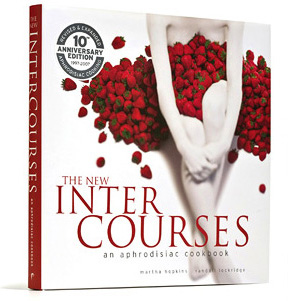
INTER COURSES

Valentine’s Day  never tasted so good!

• 145 couple-tested recipes • guaranteed to work in the kitchen  • likely success in the bedroom, too

• striking photos of food showcased on the human body  • edible massage oil recipes

 • complete aphrodisiac usage guide  • enough talk – get cooking!

http://www.senseofsmell.org/papers/Human_Pheromones_Final%207-15-09.pdf

http://www.docstoc.com/docs/11374337/Buying-Human-Pheromones–The-Ethical-Dilemma

ALKALINE WATER

water_ionizer_alkaline_water_ionizer

Do you know the PH of the water you are drinking? You should.

Water is one of the most important factors for becoming and staying healthy and vibrant. Our body contains 70% water contents and our blood is 94% water – if we follow the recommendation to drink at least two liters of water per day and this water is acidic and polluted – imagine what this will do to our bodies? Therefore, it’s important to keep that water supply fresh and clean.

Alkaline water

Contamination in Tap Water Health Damage Method of Removal/Filtration
Rust Cause of liver cancer PP Cotton
Dirt, Microorganisms, Sediment Cause of various diseases PP Cotton
Chlorine Cause of rectal cancer, colon cancer and bladder cancer Granulated Activated Carbon, KDF
Odour Bad smell in water Granulated Activated Carbon
Volatile Organic Chemicals (VOC) Cause of various diseases Granulated Activated Carbon
THMs: Total Trihalomethanes (THM) Cause of kidney cancer and birth defects. Granulated Activated Carbon, Ultrafiltration
Bacterial Cause of various diseases KDF / Calcium Sulfite
Algae Cause of various diseases KDF / Calcium Sulfite
Lead (Heavy Metal) A poisonous metal that can damage nervous connections and cause blood and brain disorders KDF / Calcium Sulfite
Mercury (Heavy Metal) A cumulative heavy metal poison KDF / Calcium Sulfite
Particles of 0.1 micron or larger Cause of various diseases Ultrafiltration
Bacteria and most viruses Cause of various diseases Ultrafiltration

IONIZING  THE WATER

When considering what water to be drinking, there are 4 different criteria that the water you drink should be judged by: Purity, pH, Mineral Content and Oxygen Content. In order to hydrate your body optimally, you need to drink water that is alkaline and mineral rich. Alkaline water helps to neutralize acids and remove toxins from the body. Ionic alkaline water also acts as a conductor of electrochemical activity from cell to cell.

ph scale

A water ionizer is an appliance that ionizes water. Ionized water is claimed by manufacturers to be extremely beneficial to human health and marketed with claims that it is an antioxidant which can slow aging and prevent disease.Others note that such claims contradict basic laws of chemistry and physiology.

A water ionizer separates water into alkaline and acid fractions using a process known as electrolysis. It does this by exploiting the electric charge of the calcium and magnesium ions present in nearly all sources of drinking water. When a source of water lacks mineral ions, such as distilled water, or has been filtered by reverse osmosis, water ionization has no effect.

Some research suggests that alkaline reduced water may be useful in scavenging free radicals in the laboratory setting. Tests on in vitro lymphocytes suggest that reduced water can prevent hydrogen peroxide-induced damage to DNA, RNA and certain proteins. However, drinking ionized water would not be expected to alter the body’s pH, and there is no evidence of any claims made by manufacturers that drinking ionized water will have a noticeable effect on the body.

Electrolyzed water has been used by the food industry to sanitize food products; though effective in bacterial solutions, it was found less useful when sanitizing utensils, surfaces and food products.Acidic electrolyzed water (pH 2.3–2.6) may have use as a seed surface disinfectant or contact bactericide.


Make a commitment to a lifelong healthy lifestyle and start experiencing the countless healthy benefits of our incredible Japanese Alkaline Water Filtration System today!

COLON HYDROTHERAPY

Hydrotherapy Machine

Colon Hydrotherapy Machine


COLON HYDROTHERAPY

Other common name(s): colonic irrigation, high colonic, detoxification therapy, colon hydrotherapy, coffee enemas, enema irrigation, hydro-colon therapy, high enema

Scientific/medical name(s): none

Description

Colon therapy is the cleansing of the large intestine (colon) through the administration of water, herbal solutions, enzymes, or other substances such as coffee.

Overview

Available scientific evidence does not support claims that colon therapy is effective in treating cancer or any other disease. Colon therapy can be dangerous and can cause infection or death.

How is it promoted for use?

Proponents of colon therapy consider it to be a method of detoxifying the body through the removal of accumulated waste from the colon. Because they claim detoxification increases the efficiency of the body’s natural healing abilities, it is sometimes promoted as a treatment for illness. It is often promoted as a general preventive health measure or as part of a routine internal hygiene regimen.

Coffee enemas have been promoted as part of several controversial cancer treatment regimens. People who promote the use of coffee enemas to detoxify the body claim that an “unpoisoned” body or a “clean” colon has the ability to recognize and destroy cancer cells. Practitioners claim coffee enemas can stimulate the liver and gallbladder into releasing toxins and flushing them from the body, allowing the body’s immune system to battle malignant cells (see Gerson Therapy and Metabolic Therapy).

What does it involve?

Colon therapy is given by a colonic hygienist or colon therapist, through the use of plastic tubes inserted through the rectum and into the colon. A machine or gravity-driven pump sends large quantities of liquid (up to 20 gallons) into the large intestine. In contrast, regular enemas only flush out the rectum, and generally use about a quart of fluid. After filling the colon with water, the therapist massages the abdomen to help the removal of waste material from the colon wall, and then fluid and waste are carried out of the body through another tube. The procedure is generally repeated several times, and the average session lasts from 45 to 60 minutes. Coffee enemas may be included in the treatment program.

What is the history behind it?

As far back as the ancient Egyptians, enemas and other “cleansing rituals” were commonly used to rid the body of toxic waste products believed to cause disease and death. In the 19th century, proponents described the large intestine as a sewage system and claimed stagnation caused toxins to form and be absorbed by the body, which led to the theory of “autointoxication.” Laxatives, purges, and enemas were routinely recommended to prevent the accumulation of waste

Colon therapy became very popular in the United States in the 1920s and 1930s, when irrigation machines were commonly found in hospitals and physicians’ offices. Although the procedure became less popular when advances in science and medicine did not support its founding theory, colon therapy has recently shown an increase in popularity.

In 1985, the California Department of Health Services issued a statement that listed some of the potential hazards of colon therapy, including infection and death from contaminated equipment, death from electrolyte depletion, and perforation (puncture) of the intestinal wall leading to life-threatening infection or death. The Food and Drug Administration (FDA) considers colonic irrigation machines to be Class III devices which means they cannot be legally marketed except for medically needed colon cleansing (such as before an x-ray or endoscope exam). The FDA forbids practitioners and sellers from making unsubstantiated claims that have not been proven in scientific studies about their services. The FDA has warned several companies to stop making such claims. No colonic irrigation machine or system has been approved for routine use.

What is the evidence?

Available scientific evidence does not support the claims on which colon therapy is based. It is known that most digestive processes take place in the small intestine, where nutrients are absorbed into the body. What remains enters the large intestine, where it passes to the rectum for elimination after water and minerals are extracted. Available scientific evidence does not support the premise that toxins accumulate on intestinal walls or that toxicity results from poor elimination of waste from the colon.

Are there any possible problems or complications?

The machines used for colon therapy are illegal unless used during conventional medical treatment. Colon therapy can be dangerous. Illness and even deaths have resulted from contaminated equipment, electrolyte imbalance, or perforation of intestinal walls. People with diverticulitis, ulcerative colitis, Crohn’s disease, severe hemorrhoids, rectal or colon tumors, or who are recovering from bowel surgery may be at higher risk of bowel injury. People with kidney or heart failure may be more likely to experience fluid overload or electrolyte imbalances. In addition, many substances can be absorbed into the body from the colon walls and cause toxic or allergic reactions. Colon therapy can also cause discomfort and cramps. Relying on this type of treatment alone and avoiding or delaying conventional medical care for cancer, may have serious health consequences.

Additional Resources

More information from your American Cancer Society

The following information on complementary and alternative therapies may also be helpful to you. These materials may be found on our Web site (www.cancer.org) or ordered from our toll-free number (1-800-ACS-2345).

Note: This information may not cover all possible claims, uses, actions, precautions, side effects or interactions. It is not intended as medical advice, and should not be relied upon as a substitute for consultation with your doctor, who is familiar with your medical situation

 *Do not eat for two hours before colonic appointment. Clients typically can return to normal activities within 15 minutes after session. Sessions are private with limited staff intrusion.It is generally suggested that Clients have two back to back sessions (two days in a row), to get things started;followed by changes in diet with subsequent sessions scheduled one a week for three weeks.