In the name of the father

Vidal Sassoon’s groundbreaking hairstyles made him a legend. Then he sold out. Now his son, Elan, hopes to build on his vision.
By Christopher Muther, Globe Staff
October 2, 2008
Elan Sassoon was, for years, quite certain he had no interest in the family business. The hair salons, sleek beauty schools, and product lines that made his father, Vidal Sassoon, the best-known hairstylist in the world held little allure. Instead, the younger Sassoon graduated from college in 1993, raised $10 million, and started producing films.

In a few years, his company, Skyline Entertainment, was making critically lauded indie movies with stars such as Blythe Danner, Peter Gallagher, and Lara Flynn Boyle. He was walking the red carpet at Cannes, hanging out with Gwyneth Paltrow and Ethan Hawke.

“I was Mr. On-the-Rise Film Guy,” Sassoon, now 38, recalls.

But the demands of film schedules and festivals, while making him someone to watch in the movie industry, was putting stress on his marriage. He had to make a choice: film or family. He chose family.

The decision drew Sassoon back to the family business, and in no small way. Next year, on Commonwealth Avenue near Boston University, he’ll open the Institute of Hairdesign by Elan Sassoon, slated to be the largest cosmetology school in the world, the first of four across the country. This month, he launches two high-end salons called Mizu, one here with his four business partners  at the posh Mandarin Oriental hotel, another in New York on Park Avenue. He’s partnered on a line of spas called Green Tangerine, and rolls out his own product line next year.

Elan Sassoon is not a hairstylist. He’s a businessman, one with a clear motivation for diving back into the industry he grew up with. He’s determined to expand upon his father’s vision – a vision that changed the beauty industry and the salon world, a vision that Vidal Sasson created, nurtured, and then, in 1983, sold for tens of millions of dollars, losing control of his name in the process.

“My dad didn’t really want to sell in the first place, and it’s something that he always regretted,” Sassoon says. “I want to finish what he started.”

A cut above
Vidal Sassoon built an empire based on his famed geometric cuts and the omnipresent catchphrase “If you don’t look good, we don’t look good.” In the 1960s, Vidal ran in the same celebrated, swinging London circles as the Beatles and the Rolling Stones.

In 1968, Vidal Sassoon was paid $5,000 to cut Mia Farrow’s hair on the set of “Rosemary’s Baby” while dozens of photographers captured the moment. Her pixie cut became as emblematic of the era as miniskirts and bell-bottoms. Sassoon’s haircuts were so influential during this period that the designer Mary Quant declared him “the Chanel of hair.” The first celebrity hairstylist, he had his own TV show in the 1980s, “Your New Day.”

The younger Sassoon says he’s building his brand through business acumen. But it doesn’t hurt that he has the most recognized last name in the salon business and grew up immersed in the culture. His father regularly pulled him out of school to travel to international salons and fashion shows.

“I learned a lot about that world because it was all around me, and it was great,” Elan says over a cup of English breakfast tea at the Bristol Lounge last week. “But it wasn’t where I thought I would end up.”

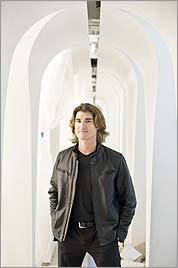
With a laid-back California lilt to his speech and shoulder-length auburn hair, Elan grew up in a world of bigger-than-life Hollywood parties and celebrity classmates in Beverly Hills. While his sisters loved the glamour of a splashy entrance, the shy Elan and his younger brother would avoid the red carpet and slip into events through the back door.

His mother is actress Beverly Sassoon (nee Adams), best known for her recurring role as Lovey Kravezit in the Matt Helm series of films with Dean Martin. After his parents divorced in 1980, Elan lived with both parents, but he was so shy that even his mother’s celebrity boyfriends couldn’t draw him out of his shell.

“My mom was dating Erik Estrada for a while, and he would pick me up from school on his ‘CHiPs‘ motorcycle,” Sassoon says of the ’70s TV heartthrob. “I was so embarrassed I would tell him to park a few blocks away and I would get on there so the other kids didn’t see me.”

Childhood friend Jason Goldberg, who formed Katalyst Media with Ashton Kutcher and produced “Punk’d” and “Beauty and the Geek,” says even though Elan grew up surrounded by decadence, he’s always been remarkably grounded.

“Even when he was a kid, he wasn’t fazed by any of it,” Goldberg says on the phone from Los Angeles. “Here was a guy who always had a good head on his shoulders. He has the business sense and the level of style and taste to pull off just about anything.”

The one business venture Elan couldn’t pull off was the one closest to his heart. In 2002, he tried to buy back his father’s beauty schools and hair salons. Shortly after his parents’ divorce, his father sold his line of hair products to Richardson-Vicks (later acquired by Procter & Gamble) and the salons and beauty schools to his three top salon managers. The way Elan tells it, his father did not want to sell when Richardson-Vicks made its $125 million offer, but he was outvoted by his shareholders. More than two decades later, Elan Sassoon secured financing to buy back the Vidal Sassoon salons and schools, and worked out an agreement with P&G, which owns the Vidal Sassoon name. But his offer was rejected. The salons were sold to the Regis Corp.

“That took six months of my life to plan and put together,” Elan says, still stung by the loss. “It was a pretty big blow when it was sold to Regis.”

He decided then that if he couldn’t buy back the salons and schools his father started, he’d open his own.

What price beauty?
Elan Sassoon’s state-of-the-art school – with tuition of $19,500 a year – will be one of the priciest beauty academies in the country, and only the second with on-campus housing. The 600 students will also undergo more hours of training than any other Massachusetts cosmetology school. Sassoon says his students will graduate with a far broader knowledge of hair cutting and styling, a concept that other salon owners in Boston applaud.

“They are trained to do the basics,” says Serge Safar, owner of Safar Coiffure on Newbury Street, of the students coming out of beauty schools. “But we end up having to train them another year or two before we can put them on the floor. A more complete education would be a huge benefit.”

Sassoon says he’s commissioning new textbooks that will provide a history of beauty. He’s bringing in experts such as Patrick McGinley, who worked as creative director at the Vidal Sassoon salon on Newbury Street, to craft a curriculum.

But one person who will not be teaching at the academy is Vidal Sassoon himself, now 80. When he sold his name, products, and schools, he signed agreements not to re-enter the beauty world. But he has little doubt that his son’s plans will succeed.

“He’s teaching the old man a thing or two,” the elder Sassoon says on the phone from his home in London. “Hair styling has always been a very exciting world. I wasn’t exactly quiet. I guess he saw what was going on and thought, ‘I can do better than him.’ And I honestly think he will.

“I mean, his whole marvelous idea of adding rooms for people to stay while they’re at school – that was his original idea. I never thought of that. We had schools and never did that. He’s a thinker and a visionary. I’m more than pleased.”

Choosing Boston
The decision to locate the academy in Boston was based, in part, on the city’s strong emphasis on education and its large student population. Elan Sassoon was born in New York, grew up in LA, and spent a year at Berkshire Academy.

But Boston became central to Elan’s world for another reason. In January 2007, his wife of 14 years, Adriana, was diagnosed with Hodgkin’s lymphoma. A former ELITE model in her native Brazil, Adriana endured a frustrating series of biopsies in Miami, where the family was living. In search of the best care, Adriana quickly moved to Boston for treatment. Elan and their two children followed that May. The family lives in Chestnut Hill. Adriana recently celebrated her first cancer-free year.

Boston appears to be a good fit for Sassoon, who confesses that he’s far more traditional and strict than his parents when it comes to marriage and family. He was married at the age of 24 and after seeing the result of divorce growing up, his priority is making his marriage work.

“It wasn’t a good situation,” he says of the years after his parents’ divorce. “The boyfriends and the girlfriends and all these people coming into the picture. It’s nice today because I’m still friends with a lot of them. My mom went out with Senator Bill Cohen for three years, he was the secretary of defense. And we’re still friendly.”

Over lemon chicken at P.F. Chang’s a few days later, Sassoon tells stories of a recent New York City media blitz, where magazines such as Men’s Vogue and Details met with him for upcoming feature stories on the low-key and charismatic man and his budding hair empire.

“It’s a little different these days from when I was a kid,” he says. “I think I’ve definitely gotten over my shyness and fear of the red carpet. I kind of enjoy it now.”

Christopher Muther can be reached at muther@globe.com
Elan Sassoon, owner of Mizu Salon
The son of legendary hairstylist Vidal, Elan Sassoon this month unveils Mizu, a 3,300-square-foot salon on the Mandarin’s second floor. The Asian-inspired hotel, he says, allowed him to eschew typical salon amenities in favor of a “high-tech Zen” vibe with white Italian furniture, gold folding screens, and iPods on which clients can watch movies. Sassoon applies the same level of perfectionism in selecting his staff: All 30 Mizu stylists, who offer cuts starting at $125 and single-process color beginning at $70, have been handpicked from the city’s top salons.                  617-585-6408          ,

Sassoon’s Hair Apparent

His dad is possibly the world’s most famous hairstylist. Now Elan Sassoon, 38, says he’s building what will be “The Harvard of hair schools.”

October 2008


His father is possibly the world’s most famous hairstylist, and he’s already run a chain of high-end medi-spas, so it was only a matter of time before Elan Sassoon—son of Vidal—started building his own beauty empire. Sassoon, 38, will open the Mizu Boston salon at the new Mandarin Oriental hotel in September, followed by Mizu New York on Park Avenue in October.

The salons, which have all-white interiors set off by gold Asian-style screens, aim to entertain as well as beautify customers by providing them with iPods (to tune out the blow-dryers) and high-tech goggles that screen movies.

Sassoon also has another major Beantown project in the works. Though he’s not a stylist—preferring to concentrate on the business end of operations—he’ll open what he describes as “the Harvard of hair schools” next year. The $22 million academy will be the first in the U.S. to offer dormitories and will also boast a 200-seat auditorium. “Most hair schools use textbooks that talk about tools that the cavemen and the ancient Egyptians used to barber,” he said. “There’s nothing in them about the last 150 years, about Michael Gordon, Trevor Sorbie or my father.”

And what advice does the legendary coiffeur give his son? “Technically he’s not allowed to,” Sassoon said with a laugh, referring to the noncompete agreement that the elder Sassoon has with Procter & Gamble, which owns the rights to his name. He does, however, offer “good one-liners from Winston Churchill,” said Elan, citing “Success consists of going from failure to failure with no loss of enthusiasm” as one of them.


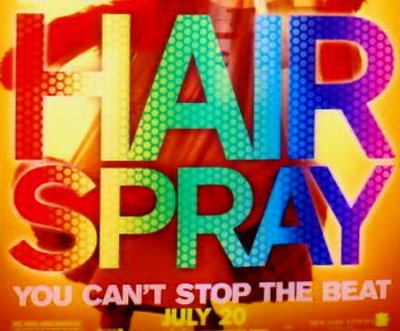
Photo above is part of a bus stop ad for HAIRSPRAY, a funny and delightful movie that I saw over the weekend at the AMC Theatres at 68th Street and Broadway. This movie is an adaptation of the still-running 2002 Tony Award-winning Broadway musical of the same title, itself adapted from John Waters’ 1988 comedy film with Ricki Lake. Set in 1962 Baltimore, the film tells the story of Tracy Turnblad as she simultaneously pursues stardom as a dancer on a local TV program, “The Corny Collins Show,” and rallies for racial integration.

Review from the New York Times:

By A. O. SCOTT

That “Hairspray” is good-hearted is no surprise. Adam Shankman’s film, lovingly adapted from the Broadway musical, preserves the inclusive, celebratory spirit of John Waters’s 1988 movie, in which bigger-boned, darker-skinned and otherwise different folk take exuberant revenge on the bigots and the squares who conspire to keep them down. The surprise may be that this “Hairspray,” stuffed with shiny showstoppers, Kennedy-era Baltimore beehives and a heavily padded John Travolta in drag, is actually good.

Appropriately enough for a movie with such a democratic sensibility, there is plenty of credit to go around. Mr. Shankman, drawing on long experience as a choreographer, avoids the kind of vulgar overstatement that so often turns the joy of live musical theater into torment at the multiplex. The songs, by Marc Shaiman and Scott Wittman, are usually adequate, occasionally inspired and only rarely inane. And they are sung with impeccable diction and unimpeachable conviction by a lively young cast that includes Nikki Blonsky, Amanda Bynes, Zac Efron and the phenomenally talented Elijah Kelley.

Of course there are better-known, more-seasoned performers on hand as well, notably Queen Latifah, Michelle Pfeiffer, Christopher Walken and Mr. Travolta. But “Hairspray” is fundamentally a story about being young — about the triumph of youth culture, about the optimistic, possibly dated belief that the future will improve on the present — and its heart is very much with its teenage heroes and the fresh-faced actors who play them.

Ms. Blonsky, a ball of happy, mischievous energy, is Tracy Turnblad, a hefty Baltimore high school student whose dream is to dance with the city’s most telegenic teeny-boppers on “The Corny Collins Show.” Ms. Bynes plays Penny Pingleton, Tracy’s timid best friend, whose prim mother (Allison Janney) won’t even let Penny watch the show, much less appear on it. Mrs. Pingleton can scarcely imagine that her daughter will eventually fall for Seaweed (Mr. Kelley), part of a group of black kids whom Tracy befriends in the detention hall after school.

As Penny and Seaweed test the taboo against interracial romance, Tracy and Link Larkin (Mr. Efron), a “Corny Collins” dreamboat, take on the tyranny of slenderness. That “Hairspray” cheerfully conflates racial prejudice with fat-phobia is the measure of its guileless, deliberately simplified politics. Upholding both forms of discrimination is Velma Von Tussle (Ms. Pfeiffer), a television station executive who uses “The Corny Collins Show” — against the wishes of Corny (James Marsden) himself — as a way of maintaining the color line and promoting the celebrity of her blond, smiley daughter, Amber (Brittany Snow).

“Hairspray” does not seriously propose that Tracy and her new African-American friends face equivalent forms of injustice. But it does make the solidarity between them feel like an utterly natural, intuitive response to the meanness and arrogance of their common enemies. “Welcome to the ’60s,” Tracy sings to her mother, conjuring up the New Frontier hopefulness of that decade’s early years rather than the violence and paranoia of its denouement.

In freezing history at a moment of high possibility — a moment whose glorious popular culture encompasses “West Side Story” and the Twist, early Motown and Phil Spector’s Wall of Sound — “Hairspray” is at once knowingly corny and unabashedly utopian. On “The Corny Collins Show” Seaweed and his friends are relegated to a once-a-month Negro Day, presided over by Motormouth Maybelle (Queen Latifah). Tracy envisions a future when, as she puts it, “every day is Negro Day.”

What is missing from “Hairspray” is anything beyond the faintest whisper of camp. The original “Hairspray” may have been Mr. Waters’s most wholesome, least naughty film, but there was no containing the volcanic audacity of Divine, who created the role of Edna Turnblad. Divine, who was born Harris Glen Milstead and who died shortly after the first “Hairspray” was released, belonged to an era when drag performance still carried more than a touch of the louche and the dangerous, and was one of the artists who helped push it into the cultural mainstream.

Perhaps wisely Mr. Travolta does not try to duplicate the outsize, deliberately grotesque theatricality of Divine’s performance or to mimic the Mermanesque extravagance of Harvey Fierstein’s Broadway turn, choosing instead to tackle the role of Edna as an acting challenge. The odd result is that she becomes the most realistic, least stereotypical character in the film, and the only one who speaks in a recognizable (if not always convincing) Baltimore accent. (“Ahm tryna orn,” she complains when she’s trying to iron.)

A shy, unsophisticated, working-class woman, Edna is ashamed of her physical size even as she seems to hide inside it, as if seeking protection from the noise and indignity of the world outside. It is Tracy who pulls her out of her shell, and without entirely letting go of Edna’s timidity, Mr. Travolta explores the exhibitionistic and sensual sides of her personality.

Mr. Walken’s gallantry in the role of Edna’s devoted husband, Wilbur, is unforced and disarmingly sincere, and their duet, “(You’re) Timeless to Me,” is one of the film’s musical high points. Another is “Without Love,” in which the two young couples express their yearning with the help of some ingenious and amusing special effects.

There are, to be sure, less thrilling moments, and stretches in which the pacing falters. But the overall mood of “Hairspray” is so joyful, so full of unforced enthusiasm, that only the most ferocious cynic could resist it. It imagines a world where no one is an outsider and no one is a square, and invites everyone in. How can you refuse?


Novo visual: Katie Holmes

Katie Holmes, a senhora Tom Cruise, exibiu um novo visual em Berlin, numa cerimônia onde seu marido foi homenageado. Antes, Katie estava usando um look Chanel, com franja longa, inspirada e motivada por sua amiga Victoria Beckham.


Agora, Katie está com um Chanel moderno, com franjinha e pontas desfiadas. Com certeza, muitas irão adotar o look, já que a franja está de volta, é só ver por aí, várias famosas já adotaram, como a atriz Aline Morais.

Posts Relacionados:

Os cabelos das atrizes da novela “A Favorita”

by Renata Ruiz ~ June 26th, 2008. Filed under: Beleza, Cabelos, Dicas, Famosos na Moda, Moda, Para usar.

Sempre que começa uma novela vem a expectativa de quem será a melhor, quem chamarea atenção, e também qual o modelito que fará a cabeça (literalmente) das mulheres. Muitas imitam uma roupa, um detalhe ou acessório. E os cabelos, ah.. esses são muito copiados.Tanto que numa conversa entre amigas, percebi que depois que a novela começou, muitas começaram a comentar sobre o cabelo da Mariana Ximenes. Ela radicalizou e cortou bem curtinho. É um corte todo desfiado e que lembra ao da Victoria “Posh Spice” Beckham.

http://beleza.terra.com.br/mulher/galerias/0,,OI47593-EI7590,00.html

E de um outro lado, temos a sempre camaleoa Taís Araújo que aparece com um cabelo longo, preto, liso e com uma franjinha (não lembra um pouco o da personagem maluca de Aline Moraes?)

Bastam alguns centímetros de cabelo para afirmar sua sensualidade à flor da nuca. Seja qual for o seu estilo embarque sem medo na onda dos curtos. Confira os cortes de cinco experts no assunto com exclusividade para Marie Claire.


‘Este look é para pessoas que buscam um curto versátil. Pode ser usado com franja, puxado atrás da orelha ou com acessórios como presilhas.

A base reta, quadrada, é cortada em camadas, do meio para as pontas.

Essa graduação dá movimento e as pontas repicadas contribuem com a leveza. Quem tem a testa pequena pode deixar a franja mais longa, abaixo do nariz’

Dica do cabeleireiro Julio Crepaldi, do Galeria

‘Apesar de curto, este look é feminino e sensual.

As mechas mais claras, tom sobre tom, no fundo castanho, dão relevo e movimento ao corte, quebrando a monotonia do tom escuro.

Os contornos não são marcados e o volume no alto da cabeça é desfiado.

A franja pode ser puxada sobre o rosto ou penteada para o lado, criando um novo look, com mais volume’

Dica do cabeleireiro Celso Kamura, do C. Kamura

‘Este cabelo, apesar de totalmente curto, pode ser usado em diferentes estilos. Não parece, mas dá.

Para uma noite glamourosa, é supersexy fazer uma risca lateral, aplicar um gel forte e deixar o cabelo bem colado à cabeça.

Para criar um look punk, meio moicano, basta colar as laterais com um gel e desestruturar os fios no alto da cabeça, descendo até a nuca. Todo mundo pode usar, desde que assuma o estilo. O mais importante é ter um formato de cabeça harmonioso.

Ao clarear as pontas, elimina-se o ‘efeito capacete’ que um tom uniforme poderia provocar. As mechas mais claras suavizam o rosto e quebram a masculinidade do look’, diz Robin Garcia, do salão BLZ

‘O mais importante em um corte crespo é garantir que o formato do cabelo não fique triangular, mais largo na base e estreito no alto.

Para isso, o contorno tem de ser irregular, com alguns cachos mais compridos que outros. Esse efeito também é conseguido com a finalização: ao usar o secador, prefira produtos mais aquosos, como gel-líquido, que não deixam o cabelo pesado.

Seque com difusor, amassando os cachos de baixo para cima. Termine soltando alguns cachos, puxando-os delicadamente com a ponta dos dedos, para quebrar a uniformidade do contorno’, diz Sérgio Gomes, do W Iguatemi

‘Este cabelo é uma evolução do corte Chanel. A princípio, quando foi criado por Vidal Sassoon, o corte era absolutamente reto. Repaginado, ficou mais assimétrico e desfiado.

É uma boa opção para quem cortou bem curto e agora quer algo mais longo. É um clássico, que combina com todo tipo de mulher. Para aderir ao look, bastam pequenas adaptações. Quem tem rosto redondo, por exemplo, pode optar por uma versão mais comprida, deixando as mechas da frente abaixo do queixo’, diz o cabeleireiro Narciso Guilherme, do MG Hair Design

‘Este é um semicurto desestruturado, uma versão mais comprida do cabelo curto. Requer uma manutenção de dois em dois meses, em média.

É perfeito para quem tem muito cabelo, porque mescla mechas curtas e compridas. A cor, com a raiz mais escura e as pontas claras, também ajuda a dar a sensação de cabelos menos volumosos. A franja e os fios em volta do rosto podem ser puxados para frente ou para atrás da orelha, criando uma moldura em volta do rosto. Na hora de modelar os fios, o ideal é usar pomadas leves, aplicadas com a ponta dos dedos’, diz Robin Garcia, do salão BLZ

Vidal Sassoon tames unruly, satanic hair

Sassoon For the past several years, I’ve suffered through a slow, teary falling out with my hair. (Ha! … Hey, that’s not funny! … Damn, I made myself feel bad.) Which brings us to a spot that crosses low-rent Twilight Zone imagery with a typical Vidal Sassoon commercial. Appropriately enough, it is a Sassoon spot (click the box on the right side), tagged “Your hair knows” and promising “answers” to every conceivable styling question. I have only one: How could you leave me this way? Though, if my once-abundant locks began mumbling satanically and reached out to unplug the dryer, I’m pretty sure I’d scream like a maniac and yank out every last remaining strand.

—Posted by David Gianatasio


Elan Sassoon
Lessons in Faith, Love and Looking Good

By: David K

According to PhoPhacts.net, “Being a heterosexual male hairdresser (H.M.H.) is almost like being god.” Francoise Marie Dubonet, the infamous Courtesan de Coiffure, declared one balmy English day to an unlikely assembly of crimpers and theologians in London’s Royal Parisian Hall, circa 1916. Philosophical Platonic thoughts continue, if we hold this truth to be self-evident, then as day follows night it also follows, being an H.M.H. from London’s “swinging mod sixties” with the surname Sassoon is being god.

Stay with the logic. If your first name happens to be Elan, as in panache, and your surname Sassoon, with the charm of your handsome father and looks from your charming and heavenly mother, then reason follows, YOU must be the prodigal son of god returneth home to Salonville, U.S.A..

Say Amen. Praise the Lord.
There’s only one slight blemish in the logic, one fine print detail omitted. The son of the father is only a heterosexual male H.M.; fact is Elan is not a hairdresser. Therefore, the common sense of it breaks down; the son needs a brand new bag and baby needs a new pair of shoes.

All homage, spirituality, ridiculosity and religiousity aside, as East Coast Director of Klinger Advanced Aesthetics, Elan Sassoon makes good use of his pedigree and entrepreneurial wiles overseeing the chain of nationwide salons, spas, medical centers, and hairdressing talents with the knowledge, history, and thicker than blood pumping blood through his veins passed down, as folklore would have it, from the father to the son.

I, meaning me, your humble narrator, became a haircutter for among other travel and financial motives to meet girls, chicks, women, broads, birds, dames, and ladies. All things being equal, though things are not equal nor are they fair, what was Elan’s raison d’être for getting into the hair and beauty game? Particularly after producing a run of successful film projects. Was it to carry on the family legacy, for the money, to meet women, or for some other more esoteric rationale?

“I enjoy producing films. My first movie ever was at Sundance and that was far out. They only take eight movies a year and we had the movie Café Society, that’s my pride and joy.” Another film, Homage, with Blythe Danner, was in the Cannes Film Festival for the Camera D’or. “We did very well with that film,” but he gets more excited about beauty than he does about profit and goes on about his gorgeous star in another of his movies, Brooklyn State of Mind, and “the drop dead gorgeous girl from Il Postino Maria Grazia Cucinotta.”

Love Lies Bleeding was with another A-List star Faye Dunaway. “That was the last film I did and then I had to make a choice. I was gone like three months, my wife couldn’t leave the country because she didn’t have her visa, and so she said to me, “Look, either you choose family or you choose your movie career.”” You can tell by the way he tells it, it was not an ultimatum and there are no regrets when he says, “So I said all right I choose family; I’m done.” Check this… I’m his wife’s hairdresser–good choice E; she’s a major babe.

“Then she said, “Good, let’s move.” And I said, cool; let’s move to Seattle. She said, “Why don’t we move to Miami?” I said, I don’t want to go to Miami; I’m going to Seattle.” His already sweet voice goes softer, “And she said, “Let’s just go look at it.” And I said, fine, you look in Seattle and I’ll go look in Miami and then we’ll make a choice.” All of a sudden a deep blue something washes over me like a romantic Tiffany Blue mist, though I’m certain he didn’t produce the new Capote. “She took me down to Cocoanut Grove, and like Coral Gables and South Miami, and y’know I was like, this is kinda cool.”

It’s at this point I inform Elan that he is but H.M. and Vidal and I are both H.M.H. –and with a tinge of a gloat explain what you have already read at the top of the story and the last thing I want to be is redundant or repeat myself over again repeatedly. He loves the H.M. designation and laughs. And I ask Elan, what have you learned from your dad?Not being a hairdresser what have you carried with you from him?

“The most valuable thing that I learned from him was surround yourself with excellent people. You surround yourself with excellent people and they will always make you look good. That was the number one thing he always told me. Bury the ego, look for the best people and you surround yourself with the best. That’s the key. Don’t always want to be the best, you know. You will be.” It makes me happy to know it was he who hired me.

The scope of his job encompasses recruiting talent to the actual physical buildings; non-stop cell phone calls, conference calls, meetings, bottom lines, and a neverending line of people needing to talk to or get next to the birthright heir to hair. “We (Klinger Advanced Aesthetics) have salons in twelve cities and I like the fact that we’re owned by Louis Vuitton.”

He loves the vision of the company. “Which is the 360 degree approach to beauty. It’s taking in everything about one’s self. Instead of just looking at the hair–it’s looking at their eyebrows, their skin, looking at all their features– it’s a whole package.” He represents, “Lots of salons will be opening around the U.S. and Europe.”


In the same way what it’s like to give birth, I’ll never know what it’s like to have such a recognizable name. How does it feel? What’s it like? He pauses and thinks thoughtfully and turns to the computer he’s been Googling his flicks and reminisces about the Faye movie. “Those were good years, um, I don’t know. As long as you take advantage of it in positive ways and not negative it can open a lot of doors for you, and you can help a lot of people. It’s hard to answer a question like that when you’ve grown up with it your whole life. I really don’t know any other way. I remember as a kid I was really shy and when I’d go to events with my mom and my dad I’d sneak in through the kitchen door of say the Beverly Wilshire Hotel at one of those black tie events instead of walking down the aisle.” He chuckles, “Going in through the back just to kind of avoid everything. Now it doesn’t bother me so much. It’s kind of nice, you know. As long as you’re grounded.”

So why did he get into the salon business? “There’s an incredible feeling, a rush, there’s an energy being around so many creative people in one place at the same time. There’s something special about being around people who want to help other people be beautiful. There’s a buzz and sense of joy.”

Given the opportunity to say one last thing and ask if there is anything he wants to say, he thoughtfully thinks and slowly says, “Peace.” A wonderful thought this holiday wartime season.

http://www.bostonmagazine.com/articles/connected_four/