Family Archives

Vidal Sassoon
Vidal Sassoon became the hairdresser of the Swinging Sixties

Vidal Sassoon, the hairdresser whose styles became synonymous with the Swinging Sixties, has become a CBE on the Queen’s Birthday Honours list.

Now 81, he revolutionised hairdressing and went on to found a multi-million-pound international hair and beauty products empire.

Born in London, he spent eight years in an orphanage before becoming a hairdresser.

He started his career as a shampoo boy in a barber’s shop.

Iconic cut

Sassoon’s father left when he was five, and his mother had to put him and his brother into a Jewish orphanage because she could not afford to keep them. Vidal began working for the famous hairstylist Teasy Weasy Raymond, in Mayfair, eventually opening his own shop in 1958.

His clients included the Duchess of Bedford, and models Jean Shrimpton and Mary Quant.

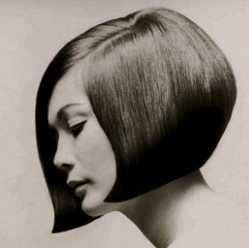
His straight, geometric cut became a staple on every high street in Britain – bringing in the era of the “wash and go” haircut.

Later in the 1960s, he moved to California, where he still lives.

In the 1980s, Sassoon lent his name to manufacturers of haircare products and salons.

Married four times, Sassoon had four children with his first wife Beverly Adams.


*The Boss on Tuesday with his CBE medal. The only shot I managed to take at The Palace (photos inside banned completely) but there are official photos which will be sent to LA shortly.
It was a great day and he did brilliantly!
Love
Esther
Sent from my BlackBerry® wireless device


Vidal Sassoon11wtcvidal1

 The world’s most famous hairdresser, lends his scissors to storm-recovery effort.

Vidal Sassoon, the world’s most famous hairdresser, was in Lacombe on a bright, cool Sunday afternoon last month. He had come to celebrate the success of “Hairdressers Unlocking Hope,” an international fund-raising effort by beauty professionals that has generated more than $1.7 million for the East St. Tammany Habitat for Humanity.

6


Strolling around East Chestnut Street, he posed for pictures, helped screw in the railing on a new Habitat house and chatted with dozens of hairstylists laying sod and spreading mulch around the tidy cottages they helped construct.

 whatsnew-hairdressersunlockinghope

 Looking remarkably fit, (he swims four times a week) and naturally gray- haired at 79 years old, (he turns 80 in January), Sassoon borrowed a black marker and added his autograph to a piece of white poster paper listing contributors to the project. There are big fans of the Sassoon line of hair products. Vidal  Sassoon the name that’s graced a million shampoo bottles.

nova-linha-sassoon

  “If you don’t look good, we don’t look good” Vidal Sassoon.

http://www.behindthechairexchange.com/unlockinghope/site.asp?company

SASSOON  STYLE  BOB

113

Before the bob hair cut became popular in the 1920’s, women were confined to having long hairstyles that were swept up with combs or often worn with hairnets to keep their curls. The 1920’s changed all this when the constraints of the Victorian styles were abandoned.With the war, women were finally able to wear their hair short, thanks to the actions of Irene Castle, silent-screen actress, who started this popular haircut in 1917 to help with the war efforts. It was the promoted style to change the outlook of women that in the time of war, they did not have the time to spend on their hair and the style would help keep their hair from being tangled in factory machines. This style became the most demanded style in this time.By the 1940’s, however, long hair was back, with emphasize on the soft, wavy looks of the shoulder length style. It wasn’t until the 1960’s that the bob style became popular again. Women were back in the work force and they needed more manageable styles. Long hair did not fit the style of the working woman.It wasn’t long before the most influential hairstylist to date, Vidal Sassoon, helped to make the bob style more popular than ever by changing the cut of the bob style haircut.Sassoon and his creative director, Maurice Tidy spent time developing variations to the cut and before long, most women wanted their hair cut in the bob cut.This trend continued along into the 1970’s with the Dorothy Hamill cut that everyone seemed to copy. Even today, with the hairstyles varied, this style continues to be popular.The bob hair cuts of today are simply variations of the look created in the 1920’s. Four decades ago, Maurice Tidy worked with Vidal Sassoon in London popularizing the 1960s bob hair style.

sassoon_picbeauty_5172_0_sl

There is nothing more simple and elegant than a Sassoon bob.  And for a  hairdresser, there is no cut more challenging to master.  It requires perfect technique, meticulous attention to detail, and a keen understanding of hair texture and growth patterns.  Just as many executive chefs test the skills of potential employees by asking them to make something as simple to prepare yet as challenging to perfect as the omlette, anyone in the hair business knows a true stylist is only as good as her bob.  Indeed, the bob is the omlette of the hair world.Sometimes the higher-end the salon, the higher-end the snob factor, especially when you’re not a client.  But despite the Sassoon name, despite the Beverly Hills address.They say that in the beauty industry, a successful  hairdresser is 20% talent and 80% personality.  

short-red-mod-bob-with-bangs

The style was, at first, shocking as women who previously prided themselves on long, luxurious hair, chopped off their locks in a show of independence and equality with men. The original style was worn straight and flat on top or waved with a Marcel iron.

A style is a ‘bob’ if it is cut with a weighted area falling anywhere from just below the ears to just below the chin.Although the bob has faded from the style front on occasion it has always been in the back-ground showing sophistication and class. Vidal Sassoon made such a hit with his severe and sculpted adaptation of this style that many think that it originated with him.The most interesting about the bob is that it has been updated and modified for many style trends but with each come-back, the original look is still as acceptable as the new styles.This style is adaptable to many facial structures and textures of hair. This, along with the ease of styling most adaptations are likely reasons for its tendency to keep reappearing on the style scene.

Over the years, the cut has been modified by adding bangs or taking them away, stylized by cutting one side short while leaving the other long, texturized, permed, waved, poofed and flattened, but it is always unmistakably a bob.Curly or straight, there is a bob haircut to fit just about every face and life style. So if you are looking for a new look that is sophisticated and stylish as well as appropriate for the office and easy to care for, there is very likely a bob that is perfect for you.


vidal-sassoon

BAD GIRL HAIR

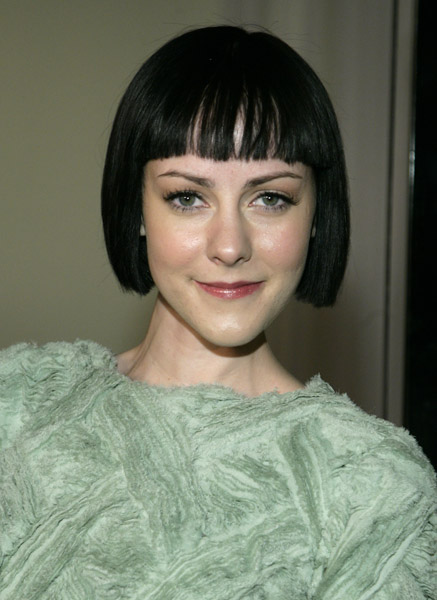
Jenna Malone at the Los Angeles Special Screening of "The Ruins" on April 2, 2008 at the Arclight Theater in Los Angeles

a-resixed-hold-shot-agyness-new-hair-wenn

Vidal Sassoon Hair Revival

50f32427-b68a-64ba-f5b556630032967e1


The Quant: Sixties designer Mary Quant’s slick pageboy cut was a variation on Vidal Sassoon’s classic angular bob.There were other mod idols, too. Learn more about Mary Quant, a fashion designer who claimed to have invented the miniskirt. She and her husband were a driving force behind 1960’s “Swinging London.”


twiggy1


The Twiggy crop: The original supermodel was hailed as the face of 1966 when she went for a super-short boyish cut.

Twiggy really only had one look, but she took it very seriously. Although the mod fashion movement got its start in 1950’s London, it’s Twiggy who is frequently remembered as the face of mod.  Mod fashion was streamlined and bold, definitively minimalist. Look for geometric patterns, startling colors, and hemlines cut well above the knee.With her short-cropped mod hairstyle, neat side-part, and long, dark lashes, Twiggy epitomized the streamlined grace that so many mod kids exalted.

Twiggy’s fellow model Peggy Moffitt popularized the austere “five point” Vidal Sassoon haircut, the moddest mod hairstyle there ever was.

2854l1


Forget Twiggy: American model Peggy Moffitt is one of the most iconic faces of 1960’s mod fashion. The actress-turned-model, who became muse to designer Rudy Gernreich, redefined the high fashion look of the era. Her Japanese Theater-inspired makeup and signature hairstyle came to represent the strengthening bond between pop art and fashion.Moffitt started modeling when she began dating photographer William Claxson, whom she later dated. Unconventionally beautiful, Moffitt’s symmetrical, almost cartoonish face redefined the qualities sought in fashion models, paving the way for superstar Twiggy.Moffitt and Gernreich continue to influence the fashion world, despite Gernreich’s death in 1985. Moffitt’s look remains popular in the haute fashion world, and several vintage Gernreich designs were redistributed under the Japanese label Commes des Garcons in 2003. 


The stylists were given a major dare in the final challenge: They had to copy one of Vidal Sassoon’s most famous bobs — with Sassoon as the guest judge. Yes, Vidal Sassoon, the rock star of haircutting, the man who liberated women from the tyranny of weekly hairdresser’s appointments in the 1960s by creating geometric haircuts that were truly wash and wear. This is the guy who gave Mia Farrow her Rosemary’s Baby pixie — another cut that pushed the envelope and redefined femininity. Can you imagine how nervous the stylists were? They may have acted calm — but they were shaking in their shoes.

The stylists also had to create two other cuts — and all of the looks had to tell a story. I know, it’s complicated. I can’t say it was easy for me to follow, either. And to top that off, they had to be sure the cuts flattered the models and their dresses. Oh, and they had to accomplish it all in three hours.

http://video.aol.com/video-detail/finale-vidal-sassoon-blog-pt1/31703643/?icid=VIDURVENT01


In the name of the father

Vidal Sassoon’s groundbreaking hairstyles made him a legend. Then he sold out. Now his son, Elan, hopes to build on his vision.

By Christopher Muther, Globe Staff
October 2, 2008
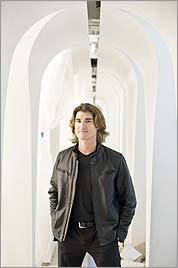
Elan Sassoon was, for years, quite certain he had no interest in the family business. The hair salons, sleek beauty schools, and product lines that made his father, Vidal Sassoon, the best-known hairstylist in the world held little allure. Instead, the younger Sassoon graduated from college in 1993, raised $10 million, and started producing films.

In a few years, his company, Skyline Entertainment, was making critically lauded indie movies with stars such as Blythe Danner, Peter Gallagher, and Lara Flynn Boyle. He was walking the red carpet at Cannes, hanging out with Gwyneth Paltrow and Ethan Hawke.

“I was Mr. On-the-Rise Film Guy,” Sassoon, now 38, recalls.

But the demands of film schedules and festivals, while making him someone to watch in the movie industry, was putting stress on his marriage. He had to make a choice: film or family. He chose family.

The decision drew Sassoon back to the family business, and in no small way. Next year, on Commonwealth Avenue near Boston University, he’ll open the Institute of Hairdesign by Elan Sassoon, slated to be the largest cosmetology school in the world, the first of four across the country. This month, he launches two high-end salons called Mizu, one here with his four business partners  at the posh Mandarin Oriental hotel, another in New York on Park Avenue. He’s partnered on a line of spas called Green Tangerine, and rolls out his own product line next year.

Elan Sassoon is not a hairstylist. He’s a businessman, one with a clear motivation for diving back into the industry he grew up with. He’s determined to expand upon his father’s vision – a vision that changed the beauty industry and the salon world, a vision that Vidal Sasson created, nurtured, and then, in 1983, sold for tens of millions of dollars, losing control of his name in the process.

“My dad didn’t really want to sell in the first place, and it’s something that he always regretted,” Sassoon says. “I want to finish what he started.”

A cut above
Vidal Sassoon built an empire based on his famed geometric cuts and the omnipresent catchphrase “If you don’t look good, we don’t look good.” In the 1960s, Vidal ran in the same celebrated, swinging London circles as the Beatles and the Rolling Stones.

In 1968, Vidal Sassoon was paid $5,000 to cut Mia Farrow’s hair on the set of “Rosemary’s Baby” while dozens of photographers captured the moment. Her pixie cut became as emblematic of the era as miniskirts and bell-bottoms. Sassoon’s haircuts were so influential during this period that the designer Mary Quant declared him “the Chanel of hair.” The first celebrity hairstylist, he had his own TV show in the 1980s, “Your New Day.”

The younger Sassoon says he’s building his brand through business acumen. But it doesn’t hurt that he has the most recognized last name in the salon business and grew up immersed in the culture. His father regularly pulled him out of school to travel to international salons and fashion shows.

“I learned a lot about that world because it was all around me, and it was great,” Elan says over a cup of English breakfast tea at the Bristol Lounge last week. “But it wasn’t where I thought I would end up.”

With a laid-back California lilt to his speech and shoulder-length auburn hair, Elan grew up in a world of bigger-than-life Hollywood parties and celebrity classmates in Beverly Hills. While his sisters loved the glamour of a splashy entrance, the shy Elan and his younger brother would avoid the red carpet and slip into events through the back door.

His mother is actress Beverly Sassoon (nee Adams), best known for her recurring role as Lovey Kravezit in the Matt Helm series of films with Dean Martin. After his parents divorced in 1980, Elan lived with both parents, but he was so shy that even his mother’s celebrity boyfriends couldn’t draw him out of his shell.

“My mom was dating Erik Estrada for a while, and he would pick me up from school on his ‘CHiPs‘ motorcycle,” Sassoon says of the ’70s TV heartthrob. “I was so embarrassed I would tell him to park a few blocks away and I would get on there so the other kids didn’t see me.”

Childhood friend Jason Goldberg, who formed Katalyst Media with Ashton Kutcher and produced “Punk’d” and “Beauty and the Geek,” says even though Elan grew up surrounded by decadence, he’s always been remarkably grounded.

“Even when he was a kid, he wasn’t fazed by any of it,” Goldberg says on the phone from Los Angeles. “Here was a guy who always had a good head on his shoulders. He has the business sense and the level of style and taste to pull off just about anything.”

The one business venture Elan couldn’t pull off was the one closest to his heart. In 2002, he tried to buy back his father’s beauty schools and hair salons. Shortly after his parents’ divorce, his father sold his line of hair products to Richardson-Vicks (later acquired by Procter & Gamble) and the salons and beauty schools to his three top salon managers. The way Elan tells it, his father did not want to sell when Richardson-Vicks made its $125 million offer, but he was outvoted by his shareholders. More than two decades later, Elan Sassoon secured financing to buy back the Vidal Sassoon salons and schools, and worked out an agreement with P&G, which owns the Vidal Sassoon name. But his offer was rejected. The salons were sold to the Regis Corp.

“That took six months of my life to plan and put together,” Elan says, still stung by the loss. “It was a pretty big blow when it was sold to Regis.”

He decided then that if he couldn’t buy back the salons and schools his father started, he’d open his own.

What price beauty?
Elan Sassoon’s state-of-the-art school – with tuition of $19,500 a year – will be one of the priciest beauty academies in the country, and only the second with on-campus housing. The 600 students will also undergo more hours of training than any other Massachusetts cosmetology school. Sassoon says his students will graduate with a far broader knowledge of hair cutting and styling, a concept that other salon owners in Boston applaud.

“They are trained to do the basics,” says Serge Safar, owner of Safar Coiffure on Newbury Street, of the students coming out of beauty schools. “But we end up having to train them another year or two before we can put them on the floor. A more complete education would be a huge benefit.”

Sassoon says he’s commissioning new textbooks that will provide a history of beauty. He’s bringing in experts such as Patrick McGinley, who worked as creative director at the Vidal Sassoon salon on Newbury Street, to craft a curriculum.

But one person who will not be teaching at the academy is Vidal Sassoon himself, now 80. When he sold his name, products, and schools, he signed agreements not to re-enter the beauty world. But he has little doubt that his son’s plans will succeed.

“He’s teaching the old man a thing or two,” the elder Sassoon says on the phone from his home in London. “Hair styling has always been a very exciting world. I wasn’t exactly quiet. I guess he saw what was going on and thought, ‘I can do better than him.’ And I honestly think he will.

“I mean, his whole marvelous idea of adding rooms for people to stay while they’re at school – that was his original idea. I never thought of that. We had schools and never did that. He’s a thinker and a visionary. I’m more than pleased.”

Choosing Boston
The decision to locate the academy in Boston was based, in part, on the city’s strong emphasis on education and its large student population. Elan Sassoon was born in New York, grew up in LA, and spent a year at Berkshire Academy.

But Boston became central to Elan’s world for another reason. In January 2007, his wife of 14 years, Adriana, was diagnosed with Hodgkin’s lymphoma. A former ELITE model in her native Brazil, Adriana endured a frustrating series of biopsies in Miami, where the family was living. In search of the best care, Adriana quickly moved to Boston for treatment. Elan and their two children followed that May. The family lives in Chestnut Hill. Adriana recently celebrated her first cancer-free year.

Boston appears to be a good fit for Sassoon, who confesses that he’s far more traditional and strict than his parents when it comes to marriage and family. He was married at the age of 24 and after seeing the result of divorce growing up, his priority is making his marriage work.

“It wasn’t a good situation,” he says of the years after his parents’ divorce. “The boyfriends and the girlfriends and all these people coming into the picture. It’s nice today because I’m still friends with a lot of them. My mom went out with Senator Bill Cohen for three years, he was the secretary of defense. And we’re still friendly.”

Over lemon chicken at P.F. Chang’s a few days later, Sassoon tells stories of a recent New York City media blitz, where magazines such as Men’s Vogue and Details met with him for upcoming feature stories on the low-key and charismatic man and his budding hair empire.

“It’s a little different these days from when I was a kid,” he says. “I think I’ve definitely gotten over my shyness and fear of the red carpet. I kind of enjoy it now.”

Christopher Muther can be reached at muther@globe.com

Sassoon’s Hair Apparent

His dad is possibly the world’s most famous hairstylist. Now Elan Sassoon, 38, says he’s building what will be “The Harvard of hair schools.”

October 2008


His father is possibly the world’s most famous hairstylist, and he’s already run a chain of high-end medi-spas, so it was only a matter of time before Elan Sassoon—son of Vidal—started building his own beauty empire. Sassoon, 38, will open the Mizu Boston salon at the new Mandarin Oriental hotel in September, followed by Mizu New York on Park Avenue in October.

The salons, which have all-white interiors set off by gold Asian-style screens, aim to entertain as well as beautify customers by providing them with iPods (to tune out the blow-dryers) and high-tech goggles that screen movies.

Sassoon also has another major Beantown project in the works. Though he’s not a stylist—preferring to concentrate on the business end of operations—he’ll open what he describes as “the Harvard of hair schools” next year. The $22 million academy will be the first in the U.S. to offer dormitories and will also boast a 200-seat auditorium. “Most hair schools use textbooks that talk about tools that the cavemen and the ancient Egyptians used to barber,” he said. “There’s nothing in them about the last 150 years, about Michael Gordon, Trevor Sorbie or my father.”

And what advice does the legendary coiffeur give his son? “Technically he’s not allowed to,” Sassoon said with a laugh, referring to the noncompete agreement that the elder Sassoon has with Procter & Gamble, which owns the rights to his name. He does, however, offer “good one-liners from Winston Churchill,” said Elan, citing “Success consists of going from failure to failure with no loss of enthusiasm” as one of them.


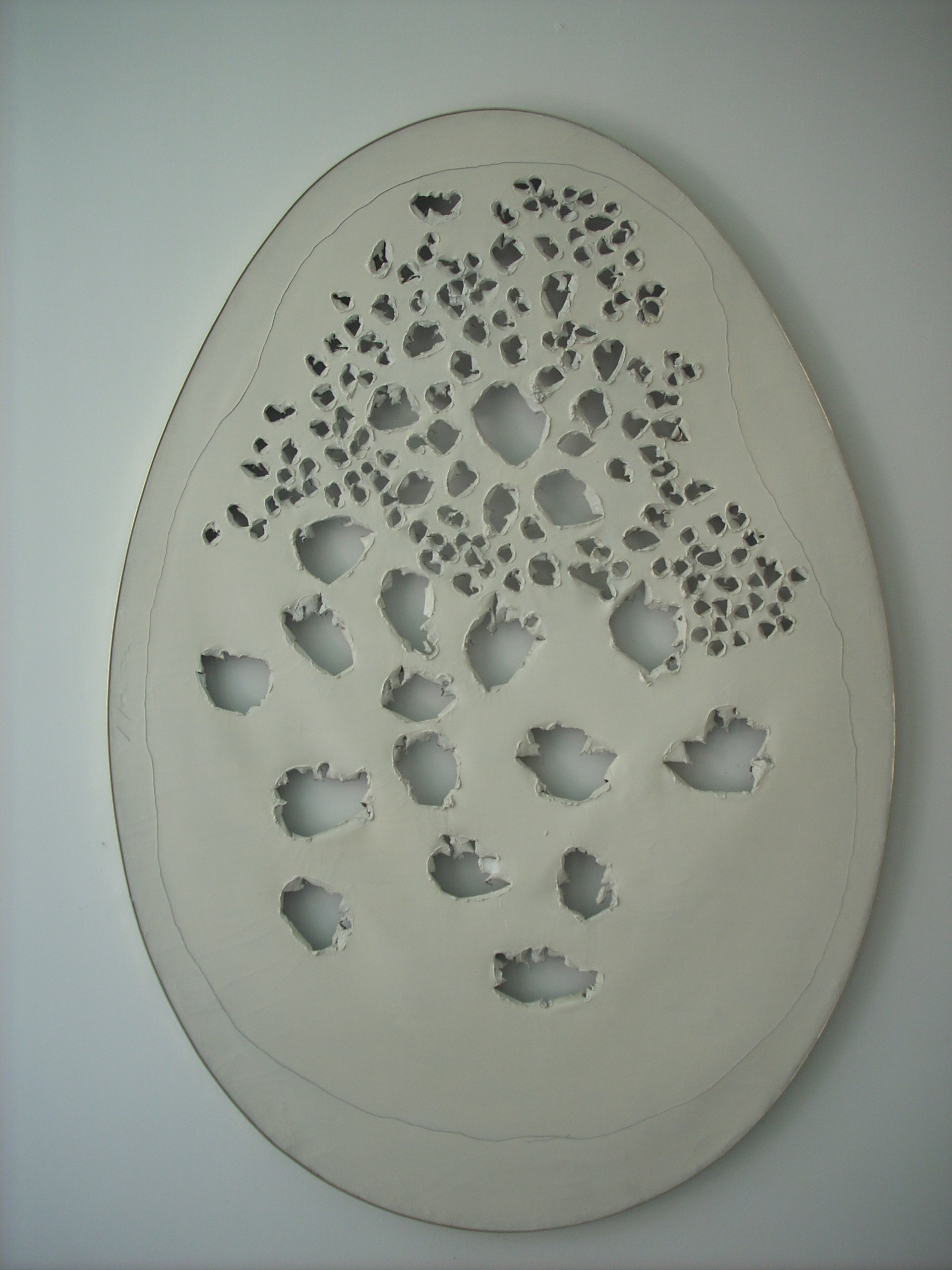
Lucio Fontana
Concetto Spaziale, la Fine di Dio
1963
£10,324,500
Sotheby’s London
Feb. 27, 2008

VIDAL SASSOON  PRIVATE COLLECTION

FONTANA’S EGG

The record-setting Fontana, a golden, glittery, egg-shaped Concetto Spaziale from 1963, was bought by Philippe Segalot, according to auction reports, spurring speculation that it might be destined for François Pinault’s new museum at Punta della Dogana in Venice.

Vidal Sassoon tames unruly, satanic hair

Sassoon For the past several years, I’ve suffered through a slow, teary falling out with my hair. (Ha! … Hey, that’s not funny! … Damn, I made myself feel bad.) Which brings us to a spot that crosses low-rent Twilight Zone imagery with a typical Vidal Sassoon commercial. Appropriately enough, it is a Sassoon spot (click the box on the right side), tagged “Your hair knows” and promising “answers” to every conceivable styling question. I have only one: How could you leave me this way? Though, if my once-abundant locks began mumbling satanically and reached out to unplug the dryer, I’m pretty sure I’d scream like a maniac and yank out every last remaining strand.

—Posted by David Gianatasio