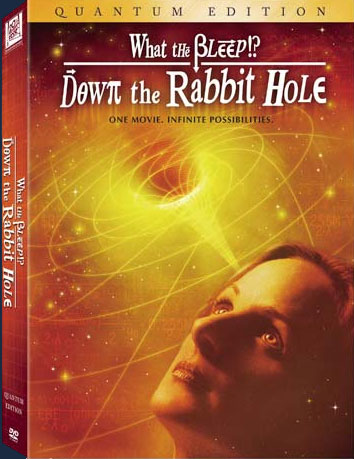
What the BLEEP Do We Know ?Down the Rabbit Hole………
WHATCH VIDEO BELOW.
What the Bleep Do We Know!? (also written What tнe #$*! Dө ωΣ (k)πow!? and What the #$*! Do We Know!?) is a 2004 film that combines documentary-style interviews, computer-animated graphics, and a narrative that posits a spiritualconnection between quantum physics and consciousness. The plot follows the story of a deaf photographer; as she encounters emotional and existential obstacles in her life, she comes to consider the idea that individual and group consciousness can influence the material world. Her experiences are offered by the filmmakers as an illustration of the movie’s thesis about quantum physics and consciousness. The 2004 cinematic release of the film was followed by a substantially changed, extended DVD version in 2006.
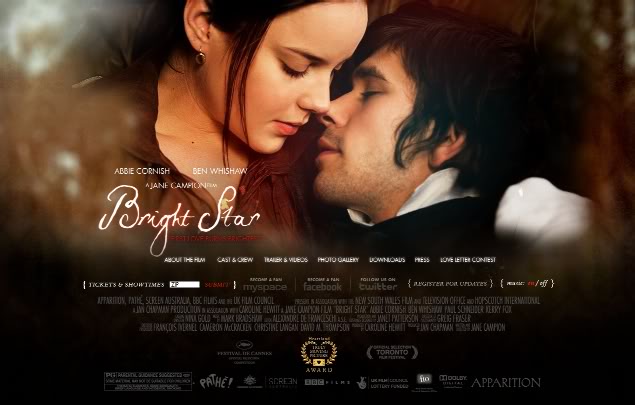
English Romantic poet John Keats was born on October 31, 1795, in London. The oldest of four children, he lost both his parents at a young age. His father, a livery-stable keeper, died when Keats was eight; his mother died of tuberculosis six years later. After his mother’s death, Keats’s maternal grandmother appointed two London merchants, John Rowland Sandell and Richard Abbey, as guardians. Abbey, a prosperous tea broker, assumed the bulk of this responsibility, while Sandell played only a minor role. When Keats was fifteen, Abbey withdrew him from the Clarke School, Enfield, to apprentice with an apothecary-surgeon and study medicine in a London hospital. In 1816 Keats became a licensed apothecary, but he never practiced his profession, deciding instead to write poetry.
Keats met and fell in love with a woman named Fanny Brawne.Keats contracted tuberculosis, and by the following February he felt that death was already upon him, referring to the present as his “posthumous existence.”He went to Rome and died there.Brawne was forever in love with him.
Bright Star
Bright star, would I were steadfast as thou art –
Not in lone splendour hung aloft the night
And watching, with eternal lids apart,
Like Nature’s patient, sleepless Eremite,
The moving waters at their priestlike task
Of pure ablution round earth’s human shores,
Or gazing on the new soft-fallen mask
Of snow upon the mountains and the moors –
No – yet still stedfast, still unchangeable,
Pillow’d upon my fair love’s ripening breast,
To feel for ever its soft fall and swell,
Awake for ever in a sweet unrest,
Still, still to hear her tender-taken breath,
And so live ever – or else swoon to death.
JOHN KEATS – 1819
A Selected Bibliography
Poetry
Collections: The Poetical Works of Coleridge, Shelley, and Keats (1831) Endymion: A Poetic Romance (1818) Lamia, Isabella, The Eve of St. Agnes, and Other Poems (1820) Poems (1817) The Poems of John Keats (1970) The Poems of John Keats (1978)
Is modern society more humane than medieval society?
Many people believe abortion is a moral issue, but it is also a constitutional issue. It is a woman’s right to choose what she does with her body, and it should not be altered or influenced by anyone else.
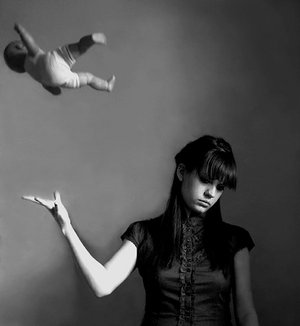
I believe that in several hundred years, if civilization survives, it will look at the barbaric treatment of children in the wombs of their parents as one of the most inhumane acts in the history of civilization, perhaps even more so than the Inquisition. Living babies with heartbeats, such as this one above, are broken into pieces by a “Doctor” with a pair of four snips and the dismembered body parts of the dead baby are sucked out of the mother’s womb with a vacuum hose. Advocates of abortion say the baby is simply a part of the mother’s body, but if that is so, I can’t understand why the doctor has to count all of the little broken off arms and legs of the baby that are sucked out of the mother to make sure none are left inside.
Modern society has a lot of housekeeping to do before it proclaims itself to be the moral compass of history. So far 45,000,000 babies like the one above have died in North America since abortion was legalized in 1973.
Suction Aspiration abortion, also known as Vacuum Aspiration, is the most common method of surgical abortion in practice today and is generally performed up to 14 weeks of gestation. This is the most common abortion procedure and this method accounts for the vast majority of first trimester abortions. This is performed on an outpatient basis and usually requires only local anesthetic. Most women feel little discomfort with this injection, since the cervix has very few nerve endings, although some report a pinching, stinging, or a dull heavy feeling.
First, a physician determines the location and size of the uterus by performing a pelvic exam. A speculum is then inserted into the vagina to visualize the cervix, then the area is cleansed. This is done to allow for the insertion of a hollow tube- called a vacurette-up through the hole in the cervix. The vacurette, which is attached to a flexible tube leading to the vacuum aspiration machine, is inserted into the uterus. The physician moves the vacurette back and forth gently in the uterus as the uterine contents are emptied. The physician will then carefully check the walls of the uterus with a spoon-shaped instrument called a curette. The entire procedure takes about 5 to 10 minutes. It may cause some cramping and vaginal bleeding, which is normal and varies with each woman.
Live and let live .Who is to decide???????
*Please share your comments about this post and any other posts from my list.
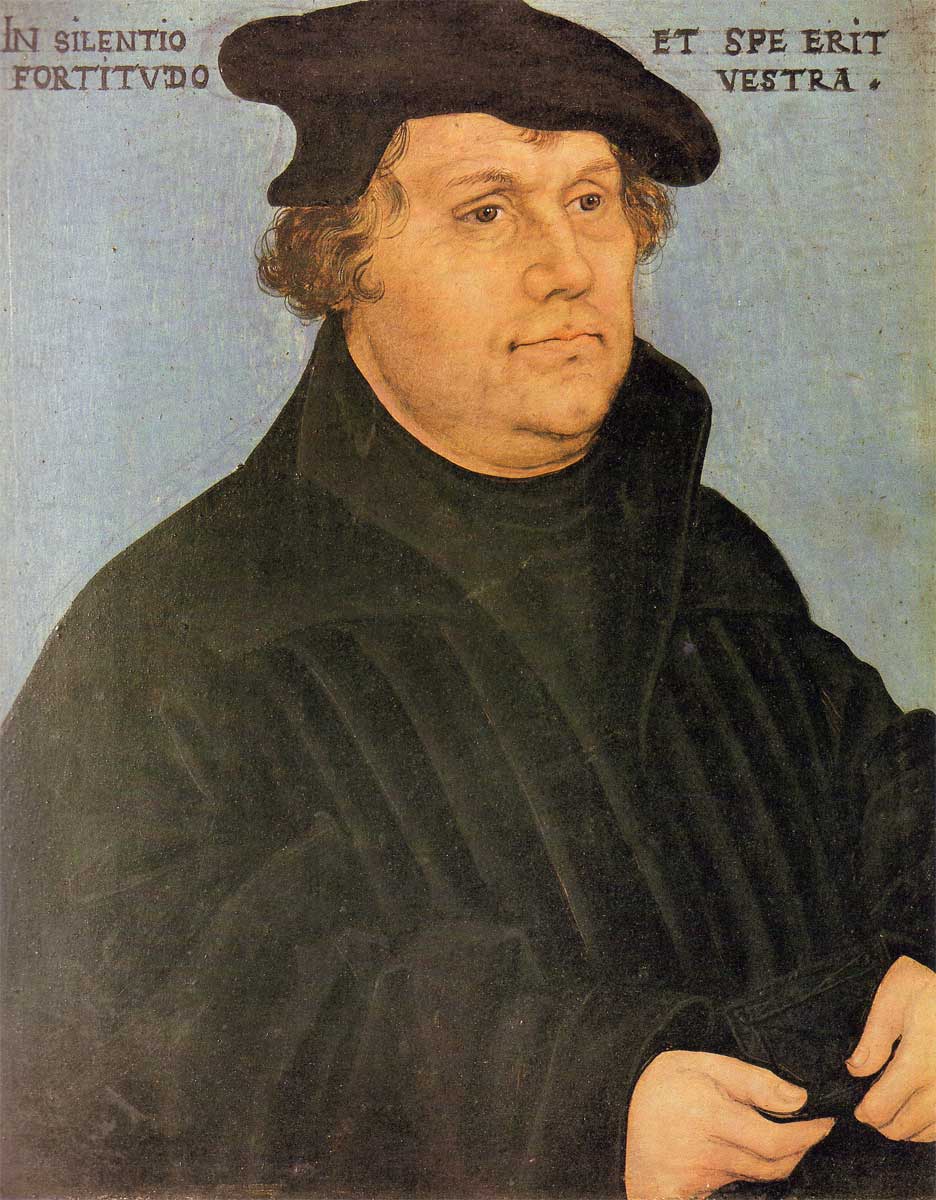
Martin Luther had a small head-start on Tyndale, as Luther declared his intolerance for the Roman Church’s corruption on Halloween in 1517, by nailing his 95 Theses of Contention to the Wittenberg Church door. Luther, who would be exiled in the months following the Diet of Worms Council in 1521 that was designed to martyr him, would translate the New Testament into German for the first time from the 1516 Greek-Latin New Testament of Erasmus, and publish it in September of 1522. Luther also published a German Pentateuch in 1523, and another edition of the German New Testament in 1529. In the 1530’s he would go on to publish the entire Bible in German.
LUTHER’S 95 THESIS
On Halloween of 1517, Luther changed the course of human history when he nailed his 95 Theses to the church door at Wittenberg, accusing the Roman Catholic church of heresy upon heresy. Many people cite this act as the primary starting point of the Protestant Reformation… though to be sure, John Wycliffe, John Hus, Thomas Linacre, John Colet, and others had already put the life’s work and even their lives on the line for same cause of truth, constructing the foundation of Reform upon which Luther now built. Luther’s action was in great part a response to the selling of indulgences by Johann Tetzel, a Dominican priest. Luther’s charges also directly challenged the position of the clergy in regard to individual salvation. Before long, Luther’s 95 Theses of Contention had been copied and published all over Europe.
Perhaps the most ironic case in the heresy insanity was that of Lutheran Church founder, Martin Luther. When this Catholic priest successfully rebelled against the papacy, thousands were encouraged to begin thinking for themselves in matters of religion. This freedom was fostered by Luther until it included questioning his doctrines. During the Peasant’s War, Luther urged the nobility to have no mercy, and to track down and kill heretics—this time “heretics” being those who disagreed with Lutheranism. He urged trained killers to “track them like dogs and kill these children of the devil!” Taking him at his word, the nobles and their armies butchered over one hundred thousand God-fearing men, women and children. Luther later boasted that “I, Martin Luther, slew all the peasants in the rebellion, for I said that they should be slain; all their blood is upon my head. But I cast it on the Lord God …“
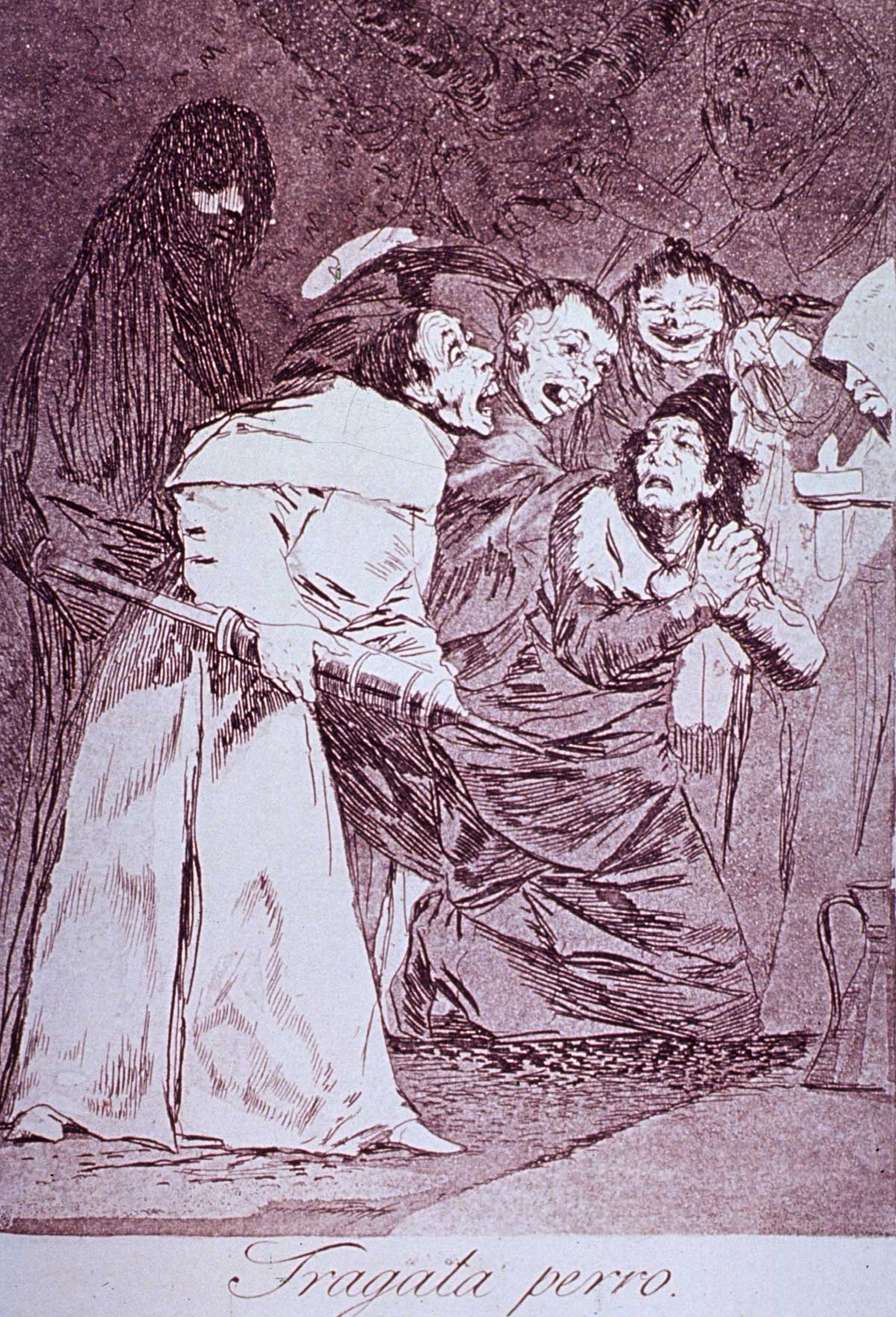
Francisco José de Goya y Lucientes (30 March 1746 – 16 April 1828) was a Spanishromanticpainter and printmaker regarded both as the last of the Old Masters and as the first of the moderns. Goya was a court painter to the Spanish Crown and a chronicler of history. The subversive and subjective element in his art, as well as his bold handling of paint, provided a model for the work of later generations of artists, notably Manet and Picasso.
In 1783, the Count of Floridablanca, a favorite of King Carlos III, commissioned him to paint his portrait. He also became friends with Crown Prince Don Luis, and lived in his house. His circle of patrons grew to include the Duke and Duchess of Osuna, whom he painted, the King and other notable people of the kingdom.
“Fear is the basis of the whole – fear of the mysterious, fear of defeat, fear of death. Fear is the
parent of cruelty, and therefore it is no wonder if cruelty and religion have gone hand-in-hand.”
– Bertrand Russell
In 1786, Goya was appointed painter to Charles III. After the death of Charles III in 1788 and revolution in France in 1789, during the reign of Charles IV, Goya reached his peak of popularity with royalty.
Black Paintings
In later life Goya bought a house, called Quinta del Sordo (“Deaf Man’s House”), and painted many unusual paintings on canvas and on the walls, including references to witchcraft and war. One of these is the famous work Saturn Devouring His Son (known informally in some circles as Devoration or Saturn Eats His Child), which displays a Greco-Roman mythological scene of the god Saturn consuming a child, possibly a reference to Spain’s ongoing civil conflicts. Moreover, the painting has been seen as “the most essential to our understanding of the human condition in modern times, just as Michelangelo‘s Sistine ceiling is essential to understanding the tenor of the 16th century”.
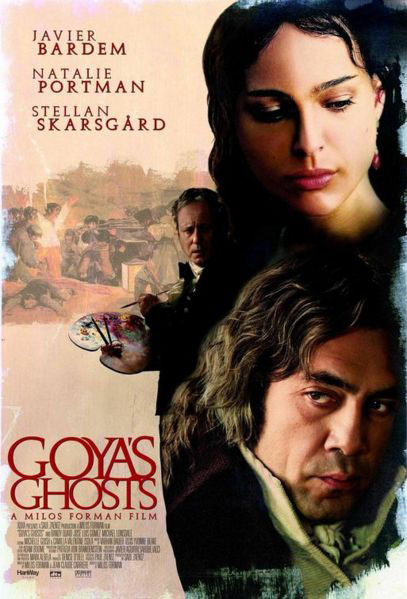
Hollywood will have to wait for long time to see again films of such quality,films that are condemned not to have a big commercial success but films that will remain in the history of art of cinema.The “ghosts of Goya” is taking us back to a past time showing with incredible reality the conditions of this time,and helped by a great performance of the actors,Milos Forman gives us another sample of his rare directing talent.In the question which film I like most “Amadeus” or “the ghosts of Goya” I can’t decide which is greater,Mozart’s genius of music composing,Goya’s genius of painting, some aspects of their lives under the unique look of Milos Forman.
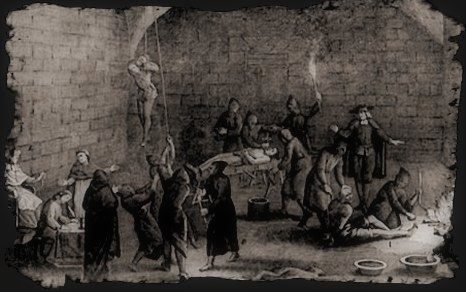
The instruments used by the Holy Inquisition
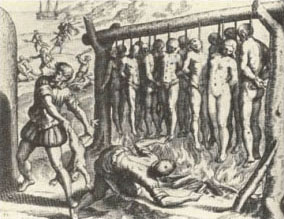
The spirit of the Holy Inquisition and the Salem witch trials lives on in the twenty-first century!
“I’m a dreamer, but I’m not the only one.I hope someday you’ll join us, and the world will be as one.” John Lennon
“TV is sometimes accused of encouraging fantasies. Its real problem, though, is that it encourages-enforces, almost-a brute realism. It is anti-Utopian in the extreme. We’re discouraged from thinking that, except for a few new products, there might be a better way of doing things.” Bill McKibben
“Widely spaced earth-sheltered towns offer sweeping views over the plains. High-speed trains link the communities. Food is grown in the region. Bikeways are everywhere. Nonpolluting hydrogen powers all vehicles. Sunlight and wind generate the hydrogen. Note the earth-covered bridges, the continuous window bands, the wind machines across the farmlands. In this new America, everything is reused, recycled, conserved.” Malcolm Wells
“The Utopia of a modern dreamer must needs differ in one fundamental aspect from the Nowheres and Utopias men planned before Darwin quickened the thought of the world. Those were all perfect and static States, a balance of happiness won for ever against the forces of unrest and disorder that inhere in things. One beheld a healthy and simple generation enjoying the fruits of the earth in an atmosphere of virtue and happiness, to be followed by other virtuous happy, and entirely similar generations until the Gods grew weary. Change and development were damned back by invincible dams for ever. But the Modern Utopia must be not static but kinetic, must shape not as a permanent state but as a hopeful sage leading to a long ascent of stages.” H.G. Wells
“As long as there is property, and while money is the standard of all things, I cannot think that a nation can be governed either justly or happily; not justly, because the best things will fall to the share of the worst men; nor happily, because all things will be divided among a few (and even these are not in all respects happy), the rest being left to the absolutely miserable.”
“A conspiracy of the rich, who on pretence of managing the public only pursue their private ends, and devise all the ways and arts they can find out; first that they may, without danger, preserve all that they have so ill acquired, and then that they may engage the poor to toil and labor for them at so low rates as possible, and oppress them as they please.”
“The source of happiness is much disputed, among all people, in Utopia.”
In 1989, Bert and John Jacobs designed their first tee-shirt. They knew nothing about the business. For five years, the brothers hawked tee shirts in the streets of Boston and traveled the East Coast, selling door-to-door in college dormitories.
In 1994, John sketched Jake’s face than the brothers decided to print Jake’s with the 3 word phrase “Life is Good”, they printed up 48 Jake shirts for a local street fair in Cambridge, Massachusetts. They laid the shirts out on their rickety card table. By noontime, all 48 of those tees were gone. A star was born.
Soon Jake was introduced to local retailers, and his simple message of optimism was embraced like nothing the brothers had ever seen. As demand for product soared, Jake’s team grew, and the Little Brand That Could began to spread across America.
The Life is good Kids Foundation is an action-oriented nonprofit, committed to helping young children overcome life-threatening challenges such as extreme poverty, violence, illness and natural disasters. Our playmaker Initiative provides training, resources and support to the adults dedicated to caring for these children so that all involved lead healthier, more joyful lives.
The Life is good Festival is a one-of-a-kind benefit event taking place the weekend of September 11th & 12th 2010 just 15 minutes from Boston on a scenic 40 acre farm at the base of The Blue Hills in Canton MA. The festival is a two-day celebration of music and optimism, featuring three stages of diverse live music, hands-on games, interactive arts activities and the “Good Kids” zone — home to the top acts in kids entertainment. The Life is good Festival is a unique music event that every age group can enjoy. So 100% of Life is good’s profits from the Festival will go towards The Life is good Kids Foundation.
* Thank God someone decided to cheer up this year’s 911 , with something GOOD. Enough with the non sense, let’s celebrate life and celebrate beauty.This year will be my first year at this festival.I hope will be a lot of fun.
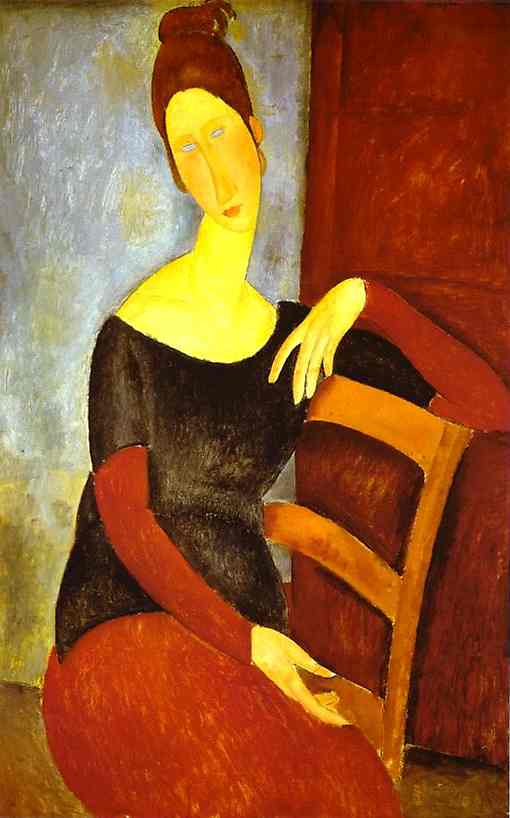
Amedeo Clemente Modigliani was born into a Jewish family in Livorno, Tuscany, Italy, on July 12, 1884. Modigliani was the fourth child of Flaminio Modigliani and his French-born wife, Eugénie Garsin. His father was in the money-changing business, but when the business went bankrupt the family was forced to live in poverty. Young Modigliani was also beset by health problems after an attack of typhoid at the age of 14 followed by tuberculosis two years later. The tuberculosis would affect him for the rest of his life. Depression also ran in his family and Modigliani suffered from it as well. At least some of his siblings seemed to have also inherited his stubborn, independent streak. In 1898 his 26-year-old brother, Emmanuel, was sentenced to six months imprisonment as an anarchist.
In 1902, Modigliani enrolled in the Scuola libera di Nudo (Free School of Nude Studies) in Florence and a year later moved to Venice where he registered to study at the Istituto per le Belle Arti di Venezia. It is in Venice that he first tried hashish and, rather than studying, began to spend time frequenting the sleazy parts of the city.In 1906, Modigliani moved to Paris, the then focal point of the avant-garde, where he would become the epitome of the tragic artist, creating a posthumous legend almost as famous as that of Vincent Van Gogh.
Although he continued to paint, by then his lifestyle had taken its toll and Modigliani’s health was deteriorating rapidly, his alcoholic blackouts becoming more frequent. After not being heard from for several days by his friends, his downstairs neighbor checked in on them and found Modigliani delirious and in bed, holding onto Jeanne, who was nearly nine months pregnant. A doctor was summoned but there was little that could be done because Modigliani was suffering from tubercular meningitis.
Modigliani died on January 24, 1920 without regaining consciousness. There was an enormous funeral, attended by many from the artistic communities in Montmartre and Montparnasse. Jeanne Hébuterne, who had been taken to her parents’ home, threw herself out of a fifth-floor window two days after Modigliani’s death, killing herself and her unborn child.
Modigliani was interred in Père Lachaise Cemetery. Jeanne Hébuterne was buried at the Cimetière de Bagneux, near Paris and it was not until 1930 that her embittered family allowed her to be moved to rest beside Modigliani.
Their orphaned 15-month-old daughter Jeanne was adopted by Modigliani’s sister in Florence. As an adult, she would write an important biography of her father titled: Modigliani: Man and Myth.
Today, Modigliani is regarded as one of the greatest artists of the 20th century, his works on display in the great museums of the world. His sculptures rarely change hands and the few paintings that change hands can sell for more than US$15.6 million. His Nu couché (Sur le côté gauche) sold in November of 2003 for US $26,887,500.
Ludwig Van Beethoven was born in December 1770, his birthplace was in Bonn, Germany and died 26 March 1827 (cirrhosis of the liver, plus dropsy)
Mozart aside, Ludwig van Beethoven is the most famous classical composer of the western world. Beethoven is remembered for his powerful and stormy compositions, and for continuing to compose and conduct even after he began to go deaf at age 28. The ominous four-note beginning to his Fifth Symphony bom bom bom bommmmm is one of the most famous moments in all of music. (Beethoven supposedly described the notes as “Fate knocking at the door.”) He wrote nine numbered symphonies in all: his Third Symphony (“Eroica”) and Sixth Symphony (“Pastoral”) are especially famous. Beethoven also wrote the popular “Moonlight” sonata (1801),Groose fugue.My favorite Pathetique.
Beethoven never married. After his death his friends found letters to a lover he called “Immortal Beloved,” whose identity has never been discovered. The English phrase “Immortal Beloved” is a translation of the German, “Unsterbliche Geliebte”… Beethoven’s precise date of birth is unknown; he was baptized on 17 December 1770, and it is presumed he was born on 16 December.
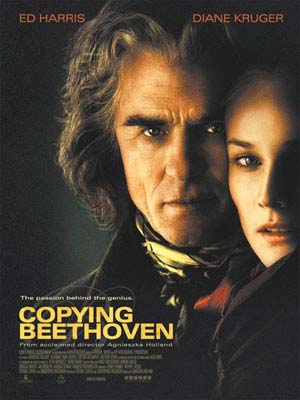
COPYING BEETHOVEN
A fictionalised exploration of Beethoven’s life in his final days working on his Ninth Symphony. It is 1824. Beethoven, played by Ed Harris, is racing to finish his new symphony. However, it has been years since his last success and he is plagued by deafness, loneliness and personal trauma. A copyist is urgently needed to help the composer finish in time for the scheduled first performance – otherwise the orchestra will have no music to play. A fictional character is introduced in the form of a young conservatory student and aspiring composer named Anna Holtz (Diane Kruger). The mercurial Beethoven is skeptical that a woman might become involved in his masterpiece but slowly comes to trust in Anna’s assistance and in the end becomes quite fond of her.
By the time the piece is performed, her presence in his life is an absolute necessity. Her deep understanding of his work is such that she even corrects mistakes he has made, while her passionate personality opens a door into his private world
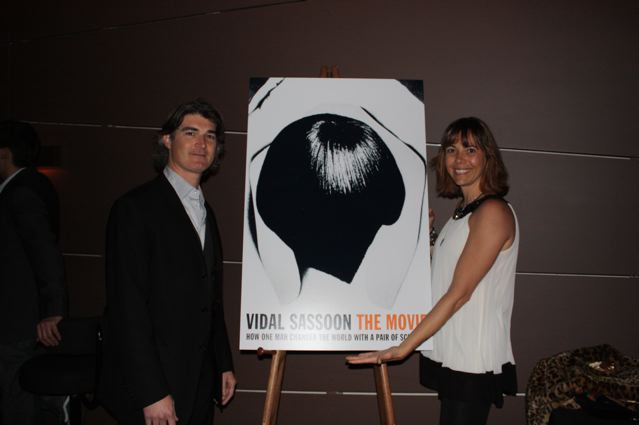
Vidal Sassoon is more than just a hairdresser,he’s a rock star, an artist, a craftsman who “changed the world with a pair of scissors.” With the geometric, Bauhaus inspired cuts.
Elan Sassoon & Adriana Sassoon N.Y.
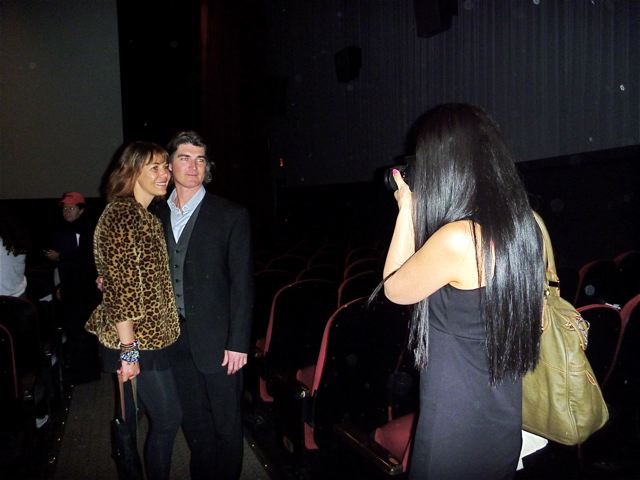
Elan Sassoon & Adriana Sassoon N.Y
A fast-paced feature documentary spanning 80 years of revolution in history and culture, Vidal Sassoon: the Movie is a true rags to riches tale, tracing Sassoon’s path from a London orphanage to international success and celebrity.Bauhaus-inspired styles and “wash and wear” philosophy quite literally changing the way women looked. The fashion, style and social revolutions of the 1960’s come alive as the design of the book and the film unfold.













 ADRIANA SASSOON